
Before you start
- Locate buried or abandoned services.
- Identify unstable walls and roofs before nearby work.
- Agree who handles metal, rubbish, and hazardous materials.
Start with what the barn needs to become
Before clearing starts, decide why the barn is being opened up. A barn being saved for equipment storage needs different access than a barn being inspected for structural repair. A barn that may be torn down needs room for demolition equipment, dumpsters, and salvage. A barn that will stay as a backdrop, workshop, animal shelter, or family storage building needs the clearing to protect useful shade, drainage, and the look of the property.
That decision affects the cut line. If the barn needs roof repair, crews may need open wall and roof-edge access on all sides. If the main problem is a blocked sliding door, the first pass may focus on the approach lane and the door face. If water is running toward the foundation, the clearing may need to expose swales, old tile outlets, and grade around the building before anyone talks about gravel or grading.
Old barns often carry sentimental value even when they are rough. Clearing should respect that. Good trees can stay. A windbreak may matter. A view from the road may matter. So can privacy from neighbors. Mark the keepers before equipment arrives, because a barn lot can look very different once the honeysuckle wall is gone.
Walk the site before you cut
Then look closer. Old barn lots collect debris over decades. You may find fence wire under leaves, chunks of concrete, metal roofing, t-posts, old gates, feed tubs, blocks, tires, lumber, nails, buried stone, and broken glass. A forestry mulcher does not like wire. Tires, chain, cable, and metal can damage equipment and create hazards. If the debris is heavy near the barn, it may need to be pulled out or marked before mulching begins.
Pay attention to holes and soft spots. Ohio barns often had wells, cisterns, hand-dug drains, livestock waterers, manure pits, root cellars, and tile lines nearby. Groundhogs and settling soil can make the surface look normal until it is not. If something looks like a depression, old lid, pipe, or wet seam, treat it as a hazard until someone verifies it.
Clear access before clearing everything else
The first useful win is usually access. If the driveway is brushed in, delivery trucks, inspectors, barn crews, roofers, excavators, and owners all struggle before the real work begins. Open the lane wide enough for the vehicles that need to use it, not only wide enough for a pickup on a dry day.
For many Ohio barns, the old farm lane is still there under grass and saplings. It may have a better base than a new route because it was used for tractors, wagons, and hay equipment for years. Reopening that lane can be cheaper and cleaner than cutting a new path. Look for old gravel, gate posts, fence lines, culverts, and worn grade changes that show where traffic used to run.
Access also includes the space around doors. Sliding doors need room to move. Hinged doors need swing clearance. A hay door, loft opening, lean-to entrance, or equipment bay may need a clear approach even if it is not the main entrance. Once those openings are visible, the owner can judge what still works and what needs repair.
Be careful with vines on siding and roofs
Vines make old barns look worse, and sometimes they are worse than they look. Grape vine, poison ivy, Virginia creeper, honeysuckle, and other climbing growth can run behind boards, under roofing, into gutters, around rafters, and through cracks in siding. The tempting move is to grab the vine and pull. That can tear off trim, tin, gutters, battens, loose boards, or pieces of rotten siding.
A safer approach is often to cut vines at the base and let them die back before final removal. Thick vines can be sectioned. Growth attached to fragile siding may need hand work. If the barn is being repaired, the barn contractor may want vines left in place until they can remove them while replacing boards or roof edges.
Poison ivy deserves extra care. Old fence rows and barn walls can grow vines as thick as a wrist. Cutting and mulching poison ivy can expose workers and property owners to oil on stems, dust, chips, gloves, tools, and clothing. If poison ivy is heavy, identify it ahead of time and plan the work accordingly.
Protect the foundation and grade
Old barns may sit on stone, block, poured concrete, piers, posts, or a mix of repairs from different decades. Some foundations are solid. Some are barely holding. Brush can hide washouts, animal burrows, rot at posts, broken block, and places where soil has piled against wood.
Clearing should expose the foundation without scraping or ramming it. Heavy equipment should stay far enough back from fragile walls and edges. If the barn has a bank side, ramp, lower level, or retaining wall, that area deserves extra attention. The ground may be steeper than it looks under weeds.
Water is often the reason the barn lot grew up in the first place. If downspouts are gone, gutters failed, soil slopes toward the wall, or a drainage swale is blocked, clearing alone will not solve the rot. It will show the problem. That is useful. Once the brush is gone, owners can see where gravel, grading, gutter repair, ditch clearing, or drainage work may be needed.
Where forestry mulching fits around barns
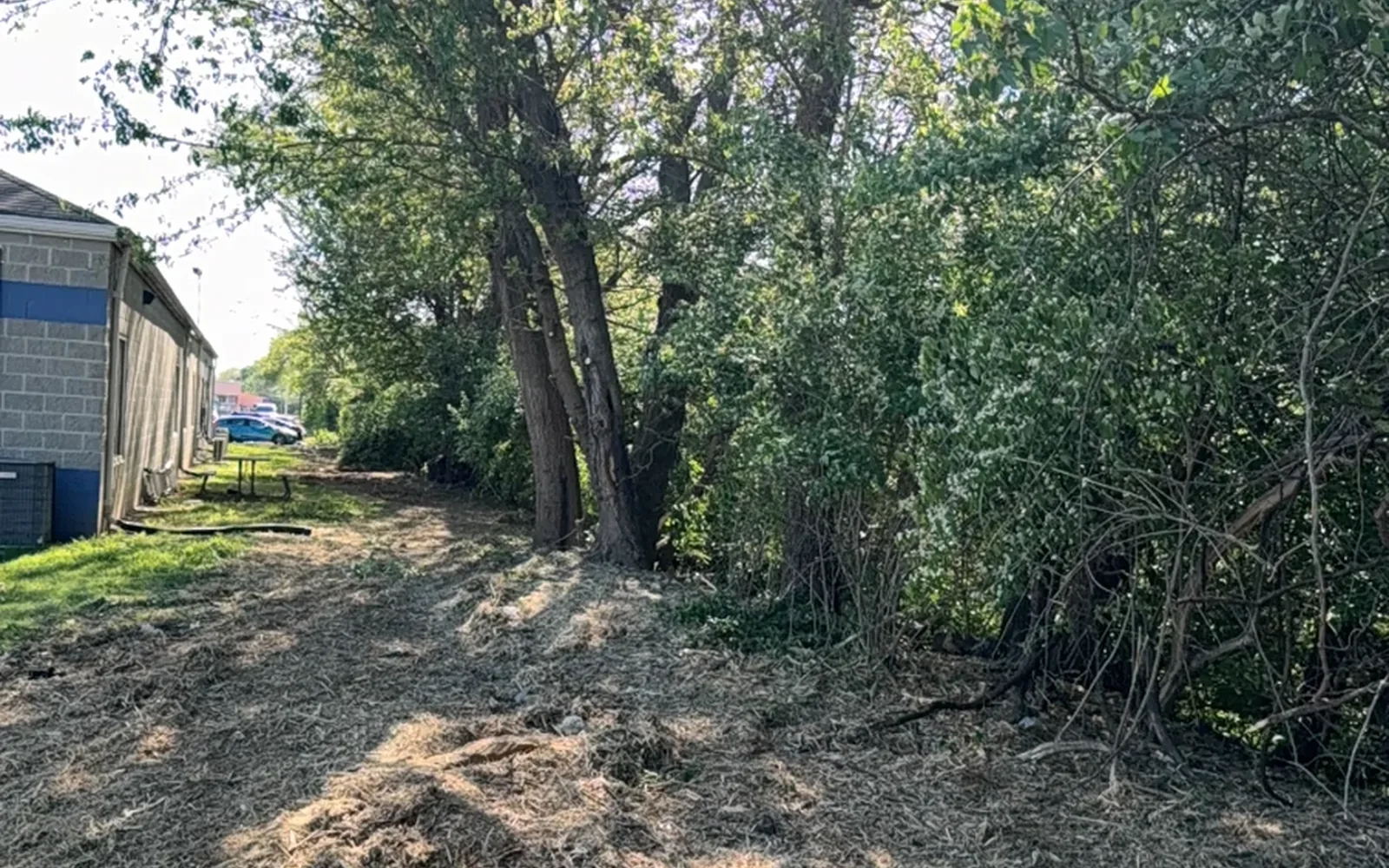
Forestry mulching can be a strong fit for overgrown barn lots when the main problem is brush, saplings, invasive shrubs, vines, and small trees. It can open the approach, fence rows, field edges, old lanes, and the working area around the barn faster than hand cutting alone. It also leaves ground cover behind, which can help reduce bare soil compared with pushing everything into piles.
The machine still needs room and judgment. Tight corners, unstable walls, low wires, loose metal, hidden debris, and soft ground can limit how close the mulcher should work. Near the building, hand cutting may be better. A common approach is to mulch the bigger area, then use saws or hand tools for the last few feet near fragile siding, doors, wells, tanks, and utilities.
Mulch depth matters too. A little mulch can protect soil and make the site easier to walk. Too much mulch against wood siding, posts, or the foundation can hold moisture and invite rot. Material should not be packed against the barn. Door openings, drainage paths, and repair access should stay clean enough for the next crew.
Old fence rows can be part of the barn problem
Barns rarely stand alone. They usually connect to old fence rows, lanes, paddocks, gates, pens, or pasture edges. Those areas can feed brush right back into the barn lot if they are ignored. Multiflora rose, honeysuckle, locust, hedge apple, cedar, and grape vine all like old fence lines because birds drop seed there and the fence protects young growth from mowing.
Clearing around the barn may need to include the first section of fence row, gate access, and the route to nearby outbuildings. That does not mean every fence has to come out. Some fence lines mark useful boundaries and should stay visible. Some are trash and need removal before they damage equipment or livestock. The important part is knowing which is which before the mulcher finds wire the hard way.
If a new fence will go in, clear enough room for layout, posts, corner braces, gates, and a maintenance strip. If the old fence will stay, clear brush off it so repairs are possible. An old barn with a clean lane and a buried fence row still feels half finished.
Think about fire risk and emergency access
Dry brush, dead limbs, old hay, scrap lumber, and tight vegetation around a barn can create a fire problem. So can blocked access. If a barn catches fire, emergency crews need a route in and enough open space to work. Rural driveways, narrow gates, and overgrown lanes can slow that response.
Clearing brush away from the structure reduces fuel close to the building. It also makes it easier to spot problems before they become emergencies: sagging wires, loose panels, trespass activity, vandalism, animal damage, and heat sources near dry material. For barns used for equipment, animals, hay, or storage, keeping the perimeter open is basic maintenance.
Do not burn brush piles near an old barn. Wind shifts fast, and old dry wood does not need much help. If material has to be piled for later removal, keep it away from the structure, lanes, fences, and overhead lines.
Plan for repair crews, dumpsters, and future mowing
Clearing should make the next step easier. A barn repair crew may need scaffolding space. A roofer may need room for ladders, lifts, material stacks, or a trailer. An excavator may need access to fix grade. A property owner may need a dumpster for decades of stored junk. If those needs are known ahead of time, the clearing footprint can be shaped around them.
Future maintenance matters after the first clearing. If the barn lot cannot be mowed or walked, it will grow back. Leave an access strip that a mower, tractor, or brush cutter can use. Keep the lane open enough for normal traffic. Open the corners so the owner can see if vines and saplings are returning.
Some regrowth is expected. Honeysuckle stumps, locust sprouts, grape vine roots, and briars can come back from the edges. A clean first clearing makes follow-up cheaper. Waiting until the barn disappears again turns a maintenance job back into a land clearing project.
Agree on the handoff
Before work begins, define what the next person needs to find on site. A rough mulched opening may still contain roots, stump remnants, and uneven ground. Grading, structural preparation, planting, surfacing, and specialist tree work are separate unless explicitly included.
Keep the marked work map with the quote. At completion, compare the limits and finish, document any follow-up, and decide who will maintain the area. Photos help record the result, but they do not replace checking the ground and access.
Plan the work for your property
Send the site address, recent photos, a marked clearing area, and the finish you want. We can discuss where clearing fits and what needs a different trade.
Discuss your project → Explore pricing