
Before you start
- Mark soft ground and the normal waterline.
- Protect outlets, spillways, and known liners.
- Keep chips and cut material out of the pond.
Start by deciding what the pond edge needs to do
Before cutting anything, decide how you want to use the pond. A fishing pond needs casting spots, walking paths, and open banks in the right places. A livestock or farm pond may need controlled access, fencing room, and safer water entry. A backyard pond might need a better view from the house, less mosquito habitat, and a clean path for maintenance. A larger rural pond may need dam access, spillway visibility, and room for a mower or UTV.
That choice changes the clearing plan. Some pond banks should be opened wide. Others should stay partly vegetated because roots hold soil and filter runoff. Clearing every stem all the way to the water looks clean for a week, then Ohio rain teaches you why pond edges need some structure.
Walk the pond before equipment shows up
A pond walk tells you more than any satellite image. Look for the dam, spillway, outlet pipe, wet spots, steep banks, old fencing, soft areas, and the easiest route in. Mark the trees you want to keep and the places where you want openings. If you have a dock, future dock location, picnic area, trail, or driveway approach in mind, flag it before the clearing crew arrives.
Soft banks, seeps, springs, and wet ruts from old traffic
Fishing spots, walking paths, dock areas, and mower access
Trees to save for shade, privacy, or bank stability
What usually grows around Ohio ponds
Pond edges collect whatever birds, wind, water, and neglect bring in. In southwest Ohio, that often means bush honeysuckle, multiflora rose, autumn olive, wild grapevine, blackberries, willows, cottonwood sprouts, locust, poison ivy, boxelder, sycamore seedlings, and cattails. Some of it is harmless. Some of it takes over fast.
Honeysuckle is the big one. It forms a wall that blocks access and shades out better groundcover. Multiflora rose and briars make the pond edge miserable to walk. Willow and cottonwood sprouts love wet soil and can become a maintenance headache if they establish on a dam. Vines pull smaller trees toward the water and hide dead limbs until they fall.
Do not strip the whole shoreline bare
The fastest way to make a pond look cleaned up is also one of the easiest ways to make it unstable. If you remove every root and leave bare soil down to the waterline, rain has a straight shot into the pond. Mud moves. Banks slump. Nutrients wash in. Algae gets worse. The water that used to soak through vegetation now runs across exposed dirt.
A better plan is selective clearing. Open the views and access points that matter. Remove invasive brush, dead trees, thorny growth, and problem saplings. Keep or replace low vegetation where it protects the bank. Leave healthy trees when they are not threatening the dam, blocking access, or leaning over the water in a dangerous way.
This is especially important on clay banks. Ohio clay can hold together when it is covered, then turn slick and cut quickly once water starts running over it. Mulch from forestry work can help protect disturbed soil, but mulch is not a magic fix for a bank that needed roots and grade control.
Where forestry mulching works well around ponds
Forestry mulching is a strong tool for the upper bank, access routes, old fence rows, overgrown pond approaches, and the wider area around the water. It can chew through honeysuckle, saplings, vines, briars, and small trees while leaving a layer of chips on the ground. That matters because you do not end the day with brush piles sitting beside the pond waiting to slide in.
Pay attention to the dam and spillway
If your pond has a dam, treat it differently from the rest of the bank. Trees and brush on a dam are not just ugly. Roots can create seep paths, dead trees can leave voids, and heavy vegetation can hide animal burrows or erosion. At the same time, ripping out big trees from a dam without a plan can make things worse.
Small brush and saplings on a dam are usually worth removing before they become bigger problems. Mature trees on a dam deserve a more careful conversation. Depending on size, location, and pond condition, removal may need a pond contractor, excavator, or engineer involved. At minimum, do not assume every tree should be pulled just because you want a cleaner look.
The spillway also needs visibility. If water cannot leave the pond the way it was designed to, it will find another path. Brush can trap debris, block flow, or hide erosion starting at the outlet. Clearing the spillway area can be one of the highest-value parts of the job because it lets you inspect what is actually happening when the pond is full.
How much should you clear?
Most pond owners do not need a perfectly manicured shoreline. They need access where people actually use the water. A practical layout might include a clear path from the driveway, a few fishing pockets, one wider area for chairs or a small dock, and an opened dam or maintenance route. The back side can stay more natural if it is stable and not full of invasive brush.
Clearing in sections also makes maintenance easier. If you open the whole pond at once but do not have a plan to mow, spray, seed, or maintain it, regrowth will come back hard. Honeysuckle, willow, briars, and vines do not retire because you cut them once. They wait for sunlight.
Timing matters on Ohio pond banks
Pond clearing is one of those jobs where a good plan can still be ruined by wet ground. Spring is tempting because everything is growing and the pond looks rough, but spring clay can be soft for weeks. Ruts near a pond are not just cosmetic. They can carry muddy water straight into the pond every time it rains.
Late fall and winter are often better. Leaves are down, visibility improves, snakes and insects are less active, and frozen ground can support equipment better. Dry summer windows can also work, especially if the goal is access and brush removal rather than major soil work.
If the pond edge is wet, waiting can be cheaper than repairing damage. A few weeks of patience may save you from grading, seeding, straw, erosion repair, and a muddy pond.
What should the pond look like when clearing is done?
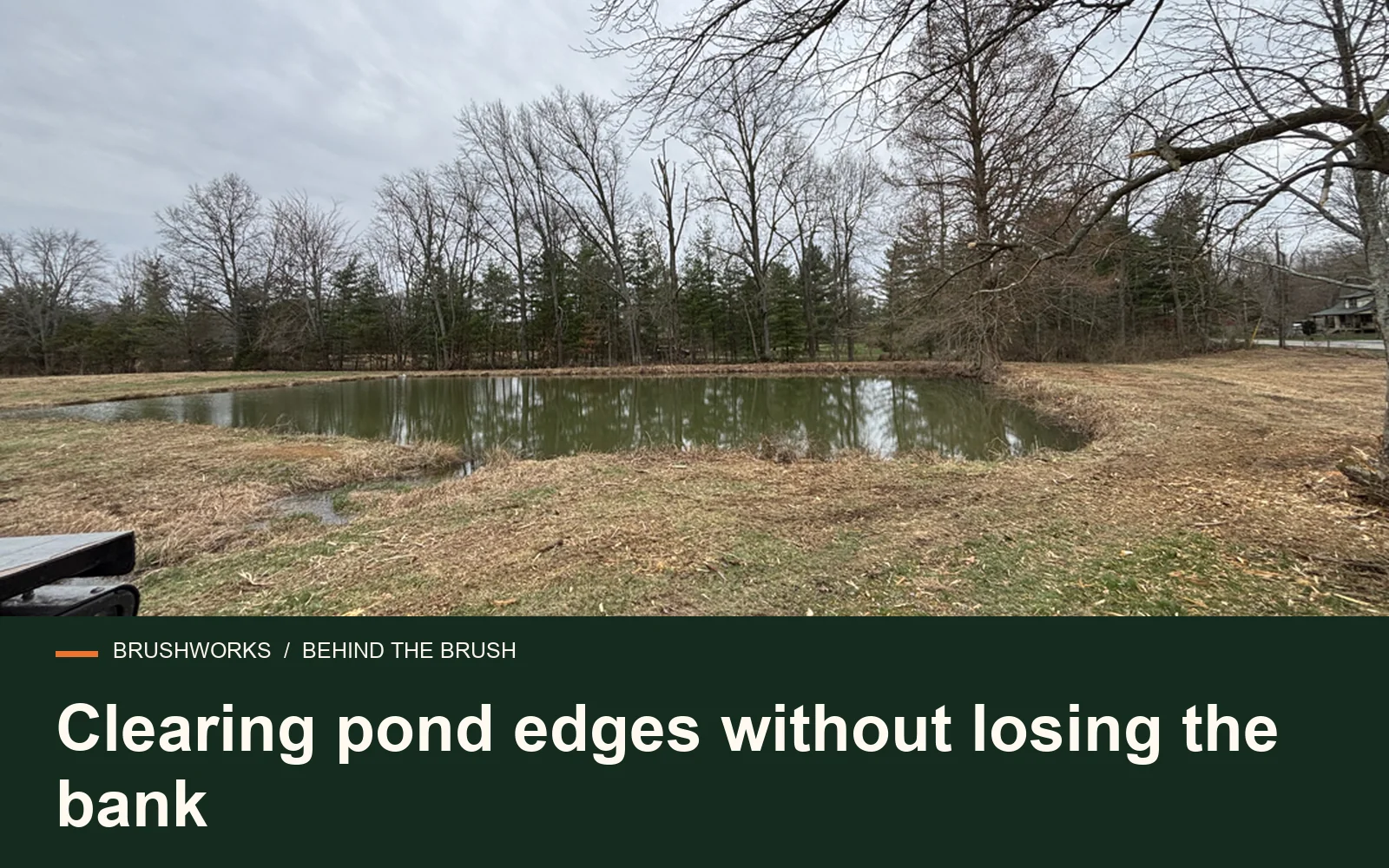
A good pond clearing job should make the water usable and the site easier to maintain. You should be able to walk the planned route, see the dam and spillway, reach the fishing or seating spots, and mow or manage the edge without fighting thorns every ten feet. You should also still have enough stable vegetation to protect the bank.
Expect mulch where woody brush was processed. That layer can help soften foot traffic and protect soil, but it should not be piled in drainage paths or pushed into the water. If a finished lawn edge is the goal, follow clearing with grading where needed, seed, straw, and a maintenance plan.
The honest answer is that clearing is the first move, not the final chapter. Around ponds, regrowth control matters. Cut honeysuckle and willow once and they will try to come back. Plan for mowing, spot treatment, seeding, or follow-up clearing before the bank disappears again.
Agree on the handoff
Before work begins, define what the next person needs to find on site. A rough mulched opening may still contain roots, stump remnants, and uneven ground. Grading, structural preparation, planting, surfacing, and specialist tree work are separate unless explicitly included.
Keep the marked work map with the quote. At completion, compare the limits and finish, document any follow-up, and decide who will maintain the area. Photos help record the result, but they do not replace checking the ground and access.
Plan the work for your property
Send the site address, recent photos, a marked clearing area, and the finish you want. We can discuss where clearing fits and what needs a different trade.
Discuss your project → Explore pricing