
Clearing Land for Wildlife Habitat Improvement Ohio: Better Cover, Food, Trails, and Edge Habitat
Good wildlife habitat is not a clean-shaved lot. It is a property with food, cover, travel routes, water, sunlight, and enough access that you can manage it without fighting through a wall of brush every time.
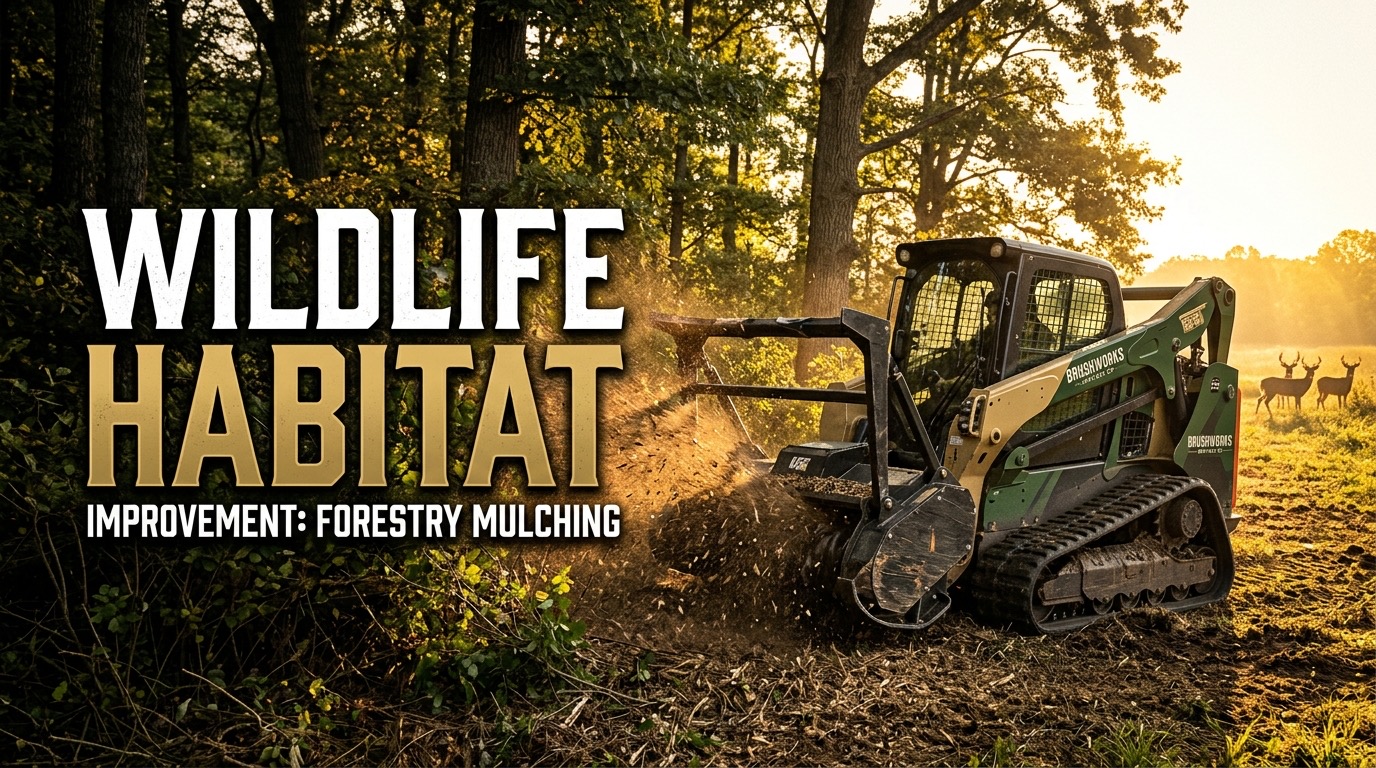
Clearing land for wildlife habitat improvement in Ohio takes a different mindset than clearing for a house pad or parking lot. The goal is not to erase the rough ground. The goal is to make the rough ground work better.
That might mean cutting a trail through a tangled field edge, opening a pocket for a food plot, releasing white oaks from honeysuckle, or feathering the woods into the field so deer and turkey have cover instead of a hard wall. On some properties, the best move is removing invasive brush. On others, it is leaving the messy bedding area alone and only clearing access around it.
Brushworks sees this across Greater Cincinnati and southwest Ohio: old pasture choked with autumn olive, creek bottoms full of honeysuckle, field edges wrapped in grapevine, and wooded acres where the good trees are alive but buried. Those places can hold wildlife. They just need to be opened with a plan.
Start with the wildlife, then the machine
Before cutting starts, decide what the property should do. A deer hunting tract, a family walking trail, a pollinator opening, a turkey nesting edge, and a small farm wildlife strip all need different clearing choices.
If the goal is deer habitat, think about bedding, food, water, wind, pressure, and travel routes. Deer use cover differently than people expect. They may prefer the ugly corner with briars and saplings over the prettiest open woods on the farm. Clearing that bedding cover flat can make the property look better and hunt worse.
If the goal is turkeys, sunlight and ground-level structure matter. A dark understory with bare dirt under invasive shrubs does not feed much. Opening the canopy edge, reducing invasive brush, and letting grasses, forbs, insects, and native plants come back can help.
If the goal is general habitat, variety wins. Ohio wildlife usually benefits from a mix of woods, brush, openings, edge, water, mast trees, grasses, and travel cover. A property that is all one thing is easier to describe, but it is often less useful to wildlife.
What selective clearing can fix
Many Ohio properties are not short on growth. They are short on the right kind of growth. Bush honeysuckle, autumn olive, multiflora rose, grapevine, callery pear, tree of heaven, and low-value saplings can form a thick layer that blocks light and keeps better plants from coming back.
Selective clearing can open that layer without removing everything that makes the property valuable. It can expose old trails, widen field edges, create small openings, free up mast trees, and make room for controlled regrowth. When sunlight reaches the ground, the site has a chance to produce browse, grasses, wildflowers, and seed-bearing plants instead of a dead zone under invasive brush.
The word selective matters. A forestry mulcher can remove a lot of material fast, so the plan has to be clear. Mark trees worth keeping. Identify wet areas, creek buffers, bedding thickets, and travel funnels. Decide where access should go before the machine arrives.
Improving habitat on rough Ohio land?
Send photos, access notes, and what you want the property to support. Brushworks can help open the right trails, clear the right brush, and leave the pieces wildlife still need.
Build trails that help management, not just movement
Trails are usually the first habitat clearing project because they make every later project easier. If you cannot reach the back field, creek bend, food plot, or stand location without crawling through briars, you will not manage it often.
A good habitat trail is not always the straightest line. It should follow workable ground, avoid wet holes, respect slopes, and stay wide enough for the equipment that will maintain it later. A trail that only fits a person today may need to fit a mower, UTV, seed spreader, sprayer, or small tractor next year.
For hunting properties, trail placement also affects pressure. A trail cut through the middle of bedding cover may be convenient, but it can push deer out of the area. A trail tucked along a contour, field edge, or downwind side can give you access without blowing up the reason the wildlife used the property in the first place.
Brushworks often clears trails as part of a larger plan: main access first, then smaller lanes to openings, blinds, stand sites, or food plot edges. The best trail system feels boring when you use it. You get where you need to go without tearing up the ground or alerting every animal on the place.
Create edge instead of hard borders
Wildlife likes edges because edges offer choices. A hard line between open field and mature woods gives animals fewer choices. A feathered edge with low cover, shrubs, saplings, grasses, and openings gives them food, shade, escape cover, and travel structure.
Many Ohio fields have edges that are too abrupt or too choked. The woods start as a wall of honeysuckle and dead limbs. Deer may travel it, but the ground under it can be bare. Turkeys do not get much insect life there. Native plants cannot compete because the light is gone.
Habitat clearing can soften that border. Remove invasive brush in sections. Keep useful native shrubs and young trees where they fit. Create pockets of sunlight. Leave some cover. The result should look a little uneven. That is usually a good sign.
Do not turn every edge into lawn. A mowed strip is useful for access and maintenance, but wildlife needs cover close by. The trick is to clear enough for use while keeping enough structure for animals to feel safe.
Food plots need more than an opening
Food plots are one of the biggest reasons Ohio landowners call for clearing. The clearing is only the beginning. A plot needs sunlight, soil contact, drainage, access, and a plan for what grows after the brush is gone.
Small hidden plots can work well if they get enough sun and are not carved out of a wet hole. Long narrow plots can work along trails or field edges, but they need room for equipment to turn and maintain them. Larger destination plots need better access, more soil prep, and a way to keep deer from eating every young plant before it gets established.
When clearing for a food plot, save useful mast trees near the edge when possible. White oak, red oak, hickory, persimmon, and other food-producing trees can make a plot more attractive. Dead, dangerous, or invasive trees are a different story. Those should be handled before they fall into the opening later.
After mulching, some sites can be seeded with minimal additional work. Others need stump cleanup, grading, lime, fertilizer, herbicide, or repeated mowing. The worse the invasive pressure, the more important the follow-up plan becomes.
Do not erase bedding cover by accident
Landowners often want the thickest mess cleared first because it looks the worst. Sometimes that is the right call. Sometimes it is where the deer bed, where rabbits escape, where songbirds nest, or where young wildlife hides.
Good habitat work asks why a thicket exists before removing it. Is it invasive honeysuckle with bare soil underneath? Is it multiflora rose that blocks every trail? Is it native sapling growth that gives deer security? Is it a wet corner that should stay rough because equipment would rut it anyway?
There is nothing wrong with opening a mess if the mess is keeping the property from being used. Just do it in pieces. Leave pockets. Cut travel lanes. Create small openings. Keep screening cover where it helps wildlife and where it helps you enter the property quietly.
Release the trees worth keeping
Not every tree needs to stay, and not every tree needs to go. Habitat improvement often means giving the right trees more room. A good oak buried in grapevine and honeysuckle may be alive but under stress. A walnut, hickory, persimmon, or healthy mast tree may need brush cleared around it so the crown has space and the ground below gets light.
At the same time, some trees make habitat work harder. Tree of heaven, callery pear, dead ash, boxelder in the wrong place, and damaged leaning trees may be better removed. Vines can also be a problem when they climb into the canopy and pull down good trees.
Tree release is slow-looking work, but it pays off. Instead of clearing an opening and hoping wildlife finds it, you keep the food sources already working and improve the space around them.
Mind water, slopes, and creek bottoms
Ohio habitat often follows water. Creeks, draws, pond edges, seeps, and low swales can be valuable. They can also be easy to damage with bad timing.
Clearing near water should be careful. Keep enough root structure and vegetation to hold banks. Avoid driving through soft bottoms when the ground is wet. Open access where it makes sense, but do not turn a shaded creek buffer into a bare chute that erodes after the next storm.
On steep ground around Cincinnati, hillside clearing needs the same respect. A remote-controlled mulcher or careful tracked machine can open slopes that hand crews hate, but the finish still matters. Leave cover where it slows water. Use trails that follow the land instead of running straight downhill. Think about where rain will go after the brush is removed.
Timing habitat clearing in Ohio
Late fall through early spring is often the cleanest window for habitat clearing. Leaves are down, visibility is better, ticks are quieter, and frozen or firm ground can reduce rutting. It is also easier to see trails, rub lines, old fences, wet areas, and the shape of the woods.
Spring and summer work can still make sense, especially for urgent access, invasive control, storm cleanup, or projects tied to planting windows. The main caution is disturbance. Ground-nesting birds, fawns, and other young wildlife may be present. Wet soil can turn a good trail into a rut. Poison ivy, ticks, and wasps are more active.
If your project is flexible, plan the heavy clearing outside the most sensitive windows and use the growing season for follow-up mowing, spot treatment, seeding, or maintenance. Habitat work is rarely one and done. The first clearing sets the table. The next season shows what wants to come back.
Plan for regrowth before it happens
Regrowth is not failure. In habitat work, regrowth can be the point. Fresh browse, young shoots, grasses, forbs, and low cover can be exactly what the property needs. The issue is whether the right plants come back and whether you can manage them.
After clearing honeysuckle, autumn olive, or multiflora rose, expect sprouts and seedlings. Mulching knocks the top growth down, but roots and seed banks may respond. Some sites need herbicide treatment by a qualified applicator. Some need repeated mowing. Some need native seeding or planting. Some need a follow-up pass a year later.
The best time to decide is before the first pass. If a cleared trail cannot be mowed later, it may close again. If a food plot cannot be reached with seed or lime, it may never perform. If an opening is left as bare soil, it may refill with the same invasive plants. Build maintenance into the layout.
How Brushworks approaches habitat clearing
Brushworks clears land across Greater Cincinnati and southwest Ohio, including Loveland, Milford, Mason, Lebanon, Batavia, Goshen, West Chester, Hamilton County, Butler County, Warren County, and Clermont County. We work on hunting land, family acreage, old pasture, creek edges, field borders, trails, and wooded lots that need to become usable again.
We start by asking what the landowner wants the property to do. Then we look at access, slopes, drainage, invasive growth, useful trees, bedding areas, and the follow-up work needed after clearing. The machine work is important, but the plan matters more.
If you want a clean building site, we can clear it clean. If you want better wildlife habitat, we do not treat the whole property like a parking lot. We open the parts that need opened, leave the cover that still has a job, and make sure you can get back in to maintain it.
Frequently asked questions
Does clearing land help wildlife habitat?
Yes, when it is done selectively. Clearing can open sunlight, create edge cover, improve travel lanes, remove invasive brush, and make room for food plots or native plants. Stripping every tree and every shrub usually hurts habitat. The best work keeps useful cover and removes the growth that is choking the property.
What should be cleared first for deer habitat in Ohio?
Start with access trails, invasive thickets, closed field edges, and areas where sunlight needs to reach the ground. Keep bedding cover, mast trees, creek buffers, and travel pinch points unless there is a clear reason to change them.
Can forestry mulching make good wildlife habitat?
Forestry mulching can be a good first step because it opens dense brush without hauling debris away. It can create trails, feather edges, release good trees, and reset overgrown fields. Follow-up mowing, seeding, spraying, or planting may still be needed to guide what grows back.
When is the best time to clear wildlife habitat in Ohio?
Late fall through early spring is often best because leaves are down, the ground may be firm or frozen, and wildlife pressure is lower. Avoid unnecessary disturbance during nesting and fawning windows when possible, and work around wet soil so trails and openings do not become rutted.
Should I clear all honeysuckle for wildlife?
Bush honeysuckle is invasive and often worth removing, but the replacement plan matters. If you remove a dense screen and leave bare soil, the site may grow back in weeds or more invasives. Pair honeysuckle removal with native cover, controlled access, mowing, seeding, or follow-up treatment.
Related articles
Creating Food Plots for Deer Ohio
How to clear the right ground for plots that deer will actually use.
Hunting Land Management Ohio
Trail systems, stand access, habitat structure, and property layout for hunters.
Clearing Brush Around Ponds Ohio
How to open pond edges without wrecking the bank or losing useful cover.
Ready to turn overgrowth into better habitat?
Send the address, photos, and what you want the land to support. Brushworks can help clear the right areas and leave the pieces wildlife still need.