
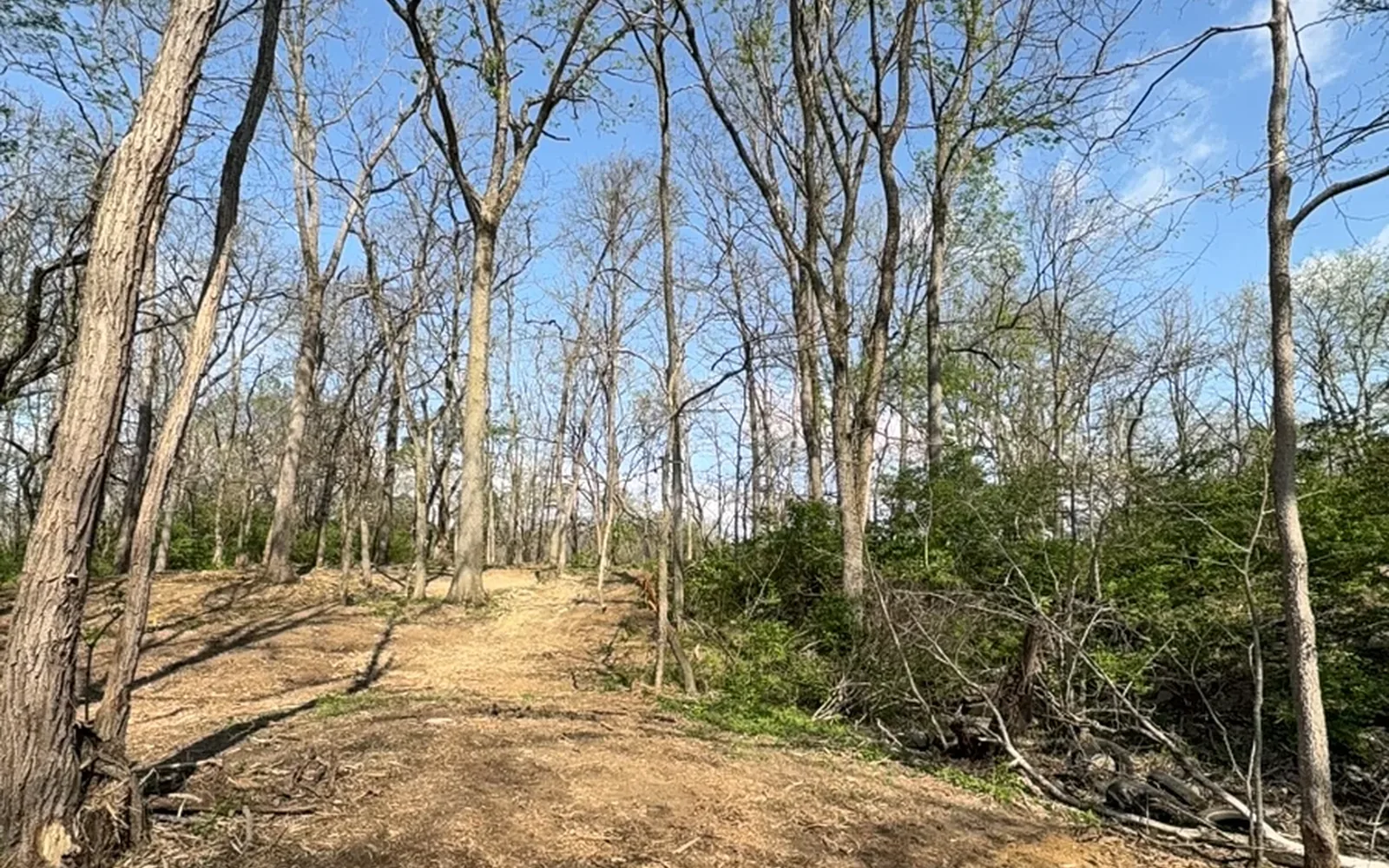
Forestry Mulching for Steep Driveway Access Cincinnati
A steep driveway is hard enough when it is clear. Add honeysuckle, saplings, washed-out edges, and blind turns, and the access problem starts before the gravel truck ever shows up.

Steep driveway access is common around Cincinnati. A lot that looks simple from the road may climb hard to a house site, drop into a wooded hollow, cross a swale, or wind through a narrow tree line before it reaches usable ground. In Hamilton County, Clermont County, Warren County, Butler County, and the rural edges around the city, many driveways started as farm lanes, logging paths, old gravel tracks, or rough cuts through brush.
When those routes grow in, they stop working. Branches scrape trucks. Vines catch mirrors. Honeysuckle hides the ditch. Saplings push into the tire path. Delivery drivers refuse the climb. A trailer cannot make the turn. A gravel contractor cannot see the road base. A landowner may technically have access, but using it feels like a chore every time.
Forestry mulching can be a good first step. It clears the brush, small trees, vines, and crowded understory along the route so the driveway can be inspected, improved, widened, ditched, graveled, or maintained. The machine grinds vegetation in place instead of dragging piles down a hill. Done with care, it opens the route without stripping every tree off the slope.
The word to keep in mind is access. Mulching does not build a finished driveway. It does not fix grade, compact stone, install culverts, or solve drainage by itself. It gives the driveway work room. On steep ground, that matters.
Need steep driveway access cleared?
Send photos from the road, halfway up the drive, and the top of the route. Brushworks can help figure out what needs clearing before gravel, grading, gates, or regular property use.
Start with the driveway's job
Before the first tree comes down, decide what the driveway needs to handle. A weekend cabin lane is different from a daily residential driveway. A route for a pickup is different from a route for concrete trucks, gravel trucks, moving vans, septic equipment, fire trucks, or a truck with a trailer.
The finished use affects the clearing width, turning room, sight lines, and drainage work. If the driveway only needs occasional UTV access, a narrow cleared route may be enough. If it needs to carry delivery trucks in wet weather, the route needs more room and a better base. If the property will be built on later, the driveway may need temporary construction access before the final drive is installed.
Steep routes punish vague planning. If the route is too narrow, trucks slide toward brush or scrape trees. If the turn is too tight, trailers jackknife or chew up the inside edge. If the ditch is hidden, water runs down the tire path and takes the gravel with it. Clearing should make the next step easier, not lock in a bad driveway shape.
Clear more than the tire tracks
A common mistake is clearing only the exact path where tires already run. That can make the driveway look open for a week, but it still leaves the real problems in place. A steep drive needs room for mirrors, doors, trailers, drainage, snow or storm cleanup, and safe correction if a driver gets off line.
That does not mean every driveway needs to become a highway through the woods. It means the cleared corridor should match the work the drive has to do. On a steep Cincinnati driveway, a few extra feet on the uphill side may expose a ditch or give room to cut back leaning brush. A few extra feet on the downhill side may improve visibility, but it may also expose a slope that needs erosion control. Each side matters for a different reason.
Selective clearing helps here. Good trees that hold a bank or frame the driveway may stay. Brush, vines, saplings, and deadwood that close the route can go. The result should feel like a usable lane, not a raw scar through the property.
Slope changes how the machine works
Forestry mulching on a slope is not the same as mulching flat field edges. The operator has to think about traction, turning room, wet soil, hidden stumps, loose rock, and the machine's working angle. A slope that feels fine in dry weather can become greasy after rain, especially on Cincinnati clay.
That is why the access route into the job matters as much as the clearing area. The machine needs a safe way in and out. It needs space to turn without sliding into a ditch or crossing a soft shoulder. It needs enough visibility to avoid old wire, buried junk, washouts, and abrupt grade changes hidden under leaves.
Some steep routes can be mulched directly. Others need a staged approach, starting at the bottom and opening small sections at a time. Some are too steep, wet, narrow, or unstable for a normal clearing plan and need another contractor or different equipment involved. A good answer is based on the actual ground, not a promise made from one photo.
Drainage is the part people notice later
On steep driveways, water is usually the long term problem. It runs down the easiest path. If the driveway becomes that path, gravel moves, ruts form, edges wash out, and the bottom of the hill turns into a mess. Brush can hide the problem for years because you cannot see the ditch, the culvert, or the low spot until the vegetation is gone.
Clearing the route should expose where water already wants to go. Look for old ditch lines, small gullies, damp soil, stains across the drive, buried culvert ends, and places where leaves pile up after storms. If the route crosses a swale, creek, or wet weather drainage path, treat that as a design issue, not an afterthought.
Mulch on the ground can reduce bare soil exposure, but it will move if concentrated water is running down the slope. It is not a replacement for proper ditching, crowned gravel, water bars, culverts, or grading. In many cases, the best sequence is clearing first, drainage planning second, gravel and finish work after that.
Sight lines matter at the road
The steepest part of a driveway is sometimes not the biggest safety issue. The entrance at the road may be worse. Cincinnati area roads can be narrow, curved, shaded, and fast. If brush blocks the view when a vehicle pulls out, the driveway feels unsafe even when the surface is good.
Forestry mulching can open the entrance by removing brush and low growth near the apron, fence line, ditch, or first bend. That can help drivers see oncoming traffic and help delivery trucks find the drive. It can also make the entrance easier to plow, mow, and maintain.
Do not assume the road edge is yours to clear without checking. Work near public right-of-way, utilities, culverts, mailboxes, signs, and neighboring property needs care. If the entrance is close to a county road, township road, or state route, confirm what can be touched and what needs permission.
Mark what stays before the slope is opened
Steep wooded driveways often have trees that are worth saving. Some provide shade. Some screen the house from the road. Some help hold the slope. Others are in the way, dying, leaning over the drive, or wrapped in grapevine. The difference can be hard to see when the understory is thick.
Walk the route before clearing and mark trees to keep. Mark trees that need a conversation. Mark the planned driveway centerline if it is not obvious. Flag the top edge, bottom edge, turnouts, gate locations, and any future utility route. If the driveway contractor has a preferred width or alignment, get that information before mulching starts.
Property lines matter too. A steep route may run close to a neighbor, an old fence, a shared lane, or an access easement. County mapping can help with orientation, but it is not a survey. If the clearing line will be close, confirm it.
Hidden utilities and old driveway debris are common
Old access lanes collect surprises. Brush can hide drain tile, old cable, private electric, shallow water lines, gas lines, abandoned fence, metal posts, concrete chunks, wire, and buried trash. Steep driveways also tend to have improvised fixes: broken concrete dumped in ruts, old culverts extended with mismatched pipe, logs used as edge support, and stone pushed into soft spots over the years.
Tell the clearing crew what you know. Mark wells, septic areas, propane lines, downspout drains, sump discharge, invisible fence, lighting wire, gate power, and anything else that may cross the route. Public utility marking is useful, but it may not locate private lines after the meter or tank.
Mulching equipment is tough, but it is not meant to eat metal, cable, concrete, or utility lines. The more hidden conditions are marked before work starts, the cleaner and safer the job will be.
Think about the top and bottom of the drive
A steep driveway usually fails at transition points. The bottom washes out where runoff meets the road or ditch. The top gets tight where the drive reaches a house, barn, pad, parking area, or turnaround. A long cleared lane does not help much if there is nowhere to turn around at the end.
At the bottom, look at the apron, culvert, road ditch, mailbox, gate, and sight lines. At the top, look at parking, delivery access, firewood access, trailers, emergency vehicles, and the next project on the property. Clearing may need to widen a landing, open a turnaround, or connect the driveway to a building site or trail.
This is especially important for rural and semi-rural properties east and north of Cincinnati, where a driveway may be the only practical access to the back half of the land. If the top of the drive is still boxed in by brush, the route is only half open.
What forestry mulching leaves behind
Forestry mulching turns brush and small trees into a rough mulch layer. On driveway access jobs, that is usually a benefit. It reduces piles, keeps the route passable during the job, and leaves the property cleaner than cut brush stacked along the slope.
The finish is still a clearing finish, not a driveway finish. There may be small stumps near grade, mulch on the surface, uneven ground, exposed roots, and rough shoulders. If the plan is gravel, concrete, asphalt, or heavy construction traffic, the next contractor may need to grade, scrape, shape, compact, install stone, and handle drainage.
That distinction saves arguments. Mulching opens the route so better driveway work can happen. It should not be sold or understood as a complete driveway build.
When hand cutting or tree service work may be needed
Some pieces of a steep access job do not belong to a mulcher. Large trees near the house, trees leaning over utility lines, hazard trees at the road, and trees that need directional felling may require a tree service. Tight spots around gates, walls, finished landscaping, or parked equipment may need hand cutting.
That does not make forestry mulching the wrong tool. It just means the project may have phases. Brushworks can clear the understory and small growth along the route, making it easier for a tree crew, excavator, gravel contractor, or fence installer to do their part. On overgrown driveways, the first win is often visibility.
If a contractor tells you they can do everything on a steep, tight, wooded driveway without seeing the site, slow down. Slopes deserve a real look.
How to send photos for a better quote
Good photos make driveway access quotes much more accurate. Start at the road and photograph the entrance from both directions if traffic conditions are safe. Then photograph the drive looking uphill or downhill, the tightest turns, the worst brush, any washed areas, the top landing, and the route the machine would use to reach the work.
Wide photos are better than closeups. A close photo of honeysuckle proves there is brush, but it does not show slope, drainage, access, or turning room. A marked screenshot or map helps too. Draw the route, the must-clear area, possible turnouts, and any property line or easement concerns.
Include the goal. Are you trying to get a gravel contractor in? Open access to a building site? Stop branches from scraping trucks? Make the driveway safer for daily use? Reach the back field? The same slope can be cleared differently depending on the answer.
A steep driveway is part of the property, not just a path
When steep driveway access works, the whole property works better. Contractors can reach the site. Owners can haul tools, firewood, trailers, and materials. Emergency access is less stressful. The route is easier to inspect after storms. The first impression from the road improves because the entrance looks cared for instead of abandoned.
The best projects are practical. Clear what blocks access. Save what helps the slope and the look of the property. Expose drainage before spending money on stone. Give vehicles and equipment enough room to use the drive without fighting brush every trip.
For Cincinnati and southwest Ohio properties, that is the point of forestry mulching for steep driveway access. It does not pretend to be the final driveway. It makes the next step possible.
Frequently asked questions
Can forestry mulching clear a steep driveway route?
Often, yes. Forestry mulching can clear brush, vines, saplings, and small trees along a steep driveway route when the machine has safe access and enough room to work. Very steep, wet, or unstable ground may need a different approach or extra planning.
Does forestry mulching make a steep driveway ready for gravel?
No. Mulching opens the route and removes vegetation, but gravel prep usually needs grading, base stone, drainage work, compaction, and sometimes culverts. Clearing should happen before that work so the driveway contractor can see the ground.
What should I mark before clearing steep driveway access?
Mark the planned driveway centerline, property boundaries, trees to keep, culverts, ditches, private utilities, septic areas, wells, gates, overhead wires, and any wet or soft spots. If the route is close to a boundary, confirm the line first.
Will mulch wash down a steep driveway slope?
It can move if water is concentrated on the slope. A good plan watches ditch lines, cross slope, culverts, and runoff before clearing. Mulch helps cover soil, but it is not a substitute for proper drainage.
How wide should steep driveway access be cleared?
The right width depends on the finished driveway, vehicles, turnouts, drainage ditches, snow or storm cleanup, and equipment access. Many routes need more than the tire path cleared so trucks, trailers, and maintenance equipment can use the drive safely.
Related articles
Clearing Overgrown Driveway Entrances Cincinnati
How to open hidden entrances, sight lines, gates, culverts, and roadside brush before access becomes a problem.
Land Clearing for Farm Lanes Ohio
A practical guide to clearing rural lanes for tractors, trucks, fields, gates, and long term maintenance.
Land Clearing for Utility Trenching Ohio
What to clear before utility crews trench electric, water, fiber, gas, drainage, or private service lines.
Open the route before you build the driveway
Use instant pricing for a starting point, or send driveway photos and the finished access goal so Brushworks can help plan the clearing work.
