
Land Clearing for Equipment Access Roads Ohio
Most rural projects start with the same problem: the equipment cannot reach the work. Before the barn pad, trench, field cleanup, pond work, or gravel road comes the access road.
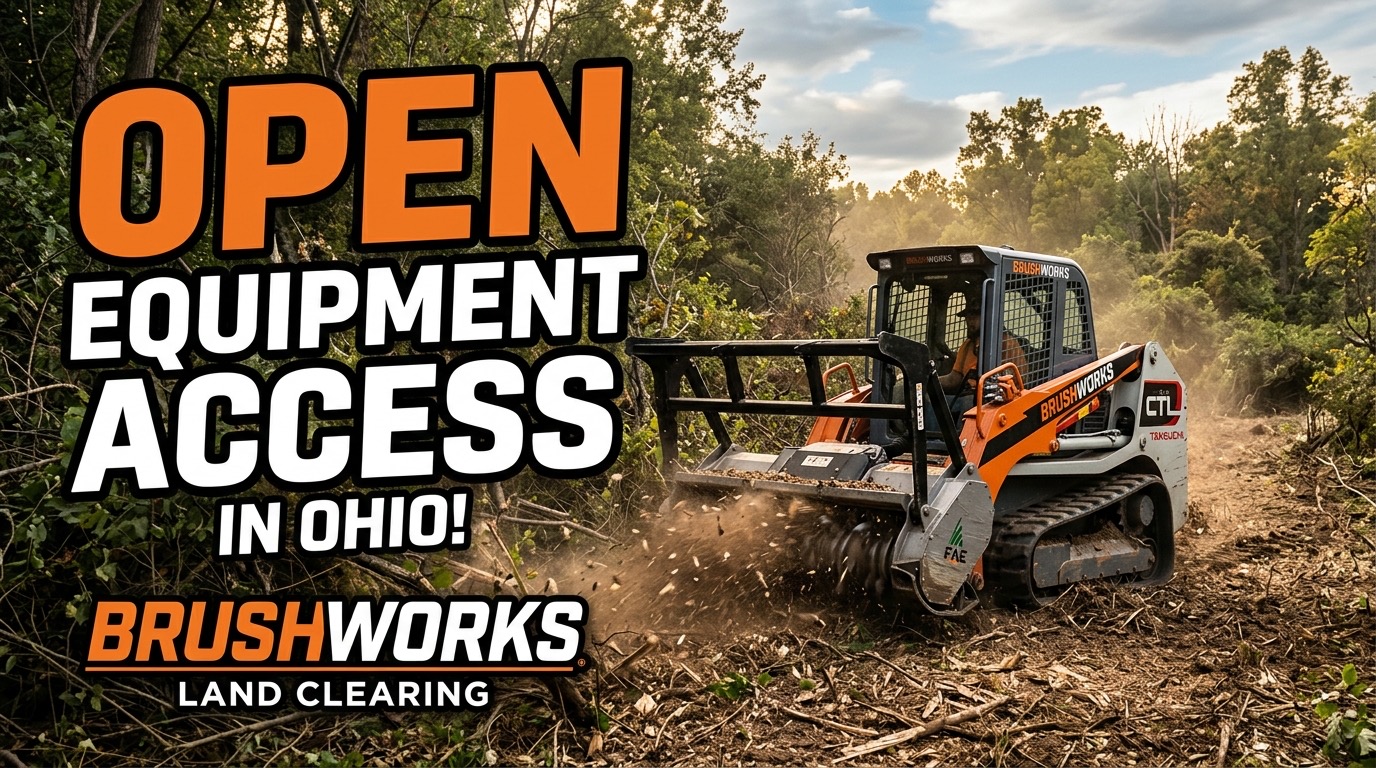
Equipment access roads are not fancy. They do not need a gate sign, a perfect crown, or a name on a map. They need to let trucks, tractors, skid steers, excavators, gravel crews, utility contractors, and landowners get to the part of the property where work has to happen.
That sounds simple until the route is choked with honeysuckle, briars, grapevine, soft shoulders, low limbs, dead ash, hidden fence, and saplings growing in the tire path. Around Cincinnati and across Ohio, a lot of rural access starts as an old farm lane, logging trail, fence row opening, driveway spur, or mowed path that has not seen regular use in years. Once it grows in, every next step gets harder.
Forestry mulching can open those routes without turning the whole property into bare dirt. The machine clears brush, vines, saplings, and small trees in place, leaving a mulch layer instead of piles of brush dragged to the side. For many Ohio properties, that is the clean first step before grading, stone, drainage work, utility trenching, building prep, or regular equipment traffic.
The goal is not to make the road look big. The goal is to make it useful.
Need an equipment road opened?
Send photos from the entrance, the tightest section, and the destination. Brushworks can help figure out what needs clearing before trucks, tractors, utility crews, or builders show up.
Start with what has to travel the road
A road for a pickup is different from a road for a dump truck. A road for a compact tractor is different from a road for a septic installer, concrete truck, well driller, excavator, or hay equipment. Before clearing starts, decide what the access road needs to carry now and what it may need to carry later.
If the route only needs UTV or small tractor access, the clearing can stay tighter. If the route needs to handle gravel trucks, trailers, material delivery, or construction equipment, the corridor needs more room. Mirrors, buckets, trailers, outriggers, dump beds, and turning radiuses all matter. So does room to correct if a tire drops toward the shoulder.
This is where many access roads get underbuilt. The landowner clears a narrow path, then the first contractor says the truck cannot make the turn or the branches will tear up the cab. The road may look open when you walk it, but equipment changes the scale.
Clear the working corridor, not just the tire path
The tire path is only part of an equipment road. A useful corridor also has shoulder room, overhead clearance, space for drainage, and enough width at turns and gates. That does not mean cutting a road twice as wide as needed. It means clearing for the job the route has to do.
In wooded Ohio ground, the problem is often side pressure. Honeysuckle, young maples, locust sprouts, briars, and grapevine close in from the edges. Low limbs catch on mirrors and lights. Dead ash drops branches after wind. Fence rows hide old wire and posts close to the lane. The road still exists on paper or memory, but it no longer works for real equipment.
A forestry mulcher can reopen the corridor and make the route readable again. You can see the slope, the ditch, the soft spots, the old stone, the bad turns, and the trees worth saving. Once the route is visible, the next contractor can make better decisions.
Match the route to the destination
An equipment road should end somewhere useful. That may be a barn pad, field edge, cabin site, pond site, utility easement, back acreage, septic area, hunting access point, gravel laydown area, or future house site. If the road opens the route but leaves no place to turn around, unload, stage material, or park equipment, the project still has a bottleneck.
Think about the last 50 to 100 feet. Can a truck turn around at the end? Can a trailer back in without jackknifing into brush? Is there room for a gravel pile, roll-off, fuel tank, job trailer, or stack of pipe? Can equipment sit off the travel lane while another vehicle passes?
Small landing areas matter. A little extra clearing at the end of the road can save hours of awkward backing and hand work later. It can also keep trucks from tearing up field edges or making new ruts because they had nowhere else to go.
Watch water before you add stone
Ohio access roads fail when water gets ignored. Water follows the easiest path, and a cleared road can become that path if the route is low, straight downhill, or boxed in by hidden berms. Around Cincinnati, clay soils can go from hard to slick fast after rain. A road that seems fine in July may become useless in March.
Clearing should expose the drainage, not bury it. Look for small gullies, old culverts, wet weather flow, soft shoulders, water standing in ruts, and places where leaves or silt collect. If the route crosses a swale or drains a hillside, plan for that before spending money on gravel.
Mulch helps cover disturbed soil, but it is not a road base and it is not a drainage plan. Heavy traffic may still need fabric, stone, grading, ditches, culverts, water bars, or a crowned surface. Clearing first lets the road builder see what they are dealing with.
Do not let a straight line make a bad road
The shortest route is not always the best route. A straight line through brush may cross the wettest ground, climb the steepest slope, cut too close to a boundary, or force an impossible turn at the end. Equipment access roads work better when the alignment respects the property.
Use existing openings when they make sense. Old farm lanes, logging paths, field edges, and fence gaps can save clearing time. But do not follow an old route just because it is there. Some old paths were cut for small tractors or temporary use, not modern trucks and trailers.
If there are two possible routes, walk both. Look at slope, soil, trees to save, drainage crossings, neighbor boundaries, utility conflicts, and how the route connects to the road. The better route may be slightly longer but cheaper to maintain.
Mark the route before the machine arrives
Flagging saves time and prevents guesswork. Mark the entrance, centerline, destination, turns, trees to keep, trees to remove, wet spots, utility crossings, gates, fence corners, and any do-not-cross boundaries. If a contractor or engineer has a preferred alignment, get that on the ground before clearing begins.
Property lines deserve extra attention. County GIS maps are useful for planning, but they are not surveys. If the access road runs near a neighbor, shared lane, old fence, or easement, confirm the line before cutting. A road that is two feet wrong can create more trouble than the clearing job was worth.
Overhead clearance matters too. Mark low wires, tree limbs over the route, leaning trees, and areas where dump beds or equipment booms may need space. The machine on the clearing job is only one piece of the project. The road has to work for the equipment that comes after it.
Hidden hazards are common on old access lanes
Old lanes collect junk. Brush can hide wire fence, T-posts, concrete chunks, buried pipe, old culverts, cable, field tile, scrap metal, tires, stumps, washouts, and abandoned farm debris. It can also hide private utilities that will not show up in a normal public locate.
Before clearing, tell the crew what you know. Mark wells, septic systems, propane lines, private electric, water lines, downspout drains, irrigation, invisible fence, gate power, and anything else that may cross the route. If you do not know, say that too. Unknown ground should be treated with more caution.
Forestry mulching equipment is built for vegetation, not steel and concrete. Finding hazards early keeps the job cleaner and helps avoid damaged equipment, broken utilities, and expensive delays.
Selective clearing keeps the property from feeling stripped
An access road does not need to erase the woods around it. In many cases, the best road is selective. Remove the brush, vines, saplings, deadwood, and trees that block equipment. Leave healthy trees outside the corridor, especially if they help screen the route, shade a slope, or hold a bank.
This matters for rural homes, hunting properties, farm lanes, and wooded lots near Cincinnati. Owners often want better access without making the property look like a construction site from the road. A careful clearing plan can open the route while keeping the land's shape.
There are exceptions. Trees that lean over the lane, stand inside a future ditch, crowd a turn, or threaten the road after storms may need to go. Large hazard trees may need a tree service rather than a mulcher. The point is to decide with a reason instead of clearing blindly.
Plan for maintenance after the first clearing
Brush comes back if the road is ignored. Honeysuckle sprouts, locust shoots, multiflora rose, briars, and volunteer saplings can narrow an access road within a few seasons. The first clearing should make future maintenance easier.
That may mean opening enough shoulder for mowing. It may mean removing invasive shrubs at the edge instead of trimming around them. It may mean clearing sight lines at gates and road entrances so the route stays usable. For farm and recreational properties, an access road that can be mowed or touched up regularly will stay open longer than a tight tunnel through brush.
Think about who will maintain it. If a landowner plans to use a tractor, the corridor needs to fit that tractor. If a contractor will maintain it once a year, the route needs clear access for that machine. Maintenance should not require a fight every time.
When clearing is only the first phase
Land clearing is often the first step, not the whole road build. After the route is open, a grading or excavation contractor may need to shape the road, cut ditches, install culverts, bridge soft areas, remove stumps, add geotextile fabric, spread stone, and compact the surface. On wetter sites, the road may need a stronger base before heavy trucks use it.
That sequence is normal. Clearing first makes the rest of the work more accurate. It lets contractors see the grade, soil, drainage, and working room before they price or build the road. It also reduces surprises during utility trenching, barn construction, pond work, or field improvements.
Problems happen when clearing gets sold as a finished road. It is better to be plain about the scope. Forestry mulching opens the access. Road construction makes it carry weight.
Photos that help with an access road quote
Good photos answer questions that closeups cannot. Start at the public road or driveway entrance. Take a wide photo looking into the property, then photos along the proposed route, the tightest turns, the thickest brush, any wet spots, slopes, gates, culverts, and the final destination.
If the route is hard to see, mark it on a screenshot or map. A rough line is useful as long as it matches what is on the ground. Include notes about what equipment needs the road and whether the finished project needs gravel, construction access, farm use, utility access, or occasional maintenance.
For Cincinnati area properties, also mention road entrance issues. Narrow township roads, blind curves, steep aprons, ditch crossings, and tight gates can affect how a machine gets in and how future trucks will use the site.
A useful road changes what the property can do
Once equipment can reach the work, projects stop feeling stuck. A barn pad becomes realistic. A back field can be mowed. A utility trench can be laid out. A pond site can be inspected. A gravel contractor can price the route. A property owner can reach the far corner without pushing through brush every trip.
That is why equipment access roads matter. They are not the most visible part of a project, but they control everything that comes after. Clear the right route, leave the right trees, respect the drainage, and build enough room for the equipment that will actually use the road.
For Ohio landowners, that is the practical value of land clearing for equipment access roads. It turns a blocked idea into a reachable job site.
Frequently asked questions
How wide should an equipment access road be cleared?
The right width depends on the equipment, turn radius, drainage, shoulders, and whether trucks or trailers need to pass. Many rural access roads need more than the tire path opened so mirrors, buckets, trailers, and maintenance equipment have room to work.
Does forestry mulching make an access road ready for heavy equipment?
Forestry mulching clears vegetation and opens the route, but it does not build the finished road base. Heavy equipment access may still need grading, stone, culverts, drainage work, compaction, and soft spot repair.
What should be marked before clearing an equipment road?
Mark property lines, the planned route, trees to keep, utilities, wells, septic areas, culverts, wet spots, gates, fence corners, overhead wires, and the final destination. If the route is near a boundary or easement, confirm it before clearing.
Can an access road be cleared through woods without removing every tree?
Yes. Many access roads can be opened with selective clearing that removes brush, vines, saplings, and problem trees while leaving good trees outside the work corridor.
When is the best time to clear equipment access roads in Ohio?
Late fall, winter, and dry summer windows can work well depending on the site. Leaf off conditions help with visibility, while dry or frozen ground can reduce rutting. Spring can be workable, but wet Ohio clay needs extra caution.
Related articles
Land Clearing for Farm Lanes Ohio
A practical guide to clearing rural lanes for tractors, trucks, fields, gates, and long term maintenance.
Brush Clearing for Rural Property Access Ohio
How to reopen gates, trails, field edges, barns, and wooded property routes without over-clearing.
Land Clearing for Utility Trenching Ohio
What to clear before electric, water, fiber, gas, drainage, or private service trenching starts.
Open the route before the work starts
Use instant pricing for a starting point, or send the route, entrance, and destination photos so Brushworks can help plan the clearing work.