
Land Clearing for Rural Investment Properties Ohio
Rural land can look like a bargain from the road and still hide the problems that decide whether it will make money, cost money, or sit untouched for years. The first clearing pass should help you see what you actually bought.
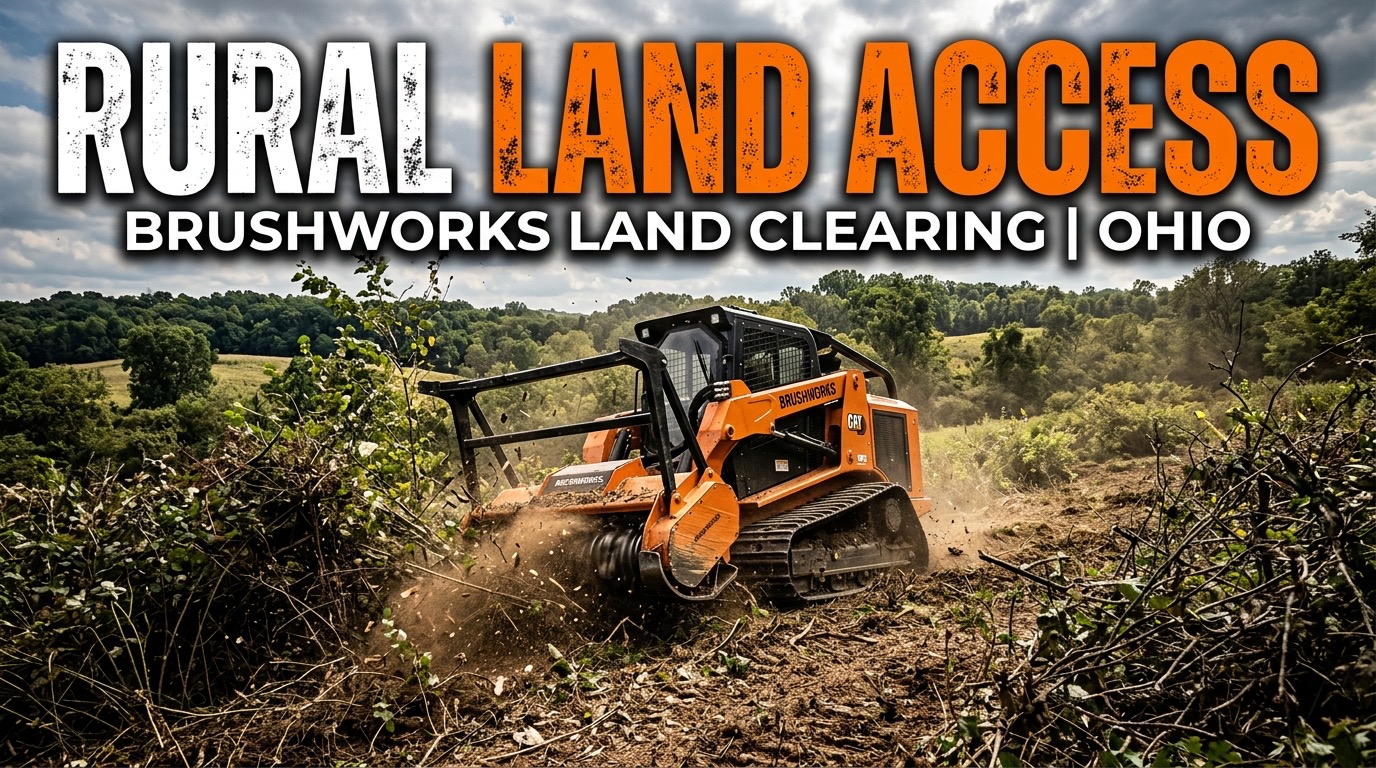
Rural investment property is a wide category. Around Cincinnati and across Ohio, it can mean a five acre wooded lot outside town, a neglected farm lane with a few old structures, a hunting tract, a future cabin site, a family parcel being cleaned up before sale, or acreage held for a later split. The common problem is simple: the land has to be accessible before anyone can make a smart decision about it.
Overgrown ground hides value, but it also hides cost. Honeysuckle can block the old entrance. Briars can close the fence row. Dead ash can sit above a lane. A low wet spot can disappear under weeds until a truck sinks into it. Old wire, dumped debris, stumps, ruts, broken culverts, and washed out crossings are all easier to miss when the only view is a wall of brush.
Land clearing for rural investment properties should not start with the biggest machine and a plan to flatten everything. That is how owners spend money before they know enough. A better first pass opens the property enough to inspect it, use it, show it, maintain it, or prepare it for the next contractor. In many cases, forestry mulching is the right first tool because it can clear brush and small trees in place without hauling piles off site.
The goal is not to make rural land look suburban. The goal is to make the land readable. Once you can drive in, walk the boundaries, see the field edges, reach the high ground, inspect the drainage, and understand the old improvements, the investment conversation changes. You are no longer guessing from parcel lines and listing photos.
Need rural investment land opened up?
Send the parcel address, photos, and a marked map. Brushworks can help open access lanes, trails, fence rows, old field edges, and first phase clearing areas around Cincinnati and across southwest Ohio.
Clear enough to understand the property
A rural parcel can be hard to judge when every edge is overgrown. The driveway may be too narrow to turn around. The best building site may be hidden behind volunteer trees. The old pasture may still be usable, but nobody can see it from the road. The rear acreage may have timber, trails, or drainage problems that do not show up until someone can reach it.
For investors, the first clearing pass should answer practical questions. Can a pickup get in without scraping both sides? Can a buyer, appraiser, contractor, or surveyor walk the land without fighting vines? Is there an old lane worth reclaiming? Are there field openings that can be brought back? Are there wet areas that should be avoided? Is the property better suited for recreation, resale, a home site, storage, pasture, or a slower hold?
That kind of clearing is selective. It opens the parts of the property that help you make decisions. It leaves areas alone when clearing them would add cost without adding useful information. On a rural investment parcel, knowing what not to clear can matter as much as knowing what to clear.
Start with access from the road
If the entrance is bad, everything else gets harder. Rural properties often have old farm drives, field entrances, shared lanes, narrow gates, hidden culverts, or steep approaches that have not been maintained. Brush grows into the sight line. Saplings close the shoulders. Vines pull down limbs. A driveway that was once usable becomes a tight slot that only works in dry weather.
Opening the entrance does several things at once. It lets vehicles reach the land. It gives contractors a place to meet and stage. It makes the property easier to show. It also reveals whether the driveway problem is mostly brush or whether the roadbed needs gravel, grading, drainage work, or culvert repair.
Do not assume the visible opening is the only option. Some parcels have an old access point buried in honeysuckle. Some have a legal access route that does not match the easiest path through the brush. If there is a recorded easement, shared drive agreement, or township requirement, sort that out before widening or changing the entrance.
Reopen lanes and trails before clearing acreage
Trails and access lanes are often the best first investment. A clear lane lets you inspect the property, reach rear corners, manage hunting access, show timber, check drainage, and bring in the next crew. It also gives the land a sense of use without committing to a full conversion.
In Ohio, many rural tracts already have old routes hiding under brush. You may find a farm lane along a field edge, a path to a barn foundation, a logging trail, a fence row access strip, or a route to a creek crossing. Reclaiming those routes is usually cheaper and cleaner than forcing a new path through the thickest part of the woods.
Good trail clearing follows the ground. It avoids wet pockets where possible, uses natural high spots, keeps turns wide enough for the intended vehicle, and leaves enough overhead clearance for equipment that may need to pass later. A lane for walking and ATV access can be narrow. A lane for a skid steer, tractor, utility truck, or gravel delivery needs more room.
Use clearing to improve due diligence
Before a rural property changes hands, gets financed, or moves into a bigger improvement plan, people need to inspect it. Surveyors need corners and lines. Soil evaluators may need access for septic planning. Builders need to see slope, access, and staging room. Fence contractors need the boundary opened. Appraisers and buyers need to understand what is usable and what is not.
Selective clearing can make that due diligence easier. It can open property corners, expose old pins if they are already known and marked, clear a path along a proposed driveway, or make room to inspect a barn, pond, creek, field edge, or old home site. It can also uncover problems early, which is better than finding them after a purchase or listing.
There is a line here. Clearing is not surveying, engineering, title work, soil testing, or environmental review. If the property has wetland concerns, stream buffers, steep erosion areas, disputed boundaries, or uncertain access rights, get the right professional involved. Brush clearing helps people reach and see the land. It does not replace the checks that protect the investment.
Fence rows and boundaries matter
Fence rows tell a lot about rural land. They show old use patterns, access points, neighbor conditions, animal pressure, tree lines, and maintenance needs. They also collect brush faster than almost anywhere else. Multiflora rose, honeysuckle, grapevine, locust sprouts, cedar, and volunteer trees can swallow old wire and make a boundary impossible to walk.
For an investment property, opening fence rows can help with surveying, resale, livestock planning, hunting access, and general maintenance. Buyers like to understand the edges. Owners like to know where gates, corners, and old wire sit before they plan new fence or pasture work.
Fence row clearing needs care. Old woven wire and barbed wire can be buried under leaves. Metal posts can sit inside shrubs. Trees may have grown through the fence. A mulcher should not be fed hidden metal. Walk what you can, mark known hazards, and be honest about areas that may need hand work before equipment can move through safely.
Drainage can decide the next use
Ohio rural land often changes character after a rain. Clay soil, old farm ditches, shallow swales, blocked culverts, pond overflow, spring seepage, and creek bottoms can make a parcel less usable than it looked during a dry showing. Brush makes drainage harder to read because it hides flow paths and low spots.
Clearing can open the view. A first pass around swales, ditch edges, culverts, pond banks, and old crossings can show where water is moving and where it is getting stuck. That helps you decide where to avoid building, where a road may need stone, where a contractor needs to look next, and which areas should stay in cover.
Be careful with drainage clearing. Do not push mulch into ditches or culvert mouths. Do not disturb creek banks just because brush is in the way. If a drainage feature is tied to a regulated stormwater system, wetland, stream, or public right of way, the owner may need guidance before changing it. Access clearing and drainage construction are different jobs.
What forestry mulching does well on investment land
Forestry mulching is a good fit for many first phase rural clearing jobs. It can grind brush, invasive shrubs, small trees, saplings, vines, and field edge growth into mulch where it stands. That means fewer brush piles, less hauling, and a cleaner route for walking or driving.
For investment properties, mulching is useful because it is flexible. A crew can open an entrance, cut a trail loop, reclaim a fence line, clean around an old barn, expose a field edge, or make a future build area easier to inspect. The mulch layer helps define the cleared route and can reduce bare soil exposure compared with scraping everything clean.
There are limits. Forestry mulching does not remove stumps below grade. It does not grade a pad, install gravel, pull buried trash, remove large logs from every site, or make wet ground dry. If the goal is a driveway, building pad, pond, septic area, or finished pasture, mulching may be the first step, not the whole project.
Avoid clearing that removes the reason people want the land
Some rural investors over-clear because they want the property to look improved fast. That can backfire. Wooded privacy, wildlife cover, mature trees, trail character, creek buffers, and screening from neighbors can be part of the value. A property that feels private and usable may sell or lease better than one that has been stripped into an exposed field.
The right clearing plan depends on the buyer or end use. A cabin buyer may want a tucked away site with a clean drive and a few trails. A small farm buyer may want field edges opened and fence lines exposed. A recreational buyer may care more about access, stand locations, and trail routes than wide open ground. A builder may need a driveway route, staging room, utility access, and a future septic area protected from damage.
When the final use is uncertain, clear in a way that keeps options open. Open the access. Reveal the useful ground. Remove the worst invasive brush. Keep good trees, buffers, and privacy where they help the property.
How clearing can help resale without promising a number
Land clearing can improve marketability when it fixes a real barrier. A buyer can walk the land. The photos show usable areas instead of a roadside thicket. The old lane is open. The property corners can be reached. A future building site can be seen. A fence contractor can quote the boundary. Those improvements can make a property easier to understand and easier to act on.
That does not mean every dollar spent on clearing comes back as a higher sale price. Rural land value depends on location, access rights, road frontage, utilities, soil, zoning, timber, terrain, water, demand, and the buyer's plans. Clearing helps most when it removes uncertainty or makes the next use more believable.
If resale is the goal, think like a buyer walking the land for the first time. They need to park safely, enter easily, see the best parts, understand the boundaries, and leave with a clear picture of what the property can become. Clearing should serve that walk.
Plan the work in phases
Phasing keeps costs under control. The first phase might be the entrance, main lane, a trail to the rear, and the fence row that needs surveying. The second phase might be opening a future cabin site, clearing around an old barn, or widening access for gravel. The third phase might be pasture reclamation, field edge cleanup, or building site prep after the buyer or owner has a firm plan.
Phasing also lets the land teach you something. Once the first lane is open, you may learn that the high ground is better than expected, the old crossing is worse than expected, or the rear field is not worth clearing yet. That is useful information. It keeps the project from turning into a guess with a big invoice attached.
For many Ohio properties, the first phase is enough to change how the land is used. Owners can inspect it, hunt it, show it, maintain it, or start planning with better information. Bigger clearing can wait until there is a clear reason.
What to send before asking for a quote
A rural clearing quote is better when the crew understands the property before arriving. Send the address, parcel number if you have it, and a map screenshot with the areas marked. Add photos from the road, entrance, gate, old lane, field edge, worst brush, wet areas, and any structures or debris.
Explain the investment goal in plain terms. Are you preparing to sell, buying during due diligence, opening a hunting tract, improving access for a future cabin, cleaning up an inherited parcel, or getting ready for fence, gravel, septic, or building work? That goal changes the clearing plan.
Also share what you already know. Mention locked gates, steep slopes, neighbor access, shared drives, underground utilities, wells, septic areas, old fence, dumped material, soft ground, creek crossings, and township or HOA concerns. Nobody expects a perfect site report. Good notes help the crew avoid surprises and price the first phase more accurately.
Where Brushworks fits
Brushworks helps Ohio property owners turn overgrown ground into usable land. On rural investment properties, that often means opening the practical parts first: entrances, lanes, trails, fence rows, access to old structures, field edges, and inspection routes. We are not there to talk you into clearing every acre. We are there to help make the property usable enough for the next smart decision.
For Cincinnati area owners, buyers, sellers, and land managers, a good first clearing pass can make a rural parcel easier to walk, easier to show, easier to maintain, and easier to plan. It can also expose the problems that need a different contractor before money gets spent in the wrong place.
If you are looking at rural land and cannot see past the brush, start with the basics: access, boundaries, drainage, trails, and the first area that needs to be used. Clear those well, then decide what comes next.
Frequently asked questions
Should I clear rural investment land before I know the final use?
Usually, clear in phases. Open access, trails, corners, and inspection areas first. Wait to clear building pads, pasture, or larger acreage until the next use is clear.
What clearing work helps an Ohio rural property show better?
Buyers and partners need to see access, boundaries, usable openings, drainage issues, old structures, and problem brush. Selective clearing can reveal those areas without stripping the property bare.
Is forestry mulching useful for land investors?
Forestry mulching is often useful because it can reopen overgrown access lanes, trails, fence rows, field edges, and future work areas while keeping most soil in place.
Can land clearing improve rural property value?
It can improve marketability when it solves access, visibility, maintenance, or usable ground problems. It is not a guarantee of a higher sale price, and over-clearing can hurt the property.
What should I send for a rural investment property clearing quote?
Send the address, parcel map, photos, access notes, known wet areas, target use, and a marked screenshot showing the first areas you want opened or inspected.
Related articles
Clearing Land for Rural Home Sites Ohio
How to clear rural home sites for access, utilities, drainage, builders, driveways, and septic planning.
Brush Clearing for Rural Property Access Ohio
How to reopen rural access lanes, gates, trails, field edges, barns, and wooded property routes.
Overgrown Acreage Cleanup Cincinnati
A practical guide to cleaning up overgrown acreage for access, fence lines, trails, and drainage.
Ready to open up rural investment land?
Use instant pricing for a starting point, or send a marked map and site photos so Brushworks can review the first clearing phase.