
Before you start
- Choose the field's use before clearing.
- Identify debris and wet areas.
- Plan soil testing, establishment, and regrowth management.
Field reclamation is different from simple mowing
A finish mower or brush hog is built for grass, weeds, and light brush. It is not built for a field full of four-inch saplings, tangled grapevine, thorny rose canes, old fence wire, and stumps from trees somebody cut ten years ago. That is where a lot of Ohio property owners get stuck. They know the land should be usable, but the first pass is too rough for farm equipment and too much work for a chainsaw weekend.
Overgrown field reclamation is the first reset. The goal is to knock back woody growth, open the ground, expose hazards, and make the field maintainable again. That may mean pasture, food plot, equipment yard, garden ground, a future home site, or just clean acreage that does not swallow a person by July.
The mistake is treating reclamation like finish maintenance. If the field has been ignored for years, the first pass needs heavier equipment and a plan for what happens next. Once the brush is gone and the rough material is mulched, normal mowing or seasonal maintenance gets a lot easier.
What takes over old fields in Ohio
Around Cincinnati, Clermont County, Warren County, Butler County, and the rest of southern Ohio, old fields usually grow into a predictable mess. The edges fill first. Honeysuckle, autumn olive, multiflora rose, and grapevine creep in from the tree line. Then young maple, box elder, cedar, locust, elm, and cottonwood start popping up in the open. If the site stays wet, willow and sycamore sprouts may show up. If the soil is dry and neglected, thorny locust and rose can make it nearly impossible to walk.
Some of that growth looks harmless when it is knee high. Give it five years and it changes the property. The canopy closes. Grass dies out. Deer beds and trails show up. Ticks increase. Fence lines disappear. Old drainage swales clog with debris. What used to be a field becomes a young woods with a nasty understory.
A brush hog can no longer make the first pass safely
Saplings are too thick to mow without breaking equipment
Start with the future use, not the brush
Before clearing starts, decide what the reclaimed field needs to become. A pasture wants different treatment than a house site. A deer plot does not need the same finish as a gravel equipment pad. A field that will be mowed twice a year can keep more stumps and rough edges than a field that needs to be drilled, fenced, or driven across with trucks.
For pasture, the big questions are fence access, water, shade, soil condition, and whether livestock will be safe around leftover stumps or thorny regrowth. For a future building site, the priority is access, visibility, drainage, and keeping heavy organic material out of areas that may be graded later. For hunting land, the plan may leave screen cover, bedding edges, and travel corridors instead of clearing everything into one open block.
Why forestry mulching is usually the first move
Forestry mulching works well for overgrown field reclamation because it cuts and grinds brush in place. Instead of pushing piles across the field, hauling brush out, or burning for days, the machine turns saplings, invasive shrubs, and woody debris into a mulch layer. That leaves the soil covered and the field open enough to inspect.
On a rough Ohio field, that matters. Exposed clay can get slick, rut, and wash after a heavy rain. Mulch helps protect the surface while the field transitions back into something useful. It also makes the first pass faster where the growth is too woody for a brush hog but not big enough to justify full tree removal.
What the field looks like after the first pass
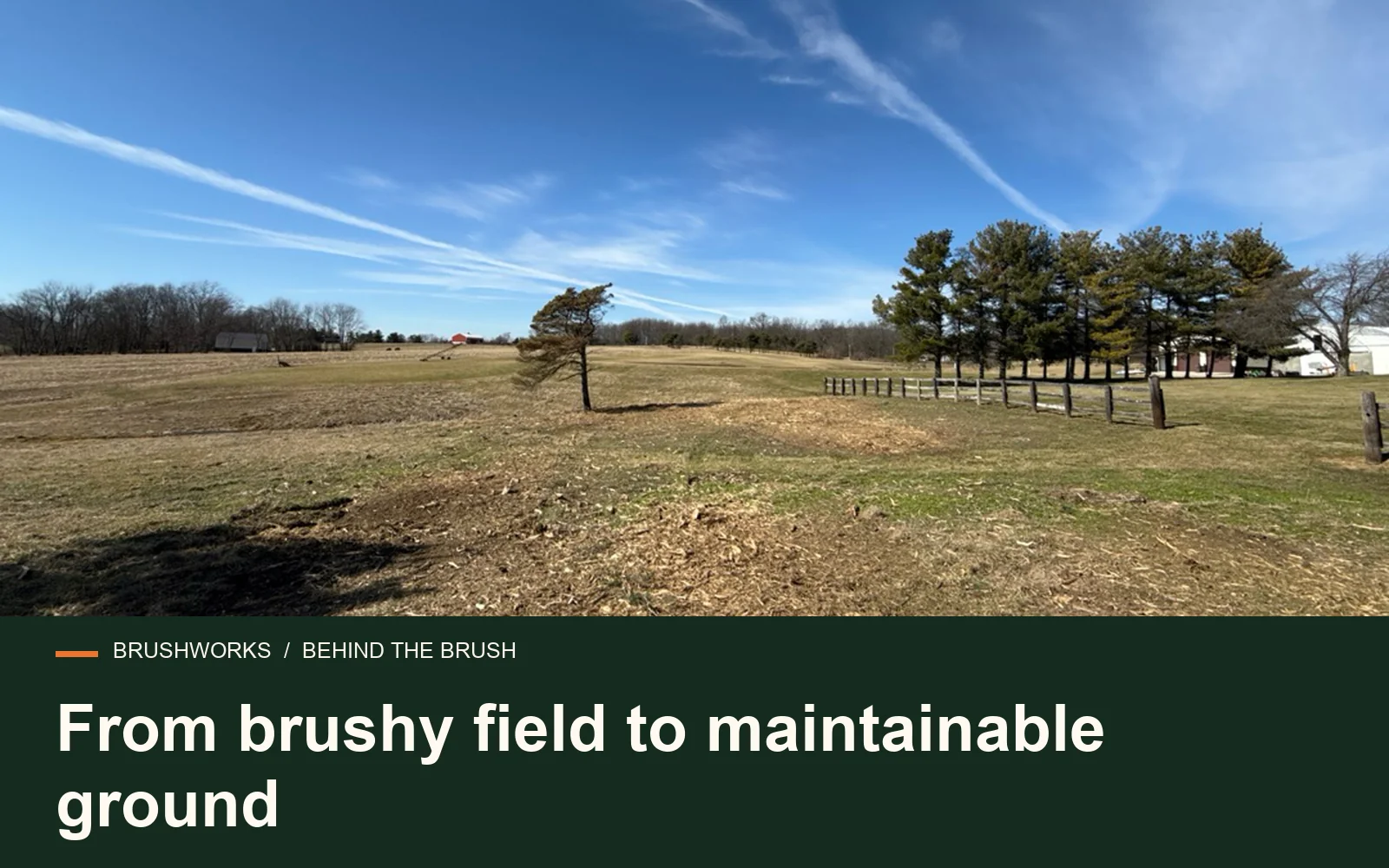
A reclaimed field will not look like a finished lawn the day the machine leaves. It should look open, accessible, and manageable. There will be mulch on the ground. There may be visible stem nubs where brush was cut low. If the field had hidden debris, old fence, tires, concrete, or trash, some of that may be uncovered during the work and handled separately.
That is normal. The first pass turns unknown ground into known ground. Once you can see the shape of the field, decisions get easier. Maybe one wet corner should stay in cover. Maybe a high spot is perfect for a barn. Maybe the old fence row should be opened for equipment access. Maybe the field needs lime, seed, and mowing before it becomes pasture again.
If you need a smooth finish for a lawn, building pad, or driveway, clearing is only step one. Grading, stump removal, topsoil work, and seeding may follow. If you need rough acreage opened for mowing, hunting, or pasture prep, the mulched finish may be exactly what you need.
Timing matters on Ohio ground
Winter can be a strong window for field reclamation because the leaves are off and frozen ground carries equipment better. The work may look rougher at first because everything is dormant, but the operator can see structure, slopes, and hazards more clearly. Fall is also good because you can clear the field, then plan seeding, spraying, or mowing before the next growing season.
That said, the right time is the time the ground can handle the work. A dry summer window may beat a wet winter week. The site decides. If the field has wet pockets, seeps, or soft creek edges, those areas may need to be avoided or handled separately.
Do not skip the maintenance plan
The field will try to grow back. That is not a failure. It is Ohio. Honeysuckle sprouts from cut stumps. Autumn olive pushes new shoots. Rose canes come back from roots. Seedlings show up anywhere sunlight hits bare ground. If the field was overgrown for years, one clearing pass does not erase the seed bank or root systems.
If you wait another three years, the same problem starts over. If you mow or manage it the first season, you protect the money you just spent.
Mistakes that make field reclamation harder
Once saplings and vines get too heavy, a mower becomes the wrong tool. Broken blades, punctured tires, and bent equipment cost more than calling in the right machine.
Soft fields rut badly. If the site is wet, waiting for better ground can save a lot of repair work.
Wire is hard on mulchers and dangerous for mowers. If you know there is old fence, T-posts, concrete, or dumped material, point it out before work starts.
A pasture, home site, food plot, and access lane all need different finishes. The clearer the goal, the better the result.
Agree on the handoff
Before work begins, define what the next person needs to find on site. A rough mulched opening may still contain roots, stump remnants, and uneven ground. Grading, structural preparation, planting, surfacing, and specialist tree work are separate unless explicitly included.
Keep the marked work map with the quote. At completion, compare the limits and finish, document any follow-up, and decide who will maintain the area. Photos help record the result, but they do not replace checking the ground and access.
Plan the work for your property
Send the site address, recent photos, a marked clearing area, and the finish you want. We can discuss where clearing fits and what needs a different trade.
Discuss your project → Explore pricing