
Autumn Brush Clearing in Ohio: Why Fall Gives You the Best Results

Most Ohio property owners wait until spring to think about their land. By then, the weeds are already winning. Fall brush clearing flips the script: you get clear sightlines, cooperative ground, and dormant brush that practically begs to be mulched. Here's why experienced landowners in Cincinnati and Southwest Ohio schedule their clearing projects in autumn.

The Leaf-Off Advantage: Seeing Your Land for the First Time

Walk your property in July and you're basically blind. The canopy blocks out sunlight. Undergrowth is chest-high. You can't see 20 feet in any direction, let alone spot the old fence posts, drainage tiles, rock outcroppings, or property pins buried under vegetation.

Walk that same property in late October? Completely different story.

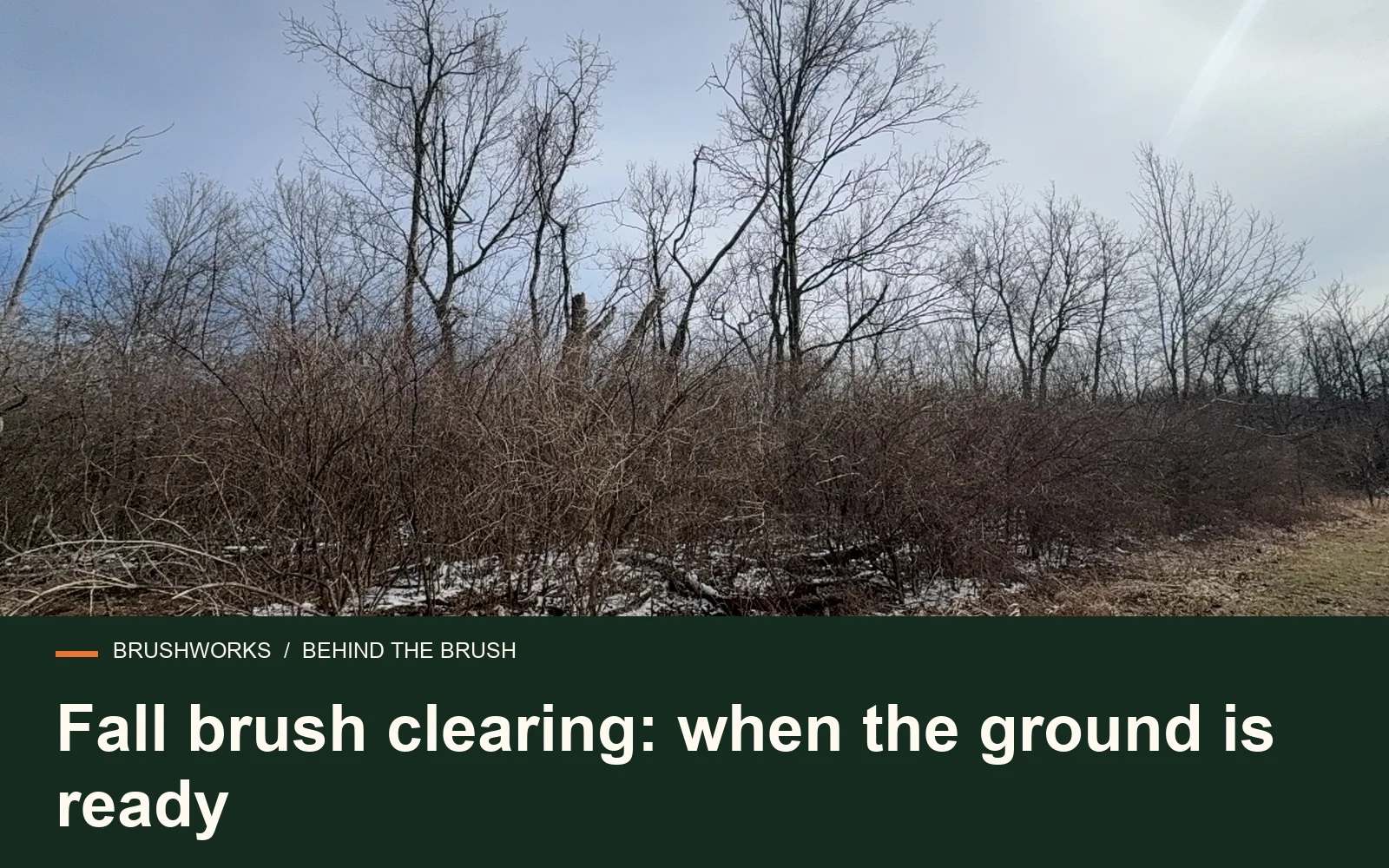
Once the leaves drop, Ohio's landscape opens up. You can see the actual shape of your terrain. You can trace the contours of the land, find where water collects, identify property boundaries, and spot hazards that have been hidden all summer. For a forestry mulching operator, this visibility is everything.

When we can see what we're working with, we work faster and smarter. We don't hit unexpected obstacles. We can plan the most efficient route through the property. We can identify which trees to keep and which to remove without guessing. The result is a cleaner job, fewer surprises, and usually a lower overall cost for you.

This is why professional land clearing crews across Ohio prefer fall work. It's not just easier. It's better.

Planning a fall clearing project? Get an instant estimate for your property.

Instant Pricing Tool

Ground Conditions in Ohio's Autumn: Firm and Forgiving

Ohio's fall is a goldilocks period for ground conditions. Summer has dried out the soil. The fall rains haven't fully saturated things yet. You get ground that's firm enough to support heavy equipment without rutting, but soft enough that the mulcher teeth bite into stumps and root systems with ease.

Compare that to spring, when snowmelt and rain turn everything into a mud pit. We've showed up to spring jobs where the access path alone needed an hour of careful navigation. A fall job on the same property? We're rolling right in and getting to work.

Here's what matters for your property: equipment ruts damage soil structure. They create channels where water pools and erodes. On hillside properties around Cincinnati, rutting can cause real problems with runoff and drainage. Fall clearing minimizes all of that because the ground cooperates.

Fall Ground Conditions in Greater Cincinnati:

  • September: Dry and firm from summer. Can be dusty on sandy soils.
  • October: Ideal conditions. Soil moisture is balanced. Best month for most properties.
  • November: Still great if fall rains have been moderate. Light frost firms up soft spots.
  • ⚠️ Late November: Watch for saturated conditions after heavy rain events. Usually still workable.

For properties in Hamilton, Clermont, Warren, and Butler counties, October is consistently the best single month for ground conditions. The Cincinnati hills dry out nicely through summer, and fall keeps them stable.

Dormant Vegetation Is Easier (and Cheaper) to Clear

By mid-October in Ohio, most brush and undergrowth has stopped growing. Honeysuckle hangs on a bit longer than native species (which actually makes it easier to spot and target), but the bulk of the vegetation is winding down for winter.

Dormant brush is thinner. The stems have less moisture. The leaves are gone or going. All of this means the mulching head processes material faster. What takes an hour in August might take 40 minutes in October.

That time difference translates directly to your wallet. Faster clearing means less equipment time on your property. Less equipment time means a lower bill. We're not padding hours here. We charge by the project, and when conditions are good, the project goes faster and we can price accordingly.

What About Invasive Species?

Fall is the single best season for identifying and removing invasive bush honeysuckle. Here's why: native Ohio plants lose their leaves in October. Honeysuckle keeps its green leaves well into November. So in late October, you can literally walk your property and every green plant you see is honeysuckle.

That makes targeted removal simple. You're not guessing what's invasive and what's native. The invasives stand out like a neon sign. We use this to our advantage on every fall honeysuckle removal job in the Cincinnati area.

Scheduling and Availability: Beat the Spring Rush

Every year, the same pattern plays out. Nobody calls about land clearing in January. A few people call in February. March hits and the phone rings off the hook. By April, we're booked 4-6 weeks out and turning away projects we wish we could take.

Fall doesn't have that problem. Demand drops after summer, and most property owners are thinking about football, not forestry mulching. That means shorter wait times, more flexible scheduling, and a better chance of getting your preferred date.

If you're planning a spring construction project, fall clearing is the strategic move. Clear the land in October or November. Let the mulch settle and break down through winter. When your builder shows up in March or April, the site is ready. No delays, no scrambling to find a clearing crew during peak season.

We've seen this play out dozens of times with builders and developers around Cincinnati. The ones who plan ahead and clear in fall save time, save money, and start construction on schedule. The ones who wait until spring? They're competing with every other homeowner who just realized their property is overgrown.

The Mulch Decomposition Cycle: Winter Works for You

When we mulch your property in fall, we leave behind a layer of shredded organic material. This mulch layer does several things over winter:

What Happens to Mulch Over Winter:

  • Suppresses spring germination — Weed seeds can't reach sunlight through the mulch blanket
  • Feeds the soil — Decomposing wood chips add organic matter and nutrients
  • Prevents erosion — Bare soil stays covered through winter rains and snowmelt
  • Retains moisture — Spring grass and plants establish faster in mulch-enriched soil
  • Breaks down naturally — By spring, the mulch has thinned and settled into the topsoil

This matters for every property, but especially for pasture reclamation and landscaping projects. Fall-cleared land that sits through winter comes alive in spring. Grass seed germinates faster. Native wildflowers come back stronger. The soil is healthier because the mulch has been feeding it for months.

Compare that to spring clearing, where the mulch layer sits on top all summer, competing with the plants you're trying to establish. Fall clearing gives nature time to work with the mulch instead of against it.

No Nesting Season Restrictions

Ohio's migratory bird nesting season runs roughly April through August. During this window, properties with significant habitat may need extra consideration before clearing. Some projects near wetlands or in areas with protected species require a pre-clearing survey.

Fall clearing avoids this entirely. By September, nesting season is over. No surveys needed. No potential delays while waiting for a wildlife assessment. No restrictions on when or where you can clear.

For most residential properties in the Cincinnati suburbs, nesting restrictions aren't a major issue even in spring. But for larger rural parcels, especially those near creeks, ponds, or wooded edges, fall clearing removes one more variable from the equation.

Common Fall Clearing Projects in Southwest Ohio

Here's what we typically clear during autumn in the Greater Cincinnati area:

🏡 Overgrown Residential Lots

Backyards that turned into jungles over summer. Property edges that haven't been maintained in years. The neighbor's honeysuckle that keeps creeping onto your side. Fall is when people finally say "enough" and reclaim their land.

🏗️ Pre-Construction Site Prep

Smart builders clear in fall for spring construction starts. The site settles over winter, drainage patterns become visible, and the ground is ready for grading when crews arrive.

🌿 Invasive Species Removal

Honeysuckle stands out in late October when everything else has gone dormant. Autumn olive, multiflora rose, and Bradford pear are also easier to identify and remove. Fall is invasive removal season.

🐴 Pasture Reclamation

Horse and cattle owners who want usable grazing land by spring need to clear in fall. The mulch breaks down over winter and grass establishes naturally when temperatures warm up in March and April.

🏠 Property Line Clearing

Boundary disputes, fence installations, and property line maintenance all go faster in leaf-off conditions. You can actually see the property pins and survey markers without hacking through brush.

🎯 Hunting Land Prep

Deer hunters who want shooting lanes, food plot sites, or access trails clear in early fall to have their property ready for November rifle season. Ohio's deer season drives a lot of land management work.

Month-by-Month Fall Clearing Guide for Ohio

September

Conditions: Warm, dry, late-summer feel. Vegetation still active but slowing down.

Best for: Properties where timing is tight. Construction deadlines. Projects that can't wait for leaves to drop.

Watch out for: Dust on dry sites. Poison ivy is still active and strong. Ticks remain active through first frost.

October

Conditions: The sweet spot. Leaves falling, ground firm, temperatures comfortable. Best overall month for clearing.

Best for: Everything. Residential lots, invasive removal, pre-construction, pasture work. This is peak fall clearing season.

Watch out for: Book early. By mid-October the conditions are so good that scheduling fills up. Rain events can cause brief delays but ground recovers quickly.

November

Conditions: Full leaf-off visibility. Temperature drops bring frost. Ground may start to soften after fall rains.

Best for: Invasive honeysuckle removal (it's the only thing still green). Steep hillside work where frost firms up soft slopes. Large acreage projects.

Watch out for: Shorter daylight hours mean fewer working hours per day. Heavy November rains can delay projects on clay soils. Early snowfall is rare but possible.

Cost Considerations for Fall Clearing

Fall clearing typically runs 10-20% less than equivalent summer work, and here's exactly why:

Factor Summer Fall
Vegetation Density Maximum — thick, green, heavy Reduced — dormant, thin, dry
Clearing Speed Slower — more material to process Faster — less resistance
Visibility Limited — full canopy Full — leaf-off conditions
Ground Conditions Dry but can be dusty Firm and balanced
Scheduling Availability Moderate demand Lower demand — more flexible
Surprise Obstacles Common — hidden by growth Rare — everything visible

For a typical 1-acre residential clearing job in the Cincinnati area, the difference between summer and fall pricing might be $400-$800. Not life-changing, but real money that stays in your pocket because conditions made the job faster.

Larger projects see bigger savings. A 5-acre clearing that runs $12,000 in summer might come in at $10,000-$10,500 in fall. Same quality, same thoroughness, just faster work because fall cooperates.

Cincinnati-Area Properties: Fall Clearing by Terrain Type

Hillside Properties (Anderson, Mt. Washington, Delhi)

Cincinnati's hills are the most common terrain challenge we deal with. In fall, the combination of dry soil and early frost creates ideal conditions for hillside work. Our FAE RCU55 remote-controlled mulcher handles slopes up to 60 degrees, and firm fall ground gives it the traction it needs. We've cleared hillsides in November that would have been too muddy to touch in April.

Flat Agricultural Land (Warren, Clinton, Clermont Counties)

Farm-adjacent properties and former agricultural land clear fastest in fall. The flat terrain is already easy to work, and fall conditions make it even faster. Fence row clearing, pasture reclamation, and field edge maintenance are all fall staples for our rural customers east of Cincinnati.

Wooded Residential Lots (Indian Hill, Milford, Loveland)

The leafy eastern suburbs of Cincinnati have some of the most heavily wooded residential lots in the region. Fall leaf-drop transforms these properties. Suddenly you can see from the house to the property line. You can spot where drainage runs. You can identify which trees are healthy and which need to go. This visibility makes selective clearing possible in a way that summer just doesn't allow.

How to Prepare Your Property for Fall Clearing

Want to get the most out of a fall clearing project? Here's what to do before the crew shows up:

Before Your Fall Clearing:

  • Walk the property in leaf-off conditions. Take photos and mark areas you want cleared vs. preserved. Use flagging tape on trees you want to keep.
  • Locate property pins and boundaries. Fall is the perfect time to find these since vegetation is down. Mark them with tall stakes so the operator can see them.
  • Identify access points. Where will equipment enter? Is there a gate, driveway, or field access that works for a truck and trailer?
  • Note any underground utilities. Call 811 before any clearing project. Buried lines, septic systems, and drain tiles all need to be marked.
  • Remove portable items. Garden tools, outdoor furniture, kids' toys, pet items. Anything near the clearing zone should be moved.
  • Talk to neighbors. A heads-up about equipment noise goes a long way. Fall clearing is loud but brief.

Frequently Asked Questions

When is the best time in fall to clear brush in Ohio?

Mid-October through late November is the sweet spot for fall brush clearing in Ohio. Leaves have dropped, giving you clear sightlines across the terrain. Ground is still firm from summer dryness, and most vegetation has gone dormant. Early September can still feel like summer with active growth, so waiting until at least mid-October gets you better results.

Why is leaf-off season better for land clearing?

When leaves drop, you can see the actual terrain for the first time all year. Hidden stumps, rocks, old fencing, property pins, drainage features, and slopes all become visible. This means fewer surprises during clearing, more accurate quotes, and better results.

Is fall brush clearing cheaper than other seasons?

Fall clearing often costs less per acre than summer clearing because dormant vegetation is thinner and easier to process. The equipment moves faster through dead brush than through dense green growth. Scheduling is also easier in fall since demand drops after the busy spring and summer season.

Can you clear land in Ohio after the first frost?

Yes, and it actually helps. Frost kills off remaining vegetation, making it even easier to mulch. Light frost firms up soft spots in the ground without freezing it solid. Brushworks operates year-round in Greater Cincinnati, and post-frost conditions in late October and November are some of our most productive working days.

Will clearing in fall prevent regrowth in spring?

Fall clearing gives you a head start on regrowth control. When you mulch vegetation during dormancy, you destroy the above-ground growth and create a thick mulch layer that suppresses spring germination. Some regrowth will still happen from established root systems, but it will be significantly reduced. A follow-up mowing pass in late spring handles most of what comes back.

Book Your Fall Clearing Now

If you're reading this and thinking about your own property, don't wait until October to call. The best fall dates book up by mid-September. Get your estimate now and lock in a date that works for your timeline.

Brushworks clears land year-round across Greater Cincinnati, Northern Kentucky, and Southeast Indiana. But fall? Fall is when we do our best work. The conditions align, the visibility is perfect, and the results speak for themselves.

Your land isn't getting less overgrown while you wait.

Ready to Clear Your Property This Fall?

Get an instant estimate and schedule your fall clearing project. Brushworks operates year-round throughout Greater Cincinnati.

Related Articles

Best Time to Clear Land in Ohio: Seasonal Guide

Read Article

Bush Honeysuckle Removal Ohio: Complete Guide

Read Article

Summer Land Management Ohio: Stop Regrowth

Read Article