
The short answer
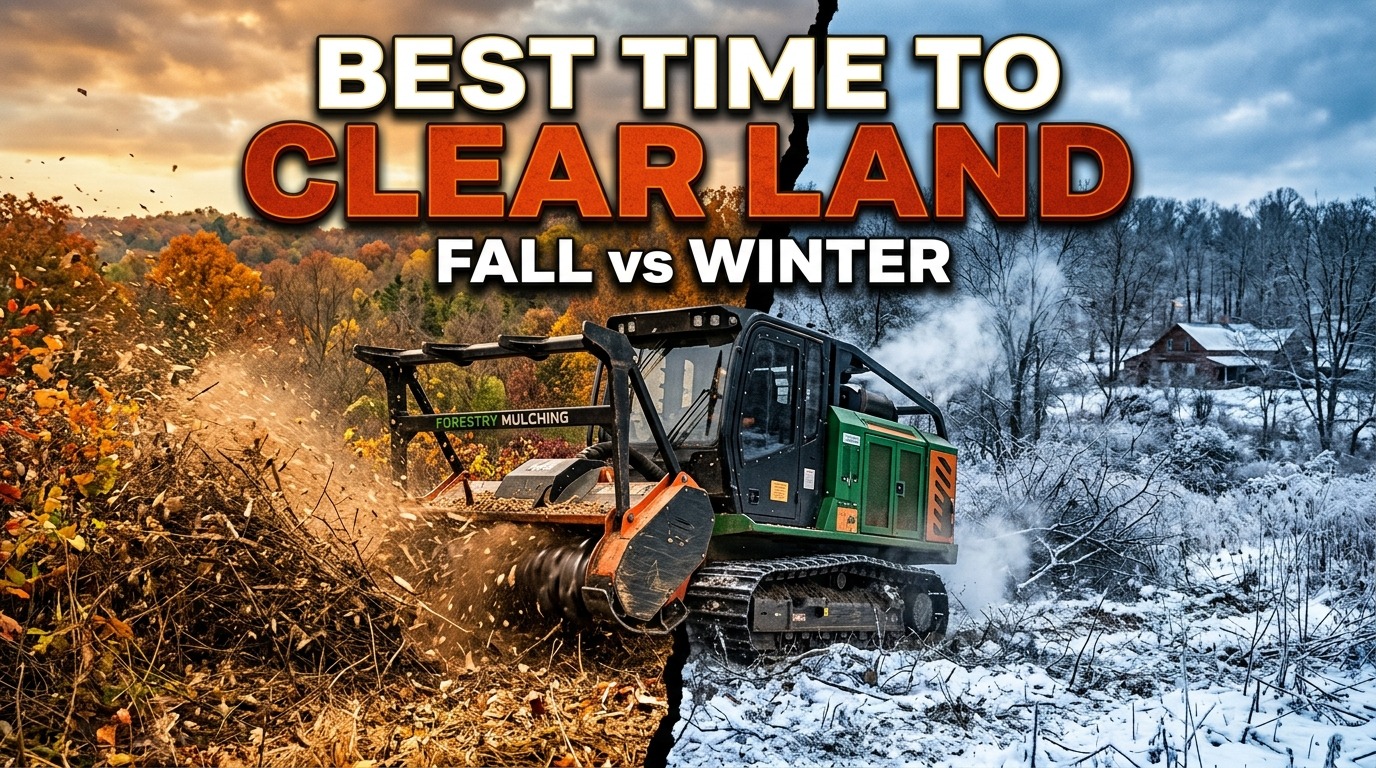
For most Ohio land clearing projects, late fall through early spring is the strongest all-around window. Leaves are down. The brush is easier to see through. Ticks and mosquitoes are mostly quiet. Frozen or dry ground can support forestry mulchers, skid steers, and support equipment with less rutting than soft spring clay.
That does not mean winter is always best or summer is always wrong. A building site that needs cleared before concrete, a fence row that has to be opened before the contractor arrives, or a trail that needs reopened before hunting season may not have the luxury of waiting. Good timing means matching the work to the site, not blindly chasing a season.
Best practical window
If your project is flexible, aim for November through March, then adjust for rain, snow, thaw cycles, slope, access, and how soon you need to seed, build, fence, gravel, or maintain the area.
Why Ohio timing is different
Ohio land clearing is not just about cutting trees and brush. It is about working around wet soils, quick weather swings, heavy spring growth, invasive plants, and properties that change fast from one season to the next. In Greater Cincinnati, the same field can be firm enough to work on Monday and too greasy to touch by Thursday after a hard rain.
Southwest Ohio has a lot of clay. Clay holds water, smears under tracks, and ruts when equipment is forced through it too soon. That is why a dry winter week can be better than a warm spring week. It is also why a good operator may tell you to wait two days after rain instead of tearing the place up to stay on schedule.
Visibility matters too. In summer, honeysuckle, grapevine, multiflora rose, briars, autumn olive, and saplings can hide stumps, wire, holes, old fence, concrete, and trash. In winter, the leaves are off and the shape of the land is easier to read. That helps with selective clearing, property line work, trail layout, pond edges, and wooded lots where the good trees should stay.
Winter land clearing in Ohio
Winter is underrated. When the ground is frozen or simply firm and dry, forestry mulching can be clean and efficient. The machine can move without making a mess, the operator can see through the woods, and the finished area is ready before spring growth starts.
Winter is especially useful for fence rows, field edges, wooded lots, trails, hunting land, future home sites, and overgrown acreage that has been ignored for years. It is easier to spot old wire, dead ash trees, leaning trunks, drainage dips, and saplings worth saving when the leaves are gone.
Winter advantages
- • Better visibility through brush and woods
- • Less insect pressure for crews and landowners
- • Frozen or firm ground can reduce rutting
- • Easier planning before spring building or seeding
- • Dormant vegetation is easier to judge and cut
Winter limits
- • Snow can hide hazards and slow work
- • Ice makes steep access risky
- • Freeze-thaw cycles can turn surfaces slick
- • Short daylight can limit production
- • Some finish work waits until warmer weather
Winter clearing also gives you time. If you want grass, a driveway, a building pad, a food plot, or a maintained trail, clearing before spring lets you plan the next step instead of trying to do everything after the brush has already exploded.
Spring clearing: useful, but watch the mud
Spring is busy because everybody starts looking at their property again. The weather warms up, contractors start scheduling, and landowners want access before summer. Spring can be a good time to clear land, but wet ground is the thing to respect.
Cincinnati clay does not care about your deadline. If the site is saturated, pushing ahead can leave ruts, damage drainage, and create extra work after the clearing is done. For low areas, creek edges, pond banks, and new driveway routes, patience can save real money.
Spring does make sense when the ground has dried enough and the cleared area needs to be ready for a project. Septic installation, fencing, home building, pole barns, detached garages, gravel pads, and pasture work often start with spring clearing. The key is to leave enough time for weather delays.
Spring rule of thumb
If your boots are sinking and the driveway approach is soft, heavy equipment will probably make a mess. If the top is dry, access is solid, and drainage is understood, spring can work fine.
Summer clearing: fast growth, heavy cover, real deadlines
Summer is the season when overgrowth looks the worst. Honeysuckle fills out. Briars get mean. Vines climb. Grass hides old debris. Trails close in. Property owners often call in summer because the problem has become impossible to ignore.
Summer clearing is completely doable, and sometimes it is the right call. If you need access for a sale, a construction schedule, a pond project, a new fence, a code issue, or a family event, waiting for winter may not make sense. The tradeoff is slower visibility and more plant volume. Dense green growth can hide hazards and make selective work more deliberate.
Heat also matters. Long days are helpful, but hot weather is harder on people and machines. Dust can be worse when the ground is dry. Insects, poison ivy, ticks, and yellow jackets are more active. None of that stops a good clearing job, but it changes the plan.
Good summer fits
Trails, fence rows, field edges, building access, overgrown backyards, and properties with firm access.
Be careful with
Hidden wire, poison ivy, wasp nests, soft creek bottoms, and thick vines wrapped into good trees.
Plan after clearing
Summer regrowth can be aggressive. Mow, seed, spray, graze, or touch up before new brush gets established.
Fall clearing: probably the most balanced season
Fall is often the sweet spot for Ohio land clearing. The worst summer heat breaks, the ground is often still workable, leaves begin dropping, and there is enough time to get land opened before winter. For many Cincinnati-area properties, September through November is a strong window.
Fall is also practical for planning. If you clear in fall, you can see drainage during winter, plan seed or gravel for spring, and avoid rushing site prep when every contractor is already slammed. For hunting land, trails and access lanes can be opened before heavy use. For future building sites, the messy first step is done before spring schedules tighten.
The caution is rain. Fall can bring wet spells, and fallen leaves can hide rocks, holes, and old debris. Still, if the site is accessible and the weather cooperates, fall gives a good mix of visibility, firm ground, and useful timing.
Best season by project type
| Project | Best timing | Why |
|---|---|---|
| Wooded lot clearing | Late fall to early spring | Better visibility, easier tree selection, less understory cover |
| Fence row clearing | Winter, early spring, or fall | Old wire and posts are easier to see when leaves are down |
| Building site prep | As early as the schedule allows | Clearing should happen before survey, excavation, gravel, and trades get crowded |
| Trail building | Fall or winter | Line of sight is better and summer growth is not fighting the layout |
| Pasture reclamation | Late winter through spring or fall | Leaves time for seeding and follow-up mowing |
| Pond or creek edge clearing | Dry periods in any season | Bank stability matters more than the calendar |
The best timing is usually tied to what happens next. If a fence contractor is coming, clear early enough for layout and post holes. If a builder needs access, clear before equipment and material deliveries. If the goal is grass, think about seeding windows. Clearing is not the whole project. It is the first domino.
Permits, boundaries, and neighbors
Season does not remove the need to know what you are clearing. Before equipment shows up, mark property lines, protected trees, septic components, wells, utilities, dog fence wire, drainage structures, and anything else that should not be touched. If you are clearing near a neighbor, a survey is cheaper than an argument.
Ohio rules vary by county, township, city, and project type. Rural brush clearing is usually straightforward, but wetlands, stream banks, steep slopes, road frontage, commercial sites, and development work can have extra requirements. Hamilton County, Butler County, Warren County, Clermont County, and local municipalities may all treat projects differently.
If the work is connected to construction, septic, driveway access, or drainage changes, check the requirements before clearing too much. You do not want to remove the wrong buffer, disturb a regulated area, or create a drainage complaint that slows the entire job down.
How timing affects regrowth
Clearing resets the property. It does not erase every seed, root, stump, vine, or invasive plant that wants to come back. Timing affects how soon regrowth shows up and what you can do about it.
Winter clearing gives you a clean start before spring. That is good, but it also means you should be ready to manage new shoots as the growing season starts. Summer clearing knocks down active growth, but the site may respond quickly if rain and sun hit exposed soil. Fall clearing gives you time to plan and watch what returns the next spring.
The maintenance test
After clearing, ask one question: can this area be maintained now? If the answer is yes, the job worked. If the answer is no, you may need grading, seeding, mowing access, selective herbicide, gravel, or a follow-up cut.
How Brushworks helps choose the right window
Brushworks clears land across Greater Cincinnati and southwest Ohio, including Loveland, Milford, Mason, Lebanon, Batavia, West Chester, Hamilton County, Butler County, Warren County, and Clermont County. We look at more than the calendar. We look at access, slope, soil, drainage, vegetation density, hidden debris risk, and what the land needs to become.
Some jobs should happen as soon as the ground is firm. Some should wait until a wet patch dries. Some are perfect winter projects. Some need to be timed around builders, fence crews, surveyors, hunting season, or family use. The right answer is usually obvious once we see the property.
If you are trying to plan a clearing project, send photos of the growth, access route, wet areas, slopes, and the end goal. We can usually tell whether you should move now, wait for a dry stretch, or schedule for a better season.
Trying to time your land clearing project?
Use instant pricing for a quick planning number, or send photos and project notes so we can help you pick the cleanest window.
Frequently asked questions
What is the best month to clear land in Ohio?
There is no single month that wins every time, but November through March is often the best window for flexible projects. Leaves are down, visibility is better, and frozen or dry ground can reduce rutting. For building deadlines, fence work, or urgent access, the best month is the one with firm ground and enough lead time for the next contractor.
Can land be cleared in winter in Ohio?
Yes. Winter is often one of the better times for forestry mulching and brush removal. Frozen ground, dormant vegetation, and leaf-off visibility can make the job cleaner. Heavy snow, ice, and thawed mud can still slow things down, so conditions matter.
Is spring too wet for land clearing?
Sometimes. Spring clearing works when the site has firm access and the soil has drained. It gets risky when Cincinnati clay is saturated, especially near creeks, ponds, low fields, and new driveway routes. Waiting a few dry days can prevent a lot of repair work.
Should I clear before building season?
Usually, yes. Clearing early gives surveyors, excavators, septic installers, fence crews, and builders room to work. It also exposes grading, drainage, stump, and access issues before they become expensive surprises.
Does clearing in winter stop regrowth?
No. Winter clearing gives you a clean start, but roots and seeds can still push new growth in spring. The advantage is that you can see the property early and plan mowing, seeding, spot treatment, grazing, or follow-up work before the brush gets big again.
Related articles
Pick the right window and get it done clean
If you are trying to time clearing for a build, fence, driveway, trail, field edge, or overgrown lot, Brushworks can help you avoid the season that turns a simple job into a mess.