
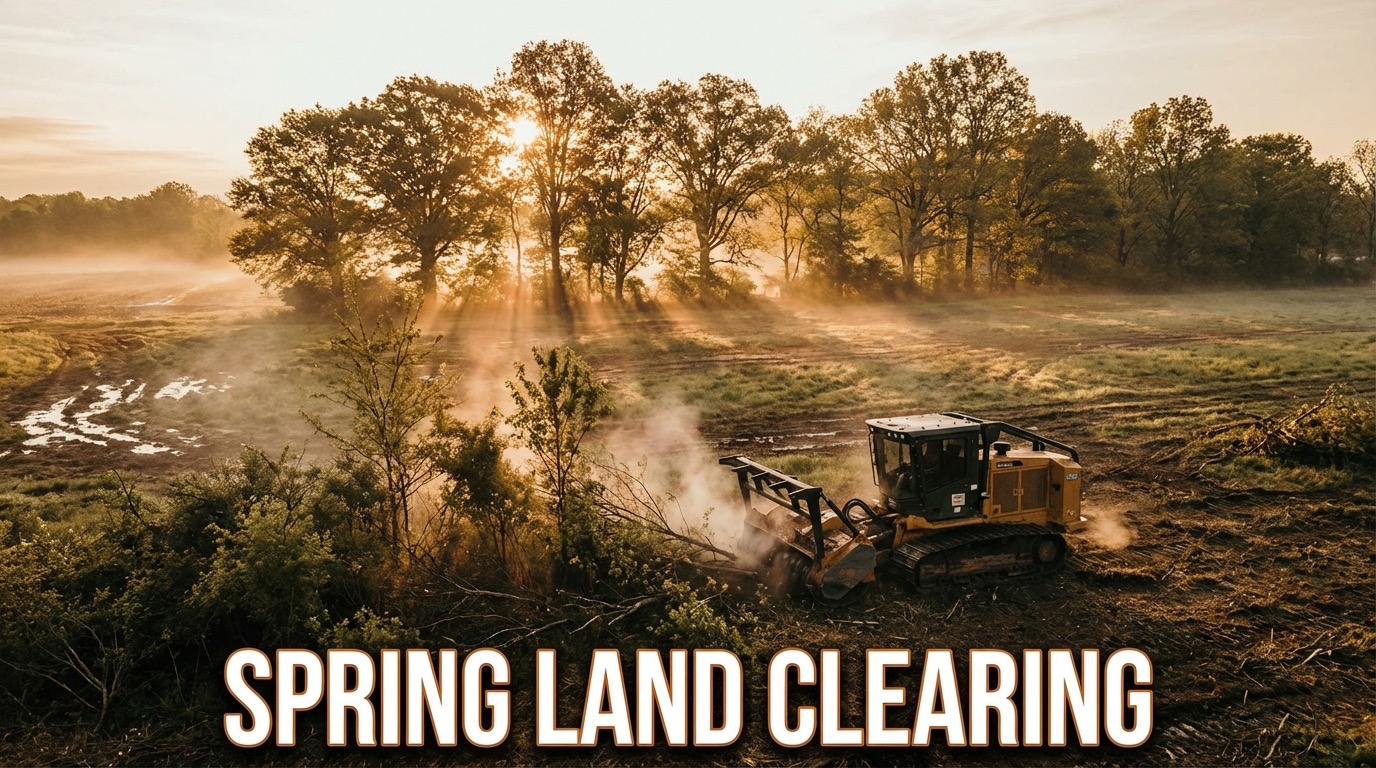
Why Spring Land Clearing Requires Extra Planning
Unlike fall or winter clearing, spring projects in Ohio face a unique combination of challenges:
Unpredictable Ground Conditions
Ohio's spring brings freeze-thaw cycles, snowmelt, and rain—often all in the same week. Ground that looks dry can be saturated just inches below the surface, creating problems for heavy equipment.
Weather Windows Are Narrow
Spring scheduling requires flexibility. A week of rain can push projects back, while a dry spell creates opportunity. We work with clients to capitalize on good conditions when they appear.
High Demand Season Begins
As the weather warms, everyone wants to get projects done. Spring marks the beginning of our busy season, so early booking helps secure your preferred dates.
Growing Season Advantage
Clear in spring and you have the entire growing season ahead. Perfect for establishing grass, planting gardens, or starting construction before summer.
The Bottom Line on Spring Clearing
Spring clearing absolutely works in Ohio—we do it every year. The key is understanding the conditions, planning for flexibility, and working with a contractor who knows how to navigate wet weather. The reward? Your cleared land ready for the entire growing season.
Ohio Spring Weather Patterns and Clearing Windows
Understanding Ohio's typical spring weather helps set realistic expectations for project timing.
March: The Transition Month
March in Cincinnati and Southern Ohio is highly variable:
- • Temperature: Highs 45-60°F, lows 25-40°F
- • Precipitation: 3.5-4.5 inches average
- • Ground conditions: Often saturated from snowmelt
- • Clearing potential: Limited—best during extended dry spells
We can work in March during favorable windows, but expect more schedule flexibility.
April: Improving but Still Wet
April brings warming trends but remains Ohio's wettest month:
- • Temperature: Highs 55-70°F, lows 35-50°F
- • Precipitation: 4.0-5.0 inches average (peak month)
- • Ground conditions: Variable—can have both wet and workable periods
- • Clearing potential: Good during dry stretches, especially late April
Late April often provides excellent clearing windows as ground begins drying.
May: Prime Spring Clearing
May offers the most consistent spring clearing conditions:
- • Temperature: Highs 65-80°F, lows 45-60°F
- • Precipitation: 4.0-4.5 inches average
- • Ground conditions: Generally drier, better drainage
- • Clearing potential: Excellent—our busiest spring month
May provides the sweet spot: warm enough for comfortable work, dry enough for equipment access, early enough to maximize your growing season.
Understanding Ground Conditions for Spring Clearing
Ground conditions matter more in spring than any other season. Here's what we evaluate and why it matters.
What "Too Wet" Actually Means
Many property owners wonder when ground is "too wet" to clear. Here's what we look at:
- → Surface water: Standing puddles or visible saturation means waiting
- → Soil compaction test: If footsteps sink more than 2-3 inches, equipment will too
- → Subsurface moisture: Ground that looks dry on top may be saturated below
- → Clay content: Ohio's clay-heavy soils hold water longer than sandy soils
- → Slope drainage: Low spots and flat areas stay wet longer than slopes
Why We're Careful About Wet Ground
- → Equipment rutting damages your property
- → Soil compaction affects future growth
- → Stuck equipment costs everyone time and money
- → Wet mulch doesn't break down as well
- → Erosion risk increases significantly
When Wet Conditions Are Workable
- → Surface moisture only (dried within 24 hours)
- → Sandy or well-drained soils
- → Sloped areas that drain naturally
- → Areas with good access routes
- → Projects that can avoid lowest spots
Our Low-Ground-Pressure Advantage
Our tracked equipment distributes weight better than wheeled machines, allowing us to work in conditions where other contractors can't. But even rubber tracks have limits—we won't risk damaging your property to meet a schedule.
Best Practices for Spring Clearing Projects
Here's how to set your spring clearing project up for success.
1. Plan Early, Book Early
Spring scheduling fills fast. The earlier you reach out, the more options you have:
- • Contact us in January-February for spring projects
- • We can often schedule tentative dates with weather flexibility built in
- • Early booking gives priority if schedule adjustments are needed
- • Get your quote while conditions are still winter—no waiting for site visits
2. Build in Schedule Flexibility
The most successful spring projects account for weather uncertainty:
- • Don't tie clearing to a hard deadline (like a construction start date the following week)
- • Plan for a 2-week window rather than a specific day
- • Have backup plans if weather pushes your project
- • Communicate timeline needs upfront so we can plan accordingly
3. Prepare Your Property
Before we arrive, take care of these items:
- → Mark boundaries: Flag any property lines, trees to preserve, or no-clear zones
- → Identify utilities: Call 811 or confirm private utility locations
- → Clear access routes: Remove vehicles, trailers, or obstacles from our path
- → Communicate with neighbors: Let them know equipment will be working
- → Note wet spots: Tell us about areas that stay wet longer
4. Consider Your Post-Clearing Plans
Spring clearing is just the beginning. Think ahead:
- → Seeding grass? Spring seeding works but requires consistent watering
- → Building? Factor in time for ground to settle and dry
- → Planting? Plan what goes where before clearing completes
- → Fencing? Post holes are easier to dig in spring moisture
Spring Clearing Costs in Ohio
Spring pricing is generally consistent with other seasons, though some factors can affect costs.
2026 Spring Land Clearing Prices (Cincinnati Area)
| Vegetation Type | Price Per Acre |
| Light brush / small saplings | $1,800 - $2,500 |
| Medium brush / small trees | $2,500 - $3,500 |
| Heavy brush / mixed forest | $3,500 - $4,500 |
| Dense hardwood / large trees | $4,500 - $6,000 |
| Minimum project | $2,500 |
Spring-Specific Cost Factors
- → Wet areas may take longer to clear
- → Limited access routes can add complexity
- → Multiple mobilizations if weather interrupts
- → Larger projects may need split scheduling
Volume Discounts Apply
- • 2.25 - 5 acres: 10% discount
- • 5.25 - 10 acres: 15% discount
- • 10+ acres: 20% discount
Volume discounts apply regardless of season.
Spring Clearing: What Happens After
One of the biggest advantages of spring clearing is having the growing season ahead of you. Here's what to expect.
Immediate Results (Days 1-7)
- → Cleared ground covered with 2-4 inches of mulch
- → Mulch color: fresh tan/brown, darkening over time
- → Some settling as mulch compacts
- → Root systems remain in place (stabilization)
Early Growing Season (Weeks 2-8)
- → Native seed bank begins germinating through mulch
- → Grass seeds (if planted) start establishing
- → Some regrowth from root systems (normal)
- → Mulch beginning to darken and break down
Mid-Summer (Months 2-4)
- → Green coverage increasing
- → Mulch decomposing and enriching soil
- → Persistent regrowth may need attention
- → Planted grass well-established
End of Season (Months 5-8)
- → Mulch largely integrated into soil
- → Ground stabilized and walkable
- → Native vegetation established
- → Ready for fall seeding or construction
Seeding After Spring Clearing
You can seed grass immediately after spring clearing, but consider:
- • Spring seeding requires consistent moisture (irrigation or rain)
- • Fall seeding often produces better results in Ohio's climate
- • Mulch helps seed establishment by retaining moisture
- • Heavy seeding recommended to compete with native germination
Common Spring Clearing Projects in Ohio
Here's what we see most often during spring season.
Pre-Construction Site Prep
Property owners clearing for spring/summer building projects:
- • New home construction lots
- • Garage and outbuilding sites
- • Driveway and access road installation
- • Pool and patio areas
Timeline tip: Clear 2-4 weeks before construction to allow ground settling.
Backyard Reclamation
Homeowners reclaiming overgrown space for summer enjoyment:
- • Backyard expansion into wooded areas
- • Garden and planting bed preparation
- • Play areas and recreation spaces
- • Fire pit and outdoor living areas
Timeline tip: Early spring clearing maximizes usable growing season.
Pasture Restoration
Farmers and horse property owners reclaiming grazing land:
- • Brush-invaded pastures
- • Fence line clearing
- • Hay field expansion
- • Horse paddock creation
Timeline tip: Spring clearing allows full season for grass establishment before fall grazing.
Real Estate Preparation
Sellers preparing properties for spring market:
- • Lot clearing for better buyer appeal
- • Revealing property potential
- • Fence line and boundary visibility
- • Curb appeal improvement
Timeline tip: Clear before listing photos for maximum impact.
Frequently Asked Questions
Can you clear land in March in Ohio?
Yes, we can work in March during favorable conditions. March is our most weather-dependent month—some years we get extended dry periods, others we're limited by wet ground. We monitor conditions closely and capitalize on good weather when it appears.
What if it rains right after you clear my property?
Rain after clearing is actually beneficial—it helps settle the mulch and promotes decomposition. The cleared ground absorbs rain better than the dense brush did before, reducing runoff. Erosion is minimal because root systems remain in place and the mulch layer provides coverage.
Should I seed immediately after spring clearing?
You can, but it's not always the best approach. Spring seeding requires consistent moisture (irrigation or regular rain) to succeed. Many property owners find better results by letting native vegetation establish through spring/summer, then doing a fall seeding. We're happy to discuss what makes sense for your specific goals.
How far in advance should I schedule spring clearing?
We recommend reaching out 4-8 weeks before your ideal timeframe. Spring is our busy season, and early planning gives you priority scheduling and more flexibility if weather requires adjustments. Waiting until April to schedule May clearing often means limited availability.
What's the latest I can clear in spring and still get grass established?
Clearing through May still provides time for grass establishment, though you'll need irrigation support for late-planted seed through summer heat. Clearing in June or later typically means waiting until fall for optimal seeding conditions—the grass will grow better when planted in September anyway.
Ready to Plan Your Spring Clearing Project?
Spring land clearing in Ohio is absolutely doable—with the right planning and expectations. Let's discuss your property and find the best approach for your goals.
Get Your Free Spring Clearing Estimate
Use our instant pricing calculator for an immediate ballpark, or contact us for a detailed quote tailored to your spring project.
Or call us directly: (513) 790-4150
What to Include in Your Request
- → Property address
- → Approximate acreage to clear
- → Description of current vegetation
- → Your ideal timeline (including flexibility)
- → Post-clearing plans (construction, seeding, etc.)
- → Any known wet areas or access concerns