
Brush Clearing for Code Violation Cleanup Cincinnati
A code notice turns overgrowth from an annoyance into a deadline. The cleanup needs to fix the violation, document the work, and leave the property easier to maintain.
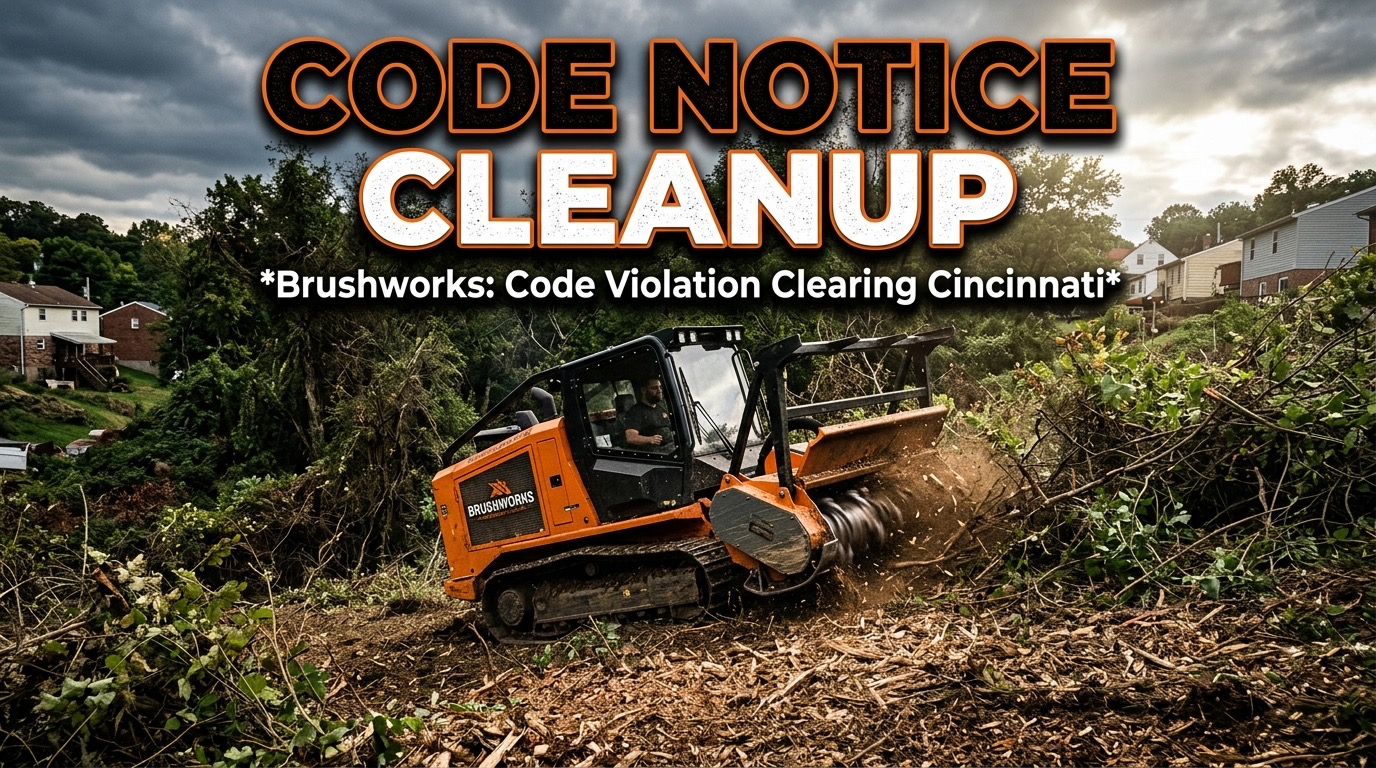
A Cincinnati brush or weed violation usually starts with a letter, a door hanger, a neighbor complaint, or a notice taped somewhere you wish it was not. The language may mention high weeds, rank vegetation, nuisance growth, blocked sidewalks, overgrown lots, brush piles, rodent harborage, sight lines, or unsafe conditions. The message is simple enough: clean it up by the deadline, or the city, township, village, HOA, or property manager may take the next step.
That next step can mean reinspections, fines, administrative charges, contractor cleanup billed back to the owner, tenant pressure, lender pressure, or a sale held up by an ugly item on the punch list. For landlords, banks, estates, investors, and homeowners who live out of town, the notice can arrive after the property has already been growing wild for months.
Good cleanup starts with reading the notice, not firing up a machine. You need to know what area was cited, what kind of vegetation is the problem, how much time you have, and what proof the local office expects after the work is done. Around Cincinnati and the surrounding Ohio counties, the answer may be as simple as mowing a small yard. It may also be a tangled mess of honeysuckle, grapevine, dead ash, briars, brush along a fence, and saplings that have turned a vacant lot into a complaint magnet.
Brushworks helps with the second kind of problem: the overgrowth that is past normal mowing and needs land clearing equipment, forestry mulching, selective cutting, or a practical cleanup plan.
Need a code cleanup handled?
Send the notice, the address, and clear photos of the overgrowth. Brushworks can help sort out whether the job needs brush clearing, forestry mulching, or a simpler maintenance crew.
Start by reading the notice closely
Do not assume every vegetation notice means the same thing. Some notices are about lawn height. Some are about brush piles. Some are about sidewalks, alleys, road frontage, vacant land, fence lines, or growth hanging into the right-of-way. Others mention junk, debris, dead trees, or unsafe structures along with vegetation.
Look for the issuing office, the date, the deadline, the parcel or address, the specific violation language, and any instructions for reinspection. If the notice includes photos or a map, save them. If it references a complaint area such as the rear fence, front sidewalk, vacant side lot, alley, or drainage ditch, that detail matters. A cleanup that makes the front look nice but misses the cited rear lot line may not solve the problem.
When the notice is vague, call or email the contact on the document before work begins. Ask what area needs to be corrected and how they want proof submitted. You do not need a speech. You need the practical answer: what has to be cleared for the property to pass.
Separate mowing problems from brush problems
Some code cleanups are ordinary mowing jobs. Tall grass in an open yard, weeds around a mailbox, or light growth along a curb may need a lawn crew, not a forestry mulcher. Calling in heavier equipment for a simple mowing violation wastes money and can leave the wrong finish.
Brush clearing is different. It becomes the right conversation when the property has woody growth, invasive shrubs, vines, small trees, thickets, overgrown fence rows, blocked access, or areas that a mower cannot safely handle. Cincinnati properties often have bush honeysuckle, multiflora rose, grapevine, poison ivy, dead ash limbs, volunteer trees, and old fence wire buried under growth. Vacant lots and neglected rental properties can turn fast, especially after a wet spring.
The best first question is simple: can a normal mower enter the area and cut it cleanly without tearing up the property or hitting hidden debris? If the answer is no, the cleanup probably needs more than mowing.
Document the property before work starts
Before any cutting happens, take photos. Stand at the street and photograph the whole frontage. Photograph sidewalks, alleys, gates, fences, the driveway, the worst overgrowth, and the exact area mentioned in the notice. If there is a neighbor complaint about growth crossing a boundary, photograph that line from both useful angles if you can do it safely and legally.
These photos protect the owner and help the clearing crew understand the scope. They also create a record if there is a dispute about what was present before cleanup. Dated photos are useful for landlords, property managers, estate representatives, investors, and anyone trying to show that the violation was corrected before the deadline.
Do not climb through unsafe brush just to get one more photo. Hidden holes, wire, glass, hornets, poison ivy, and unstable debris are common on neglected lots. Get what you can from safe edges, then let the site walk happen with the right gear.
Access can decide the whole cleanup
A small overgrown lot can become a hard job if there is no clean access. Locked gates, narrow alleys, soft yards, steep driveways, parked cars, low wires, fences, retaining walls, and tight urban lots all affect how equipment reaches the growth. In older Cincinnati neighborhoods, the problem area may be behind a house with only a narrow side path. On rural edges of Hamilton, Clermont, Butler, or Warren County, the issue may be a long overgrown lane or a back acreage line.
Access determines whether the job can be handled with a compact machine, hand cutting, a mulcher, a mower, or a combination. It also affects how cleanly material can be processed. A machine may be able to mulch brush in place, but it still needs room to work without hitting buildings, fences, utilities, septic covers, wells, or landscape features.
When asking for a quote, include photos of the entrance and the path to the work area. A close-up of brush is helpful, but a wide photo of how the crew gets to that brush is often more important.
Know what should stay
Code cleanup does not always mean clear everything. The goal is to remove nuisance growth and correct the violation while protecting useful trees, screening, landscape beds, drainage areas, and property features that still matter. A vacant lot may need the front and side edges opened. A rental property may need the backyard returned to maintainable condition. An estate property may need access for appraisal, sale photos, or inspections without stripping every tree.
Mark anything that should stay before the crew arrives. That includes healthy trees, planted shrubs, survey stakes, utility flags, young trees the owner wants, landscape beds, septic components, wells, drainage inlets, and neighbor boundaries. If the property is vacant or inherited, ask someone familiar with it about buried items and old improvements.
A good clearing pass should make the property comply and make future maintenance realistic. It should not remove a useful privacy screen or tear into a planted area because nobody marked it.
Watch for hidden hazards in neglected brush
Overgrown code violation properties often hide the things that break equipment or hurt people. Old chain link, barbed wire, T-posts, concrete chunks, tires, bottles, stumps, clothesline posts, metal edging, downspout extensions, toys, trash, lumber, and dumped material can disappear under weeds and vines. A mower or mulcher can find those hazards the hard way.
Walk the edges before work begins if it is safe. Tell the crew about anything you know. Mark hazards with flags or paint. If the growth is too thick to inspect, say that up front. The cleanup may need a slower first pass, hand cutting near structures, or a plan that opens the area in stages.
Utilities matter too. Public utility locates do not always cover private lines. Old electric to a shed, irrigation lines, drain tile, propane lines, invisible fence, private water lines, and abandoned utilities can be present on residential and rural properties. If you know or suspect private utilities, flag them before clearing.
Fence lines and sidewalks are common trouble spots
Many vegetation complaints start where property edges meet public or neighbor space. Brush leaning over a sidewalk, vines growing through a fence, saplings along an alley, honeysuckle blocking a sight line, or weeds spilling into a neighboring yard can trigger a notice faster than growth hidden in the middle of the lot.
Fence lines are slow to maintain once vines and woody growth take over. The crew has to watch for wire, posts, panels, neighbor property, and anything the owner wants preserved. Forestry mulching can reclaim rough edges, but it may not be the right tool tight against delicate fence, parked vehicles, sheds, or walls. Hand work may be needed in spots.
Sidewalk and street frontage cleanup should leave a clean, visible edge. That may mean cutting back woody stems, trimming low limbs, removing vines, and opening the right-of-way enough for safe passage and visibility. It is also smart to photograph the finished frontage from the same angle as the before photo.
Vacant lots need a maintenance plan after cleanup
A one-time code cleanup can pass the immediate inspection and still leave the owner with the same problem next month. Vacant lots regrow quickly when honeysuckle stumps, vines, weed seed, and brush edges are left unmanaged. The first clearing pass should reduce the growth to a condition that a mower or maintenance crew can keep up with.
That is the difference between knocking the top off and actually reclaiming the lot. If the cleanup leaves tall stubble, uncut corners, and brush piles, the property may look bad again fast. If the cleanup opens access, processes brush, removes the worst woody growth, and creates clear edges, future mowing is easier and cheaper.
For investors and property managers, this is where the money is. The goal is not just to close one notice. The goal is to stop the same parcel from becoming a recurring violation.
Rental and sale properties need clean proof
When a rental, inherited property, or house listed for sale gets cited, timing matters. Tenants may not be able or willing to handle the growth. Buyers may see the notice as a sign of neglect. Agents may need the yard opened before photos or inspections. Lenders and title parties may want problems cleared before closing.
For these properties, before-and-after documentation is part of the job. Take photos from the street, the rear yard, fence lines, access points, and any area named in the notice. Save the invoice or work summary. If the local office asks for proof, submit the clearest photos and keep the rest.
If the property is occupied, coordinate access before the crew arrives. Dogs, locked gates, vehicles, personal property, tenant belongings, and utility questions can all stop a cleanup that otherwise could have been finished.
Do not ignore drainage areas and ditches
Some code or nuisance complaints involve growth along drainage ditches, swales, detention basins, culverts, or creek edges. Those areas need care. They may be overgrown because nobody can reach them, but they also carry water. Cutting everything to bare dirt can create erosion, muddy runoff, and more maintenance problems.
For Cincinnati area properties with drainage features, the cleanup should open access and remove obstructive growth while respecting the way water moves. That may mean clearing woody brush from a ditch line, opening a blocked culvert area, cutting back saplings, or making room for inspection. It does not mean reshaping the ditch without the right plan or permission.
If the notice mentions stormwater, standing water, blocked drainage, or a public right-of-way, be more careful about scope. Clearing vegetation and grading dirt are different jobs with different risks.
Understand what forestry mulching will leave behind
Forestry mulching cuts and grinds brush, saplings, vines, and small trees into wood material that stays on site. For many overgrown lots, that is useful. It reduces haul-off, protects soil better than bare scraping, and turns tangled vegetation into a more manageable surface. It is a strong fit for thick brush, wooded edges, rural lots, and areas where hauling every piece of debris would be slow or expensive.
Mulching does not create a finish lawn. It does not remove every stump below grade, pick up trash, grind concrete, remove buried metal, or make a site ready for sod. It opens the property and knocks woody overgrowth into a maintainable condition. If the code notice requires trash removal, junk hauling, structural repair, or lawn restoration, those may need separate scopes.
Knowing this upfront avoids disappointment. If the property needs a mowed look, the cleanup plan may include brush clearing first, then mowing or follow-up maintenance once the site is safe and accessible.
How to get a useful quote fast
Code violation cleanup usually has a clock attached, so make the quote request clear. Send the address, deadline, notice language, photos, access details, and what outcome you need. If the issuing office told you the exact concern, include that. If there are locked gates, tenants, dogs, steep slopes, wet ground, or known debris, say so.
Photos should show scale. A close picture of weeds is not enough. Stand back and capture the whole area. Show where equipment can park, how it enters, what is nearby, and how far the growth runs. Include the worst spot, but also include the easy areas. Pricing depends on the whole job, not the thickest three feet.
If you are not sure whether the job is mowing, brush clearing, or land clearing, say that too. A good contractor would rather sort the scope correctly than sell the wrong service.
After cleanup, close the loop
Once the work is done, take after photos from the same angles as the before photos. Photograph the street frontage, sidewalks, alleys, fence lines, rear yard, and the exact area named in the notice. Save the date, invoice, and any communication with the contractor.
Then follow the process listed in the notice. That may mean calling for reinspection, emailing photos, uploading documentation, or simply keeping proof in case the office follows up. Do not assume the violation is closed just because the property looks better. The local office still controls its file.
For property owners who do not live nearby, ask for job photos before the crew leaves. It is easier to catch a missed corner the same day than after the deadline has passed.
Clean it up in a way you can maintain
A code violation is frustrating, but it can be useful. It forces the property owner to deal with overgrowth before it gets worse. The trick is to clean the property in a way that solves the notice and makes the next season easier.
Open the access. Remove the woody growth that a mower cannot handle. Clear fence lines, sidewalks, and complaint areas. Protect useful trees and features. Document the work. Then set up a maintenance plan so the same notice does not show up again.
For Cincinnati property owners, that is the practical win. Not a perfect-looking lot for one afternoon, but a property that is back under control.
Frequently asked questions
What should I do first after a Cincinnati brush or weed code violation?
Read the notice carefully, confirm the deadline, identify the exact area that needs cleanup, take dated photos, and clear the vegetation that is creating the violation. If the notice is unclear, contact the issuing office before guessing.
Can forestry mulching help with a code violation cleanup?
Forestry mulching can help when the violation involves heavy brush, saplings, vines, invasive shrubs, overgrown fence lines, or wooded edges. It is not the right tool for simple lawn mowing or small hand-weeding jobs.
Will clearing brush automatically close a code violation?
Not automatically. The property still needs to meet the requirements in the notice, and the owner may need to submit photos, request reinspection, or follow the local process. Clearing gives you evidence that the issue was corrected.
How fast can an overgrown property be cleaned up?
Timing depends on access, acreage, growth thickness, slope, debris, utilities, and weather. Many small brush cleanup jobs can be handled quickly once the scope is clear, but notices with tight deadlines should be addressed as soon as possible.
What photos help with a code violation cleanup quote?
Send the notice if you can, plus wide photos from the street, close photos of the overgrowth, fence lines, entrances, slopes, gates, utilities, and anything blocking equipment access. Dated before-and-after photos also help document compliance.
Related articles
How to Clear an Overgrown Backyard in Cincinnati
How Cincinnati homeowners can bring neglected yards, fence lines, vines, and brushy edges back under control.
Residential Brush Removal Cincinnati
A homeowner guide to clearing honeysuckle, briars, vines, fence lines, and overgrown backyard edges.
Clearing Overgrown Driveway Entrances Cincinnati
What to clear when brush blocks sight lines, culverts, gates, and safe access from the road.
Turn the notice into a finished cleanup
Use instant pricing for a starting point, or send the notice and photos so Brushworks can help identify the right cleanup scope.