
What a utility easement actually means on an Ohio property
A utility easement is a legal right that lets a utility company access part of your property for power lines, underground electric, gas, water, sewer, storm infrastructure, or communications lines. You still own the land. You still mow it, pay taxes on it, and deal with the brush that grows there. But you do not get to treat that strip like normal private ground if your plans block access or interfere with the utility's rights.
In the Cincinnati area, easements show up in a few common ways. Some run along the front of a suburban lot near the road. Some cut through the back edge of a neighborhood where drainage or utility corridors follow a tree line. Others stretch across rural acreage in Hamilton, Clermont, Brown, or Butler County where poles, buried utilities, or drainage infrastructure need periodic access.
The important part is not the legal vocabulary. The important part is this: if the easement has not been maintained, it eventually becomes a problem for somebody. Sometimes that somebody is the utility. A lot of times it is the property owner who now has a narrow, overgrown mess that nobody can inspect or service easily.
Why utility easements get ugly so quickly in southern Ohio
Ohio grows brush like crazy. Honeysuckle, multiflora rose, young locust, volunteer maple, autumn olive, grapevine, poison ivy, and every other nuisance plant in the county love narrow disturbed corridors. Easements are almost built for them. They get sunlight, inconsistent mowing, and just enough neglect to turn into a tangle.
That is why a utility easement that looked mostly open a couple years ago can become nearly impassable. Once the first wave of brush gets overhead and the vines knit it together, you are not dealing with a simple mowing job anymore. You are dealing with woody material, root systems, hidden debris, and blind access.
Common Ohio easement problems we see
- • Bush honeysuckle and multiflora rose choking a narrow corridor
- • Saplings leaning into power or telecom lines
- • Briars and vines hiding guy wires, boxes, or poles
- • Fence creep, dumped brush piles, or old debris blocking access
- • Wet ground and slope making machine access tricky
- • Homeowners who kept planting into the easement because it looked unused
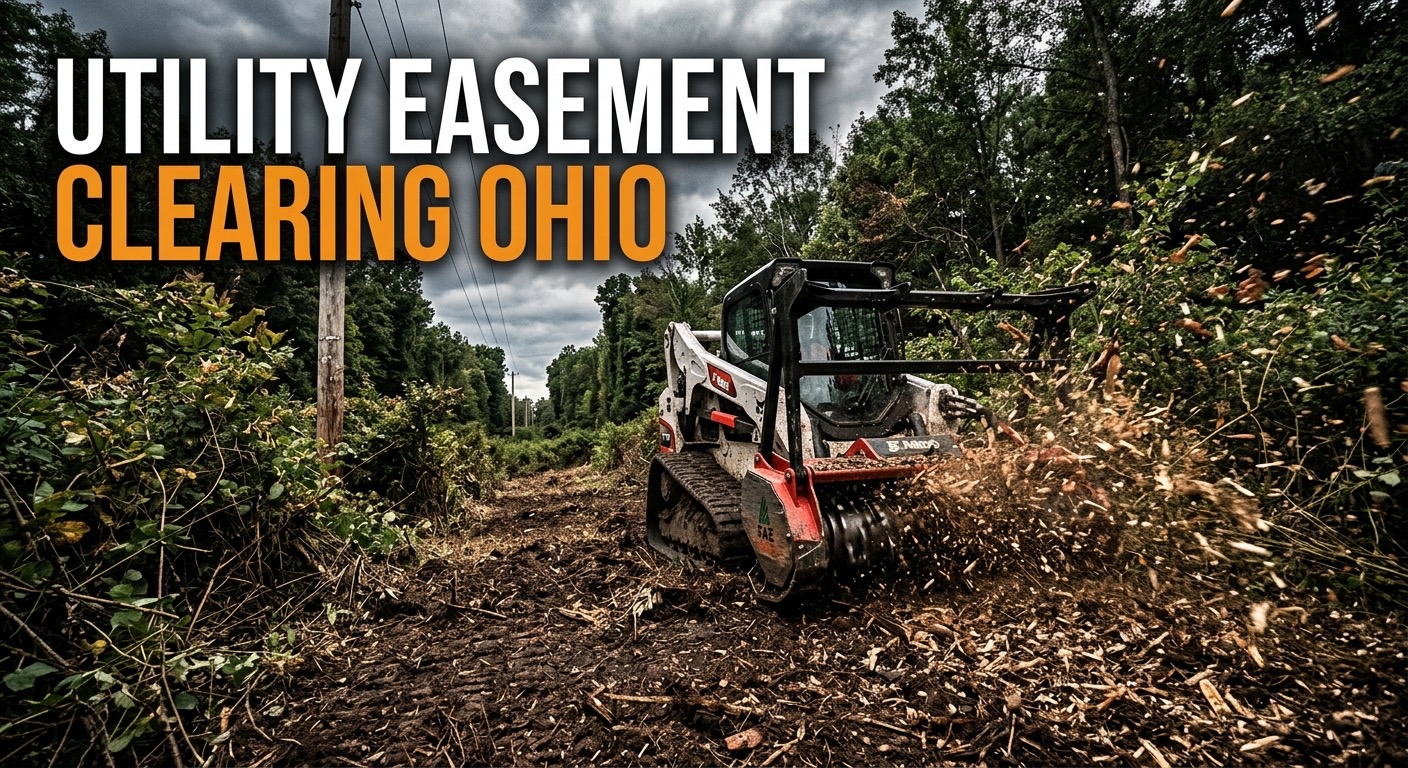
When the corridor is narrow and long, the job gets annoying in a hurry. That is exactly where forestry mulching and targeted brush clearing make sense. You can reopen access, keep soil disturbance low, and leave a clean finish instead of a torn-up scar through the property.
When brush clearing is the right move and when it is not
Not every utility easement needs a major clearing project. Some just need consistent mowing. Others need one solid reset because the corridor has gotten away from everyone. The line is usually pretty obvious once you walk it.
If the easement has woody brush, saplings, invasive growth, hidden obstacles, or no clear path for inspection and service, brush clearing is probably the right call. If the issue is tree limbs within dangerous distance of energized conductors, that may be utility-company work or specialized line-clearance work, not general land clearing. This matters. Working around live lines without the right plan is dumb and dangerous.
A brush clearing job
- ✓ Honeysuckle, briars, and saplings under access lines
- ✓ Overgrown rear-lot easements behind homes
- ✓ Underground utility corridors blocked by woody growth
- ✓ Long narrow access strips on rural acreage
- ✓ Utility or HOA access routes that need to be visible again
A line-clearance or utility-coordination job
- ✗ Tree work inside required conductor clearance distances
- ✗ Work that risks contact with energized overhead lines
- ✗ Digging near marked underground utilities without a plan
- ✗ Pole or transformer access requiring utility lockout or supervision
- ✗ Specialized pruning by power-line arborists
The smart move is to identify the lane first. If it is brush and small trees in an access corridor, Brushworks can usually handle it. If it touches energized clearance work, we coordinate instead of pretending every machine job is the same.
Why forestry mulching works so well on utility easements
Utility easements are usually long, narrow, and awkward. That is exactly the kind of work where hauling slash piles gets expensive fast. Forestry mulching is often the cleaner answer because it cuts and processes brush and small trees in place. Instead of leaving a pile every fifty feet, it turns the material into a mulch layer and keeps the corridor usable.
That matters for both looks and function. On a residential easement behind a subdivision, nobody wants a churned-up trench with piles of brush stacked along the fence line. On rural land, you still do not want deep ruts, exposed soil, and a bunch of material to burn or haul. Mulching keeps the footprint tighter and the finish more controlled.
It also makes follow-up maintenance easier. Once the easement has been reset properly, the next round is usually lighter and cheaper because you are managing regrowth instead of fighting a decade of neglect.
What forestry mulching does well on utility corridors
- • Reopens sight lines so utilities, boxes, poles, and drainage structures are visible
- • Handles invasive brush and saplings without a separate debris-haul phase
- • Keeps the corridor walkable for inspections
- • Disturbs the soil less than full dozing and grubbing
- • Works well on winding access strips and edges of wooded property
What a good utility easement clearing plan looks like
The best easement clearing jobs are not the ones where everything gets stripped bare. They are the ones where access is restored cleanly and the property still looks intentional when the machine leaves. That starts with a plan.
1. Confirm the corridor
A surprising number of owners know there is an easement somewhere but do not know the exact width or route. Before any serious clearing, confirm the corridor on the survey, plat, title paperwork, or utility documentation. Guessing is how people clear the wrong strip.
2. Identify what actually needs to go
Brush, invasive growth, small trees, hanging vine mats, and junk blocking access usually go. Healthy mature trees outside the corridor or screening that does not interfere with access can often stay. You want functional clearance, not mindless destruction.
3. Watch the utilities
Call before you dig. Mark underground lines. Think about guy wires, transformers, pedestals, valves, and low overhead hazards. Even when the work is mostly brush, the site needs a real hazard check first.
4. Plan for maintenance after the reset
The cheapest easement is the one you keep from getting ugly again. Once the corridor is open, the next phase might be simple mowing, spot-spraying invasives, or a lighter maintenance pass every couple years. The point is to avoid paying for the same full reset over and over.
How much utility easement clearing costs in Ohio
Pricing depends on access, density, slope, corridor length, and what kind of finish the site needs when the work is done. A short rear-lot easement with light woody growth behind a Cincinnati neighborhood is a very different job than a quarter-mile rural corridor swallowed by honeysuckle and saplings.
| Easement condition | Typical range | Notes |
|---|---|---|
| Light brush cleanup | $500 to $1,500 | Short corridor, light saplings, easy access |
| Moderate residential easement reset | $1,500 to $4,000 | Honeysuckle, briars, woody growth, tighter machine access |
| Rural or long-corridor mulching | $3,000 to $8,000+ | Long runs, slope, dense regrowth, or multiple access points |
| Special coordination work | Varies | Active utility coordination, difficult hazards, or combined services |
Those are real-world Cincinnati and southern Ohio planning numbers, not a universal rate card. If the corridor has hidden junk, old wire, dumped logs, wet ground, or steep sections, the number moves. The fastest way to get a useful estimate is still photos, address, and roughly how long and wide the easement is.
Need pricing on an overgrown utility easement?
Send the property address, a few phone photos, and the rough corridor length. We can usually tell pretty quickly whether this is a light cleanup, a full mulching reset, or something that needs utility coordination first.
Mistakes that make easement clearing more expensive
A few mistakes show up over and over on these jobs.
Waiting until access is impossible
The longer the corridor sits, the more it turns from mowing into woody clearing. Costs climb because the machine work gets slower and the obstacles get harder to see.
Treating line-clearance work like regular land clearing
If the problem is energized conductor clearance, you need the right crew and utility coordination. Pretending otherwise is how people get hurt.
Clearing more than the easement needs
Some corridors need access restored, not a football field carved through the yard. Good work is precise. It solves the problem without wrecking the look of the property.
Ignoring regrowth after the first cleanup
If you never touch the corridor again, Ohio wins. A maintenance plan keeps the second and third rounds cheap.
Who usually calls us for this work
Utility easement clearing is not just one type of customer. We see a mix.
- Homeowners who got a utility notice or finally got tired of the jungle behind the fence.
- HOAs and neighborhood boards trying to keep rear-lot utility corridors from becoming a liability.
- Rural landowners with easements crossing acreage that has not been maintained in years.
- Property managers and developers cleaning access before inspections, service work, or adjacent construction.
The common theme is simple. They do not need poetry. They need a passable corridor, a clean finish, and someone who understands the difference between brush clearing and utility line work.
How Brushworks handles utility easement clearing around Cincinnati
Brushworks handles the part of the job we are built for: brush removal, invasive growth clearing, forestry mulching, selective small-tree removal, and reopening tight access corridors without turning the property into a mud pit. We work across Cincinnati and southern Ohio, including Hamilton, Clermont, Warren, and Butler counties.
We are especially useful when the easement is overgrown but still a land-clearing problem, not an energized line-clearance problem. That is a sweet spot for us. We can reset the corridor, make the site visible again, and leave you with something you can maintain instead of dread.
If your easement issue crosses into specialized utility clearance, we will say that plainly. That honesty saves people money and keeps everyone safer.
Frequently asked questions
Who is responsible for clearing a utility easement in Ohio?
That depends on the easement language and the utility involved. Utilities often maintain access for their infrastructure, but property owners are still expected not to block the corridor and often end up handling general brush issues on their side.
Can you clear brush under power lines?
Sometimes yes, sometimes no. Brush and small growth in an access corridor are one thing. Hazardous clearance near energized conductors is another. We evaluate the site first and coordinate when the work crosses into line-clearance territory.
Is forestry mulching good for utility easements?
Usually yes. It is one of the cleanest ways to reopen long narrow corridors without leaving piles of debris or tearing the whole site apart.
How often should an easement be maintained?
In southern Ohio, waiting too long is expensive. Many corridors benefit from lighter touch maintenance every one to three years depending on sunlight, moisture, and the kind of regrowth you get.
What if the easement is behind several backyards in a neighborhood?
That is common. We can work with HOAs, property managers, or individual owners to reopen shared rear-lot access corridors while keeping the disturbance focused and controlled.
What is the next step if my easement is already overgrown?
Send photos, the property address, and the rough corridor length. If it is a standard brush-clearing problem, we can price it. If it needs utility coordination first, we will tell you that upfront.
Related articles
Pipeline Right-of-Way Clearing Ohio
How access clearing works on longer utility corridors and industrial right-of-way ground.
Fence Row Clearing Ohio
A practical guide to reopening overgrown property edges without tearing up usable ground.
Commercial Land Clearing Cincinnati
What property managers and commercial owners need to know about clearing access and problem growth.
If the easement is disappearing, handle it before the next growing season makes it worse
An overgrown utility corridor is one of those jobs that never gets cheaper by waiting. Get a quick number, get the access back, and move on with your life.