
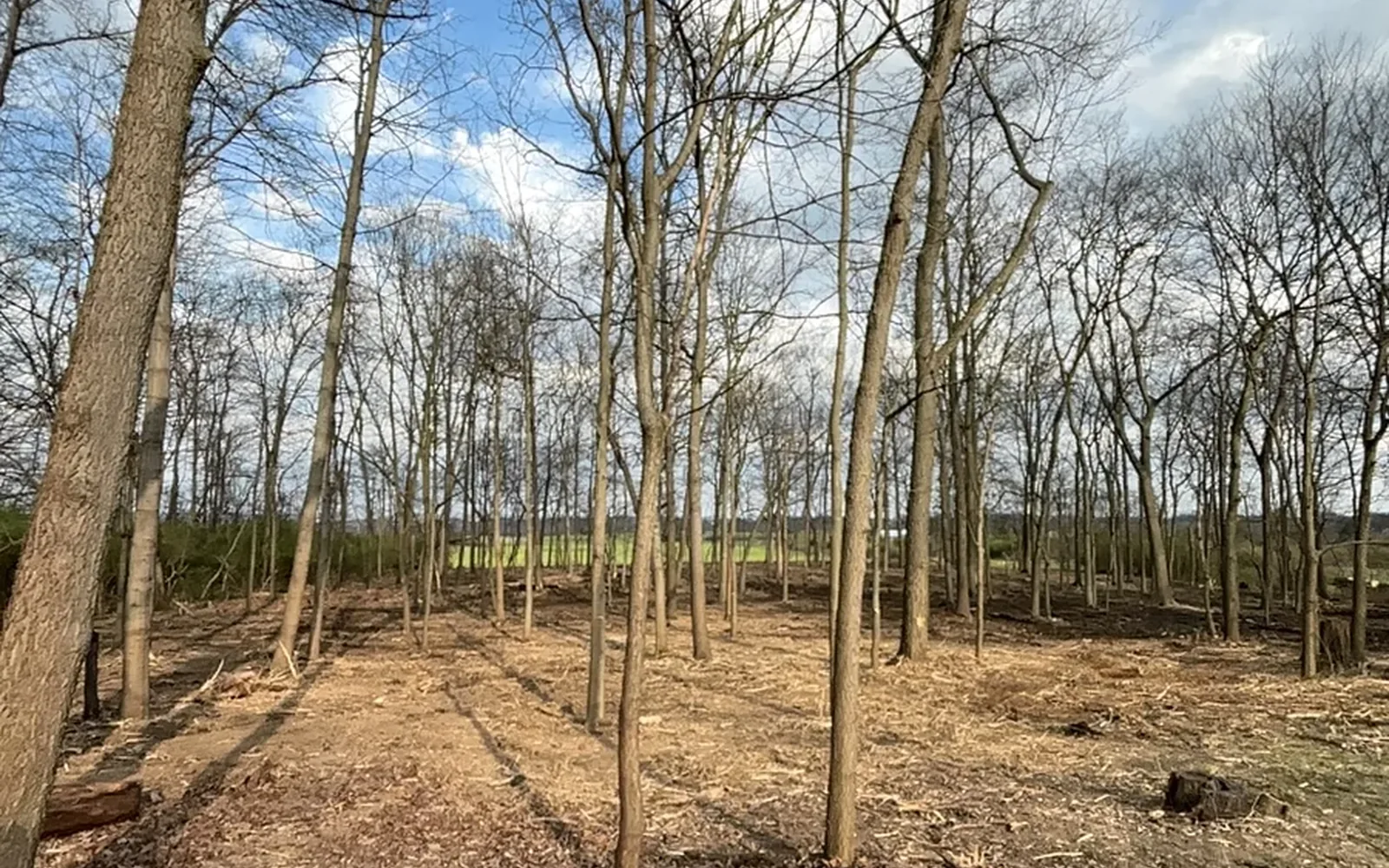
Clearing Land for Rural Home Sites Ohio

A rural home site needs more than an open patch where the house might sit. It needs access, work room, drainage awareness, utility routes, and a clearing plan that leaves the right trees standing.

Published July 8, 202612 min read
Clearing Land for Rural Home Sites Ohio
Field guide from Brushworks Services Co. — practical land clearing advice for Ohio property owners.

Buying rural land in Ohio is exciting until the first real site walk. The map shows a driveway, a homesite, a septic area, a barn, and maybe a few trails. The ground shows honeysuckle, grapevine, dead ash, old fence, briars, soft clay, hidden dips, and no clean way for a truck to reach the place where the house is supposed to go.

That is where land clearing starts to matter. Not as a cosmetic cleanup, and not as a race to scrape the whole lot clean. Good clearing for a rural home site is practical. It opens the ground needed for decisions, access, utilities, septic planning, drainage, and construction. It also protects the parts of the property that made you want rural land in the first place.

Around Cincinnati and across Ohio, many rural home sites begin as wooded acreage, overgrown pasture, an old farm parcel, or a lot split off a larger tract. The first clearing pass should make the property usable without forcing every later decision too early. Builders, driveway contractors, septic designers, well drillers, utility crews, and excavation crews all need room. The landowner still needs privacy, shade, good trees, and ground that drains correctly.

The best result is not the biggest clearing. It is the right clearing in the right order.

Planning a rural home site?

Send the driveway entrance, proposed home area, thick brush, and any septic or utility notes. Brushworks can help open the ground that needs to be seen before the build moves forward.

Start with access from the road

Before anyone worries about the exact corner of the living room, the property needs a way in. A rural home project depends on trucks, trailers, concrete crews, material deliveries, dumpsters, septic equipment, well rigs, and grading machines. If the driveway route is too tight or blocked, every contractor after that has a problem.

Access clearing usually starts at the road entrance. Look at the ditch, culvert, sight lines, gate opening, overhead limbs, mailbox area, and how a truck will swing in from the road. In the Cincinnati area, rural roads can be narrow with deep ditches and blind curves. A driveway that feels fine in a pickup may not work for a dump truck or a trailer carrying equipment.

Once inside the property, the route needs enough width and overhead room for real construction traffic. That does not mean cutting a highway through the woods. It means opening a working corridor with room for mirrors, trailers, buckets, and future maintenance. A tight tunnel through brush may look neat after clearing, but it can become useless when the first delivery truck arrives.

Clear enough to see the home site

A proposed home site on a drawing is only a starting point. Once brush and small trees are cleared, the ground often tells a more honest story. You may find slope, wet pockets, shallow gullies, old stumps, rock, buried debris, better views, worse views, or a smarter location fifty feet away.

That is why a first clearing pass should expose the area without locking the whole project into one shape. Clear the brush, saplings, vines, and problem growth around the proposed house area. Leave good trees outside the likely work zone when they are not in the way of grading, drainage, utilities, or safety. A rural home usually feels better when the lot still has edges and shade, not just bare open dirt.

Homeowners sometimes want to clear only the exact footprint. Builders usually need more. There has to be room for excavation, spoil piles, concrete trucks, framers, material staging, dumpster placement, parking, and equipment movement. If the home site is too tight, crews end up driving over roots, making ruts, or cutting more in a hurry later.

Do not clear blindly around septic ground

Septic planning can control where a rural home actually works. Soil tests, leach field layout, reserve area, setbacks, slope, and drainage all matter. Before heavy clearing, mark known septic test areas, proposed leach field zones, and any no-disturb areas from the designer or county process.

Forestry mulching can be useful around septic planning because it opens access and visibility without wholesale grading. The machine can clear brush so the soil evaluator, septic designer, or excavator can reach the area. But the clearing plan should respect the ground that may become the system. Ruts, heavy traffic, stump digging, or careless disturbance in the wrong area can make a hard project harder.

If septic locations are still unknown, keep the first phase flexible. Open access and candidate areas, then let the site work guide the final layout. On rural Ohio lots, the best house location may be the place that works with septic, driveway, drainage, and utilities together, not the place that looked best on a first sketch.

Think about the well and utilities early

Water, electric, fiber, gas, propane, and private utility routes need clearing too. A house site can be open, but if the utility route is still buried in brush, the project is not ready. Utility crews need to see grade changes, trees, wet spots, crossings, and where trenching equipment can move.

Mark the likely path from the road, pole, transformer, well location, propane tank, or service connection to the home site. If the route crosses a driveway, drainage swale, future fence, creek edge, or wooded slope, handle that before the trenching crew is waiting. Clearing the route early helps avoid last minute cuts through good trees or awkward utility lines placed where they will be in the way later.

Private utilities deserve special care. Old farm electric, water lines, cisterns, field tile, invisible fence, downspout drains, and abandoned lines may not show up on a public locate. If there is a chance something is buried, mark what you know and slow down in that area.

Drainage should shape the clearing plan

Ohio clay can be unforgiving. A rural home site that looks dry in August may hold water in March. Clearing exposes the ground, but it can also change how water moves if the plan ignores slope, swales, old ditches, and low spots.

Watch where leaves collect, where grass changes color, where soil stays soft, and where water has already cut small channels. If the driveway follows the easiest downhill line, it may become a water path. If the home site is boxed in by brush and berms, clearing may reveal that surface water needs a better route before construction starts.

Mulch left from forestry work can help protect exposed soil, but it is not a cure for poor drainage. The clearing phase should make drainage easier to inspect. Grading, culverts, ditches, stone, fabric, and final water management are separate decisions that usually come after the route and building area are visible.

Leave room for builders to work

Rural construction takes space. A framing crew, roofing crew, concrete crew, excavator, septic installer, well driller, and utility contractor all use the land differently. Add delivery trucks, lumber piles, trusses, gravel, pipe, dumpsters, portable toilets, temporary parking, and turnaround room, and the work area gets larger than most owners first expect.

That does not mean the entire front field has to be cleared. It means the clearing plan should include a staging area. A simple open spot near the house site or along the driveway can keep trucks from driving across soft ground and keep materials out of the way. It also gives crews a place to turn around without backing a trailer down a long wooded lane.

Ask your builder what they need before the clearing crew arrives. Some builders want a broad open pad and access all around the house. Others can work tighter if the route and staging area are planned well. The earlier those needs are known, the less likely the site gets hacked open in a rush.

Selective clearing protects the value of rural land

People buy rural property for space, quiet, trees, views, privacy, and control over the land. Over-clearing can damage that value. Once mature screening trees are gone, they are not coming back quickly. Once a wooded edge is stripped, the house may feel more exposed than expected.

Selective clearing is often the better fit. Remove invasive shrubs, dead trees, grapevine, briars, saplings in the work zone, and trees that conflict with the driveway, house, septic, utilities, or drainage. Keep healthy trees that frame the view, block the road, shade a western exposure, or separate the house from neighboring ground.

Some trees still need to come down. Dead ash, leaning trees, trees crowding the foundation, and trees inside future grade work can create safety and construction problems. Large trees near the home site may need a tree service instead of a mulcher. The point is to make those calls on purpose.

Old farm parcels hide old problems

Many rural home sites around Ohio come from former farms or long-held family land. Those properties often hide old fence, posts, concrete, dump piles, tile, wells, cisterns, scrap metal, tires, buried rock, and abandoned lanes. Brush grows over all of it.

Tell the clearing crew about anything you know before work starts. Walk the property if it is safe. Mark old wire, posts, wells, soft spots, debris piles, and structures that should stay. Forestry mulchers are built to process vegetation, not steel, concrete, or mystery farm junk.

Clearing can also reveal useful history. An old lane may become the best construction access. A former field edge may be the cleanest utility route. An old high spot may make more sense for staging than the original plan. The first phase should help the property explain itself.

Coordinate clearing with permits and local rules

Rules vary by county, township, subdivision, and site condition. Some rural work is straightforward. Other projects touch steep slopes, floodplain, stream buffers, driveway permits, culvert requirements, stormwater controls, or building department conditions. If the lot is in Hamilton, Clermont, Butler, Warren, or nearby counties, do not assume every parcel follows the same process.

Before clearing near a road ditch, creek, wet area, shared lane, or boundary, check what applies. If a driveway permit, septic review, grading plan, or erosion control step is required, it is better to know before the machine is on site. Clearing in the wrong place can create repair work, delays, or an uncomfortable conversation with the next inspector.

For most private rural home sites, the practical move is simple: mark the known limits, avoid sensitive areas until they are confirmed, and clear in phases when the final layout is still moving.

Use phases when the site is still undecided

A phased clearing plan can save money and regret. Phase one opens access, reveals the likely home area, reaches septic and utility planning zones, and creates enough room for site walks. Phase two happens after the builder, septic designer, driveway contractor, or excavator confirms what needs more space.

This approach works well on wooded lots and overgrown acreage because the owner can make better decisions once the ground is visible. Instead of clearing every possible option, you clear the areas needed to choose the right option. That keeps more trees standing and reduces wasted machine time.

Phasing also helps with budget. Rural home projects already have moving parts. Driveway stone, culverts, well work, septic installation, grading, and utilities add up. Clearing the property in a practical order keeps the first spend tied to decisions that matter.

Photos that help with a rural home site quote

Good photos make it easier to price the work and spot issues early. Start at the road and take a wide photo of the entrance. Then take photos down the proposed driveway route, from both directions if possible. Show the thickest brush, the home site, the septic area, any slopes, wet ground, old fence, overhead wires, and the place where trucks need to turn around.

If you have a site plan, driveway sketch, survey, septic drawing, or marked screenshot, include it. The map does not have to be perfect. It just needs to help connect the photos to the ground. If the route is still undecided, say that. A clearing plan can be built around options as long as everyone understands what is fixed and what is flexible.

For Cincinnati area sites, mention narrow access roads, steep entrances, locked gates, shared driveways, drainage ditches, and any neighbor or easement concerns. Those details affect how equipment reaches the land and how cleanly the work can be done.

What clearing does and does not finish

Forestry mulching and land clearing can open the site, remove brush, clear access, expose the grade, reduce overgrowth, and make room for the next trades. It can turn a hidden rural lot into a place where builders and designers can actually work.

It does not build the house pad, install the driveway base, compact fill, remove every stump needed for a foundation, install septic, dig utilities, or solve drainage by itself. Those are usually excavation, grading, utility, or septic scopes. Good clearing makes those scopes easier to plan and execute.

That distinction matters. A clean clearing job should leave the site ready for the next right step, not pretend every construction problem has been solved.

Clear for the home you want to live in

A rural home site is not just a construction zone. It is the future driveway you will use every day, the view from the porch, the shade near the house, the path to the barn, the way water moves during a storm, and the privacy between you and the road.

Clearing should serve that long-term use. Open what needs to be open. Keep what is worth keeping. Make room for builders without stripping the property flat. Pay attention to septic, utilities, drainage, and access before the schedule gets tight.

Done well, land clearing gives the rest of the project a clean start. It turns an overgrown rural parcel into a buildable site while leaving enough of the land intact to still feel like Ohio country ground.

Frequently asked questions

What should be cleared first for a rural home site in Ohio?

Start with safe access from the road, the proposed driveway route, the home site, utility routes, septic test areas, and enough staging room for builders and delivery trucks. Clearing everything at once is not always the best first move.

Can forestry mulching prepare a house pad?

Forestry mulching clears brush, vines, saplings, and smaller trees so the site can be inspected and planned. It does not replace excavation, grading, stump removal, soil compaction, or foundation preparation.

How much land should be cleared around a rural house site?

The right amount depends on the home footprint, driveway, septic layout, utilities, drainage, builder access, fire access, and how much privacy or woods the owner wants to keep. A selective clearing plan usually works better than stripping the whole lot.

Should septic and well locations be marked before clearing?

Yes. Mark proposed septic areas, soil test pits, reserve areas, wells, private utilities, and no-disturb zones before clearing. Rural home sites can become expensive fast if the wrong ground is disturbed.

When is a good time to clear land for a rural home site in Ohio?

Late fall, winter, and dry summer windows are often helpful because visibility and ground conditions can be better. Spring can work too, but wet Ohio clay and active drainage need more care.

Related articles

Open the right ground before construction starts

Use instant pricing for a starting point, or send site photos and notes so Brushworks can help plan the first clearing pass.