
Clearing Woods for Backyard Expansion Cincinnati
A bigger backyard does not have to mean wiping out the woods. Most good projects open the rough edge, save the better trees, and leave a space the owner can actually maintain.
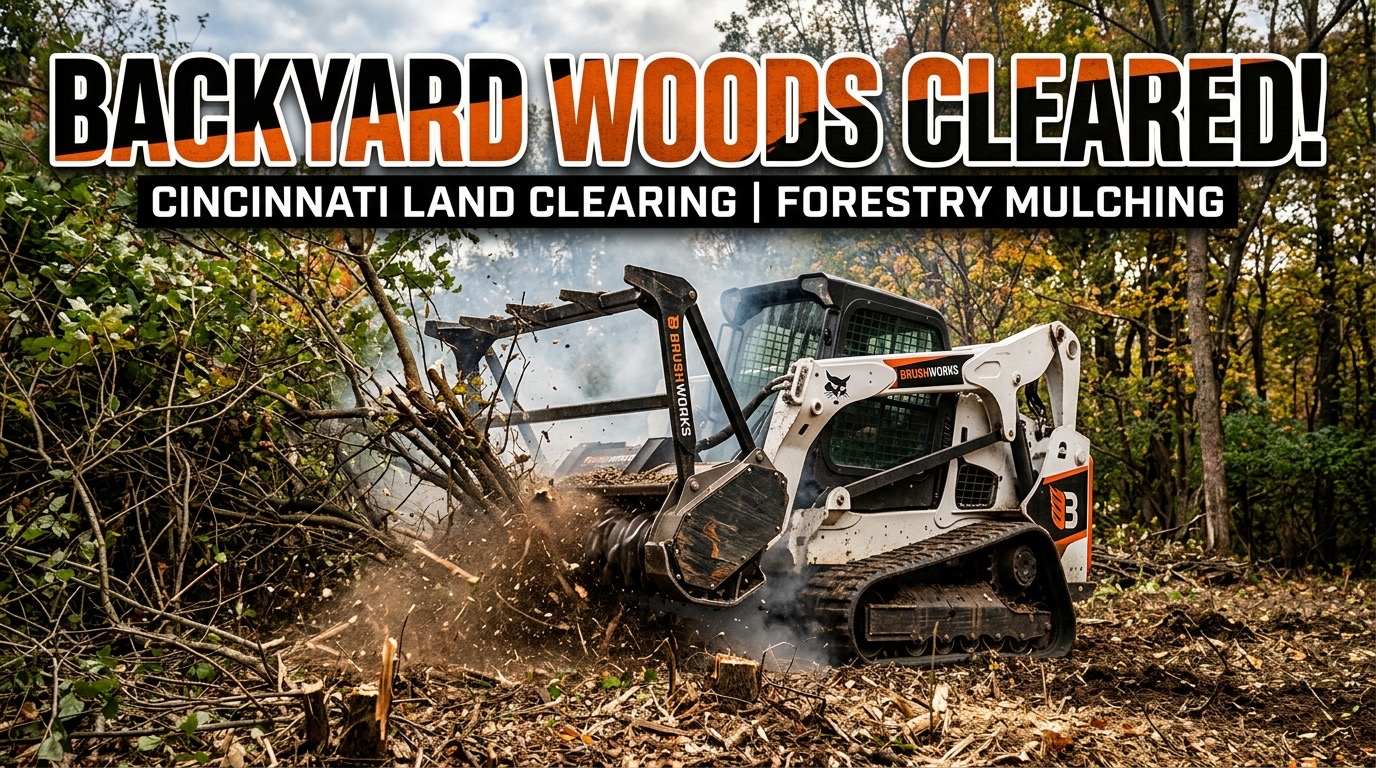
Backyard woods can feel like a bonus when you first buy a place in Cincinnati. They give privacy. They soften road noise. They make a small lot feel deeper. Then the understory fills in. Bush honeysuckle blocks the view. Vines pull at good trees. Briars take over the back fence. The ground behind the play set, shed, or patio becomes a place nobody walks unless they are wearing boots and long sleeves.
That is when homeowners start thinking about backyard expansion. The goal may be a larger lawn, a fire pit, a dog area, a garden, a trail, a shed pad, a play area, or just enough open ground to see what is back there. Around Hamilton County, Clermont County, Butler County, and Warren County, that often means clearing wooded edges that have been ignored for years.
The best work starts with restraint. Clearing woods behind a house should not be a blind push into the tree line. It should answer a simple question: what space do you need back, and what part of the woods still helps the property? A heavy hand can leave a backyard exposed, muddy, hot, and harder to maintain. A careful plan can open usable ground while keeping shade, privacy, and the trees worth saving.
Brushworks handles backyard brush clearing and wooded edge cleanup throughout the Cincinnati area. The work is usually part land clearing, part access planning, part tree selection, and part maintenance planning. If you get those pieces right, the new yard feels like it always belonged there.
Thinking about expanding into a wooded backyard?
Send the address, photos from the house toward the woods, and a rough idea of what you want the space to become. Brushworks can help plan a selective clearing project that fits the lot.
Start with the finished use
Before cutting starts, decide what the new backyard space needs to do. A play area needs different clearing than a walking trail. A dog fence needs clean lines and visibility. A garden needs sun and access to water. A fire pit needs room to sit, move, and keep flame away from low limbs and dry brush. A shed or garage approach needs enough clearance for delivery, gravel, and later maintenance.
That finished use decides the clearing line. If the purpose is a larger lawn, the edge should be shaped so a mower can turn without fighting stumps, roots, and awkward corners. If the purpose is a natural sitting area, the crew may leave more canopy and focus on removing honeysuckle, vines, deadfall, and thorny growth. If the purpose is a trail, the route should follow better ground instead of forcing a straight line through wet spots.
This is where many backyard projects go sideways. A homeowner says, "clear the woods back there," but the real goal is a level spot for a swing set or a clean view from the patio. Say that up front. The more practical the target, the better the finished space will be.
Do not clear away the trees that make the yard better
Most wooded backyard edges have a mix of good and bad growth. Mature oaks, maples, walnuts, sycamores, beeches, and tulip poplars may be worth keeping. They give shade, structure, and a finished look. The problem is often underneath them: bush honeysuckle, grapevine, multiflora rose, greenbrier, poison ivy, dead limbs, storm debris, and crowded saplings.
Selective clearing can remove the rough lower layer without turning the yard into a bare field. That matters in Cincinnati neighborhoods where privacy is part of the value of the lot. It also matters on hot summer afternoons. A yard that keeps good shade can be more comfortable than a fully opened yard that bakes all day.
Mark the trees you want to keep before the crew arrives. Use flagging tape, paint, or a clear map. If there are trees you are unsure about, talk through them on site. Some trees look fine from the house but are hollow, leaning, split, or wrapped in vines. Others may look messy in winter but are healthy and useful. The goal is not to save every tree. The goal is to avoid losing the good ones by accident.
Cincinnati wooded lots often mean honeysuckle first
For many backyard expansion jobs in southwest Ohio, the first fight is bush honeysuckle. It grows thick along wooded edges, fences, creek corridors, ravines, and old farm lots. It leafs out early, holds leaves late, and blocks light from reaching the ground. Under a heavy honeysuckle layer, a backyard can feel smaller than it really is.
Removing honeysuckle can change the whole property. Suddenly you can see the grade. You can walk to the back line. You can spot old fence, trash, drainage problems, or trees that need attention. You may also find that the woods are deeper, steeper, wetter, or cleaner than expected. That is useful information before you commit to lawn, fencing, grading, or a larger backyard project.
Honeysuckle also comes back if it is ignored. Mechanical clearing opens the ground, but roots and seed can push new growth. Some properties need mowing, follow-up cutting, or targeted invasive plant treatment from a qualified applicator. If you want the expanded yard to stay open, plan the second season before the first season ends.
Watch the property line before the brush is gone
Wooded edges can hide boundaries. A fence may be off the line. A neighbor may have always mowed a strip that is not theirs. County GIS can be helpful, but it is not a survey. If the new backyard edge will get close to a neighbor, a fence, or a shared tree line, confirm the boundary before clearing.
This matters most when the project opens visibility. A thick wall of brush may have hidden a property line disagreement for years. Once it is gone, everyone can see the change. A survey, marked pins, or a clear agreement with the neighbor can prevent a small clearing job from turning into a long argument.
It is also worth thinking about what the neighbor will see after the work. You may want a larger yard, but you may not want a direct view into the next patio. Leaving a screen of better trees or a softer wooded strip can make the expanded yard feel more private on both sides.
Access decides what equipment can do
Backyard clearing is often limited by how equipment reaches the work area. A wide open rural lot is simple. A Cincinnati backyard with a narrow side gate, retaining wall, soft lawn, septic area, overhead wires, steep slope, or tight turn is different. The machine may need a clear route from the driveway to the woods, or the work may need to be staged by hand in tighter spots.
Before the job, walk the access route. Measure gates. Look for low branches, landscape beds, downspout drains, sprinkler heads, invisible fence, private electric, gas lines, septic components, and soft areas that could rut. If access crosses finished lawn, talk about weather and ground conditions. Waiting for drier ground can be cheaper than fixing turf damage afterward.
Access also affects the quote. Two identical wooded edges can price differently if one is easy to reach and the other requires tight handling through a side yard. Good photos should show the work area and the route to reach it.
Drainage can change after the woods open
Clearing a wooded backyard edge changes sunlight, leaf cover, and how people use the ground. It can also expose drainage patterns that were hidden under brush. Cincinnati clay, ravines, creek edges, shallow swales, and old downspout routes all need attention. A new lawn area will not work well if storm water runs through the middle of it.
Look for low spots, wet weather flow, standing water, soft soil, and erosion before clearing. If the area sits below the house, pay attention to downspouts and sump discharge. If it sits near a creek, ditch, or steep slope, be careful about removing stabilizing vegetation without a plan. Brush clearing can make maintenance easier, but it should not send water where it does not belong.
Forestry mulching leaves material on the ground, which can help cover exposed soil. It is still not a drainage system. If the expanded backyard will become lawn, patio space, or a play area, you may need grading, soil work, seeding, sod, drains, or stone after clearing. Opening the woods is often the first phase, not the finish line.
Forestry mulching leaves a rough natural surface
Forestry mulching is a good fit for many wooded backyard expansion projects because it grinds brush and small trees in place. Instead of dragging piles through the yard or hauling brush away, the machine turns the growth into mulch. The result is cleaner than a tangled brush pile, and the owner can walk the area right away in many cases.
It is important to know what that finish is. Mulching does not create a finished lawn. It does not remove every stump below grade. It does not level the yard. It opens the area and leaves a rough natural surface that can be improved from there. For some homeowners, that is exactly right. For others, it is the first step before grading, topsoil, seed, sod, fencing, or landscape work.
Large trees, hazardous trees, trees near houses, and trees near utility lines may require a tree service. Deep stumps, boulders, concrete, buried debris, and old metal can require extra planning. A good clearing plan is honest about what the machine can do and what another contractor may need to handle later.
Plan the transition from lawn to woods
The edge between yard and woods is where maintenance usually succeeds or fails. If the line is too jagged, too narrow, or full of stump clusters, mowing becomes annoying. If the line is cut too hard, the yard may feel exposed. If the edge is left with vines and invasive shrubs, the woods will start moving back into the lawn.
A clean transition might be a mowable curve, a mulched natural edge, a trail, a fence line, or a planted buffer. The right answer depends on how the family uses the yard. Kids and dogs may need open sight lines. A fire pit may need a wider cleared pocket. A garden may need more sun. A quiet sitting area may work better under partial shade.
Think about where the mower turns, where leaves will collect, where snow or rain will move, and where new sprouts will be easy to spot. A backyard expansion should make weekly maintenance simpler, not leave behind a shape that only looked good on the day the machine left.
Permits, HOAs, and local rules can matter
Basic brush removal on private upland property is usually more straightforward than building, grading, or changing drainage, but local rules still matter. Cincinnati area properties can fall under city, township, county, HOA, right-of-way, floodplain, stream corridor, hillside, or tree preservation requirements. The details change by address and project scope.
If the work is near a road, creek, ravine, drainage path, steep hillside, shared boundary, or regulated area, check before clearing. If the next phase includes grading, retaining walls, fence work, a pool, a detached garage, a driveway extension, or a patio, ask the contractor or local office what they need before the ground is opened.
Clearing first can help those conversations because everyone can finally see the ground. Just avoid changing drainage, removing protected trees, or crossing boundaries without knowing the rules.
What to send for a better backyard clearing quote
Photos should show the house side, the access route, the wooded edge, the thickest brush, the desired clearing line, slopes, fences, gates, drains, and trees you care about. Stand at the patio or back door and take wide photos toward the woods. Then take photos from inside the woods looking back toward the house if you can reach it safely.
A marked screenshot helps even more. Draw the rough clearing area on a phone map, survey, or county image. Mark the must-do area and the nice-to-have area if the budget may need phasing. Include the finished use: lawn, dog area, trail, fire pit, shed, garden, fence, play area, or simple cleanup.
Mention anything hidden. Old wire, buried metal, drain tile, private utilities, septic fields, wells, sprinkler lines, invisible fence, play equipment, landscape walls, and soft ground all matter. Nobody likes surprises under honeysuckle.
What happens after the woods are cleared
The new space needs a plan. If you want grass, expect cleanup, soil prep, seed or sod, and mowing. If you want a natural wooded area, expect periodic trimming and invasive follow-up. If you want a trail, keep it wide enough for the mower, UTV, or tool you will use to maintain it. If you want a fire pit, handle seating, access, drainage, and safe clearance before buying furniture.
Backyard expansion works best when clearing and finish work are treated as separate steps. The clearing reveals the ground. Then you can make better decisions about grade, shade, drainage, and layout. Sometimes the first plan changes once the woods are open. That is normal. You may find a better tree, a wet spot, an old fence, or a natural flat area that changes the layout.
For Cincinnati homeowners, the payoff is simple. The yard gets bigger because it becomes usable, not because every tree disappears. You can walk the back line. You can mow the edge. You can see the kids or dogs. You can plan the next project without guessing what is under the brush.
Frequently asked questions
Can wooded backyard edges be cleared without removing every tree?
Yes. Many Cincinnati backyard expansion projects are selective. Brushworks can remove honeysuckle, briars, vines, saplings, deadfall, and crowded understory while preserving better shade trees, privacy trees, and useful wooded edges.
What should I mark before clearing woods behind my house?
Mark the desired clearing line, trees to keep, property corners, fence lines, drains, utilities, septic areas, play sets, sheds, landscape features, and any private lines. If the boundary is uncertain, confirm it before work starts.
Is forestry mulching good for backyard expansion?
Forestry mulching works well when equipment can safely reach the area and the goal is to remove brush, vines, saplings, and small trees. It leaves a rough mulch surface, not finished lawn, so grading, seeding, sod, or landscaping may be separate next steps.
Will clearing woods make my Cincinnati backyard muddy?
It can if drainage, slope, and soil are ignored. Cincinnati clay and shaded wooded ground can stay wet. A good plan watches swales, downspouts, creek edges, low spots, and machine access before opening the canopy.
How do I keep a newly expanded backyard from growing back?
Plan the finish before clearing. A new lawn area needs cleanup, soil work, seed or sod, and mowing. A natural edge needs periodic trimming and invasive follow-up. If the opened area cannot be maintained, Cincinnati brush will start moving back in.
Related articles
Residential Brush Removal Cincinnati
How homeowners can clear honeysuckle, briars, vines, fence lines, and wooded yard edges.
How to Clear an Overgrown Backyard in Cincinnati
A guide to opening backyard space while keeping trees, privacy, and drainage in mind.
Land Clearing for Outdoor Living Spaces Cincinnati
Planning patios, fire pits, play areas, gardens, and backyard projects before clearing starts.
Ready to open up the backyard?
Use instant pricing for a starting point, or send photos from the house, the access route, and the wooded edge so Brushworks can help plan the right clearing line.