
Forestry Mulching for New Construction Sites Ohio: Clean Access Before Builders Show Up
Before excavation starts, overgrown land needs practical access, clear work zones, and fewer surprises. Forestry mulching can make that happen without stripping the whole lot bare.
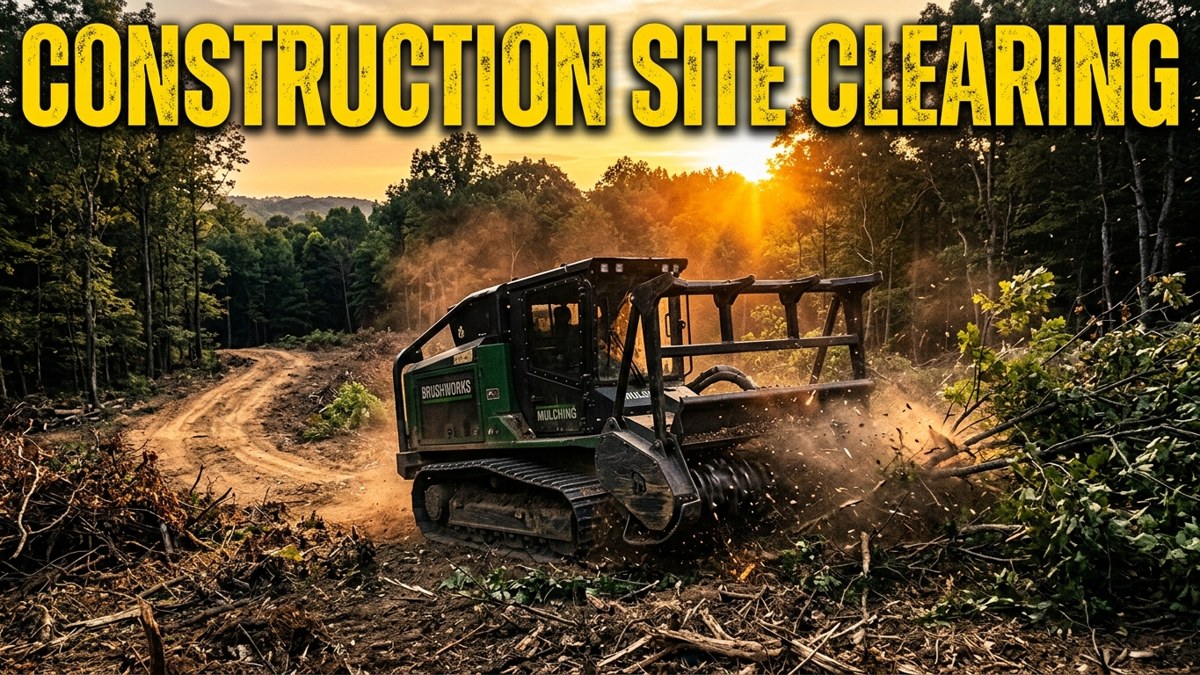
Most construction problems start before the first footing is dug. The driveway path is too tight. The excavator cannot turn around. The survey stakes disappear in honeysuckle. The builder thinks there is room for a dumpster until the concrete truck shows up. Raw ground has a way of hiding expensive surprises.
Forestry mulching is often the clean first move for new construction sites in Ohio, especially on wooded lots, old farm edges, rural acreage, and overgrown parcels around Cincinnati. It opens the site without turning the whole property into a mud hole. It gives builders, excavators, septic designers, surveyors, and utility crews room to work. It also helps the landowner see what they actually bought.
That does not mean a mulcher does every part of site prep. It does not pour concrete, remove every stump root, build a driveway base, or replace an excavator. It clears the brush, small trees, vines, and junk growth that keep everyone else from doing their job well. On the right site, that step saves time and prevents bad decisions.
Here is how to use forestry mulching before new construction without clearing too much, wrecking the soil, or creating work the builder has to fix later.
Start with access, not the house pad
The first practical question is simple: can trucks and equipment get in, turn around, and work safely? If the answer is no, the building footprint is almost beside the point. A good house site is useless when the driveway path is blocked by saplings, thorn trees, dead ash, grape vines, or a ditch nobody noticed from the road.
On construction lots around Clermont County, Warren County, Hamilton County, Butler County, Brown County, and nearby rural Ohio, we usually think about access before anything else. That means opening the driveway route, a turn-in from the road, room for machines to unload, and enough space for the surveyor and excavator to reach the actual building area.
Do not make the access lane too cute. Builders need practical space. Concrete trucks, dump trucks, lumber deliveries, septic installers, well drillers, and utility crews do not move like a side-by-side. A narrow trail that feels fine on foot can become a daily headache once construction starts.
At the same time, wider is not always better. Clearing a sixty-foot scar through the woods when a sensible construction entrance needs thirty feet just creates more exposed soil and more regrowth to manage. The goal is enough room, not maximum damage.
Use mulching to reveal the real site
Overgrown land lies to you. From the road, it may look flat. Under the brush, there may be a swale, old fence, buried trash, wet pocket, stump field, abandoned lane, or drop-off that changes the plan. You do not want to learn that after the builder has priced the project around a clean sketch.
Forestry mulching removes the vegetation layer so the team can read the ground. Survey stakes are easier to find. Property corners are easier to reach. Soil test pits are easier to place. The excavator can see slope, drainage, rock, and soft spots before mobilizing heavier equipment.
This matters on custom home sites, pole barns, barndominiums, detached garages, small commercial buildings, and farm structures. Even a simple building can get expensive when the site plan ignores real conditions. Clearing early helps everyone make better calls before the work gets locked in.
It also helps the landowner. A lot of people walk a wooded lot once, fall in love with the idea, and never see the rough parts until construction starts. Opening the right lanes and work areas makes the property easier to understand. You can see where the sunrise hits, where the water wants to run, which trees are worth keeping, and which areas should stay untouched.
Need to open an Ohio construction site before the builder starts?
Send Brushworks the address, site plan if you have one, and a few photos from the road and building area. We can clear access, staging space, and overgrown edges so the next crew is not guessing through brush.
What forestry mulching handles well
A forestry mulcher is built for brush, saplings, invasive shrubs, small trees, vines, field edges, fence rows, and overgrowth that blocks access. It grinds that material in place and leaves a rough mulch layer on the ground. On construction sites, that can be useful because the site becomes walkable and visible quickly.
Common pre-construction mulching work includes opening a driveway corridor, clearing around survey stakes, cutting access to septic test areas, opening utility routes, creating equipment staging space, cleaning up old fence rows, widening an existing farm lane, and knocking back invasive honeysuckle or autumn olive around the future work zone.
It is also a good fit when the landowner wants to preserve the look of the property. Bulldozing everything into piles can make a wooded lot look like a bomb went off. Mulching can keep the clearing more selective. You can open the necessary areas while keeping privacy buffers, good trees, and natural edges.
The finished surface is not a final grade. It is a cleared working surface. That distinction matters. A mulched path can help a crew walk, stake, measure, and plan. It should not be treated as a compacted driveway or building base.
What forestry mulching does not replace
There are jobs a mulcher should not pretend to do. It does not excavate a foundation. It does not remove root balls from a house pad. It does not install culverts, build a gravel driveway, compact subgrade, trench utilities, or correct drainage by itself.
If a building, driveway, patio, septic area, or concrete slab is going in, the builder or excavator may need certain material removed, not just mulched. Woody mulch can be helpful on the surface in non-structural areas, but it does not belong buried under a driveway base or foundation where it can decay and settle.
Stumps are another place to be clear. Forestry mulching can grind stumps low and make the site easier to move across. It does not dig every stump and root out of the ground. For final construction areas, the excavator may still need to remove stumps, strip topsoil, cut grade, and prepare the base properly.
That is not a weakness. It is just the order of operations. Let the mulcher open the site. Let the excavator build the site.
Clear around the plan, not around a guess
If you already have a site plan, use it. If you do not, clear enough to make planning easier without committing the property to a bad layout. The most expensive clearing mistake is removing good trees or buffers before the builder, surveyor, or health department has confirmed where the building and septic can actually go.
A house pad may move because of slope. A driveway may shift because of sight distance at the road. A septic area may change because the soil test failed in the first spot. A utility route may need a straighter path. If everything is cleared based on a rough idea, you can end up with open ground in the wrong place and the real work area still buried in brush.
For many Ohio lots, the smarter first phase is access and visibility. Open the driveway approach, survey lines, likely building zone, and routes needed for testing. Then finalize the plan. Once the layout is confirmed, clear the remaining work area with confidence.
This is slower than guessing and ripping everything out. It is also cheaper than fixing a cleared mess.
Protect the trees worth keeping
One reason people build on wooded land is because they want the trees. Then construction starts and the best trees get boxed in by equipment, buried around the roots, scraped by machines, or cut down because nobody protected them early.
Before clearing, mark trees that should stay. Think about shade, privacy, driveway feel, future yard space, views, and safety. Mature oaks, walnuts, hickories, maples, and healthy specimen trees can add real value to a home site. Dead ash, leaning trees, invasive callery pear, tree of heaven, and crowded junk growth may need to go.
Tree protection is more than saving the trunk. Roots matter. Heavy equipment, soil compaction, grade changes, and trenching can hurt trees even if the bark looks fine. If a tree is important, leave room around it and keep repeated construction traffic away from the root zone where possible.
There is also a safety side. Dead ash trees are common across Ohio because of emerald ash borer. They get brittle and dangerous. If dead trees are near the future driveway, staging area, or building site, deal with them before the lot is full of crews and vehicles.
Plan for water before the site is bare
Ohio weather will test a construction site fast. A summer thunderstorm can turn loose soil into ruts. A spring rain can show exactly where the driveway should not have gone. Clay ground around Cincinnati and southwest Ohio does not forgive poor drainage.
Forestry mulching can help because the mulch layer reduces bare soil exposure in cleared areas. It slows runoff, protects the surface, and keeps the site from looking like scraped clay on day one. That helps most in access lanes, wooded edges, and future yard areas that are not being immediately excavated.
Still, mulch is not a drainage plan. Watch where water already runs. Avoid driving the main construction access through the wettest pocket if there is a better route. Leave vegetation near creek banks, ditches, swales, and pond edges unless there is a specific reason to open them. If the site needs culverts, stone construction entrance, erosion control, silt fence, or grading, that belongs in the builder or excavator plan.
A cleared site should make water easier to understand, not harder to manage.
Leave room for staging and deliveries
Construction needs space that is not the house. Lumber, trusses, dumpsters, stone, pipe, septic materials, forms, fuel, trailers, and employee parking all need somewhere to go. If staging is ignored, that space gets invented later by whichever truck arrives first.
On tight rural lots, a small staging area near the entrance can keep the rest of the property from getting chewed up. On larger acreage, it may make sense to open a temporary loop or landing so trucks do not back long distances through trees. For pole barns and outbuildings, staging near the building pad can save time as long as the ground can handle traffic.
The staging area does not need to be pretty. It needs to be safe, reachable, and out of the way of final grading when possible. Clear it intentionally. Do not let ten different crews make ten different paths because nobody planned where the work would happen.
Think about septic, wells, and utilities early
Septic and utility routes can control more of the site than people expect. In many Ohio counties, the septic area is not just a small tank location. It may include primary and replacement leach field areas that need to stay protected. Driving heavy equipment through the wrong spot can create problems before the house is built.
If the lot needs a septic design, clear access for soil testing and layout, but be careful about unnecessary disturbance in likely leach field areas. If utilities are coming from the road, think about how straight or practical that route needs to be. If a well is planned, the drill rig needs access and room too.
Forestry mulching helps these crews reach the places they need to evaluate. It should not be done blindly through areas that the health department, engineer, or utility provider may want protected. When in doubt, clear paths and visibility first, then widen once locations are confirmed.
A good pre-construction clearing sequence
The cleanest projects usually follow a simple order. First, gather the survey, rough site plan, driveway idea, septic information, and any county or township requirements. Second, walk the property and mark what needs access, what should stay, and what is unsafe. Third, clear enough to expose the ground and let the professionals do their layout. Fourth, finalize the construction limits. Fifth, clear the confirmed work zones and leave the protected areas alone.
This sequence works because construction sites change. Nobody wants to pay for clearing twice, but selective phases are not the same as wasted work. Opening the site for layout can prevent bigger mistakes later.
For simple lots, the whole thing may happen in one visit. For complicated wooded properties, steep ground, long driveways, creek crossings, or uncertain septic locations, phasing is usually smarter.
What Brushworks looks for on construction clearing jobs
When Brushworks walks a new construction site, we are looking for access, working room, problem trees, drainage, property boundaries, and the parts of the lot that should not be touched yet. We want to know where the driveway enters, where the building is likely to sit, where utilities may run, where trucks will stage, and where good trees or buffers should stay.
We also look for the stuff that causes headaches: dead ash, thorny locust, honeysuckle walls, old fence, steep side slopes, wet pockets, hidden debris, and narrow turns. Those are the things that slow down builders if they are ignored.
Brushworks clears construction access and building sites across Greater Cincinnati and southwest Ohio. We work on rural home sites, barns, garages, small commercial lots, farm improvements, and wooded acreage where the first job is making the property usable. We are not there to over-clear the land. We are there to open the right ground so the builder, excavator, and landowner can move forward with fewer surprises.
If your construction site is still buried in brush, start with the basics: address, photos, rough plan, and what needs to happen next. From there, the clearing plan gets much easier.
Frequently asked questions
Is forestry mulching good for new construction sites in Ohio?
Yes, when the site has brush, saplings, invasive growth, trails, or wooded edges that need opened before layout, excavation, or utility work. It is not a replacement for grading, stump removal, basement excavation, or engineered site work, but it is a strong first step for making raw land visible and accessible.
Can you build directly over mulched material?
Usually no. Mulch can stay in non-building areas for erosion control and access, but house pads, driveway bases, septic areas, and hardscape zones need proper excavation, compaction, and stone or soil work. The builder, excavator, or engineer should decide what material must be removed from structural areas.
Does forestry mulching remove stumps?
Forestry mulching grinds vegetation above ground and can cut stumps low, but it does not dig out the root ball like an excavator. For foundations, slab areas, utilities, and final grading, stumps and roots may still need excavation depending on the plan.
When should land be cleared before construction?
Clear early enough for the surveyor, builder, septic designer, excavator, and utility crews to see the site, but not so early that regrowth takes over before work starts. Many Ohio projects benefit from clearing before final layout and then touching up access routes before construction begins.
What areas should be cleared first on a construction site?
Start with the driveway path, house or building footprint, utility routes, septic test access, equipment staging, and enough working room for trucks and machines. Leave good trees and buffer areas alone until the site plan confirms what actually needs to go.
Do I need permits before clearing a construction lot?
It depends on the location, acreage disturbed, drainage, wetlands, floodplain, and local rules. Around Cincinnati and southwest Ohio, check with the county, township, city, builder, or engineer before clearing near streams, steep slopes, wetlands, or roads.
Related articles
Ready to open your construction site?
Send the address, rough plan, and photos of the access point or building area. Brushworks can clear the routes and work zones that make the rest of the project easier.