
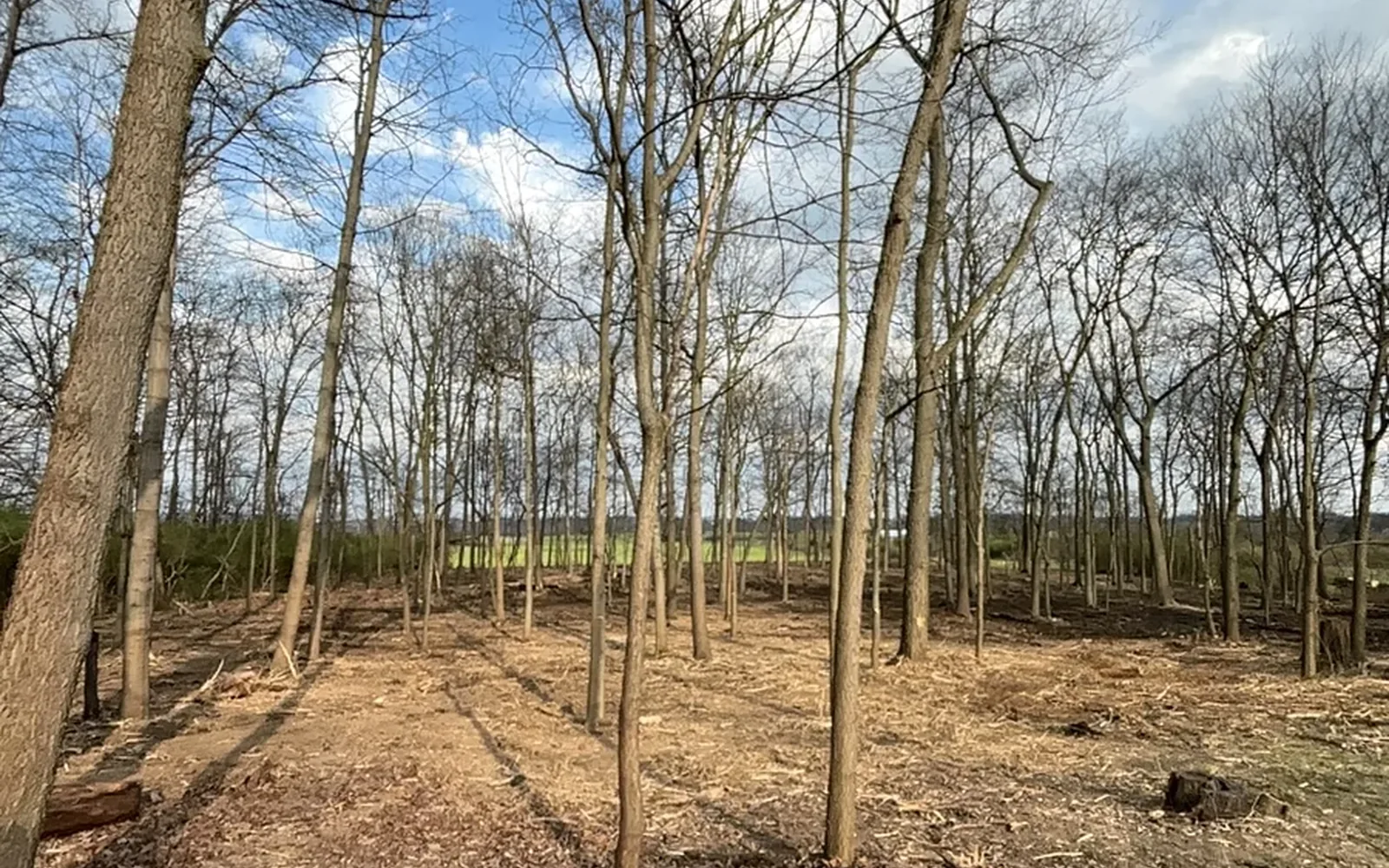
Land Clearing for Home Building in Ohio: Your Complete Pre-Construction Guide
Building your dream home on a wooded lot in Ohio? Before the foundation gets poured, that land needs to be cleared properly. Done right, site preparation sets your entire build up for success. Done wrong, you're looking at delays, cost overruns, and problems that haunt the project for months. Here's everything you need to know about clearing land for residential construction in Ohio.
Why Pre-Construction Clearing Matters
Land clearing isn't just about removing trees—it's about creating the canvas for your entire building project. The decisions you make during this phase affect everything that follows:
🏗️ Construction Access
Concrete trucks, lumber deliveries, excavators—your build requires heavy equipment that needs room to maneuver. Proper clearing creates staging areas and access routes that prevent delays and damage.
📐 Foundation Prep
Stumps and root systems under or near your foundation cause settling, cracking, and water intrusion. Clearing removes these hazards before they become expensive problems.
🌧️ Drainage Planning
How water flows across your property changes dramatically once trees are removed. Proper clearing includes understanding drainage patterns to prevent basement flooding and erosion.
💰 Cost Control
Clearing done separately from other site work is typically 30-50% cheaper than having your general contractor handle it. It's also easier to get competitive bids when the scope is clearly defined.
The builder's perspective: Experienced builders prefer working with landowners who've already cleared the building envelope. It simplifies scheduling, eliminates a major variable from their timeline, and lets them focus on construction rather than site prep.
Planning Your Building Site Clearing
Before any equipment touches your property, you need a clear plan. Here's how to develop one:
Step 1: Know Your Setbacks and Building Envelope
Every Ohio municipality has setback requirements—minimum distances your home must sit from property lines, roads, and easements. Common setbacks in Ohio:
| Setback Type | Typical Distance | Notes |
|---|---|---|
| Front (from road) | 25-50 feet | Varies by road classification |
| Side yard | 10-25 feet | Often 10' minimum, 25' combined |
| Rear yard | 25-50 feet | Larger lots often have larger setbacks |
| Easements | Varies | Check deed and plat for utility/access easements |
Action item: Contact your county or township building department for exact setback requirements before planning your clearing area.
Step 2: Map What Needs to Go (and What Stays)
Walk your property with your house plans in hand. Mark these areas:
- House footprint + 15-20 feet: The building itself plus work area for construction crews
- Driveway path: From road to garage, typically 12-16 feet wide
- Septic field (if applicable): Requires clearing for installation and future access
- Well location (if applicable): Usually 50+ feet from septic, needs clear access
- Utility runs: Electric, gas, water lines from street to house
- Construction staging: Area for material storage, dumpsters, equipment parking
Pro tip: Add 20% more clearing than you think you need. You can always leave trees later, but bringing equipment back for a second clearing costs money.
Step 3: Identify Trees Worth Preserving
Not every tree should go. Large, healthy trees add significant value to finished homes. Consider keeping:
- Mature oaks, maples, and other hardwoods that will shade the house (especially on south/west sides)
- Specimen trees that create visual interest
- Privacy screening along property lines
- Trees that frame views from key windows
Reality check: Trees within 20 feet of the house often don't survive construction anyway—root damage from digging, soil compaction from equipment, and grade changes kill them slowly over 2-5 years. Be realistic about what can actually be preserved.
Ready to clear your building site? Get an instant estimate for your project and see what forestry mulching would cost.
Get Your Instant EstimateOhio Permits and Regulations for Building Site Clearing
The good news: Ohio is relatively permissive about land clearing on private property. The nuances matter, though:
🏛️ Local Building Department
Most Ohio jurisdictions don't require permits specifically for land clearing. However:
- You'll need a building permit for the eventual construction
- Some departments want to review site plans before any work begins
- Zoning verification may be required to confirm residential use is permitted
Call first: 5 minutes on the phone with your building department prevents weeks of problems later.
🌊 Erosion and Sediment Control
Ohio EPA requires erosion control for earth-disturbing activities. Key thresholds:
- Under 1 acre: Best practices recommended but rarely enforced
- 1-5 acres: May need a storm water permit depending on location
- Over 5 acres: Construction General Permit (CGP) required
- Near waterways: Buffer requirements within 300 feet of streams/wetlands
Forestry mulching advantage: The mulch layer left behind provides excellent erosion control, often eliminating the need for additional measures like silt fencing.
🌳 Tree Preservation Ordinances
Some Ohio communities (particularly suburbs of Columbus, Cleveland, and Cincinnati) have tree preservation requirements:
- May require permits to remove trees over certain diameter (often 6"+)
- Some mandate replacement planting for trees removed
- Heritage tree protections for very large or historically significant trees
Check your specific municipality—rural townships rarely have these restrictions, but suburban communities often do.
🦅 Federal Protections
Rarely an issue but worth knowing:
- Migratory Bird Treaty Act protects active nests (avoid clearing during nesting season if visible nests present)
- Endangered species on the property would require consultation
- Wetlands require Army Corps of Engineers permits to fill or disturb
Clearing Methods for Building Sites: Comparing Your Options
You have several options for clearing your building site. Each has its place:
🌲 Forestry Mulching (Recommended for Most Projects)
A specialized machine grinds standing trees, brush, and stumps into mulch in a single pass.
✅ Advantages
- Fast: 1-3 days for typical building site
- Cost-effective: $2,000-$3,500/acre
- Stumps processed in place
- No debris hauling needed
- Erosion protection from mulch layer
- Stable surface for construction equipment
⚠️ Considerations
- Stumps ground 2-4" below grade (adequate for most uses)
- Mulch may need spreading for foundation areas
- Large trees (18"+) may need chainsaw assist
- Requires equipment access route
Best for: Most residential building projects, especially rural and semi-rural lots
🚜 Bulldozer/Excavator Clearing
Heavy equipment pushes over trees and grubs out stumps, typically piling debris for burning or removal.
✅ Advantages
- Handles any size vegetation
- Can do grading simultaneously
- Complete stump removal possible
- Familiar to most contractors
⚠️ Considerations
- Higher cost: $3,500-$6,000+/acre
- Debris piles require burning or hauling
- Significant soil disturbance
- Topsoil often mixed with subsoil
- Erosion risk until stabilized
Best for: Projects requiring significant grading, very large trees, or sites where you're moving substantial earth anyway
🪓 Traditional Tree Removal
Arborists or tree services remove trees individually with chainsaws, typically followed by separate stump grinding.
✅ Advantages
- Precise, surgical removal
- Works in tight spaces
- Can harvest valuable timber
- Minimal equipment footprint
⚠️ Considerations
- Very expensive for multiple trees ($500-$2,000+ each)
- Slow: days to weeks for large areas
- Stump grinding is separate cost
- Debris hauling adds expense
Best for: Removing individual hazard trees, trees near existing structures, or harvesting valuable timber
Real Cost Comparison: 2-Acre Building Site in Ohio
Scenario: Clear 2 acres of moderate woods (mix of 4-12" trees, brush understory) for home construction, driveway, and septic
Forestry Mulching
2 acres × $2,500 = $5,000
1-2 days, construction-ready
Bulldozer + Burn
Clearing + burning + grading = $9,000-$12,000
3-5 days plus burn pile management
Traditional Removal
~100 trees × $600 avg + stumps = $70,000+
2-4 weeks
Timeline: From Wooded Lot to Construction-Ready
Here's what a realistic timeline looks like for clearing a residential building site in Ohio:
Planning & Permits
Contact building department, verify setbacks, check for any required permits. Walk property with house plans to mark clearing boundaries.
Get Quotes & Schedule
Get 2-3 quotes from clearing contractors. Schedule work (may take 1-3 weeks depending on season).
Clearing Work
Actual clearing typically takes 1-3 days for a residential site. Includes marking preservation trees, equipment mobilization, clearing, and demobilization.
Follow-Up Work
If needed: additional stump grinding, rough grading, driveway base installation, utility marking.
Construction Ready
Site is prepared for foundation work, well drilling, septic installation, or whatever comes next in your build sequence.
Seasonal consideration: In Ohio, late fall through early spring (November-March) is typically the best time for clearing. Ground is often firmer, there's no bird nesting season concern, and scheduling is easier since it's the slow season for land clearing contractors. Summer clearing works fine but may cost 10-20% more due to higher demand.
Working with Your Builder: Coordination Tips
Clearing before you have a builder selected? Or coordinating with one already under contract? Here's how to make it work:
If You're Clearing Before Hiring a Builder
- Get preliminary house plans first: Even rough sketches help determine clearing boundaries. Square footage, garage orientation, and foundation type all affect how much to clear.
- Clear more than the minimum: Leave room for the builder to adjust placement by 10-20 feet in any direction.
- Don't grade: Let the builder handle final grading once the foundation is designed and staked.
- Document everything: Photos of the property before, during, and after clearing help future planning.
If You Have a Builder Under Contract
- Ask if they prefer to handle clearing: Some builders want to control the whole process. Others are happy for you to save money by handling it separately.
- Get their specific requirements: Foundation type, equipment access needs, staging area size—builders know exactly what they need.
- Coordinate timing: Clear 2-4 weeks before they need the site. This prevents weather delays from cascading through the schedule.
- Share clearing contractor contact: If issues arise during construction, your builder can coordinate directly.
What Builders Want from a Cleared Site
When we talk to builders in the Cincinnati area, here's what they consistently want:
- Building pad cleared to 20-25 feet beyond house footprint (all directions)
- Driveway path wide enough for concrete trucks (14-16 feet minimum)
- Staging area for materials (minimum 30x30 feet near house site)
- Stumps low enough to not interfere with foundation excavation
- No debris piles that need to be dealt with
- Access route that won't turn to mud in the first rain
Forestry mulching checks all these boxes—which is why it's become the preferred method for residential site preparation.
Cost Breakdown: Full Building Site Preparation
Land clearing is one piece of site preparation. Here's how the full budget typically breaks down for a new home site in Ohio:
| Item | Typical Cost | Notes |
|---|---|---|
| Land Clearing (1-2 acres) | $3,000-$7,000 | Forestry mulching; includes stumps |
| Survey/Staking | $400-$800 | Boundary and building location |
| Soil/Perc Testing | $300-$600 | Required for septic design |
| Rough Grading | $1,500-$5,000 | If significant grade changes needed |
| Driveway Base | $2,000-$6,000 | Gravel base for construction access |
| Well Drilling | $5,000-$15,000 | If no municipal water; depth-dependent |
| Septic System | $8,000-$25,000 | Conventional to advanced treatment |
| Utility Connections | $2,000-$10,000 | Electric, gas; distance-dependent |
| Typical Total Site Prep | $25,000-$60,000 | Before foundation is poured |
Budget tip: Land clearing is one of the most controllable costs in this list. Getting competitive quotes can save $1,000-$3,000. The difference between mulching and traditional removal can be $10,000+. This is not the place to go with "whoever the builder uses."
Common Mistakes to Avoid
After helping hundreds of Ohio landowners prepare building sites, here are the mistakes we see most often:
❌ Clearing Too Little
Trying to save money by clearing the absolute minimum. Then the builder needs more space, equipment can't maneuver, and you pay for a second mobilization. Clear 20% more than you think you need.
❌ Ignoring Access Routes
Clearing the house site but not thinking about how concrete trucks and lumber deliveries will get there. A 10-ton truck needs a solid path—not a muddy trail through the woods.
❌ Forgetting About Septic
The septic field needs to be in an area that percolates well, isn't too close to wells or property lines, and often needs its own clearing. Plan for this upfront.
❌ Trying to Save "That One Tree"
Keeping a tree 15 feet from the house because it's pretty—then watching it die slowly from construction damage, or worse, having roots invade the foundation. If it's in the work zone, it probably can't be saved.
❌ Not Checking Setbacks First
Clearing where you want the house, then discovering setbacks push it 30 feet from there. Now you've cleared the wrong area and preserved trees that need to go.
❌ Clearing in the Wrong Season
Starting a big clearing project in April on wet clay soil. Equipment ruts up the property, work stops for rain, and the site becomes a mud pit. Winter/early spring on frozen or dry ground is usually better.
Frequently Asked Questions
How much does it cost to clear land for building a house in Ohio?
Land clearing costs in Ohio typically range from $1,500 to $5,000 per acre depending on vegetation density, terrain, and accessibility. For a typical residential building site (0.5 to 2 acres of actual clearing), expect to pay $2,000 to $8,000 total. Forestry mulching is usually the most cost-effective method, averaging $2,000-$3,500 per acre.
Do I need a permit to clear land for home building in Ohio?
In most Ohio jurisdictions, you don't need a permit specifically for land clearing on your own property. However, you will need permits for the actual construction, may need zoning approval, and must comply with erosion and sediment control requirements near waterways. Some townships have tree preservation ordinances. Always check with your local building department first.
How long does it take to clear land for a house?
The actual clearing work typically takes 1-3 days for a residential building site using forestry mulching. The complete timeline from planning to construction-ready—including permits, scheduling, and any follow-up work—is typically 4-8 weeks.
What is the best method to clear land for building?
For most residential building projects in Ohio, forestry mulching is the best method. It's faster, more affordable (30-50% less than traditional clearing), leaves beneficial mulch that prevents erosion, and processes stumps in place. Bulldozing may be preferred only if you need significant grading changes.
Should I clear land before or after buying it?
Generally, clear land after buying it. However, before purchasing, walk the property to assess vegetation, verify the buildable area isn't in wetlands or flood zones, check for easements, and get a rough clearing estimate to factor into your budget.
What should I do with trees I want to keep?
Before any clearing work begins: clearly mark trees to preserve with flagging tape or paint, establish a protection zone around each tree equal to its drip line, inform all contractors which trees are keepers, and request that equipment stays outside protection zones. Consider having an arborist assess which trees are worth saving.
Ready to Prepare Your Building Site?
Whether you're building in the Cincinnati suburbs or on rural Ohio acreage, Brushworks helps landowners prepare sites efficiently and affordably. Get an instant estimate for your project or contact us to discuss your specific needs.
