
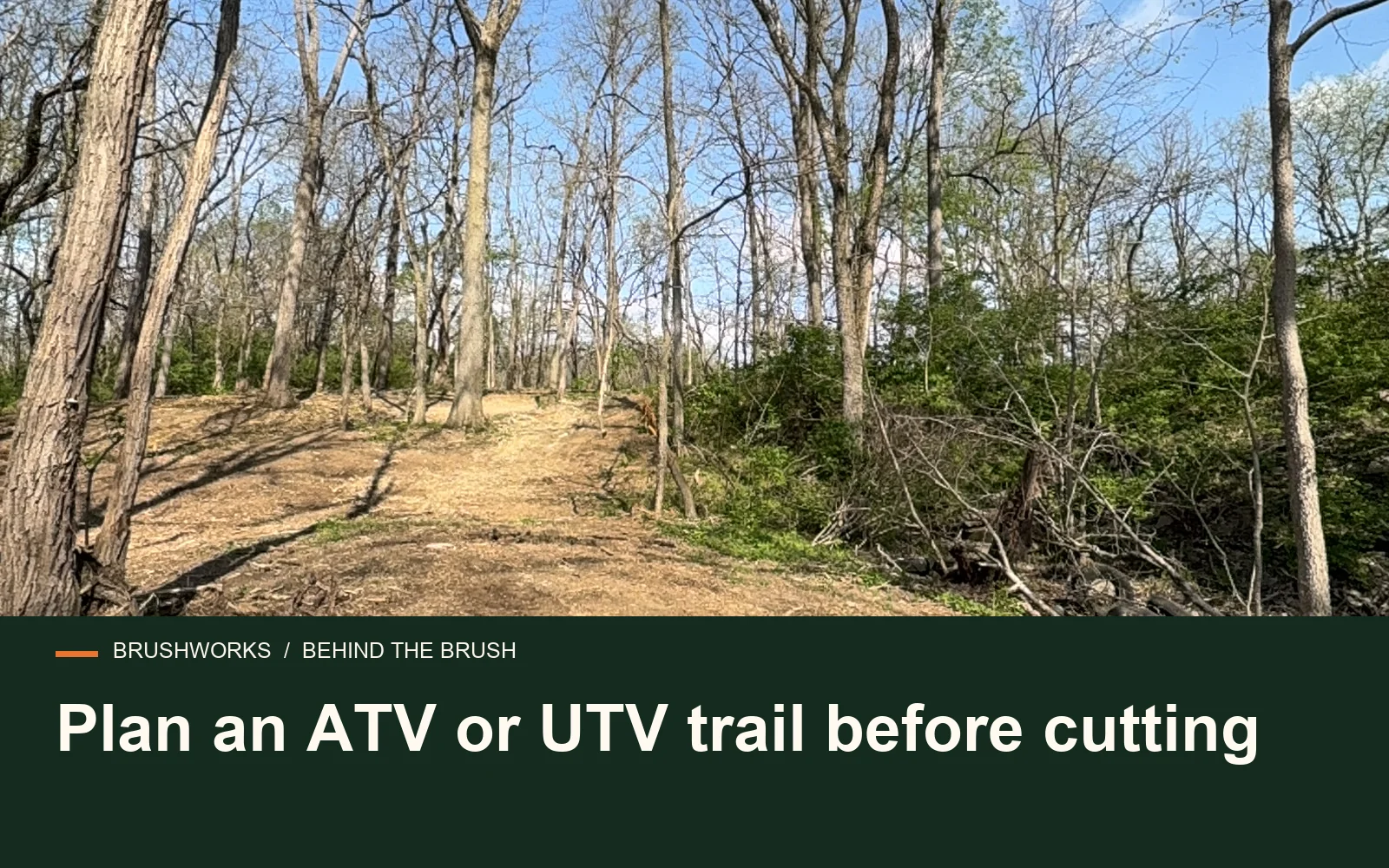
Forestry Mulching for Recreational Trails Ohio

A good trail is more than a gap through the woods. It has to follow usable ground, drain right, turn wide enough, and stay maintainable after the first pass.

Published July 12, 202613 min read
Forestry Mulching for Recreational Trails Ohio
Field guide from Brushworks Services Co. — practical land clearing advice for Ohio property owners.

Recreational trails are one of the most common reasons Ohio property owners call about forestry mulching. The property may already have old deer paths, logging trails, farm lanes, field edges, or ATV routes. It may also be a wall of honeysuckle, grapevine, briars, saplings, and fallen limbs where the owner knows a trail should go but cannot walk it without getting scratched up.

That is where forestry mulching fits well. A mulcher can open a path through brush and small trees without piling material everywhere or scraping the ground bare. The result is a trail you can walk, ride, inspect, mow, and improve. It is not the same as finished trail construction, and it does not replace drainage or gravel where those are needed. It is the clearing phase that makes the route real.

A recreational trail can mean different things. Around Cincinnati and across Ohio, we see walking trails, family nature paths, hunting access routes, UTV loops, pond trails, firewood access, maintenance lanes, food plot trails, dog walking paths, and connectors between barns, fields, creeks, and wooded corners. The best route depends on how the trail will be used, who will use it, and what kind of ground it crosses.

Planning a trail through overgrown Ohio ground?

Send photos of the route, the starting point, the worst brush, and the kind of use you have in mind. Brushworks can help open recreational trails, hunting access, maintenance paths, and wooded property loops.

Start with the trail's real job

Before any cutting starts, decide what the trail needs to do. A walking path for family use can be narrow and quiet. A UTV trail needs width, turn room, overhead clearance, and a surface that will tolerate tires. A hunting access trail may need to stay tucked into cover and avoid crossing bedding areas. A maintenance trail may need to carry a mower, tractor, skid steer, or small dump trailer.

This decision affects the route, width, and amount of clearing. If the trail is too narrow for its purpose, it will be frustrating from the first week. Mirrors scrape brush. Tires drop into soft edges. Trailers cannot turn. Low limbs catch on roll cages. If the trail is cleared wider than needed, the property can lose shade, privacy, wildlife cover, and the natural feel that made the trail worth building.

Good trail planning starts with the largest thing that needs to use it. For a walking trail, that may be a mower for maintenance. For an ATV or UTV trail, it may be the side-by-side plus room for a passenger to step out safely. For a hunting property, it may be a small tractor pulling a seed or lime spreader to a food plot. Build around real use, not a guess.

Walk the route before equipment arrives

A trail drawn on a map rarely matches the ground perfectly. Ohio woods have wet pockets, shallow ditches, old fence wire, rock, stumps, steep knobs, washouts, dead ash trees, and hidden junk. The best route may bend around trouble instead of fighting through it.

Walk the proposed route if it is safe to do so. Mark the start, finish, turns, creek crossings, wet spots, trees to keep, and any places where the trail should not go. If the brush is too thick to walk, mark the route from the edges and use map screenshots or flagged reference points. The more clearly the route is marked, the less time gets wasted making decisions with equipment running.

Pay close attention to old fence rows. They often look like natural brush lines, but they can hide woven wire, barbed wire, t-posts, broken gates, cable, and metal debris. Wire is bad news for mulching equipment and can turn a simple trail job into a repair problem. If you know an old fence runs through the route, say so before work starts.

Use existing paths when they make sense

Many properties already have a trail hiding under the growth. Deer paths, old tractor lanes, logging routes, field roads, pond access paths, and fence line openings often follow better ground than a new route would. They may already avoid the wettest areas, climb the hill at a workable angle, or connect the places people naturally want to reach.

Using an old path can save time, but it should not be automatic. Some old routes were made for a different purpose. A logging trail may be too steep for regular family use. A deer path may cut across a wet draw. An old farm lane may have a washed-out culvert. A trail that worked for a previous owner may not serve the way you want to use the property now.

Forestry mulching is helpful here because it can open the old route enough to see what is worth keeping. Once the growth is down, the owner can decide whether to improve the trail, shift a section, widen a turn, or close a bad stretch and let it grow back.

Trail width depends on use and maintenance

A narrow walking trail can feel better in the woods than a wide lane. It keeps shade, reduces the amount of disturbed ground, and feels more natural. But even a walking trail needs enough room for maintenance. If a small mower, brush cutter, or utility vehicle will be used later, clear for that equipment instead of only clearing for shoulders and shoes.

ATV and UTV routes need more room. The machine needs a safe travel lane, but turns also matter. A tight trail may be passable going one direction and miserable coming back with a load, a passenger, or wet ground. Add room at corners, overlooks, gates, creek approaches, and places where riders may need to stop or turn around.

For hunting, trail width is a balance. You may want quiet access, easy movement, and enough room to haul gear, but you may not want a wide open road that changes how deer use the property. On those projects, a narrower route with smart bends and limited sight lines can be better than a straight cleared lane through the middle of cover.

Drainage decides how the trail ages

A trail that ignores water will show it fast. Ohio clay can rut. Shaded woods can stay wet. Slopes can wash. Low spots can turn into muddy pockets that riders avoid, which makes the trail wider and messier over time. Mulching opens the route, but water still needs somewhere to go.

Where possible, route the trail along ground that sheds water instead of collecting it. Avoid running straight down fall lines on hillsides. Cross low areas at narrow points. Look for natural benches, old lanes, and dry ridges. If a trail has to cross a wet spot, plan for extra work such as stone, a culvert, a small bridge, water bars, grading, or a reroute.

The mulch left by forestry mulching can help keep soil covered, but it is not a cure for bad drainage. On heavy-use trails, especially UTV routes, the clearing phase should be followed by a close look at low spots after rain. That is when the next step becomes obvious.

Forestry mulching handles the rough growth

Most Ohio recreational trail projects are not blocked by giant timber. They are blocked by the messy middle layer: honeysuckle, autumn olive, multiflora rose, briars, grapevine, box elder, cedar, locust sprouts, privet, deadfall, and small volunteer trees. That is exactly the kind of material forestry mulching can handle efficiently when site conditions are right.

Instead of cutting brush by hand and dragging it into piles, the mulcher cuts and grinds material in place. That matters on long routes where debris handling would take more time than the cutting. It also leaves a mulch layer that can make the trail easier to walk right after clearing.

There are limits. Large trees, hazard trees, steep banks, saturated ground, heavy metal debris, deep ruts, and utility conflicts may need different equipment or a separate plan. A mulcher is a strong trail-opening tool, not a magic answer for every acre. The operator still needs to read the ground and know when to slow down or stop.

Think about trees before the trail is cut

A trail should not remove good trees by accident. Some trees provide shade, hold soil, frame a view, protect privacy, or give the woods character. Others are in the way, leaning over the route, dead, damaged, invasive, or likely to drop limbs where people will travel. Marking trees before work starts keeps the route intentional.

Dead ash trees deserve special attention in Ohio. Emerald ash borer damage has left many standing dead ash trees in woods, field edges, and old fence rows. A dead ash near a trail can become a safety issue, especially after wind, freeze-thaw cycles, and summer storms. Forestry mulching may clear the brush around it, but dangerous overhead tree work may require a tree professional.

Low limbs should be judged by trail use. Walkers need less clearance than a UTV, tractor, or maintenance vehicle. If the trail will ever be used by equipment, look up before finalizing the route. Ground-level clearing is only half the travel space.

Recreational trails can help property management

A good trail also makes the property easier to inspect and maintain. Owners can reach fence corners, ponds, creek banks, food plots, stands, drainage problems, dead trees, and back acreage without fighting brush every time. That access saves time long after the first clearing is done.

For rural homes and small acreage near Cincinnati, trails can turn land that is technically owned into land that is actually used. Families can walk the woods. Kids can reach a creek or clearing safely. Owners can show visitors the property. A path around a pond, through a wooded edge, or along an old field can change how often people get outside.

For hunting and habitat work, trails also shape movement. Access routes can help hunters get in and out with less disturbance. Maintenance trails can support food plot work, stand checks, and habitat improvements. The route should be planned so it helps the property after the machine leaves.

Plan trail loops, spurs, and turnarounds

A trail that dead-ends in thick brush may work for walking, but it can be awkward for equipment and UTV use. If the property allows it, loops are often better. A loop gives people a natural route, reduces repeated backing, and makes the trail feel more complete. It can also connect important areas like a barn, pond, field edge, creek crossing, food plot, campsite, or overlook.

Spurs are useful when a full loop does not make sense. A short spur can reach a stand, firewood area, creek access point, or maintenance spot without clearing a wider main route through sensitive ground. Turnarounds matter at the end of spurs. A small machine still needs room to turn without tearing up the trail edge.

Do not forget entry points. The trail should start somewhere practical, with enough room to park, unload, or enter from a yard, lane, barn, or driveway. If the first 50 feet are cramped, muddy, or hidden, the trail will be used less than expected.

What to mark before Brushworks shows up

Good marking keeps a trail project moving. Use flagging tape, stakes, paint, or clear map screenshots. Mark the centerline or both edges if width is important. Mark trees to save, no-go areas, wet spots, property lines, fence lines, culverts, wells, septic areas, utilities, hunting stands, cameras, and any places where the route should narrow or widen.

If you are not sure about buried utilities, call for locates. Public utility marking may not cover private lines on rural property, so think about electric to barns, water lines, drain tile, propane lines, invisible dog fence, old irrigation, and anything a previous owner may have installed. Trails often go through the forgotten parts of a property, which is exactly where surprises live.

Photos help too. Send the starting point, the ending point, the worst brush, any steep or wet areas, and examples of what you want the finished trail to feel like. If the route is hard to describe, draw it on a satellite screenshot. A little prep up front makes the estimate and the work more accurate.

Keep the trail maintainable after the first clearing

Ohio brush grows back. Honeysuckle sprouts from cut stumps. Briars reach toward sunlight. Vines climb the edges. Soft maple, box elder, locust, cedar, and other volunteer trees show up along open ground. The first clearing is the reset. Maintenance is what keeps the trail usable.

The best maintenance plan is simple enough to actually happen. If you own a mower, clear enough width for it. If a UTV with a sprayer or small trailer will maintain the route, leave room for that. If the trail is mostly for walking, plan seasonal trimming before growth folds back into the path. Invasive plants may need targeted treatment by a qualified applicator if mechanical clearing alone will not hold them back.

Trail edges are easier to manage when they are not over-cleared or under-cleared. Too narrow, and every year feels like starting over. Too wide, and the trail may invite more sun-loving brush. The right width is the one that fits the use and the maintenance plan.

How Brushworks approaches recreational trail clearing

Brushworks starts with the route and the use. We look at access, slopes, drainage, brush type, trees to keep, overhead clearance, soft ground, property boundaries, and how the trail will be maintained. On some properties, the right answer is a narrow walking loop. On others, it is a wider UTV trail with room at turns, gates, and work areas.

We also look for the next step. If the trail may later get gravel, drainage work, a bridge, a food plot, a campsite, or regular mowing, the clearing should make that easier. If a section looks too wet or steep, it may be better to reroute than force a trail where it will fail.

A recreational trail should make the land easier to use without making it feel stripped. When the clearing is planned well, the property owner gets access, visibility, and a path that invites regular use. That is the real value of forestry mulching for trails in Ohio: turning overgrown ground into a route people can actually enjoy and maintain.

Frequently asked questions

Is forestry mulching good for recreational trails in Ohio?

Yes, forestry mulching is often a good first step for recreational trails because it cuts brush, saplings, vines, and invasive shrubs in place while leaving mulch on the trail surface. It is best used for opening and shaping the route, not for building a finished gravel or paved trail.

How wide should a recreational trail be cleared?

The width depends on use. A walking trail can stay narrow, while ATV, UTV, hunting access, maintenance, or small equipment trails need more width, turn room, and overhead clearance. Plan the trail around the largest machine or vehicle that needs to use it safely.

Can forestry mulching handle honeysuckle and briars on trails?

Forestry mulching can clear heavy honeysuckle, briars, grapevine, multiflora rose, autumn olive, and small volunteer trees from trail routes. Some regrowth is normal, so future mowing, trimming, or targeted follow-up may be needed along sunny trail edges.

Do mulched trails need drainage work?

Some do. Mulching opens the route, but wet spots, springs, low areas, clay soil, and slopes may still need water bars, shallow ditching, rerouting, stone, or grading if the trail will see regular use.

What should be marked before trail clearing starts?

Mark property lines, desired trail route, trees to keep, creek crossings, wet areas, steep slopes, utilities, septic areas, wells, fences, culverts, hunting stand locations, and any sensitive ground before equipment starts.

Related articles

Ready to open a recreational trail?

Use instant pricing for a starting point, or send photos of the route, brush, access, slopes, and wet areas so Brushworks can help plan the clearing.