
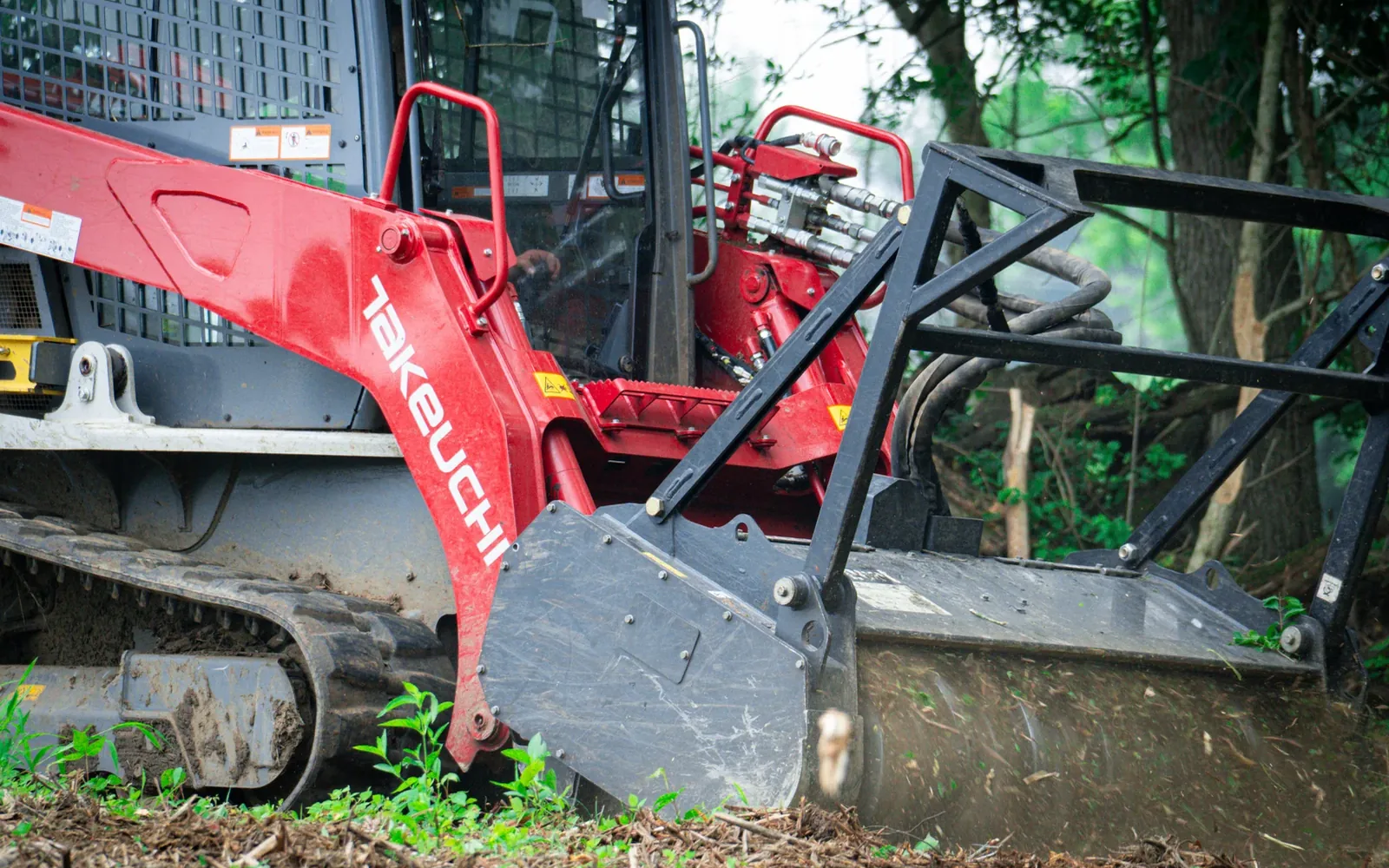
The Quick Answer: Forestry Mulching Wins for Most Properties
If you're clearing residential land, reclaiming overgrown pasture, removing invasive species, or preparing a wooded lot for use—forestry mulching is almost always the better choice. It's typically cheaper, faster (start to finish), and leaves your land in better condition.
Bulldozing still has its place—primarily for large commercial developments where you need stumps removed and the land graded flat. But for the vast majority of property owners in Greater Cincinnati, forestry mulching is the smarter move.
Here's exactly why.
Head-to-Head Comparison
| Factor | Forestry Mulching | Bulldozing | Winner |
|---|---|---|---|
| Cost per acre | $2,500–$5,000 | $4,000–$10,000+ | Mulching |
| Equipment needed | 1 machine | 2-4 machines | Mulching |
| Debris removal | None needed | Burn piles or haul-off | Mulching |
| Soil damage | Minimal | Significant | Mulching |
| Erosion control | Excellent (mulch layer) | Poor (exposed soil) | Mulching |
| Selective clearing | Yes—preserve any tree | Difficult | Mulching |
| Steep slopes | Yes (with RC equipment) | Limited/dangerous | Mulching |
| Time to completion | 1-3 days typical | 1-2 weeks typical | Mulching |
| Land usable after | Immediately | After cleanup/grading | Mulching |
| Stump removal | Ground level only | Complete removal | Bulldozing |
| Large trees (24"+) | May need chainsaw assist | Handles any size | Bulldozing |
The scorecard: Forestry mulching wins 9 out of 11 categories. Bulldozing only wins when you need complete stump removal or you're dealing with very large trees.
Want to see what forestry mulching would cost for your property?
Get Instant PricingWhy Forestry Mulching Costs Less
On paper, the hourly rate for a bulldozer might look similar to forestry mulching equipment. So why is the total project cost so much higher? Because bulldozing isn't just bulldozing—it's a multi-step process:
Forestry Mulching Process:
- Mulcher arrives
- Clears vegetation in single pass
- Leaves, you're done
Total: 1 machine, 1-3 days
Bulldozing Process:
- Dozer pushes trees into piles
- Wait for burn permit (or arrange haul-off)
- Burn piles (weather dependent)
- Push remaining debris
- Grade disturbed soil
- Possibly seed/stabilize for erosion
Total: 2-4 machines, 1-2+ weeks
Every extra step costs money. Burn permits, debris hauling, multiple equipment mobilizations, and soil restoration all add up. A bulldozing project quoted at "$3,000" often becomes $6,000+ by the time you're actually done.
Real Example:
A 2-acre overgrown lot in Clermont County. Bulldozing quote: $3,500 for dozing + $1,200 debris hauling + $800 grading = $5,500 minimum. Forestry mulching quote: $4,200 all-in. Plus the mulching job was done in one day vs. two weeks.
The Environmental Difference Is Massive
This is where the methods really diverge. If you care about your land's long-term health—or you have slopes, waterways, or erosion concerns—forestry mulching isn't just better, it's in a completely different league.
🌱 What Forestry Mulching Does to Your Soil:
- ✅ Leaves root systems intact (prevents erosion)
- ✅ Creates 2-4" layer of organic mulch
- ✅ Mulch retains moisture and suppresses weeds
- ✅ Decomposes into nutrient-rich soil amendment
- ✅ No soil compaction from heavy tracked equipment
💀 What Bulldozing Does to Your Soil:
- ❌ Strips away topsoil (often permanently)
- ❌ Exposes bare dirt to rain and runoff
- ❌ Compacts soil with heavy equipment
- ❌ Destroys soil microbiome and beneficial organisms
- ❌ Often requires importing new topsoil afterward
Why This Matters for Cincinnati Properties:
Greater Cincinnati is known for its hills. Exposed soil on a slope = erosion. One heavy rain after bulldozing can wash away years worth of topsoil and create gullies. The mulch layer from forestry mulching acts like armor, holding the hillside in place while new vegetation establishes.
When Bulldozing Actually Makes Sense
We're not saying bulldozing is never the right choice. There are specific situations where it's the better option:
Consider Bulldozing When:
- 🏗️ Building a foundation – You need stumps completely removed and the ground graded flat
- 🌳 Clearing massive trees – Trees over 24" diameter may exceed mulching capacity
- 🏢 Large commercial development – 20+ acres where speed of initial clearing matters more than finish quality
- 🚜 Agricultural field prep – When you need to plow and plant immediately with no debris
Even in these cases, many property owners use a hybrid approach: forestry mulching to clear the vegetation, then targeted stump removal only where needed. This minimizes cost and soil disruption while still achieving the end goal.
What About Stumps?
This is the most common question we get. "If forestry mulching doesn't remove stumps, won't I have a yard full of stumps?"
Here's the reality: Forestry mulching grinds stumps to ground level or slightly below. They're not removed, but they're not sticking up either. Within 1-2 growing seasons, they're invisible—either decomposed or covered with grass.
When Ground-Level Stumps Work Fine:
- ✅ Pasture or grazing land (mowers clear right over them)
- ✅ Recreational property (trails, hunting land, general use)
- ✅ Residential yards (grass covers them)
- ✅ Anywhere you're not pouring concrete or digging
When You Actually Need Stump Removal:
- ⚠️ Pouring a foundation, driveway, or patio
- ⚠️ Installing underground utilities
- ⚠️ Creating a sports field or formal lawn
- ⚠️ Agricultural plowing
For most homeowners reclaiming an overgrown lot or clearing brush, stumps at ground level are a non-issue. And the cost savings vs. full stump removal is substantial.
The Hillside Factor: No Contest
If you have steep terrain—and in Cincinnati, you probably do—this comparison isn't even close.
Bulldozers on slopes: Dangerous. Heavy tracked dozers can slide, tip, or lose traction on steep grades. Most operators won't even attempt slopes over 30%. Those that do risk equipment damage, operator injury, and massive erosion afterward.
Forestry mulching on slopes: Brushworks operates remote-controlled hillside mulchers (like the FAE RCU-55) that safely clear slopes up to 60°. No operator on the machine means no safety risk. The mulch layer immediately stabilizes the hillside.
Bottom line: If you have a hillside to clear, forestry mulching isn't just better—it may be your only realistic option.
Timeline Comparison: Done vs. Ongoing
Here's what a typical residential land clearing project looks like with each method:
Forestry Mulching Timeline:
- Day 1: Equipment arrives, clearing begins
- Day 1-2: Clearing complete
- Day 2: Walk the property, you're done
Total: 1-2 days
Bulldozing Timeline:
- Day 1-2: Dozer pushes material into piles
- Day 3-7: Wait for burn permit approval
- Day 8-10: Wait for dry weather to burn
- Day 11-12: Burn piles (may take multiple days)
- Day 13-14: Push remaining debris, rough grade
- Day 15+: Final grading if needed
Total: 2-3 weeks minimum
If you need your land cleared for a specific deadline—construction start, property closing, event—forestry mulching's predictable timeline is a major advantage.
Frequently Asked Questions
Is forestry mulching cheaper than bulldozing?
Yes, forestry mulching is typically 30-50% cheaper than bulldozing for most residential and small acreage projects. Bulldozing requires multiple machines, debris hauling, and often site restoration—costs that add up quickly. Forestry mulching is a single-pass operation with no debris removal needed.
Does forestry mulching damage the soil like bulldozing?
No. Forestry mulching leaves the root structure and topsoil intact, preventing erosion and preserving soil health. Bulldozing strips away topsoil, compacts the ground, and often requires expensive soil restoration or grading afterward.
Can a bulldozer clear land faster than forestry mulching?
Not usually. While a bulldozer can push trees quickly, the total project time includes debris piling, burning or hauling, and site cleanup. Forestry mulching completes everything in a single pass—cut, mulch, and done. For most properties under 10 acres, forestry mulching is faster start-to-finish.
When should I use bulldozing instead of forestry mulching?
Bulldozing may be better for large-scale commercial development where you need to remove stumps and grade the land flat, or when clearing very large trees (24"+ diameter) that exceed mulching equipment capacity. For residential properties, pastures, and most land clearing projects, forestry mulching is the better choice.
Can I mow over stumps left by forestry mulching?
Yes. Forestry mulching grinds stumps to at or slightly below ground level. Standard lawn mowers and brush hogs clear right over them. Within 1-2 growing seasons, most stumps are completely invisible under grass.
The Verdict: Choose Based on Your End Goal
Choose Forestry Mulching If:
- ✅ Residential lot clearing
- ✅ Pasture reclamation
- ✅ Invasive species removal
- ✅ Trail or path creation
- ✅ Fence line clearing
- ✅ Steep hillsides
- ✅ Preserving select trees
- ✅ Properties under 10 acres
- ✅ Erosion is a concern
- ✅ Budget matters
Choose Bulldozing If:
- ⚠️ Pouring foundation/concrete
- ⚠️ Complete stump removal required
- ⚠️ Trees over 24" diameter
- ⚠️ Large commercial sites (20+ acres)
- ⚠️ Agricultural field preparation
For 90% of property owners in Greater Cincinnati, forestry mulching is the right choice. It's cheaper, faster, better for your land, and leaves you with usable property immediately.