
HOA Land Clearing Services Ohio: Common Area, Trail, Detention Basin, and Fence Line Cleanup
HOA land clearing sounds simple until the work touches neighbors, budgets, drainage, trails, liability, and the one homeowner who watches everything from the kitchen window. Ohio associations need a clear scope before a machine shows up.
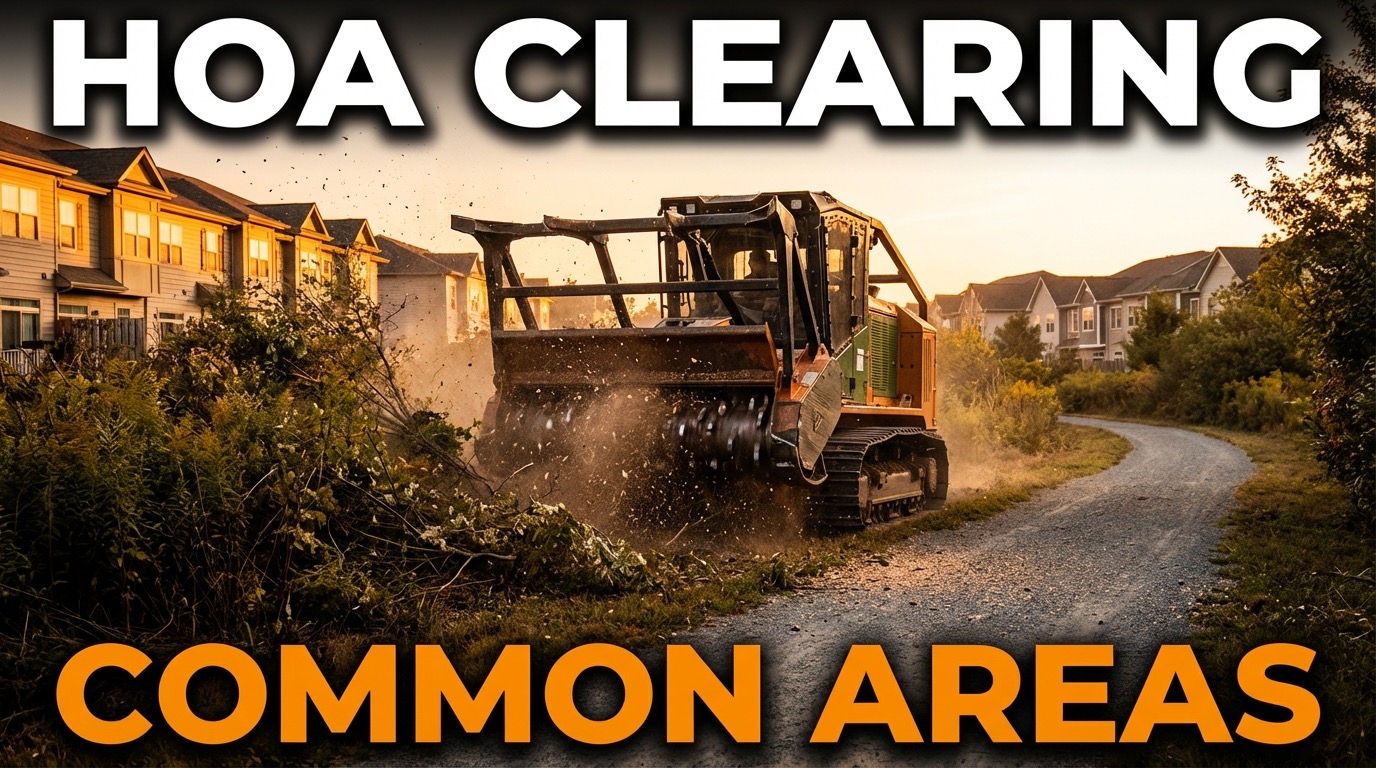
HOA land clearing in Ohio usually starts with a complaint. The walking trail is closed in by honeysuckle. The detention basin has not been accessible for years. The fence line behind the homes is a wall of vines. A common area that looked natural when the subdivision was new has turned into thorny brush, dead ash limbs, and volunteer trees leaning over yards.
That kind of overgrowth is not just ugly. It affects mowing, stormwater inspection, utilities, visibility, safety, and the way residents feel about the neighborhood. The tricky part is that HOA work has more people involved than a private land clearing job. A board may approve the project, a management company may coordinate it, residents may have strong opinions, and local rules may limit what can be cut.
Brushworks works around Greater Cincinnati and southwest Ohio, where many neighborhoods have wooded buffers, drainage basins, old farm fence rows, common trails, retention ponds, and steep edges that were easy to ignore until they got out of hand. The best HOA clearing projects are not rushed. They start with the problem, define the finish, and leave the association with ground it can actually maintain.
Start with the actual HOA problem
Before asking for bids, name the problem in plain language. "Clear the common area" can mean ten different things. Does the association need a trail reopened? Does the landscaper need mower access? Is the drainage basin blocked? Are invasive shrubs taking over a wooded buffer? Are residents worried about ticks, dumped trash, sight lines, or trees falling into backyards?
The answer changes the scope. A trail project may need a clean corridor, overhead clearance, and a walking surface that drains. A detention basin project may need enough access for inspection and maintenance equipment. A fence line project may need selective clearing so privacy is not removed overnight. A stormwater project may need protection around outlets, spillways, and slopes.
Boards save money when they describe the outcome instead of guessing at the method. A contractor can recommend forestry mulching, hand cutting, hauling, mowing, or a staged plan once the goal is clear. If the goal is vague, the bid will be vague too.
Common HOA clearing projects in Ohio
Most HOA land clearing jobs fall into a handful of categories. Common area cleanup is the broadest one. This can include brush, saplings, deadfall, old landscape debris, invasive shrubs, and volunteer trees in land owned by the association. These areas often sit behind homes, near entrances, around signs, beside ponds, or between phases of a subdivision.
Trail clearing is another common request. A trail that was cut when the neighborhood was built can disappear in a few seasons if honeysuckle, multiflora rose, grapevine, and young trees are allowed to grow back. Reopening it may mean clearing both sides, cutting low limbs, improving sight lines, and deciding whether the association wants a natural footpath, mulch path, or future gravel work.
Detention basin and retention pond access can be more urgent. Ohio neighborhoods often have stormwater features that must be inspected or maintained, but the access route gets swallowed by brush. If the outlet, emergency spillway, fence, or access path cannot be reached, routine maintenance becomes harder and more expensive.
Fence line and perimeter clearing is usually about boundaries. The association may need to clean a shared fence, open the back side of lots, remove vines, or make room for repairs. This work needs care because residents may value the privacy even if the brush is technically on HOA land.
Need an HOA common area cleared?
Send the location, photos, map, and the board's goal for the area. Brushworks can help define the scope before the association commits money to the wrong kind of clearing.
Why forestry mulching often fits HOA work
Forestry mulching is useful for many HOA projects because it reduces brush in place. Instead of cutting a thicket and leaving a pile for someone else, the machine grinds small trees, brush, vines, and woody material into a mulch layer. That can be a good fit for wooded buffers, trails, basin access routes, old fence rows, and common areas where hauling debris would drive up cost.
The biggest advantage is speed. A dense honeysuckle edge that would take a crew days to cut and drag can often be opened much faster with the right machine and access. The finished area is easier to inspect, easier to walk, and easier to maintain.
Mulching is not the right answer for every square foot. Close work around homes, utilities, delicate landscaping, fences, playgrounds, and wet ground may need hand work or smaller equipment. Large logs, trash, wire, concrete, and treated lumber need a different plan. The board should expect a contractor to explain where the machine can work and where it should stay out.
Know the property lines before clearing
HOA land clearing should never run on guesses. Common areas, easements, stormwater parcels, utility corridors, and homeowner lots can meet in confusing ways. Subdivision plats may show one thing, mowing patterns may suggest another, and residents may have been using a strip of land for years without realizing it belongs to the association.
Before work begins, the board or management company should confirm ownership and boundaries. That may mean reviewing plats, GIS maps, maintenance agreements, easement documents, or a recent survey. If the area is close to a private lot, mark the limit clearly. Stakes, paint, flags, and a map can prevent a small clearing job from turning into a neighborhood dispute.
This matters most near rear yards. Residents may have sheds, playsets, fences, firewood, gardens, drainage pipes, or informal landscaping near the edge. The clearing crew needs to know what belongs to the HOA, what must be protected, and where the work stops.
Check drainage and stormwater responsibilities
Many Ohio HOAs are responsible for detention basins, retention ponds, swales, ditches, and access paths tied to stormwater management. These areas are easy to ignore when they are dry and hard to fix when they fail. Brush around outlets, inlets, spillways, and pond edges can hide erosion, clogged pipes, animal holes, trash, and tree roots.
Clearing around stormwater features should be done with care. The goal is access and visibility, not stripped slopes and exposed soil. Removing every plant from a basin bank can increase erosion. Leaving woody growth on a dam, outlet, or access route can create maintenance problems. The right plan depends on the feature, slope, soil, and local requirements.
If the basin is regulated by a city, township, county engineer, or stormwater district, the association should confirm what maintenance is expected. A clearing contractor can open access and reduce brush, but the board may still need an engineer, excavator, landscaper, or stormwater specialist for repairs.
Protect trees residents care about
Tree decisions can get emotional in HOA work. Some residents want every overgrown edge cut back hard. Others bought their home because of the trees and do not want the common area opened up. A good scope separates nuisance growth from trees worth keeping.
In southwest Ohio, the usual problem plants include bush honeysuckle, autumn olive, grapevine, multiflora rose, tree of heaven, dead ash, and volunteer saplings in the wrong place. Removing that material can make healthy trees more visible and reduce pressure on the edge without turning the common area into bare ground.
If the association wants selective clearing, mark keep trees before work starts. Do not expect a machine operator to guess which young maple, oak, cedar, ornamental, or privacy tree matters to the neighborhood. A simple walk-through with flags can save a lot of argument later.
Plan resident communication before the work starts
HOA clearing projects go better when residents are told what is happening, where it is happening, and why. People react badly when they wake up to equipment behind the fence with no warning. They also react badly when the finished area looks different than they imagined.
The board does not need to write a novel. A short notice is usually enough: the work area, expected dates, equipment hours, parking or access needs, what will be removed, what will remain, and who to contact with concerns. If the work is behind private yards, send the notice early enough for residents to move patio furniture, hoses, decorations, firewood, or anything that has crept into the common area.
Clear communication also helps the contractor. If residents know the scope, the crew is less likely to get pulled into side requests at the property line. Side requests sound harmless, but they can create liability, billing confusion, and fairness problems for the association.
Access is part of the bid
HOA common areas are not always easy to reach. The machine may need to enter through a gate, between homes, across a field, beside a pond, or along a service path that has not been used in years. Access affects equipment choice, cost, scheduling, and the risk of turf damage.
When getting bids, show the contractor exactly where equipment can enter and exit. Point out irrigation, drain tiles, utilities, septic areas, fences, mailboxes, curbs, soft ground, and narrow turns. If the crew has to cross homeowner property, the association should handle permission before the work date.
Good access planning also includes weather. Ohio clay can go from firm to soft quickly. A project that is easy in frozen winter ground may be messy after heavy spring rain. If the board cares about minimizing turf repair, timing matters.
How to compare HOA land clearing bids
The cheapest bid is not always the least expensive outcome. HOA boards should compare what is included. Does the contractor understand the boundaries? Does the price include mobilization? Will material be mulched in place, hauled off, chipped, stacked, or left? How wide will trails be? How close will work get to fences and homes? What happens if hidden trash, wire, concrete, or dumped debris is found?
Ask about insurance, equipment, schedule, finish standard, and cleanup. Ask whether the crew will protect marked trees, avoid wet areas, and keep residents out of the work zone. If the association needs a certificate of insurance naming the HOA or management company, request it before scheduling.
Photos help. A contractor who can show similar brush, trails, basins, or fence lines is easier to evaluate than one who only gives a number. For boards that must explain spending to residents, before-and-after documentation is useful too.
Think past the first clearing
The first clearing is the reset. It gets the property back to a manageable condition. The maintenance plan is what keeps it from turning back into a wall of brush. Without maintenance, honeysuckle sprouts, vines climb, saplings regrow, and the association pays for another big reset later.
Design the cleared area so the regular landscaper can reach it. A trail should be wide enough to mow or trim. A basin access path should work for the equipment that will inspect or service it. A fence line should have a reasonable maintenance strip. If the final layout cannot be maintained, it will not last.
Some associations need an annual inspection and a small touch-up. Others need seasonal mowing or targeted invasive treatment. The right schedule depends on sun exposure, soil, seed bank, nearby woods, and how clean the board wants the area to stay.
Where Brushworks helps Ohio HOAs
Brushworks handles land clearing, forestry mulching, brush removal, trail opening, fence line cleanup, and common area access work around Greater Cincinnati and nearby Ohio communities. That includes neighborhoods in Hamilton County, Butler County, Warren County, Clermont County, and surrounding areas where wooded common ground and overgrown drainage features are common.
For HOA projects, we look for the practical path. What needs to be opened? What needs to stay? Where can equipment safely access the work? What will residents see when the job is done? What maintenance has to happen next?
The best HOA clearing job is boring in the right way. The board knows what was approved. Residents know why the work happened. The landscaper can maintain it. The stormwater feature can be inspected. The trail can be used again. The association gets its common ground back without creating a new problem.
Frequently asked questions
What land clearing work do Ohio HOAs usually need?
Common HOA projects include clearing overgrown common areas, reopening walking trails, cleaning detention basin access, cutting back fence lines, removing invasive brush, opening sight lines near entrances, and creating maintenance access for mowers, landscapers, or utility crews.
Can an HOA use forestry mulching in a neighborhood common area?
Yes, when the access, slope, utilities, and nearby homes allow it. Forestry mulching works well for dense brush, saplings, honeysuckle, autumn olive, and tangled wooded edges because it reduces the material in place instead of leaving piles across the common area.
Does an HOA need approval before clearing common land?
Most HOAs should confirm board approval, property boundaries, easements, drainage responsibilities, tree rules, and any city, township, or county requirements before work starts. If the area touches wetlands, streams, regulated stormwater features, or utility easements, extra review may be needed.
How should an HOA get bids for land clearing?
Give each contractor the same scope: maps, photos, access points, disposal expectations, areas to protect, and the finish standard. Ask whether the price includes mobilization, hazard cleanup, debris handling, trail width, mowing access, and follow-up options.
How often should an HOA maintain cleared brush areas?
Most cleared HOA areas need at least annual inspection. Fast-growing edges, basins, trails, and invasive thickets may need seasonal mowing, spot cutting, herbicide treatment by a qualified applicator, or a light clearing pass before the brush gets tall again.
Related articles
Brush Clearing for Property Managers Cincinnati
How recurring clearing helps managers keep portfolios safer, cleaner, and easier to maintain.
Clearing Brush Around Ponds Ohio
Open pond banks and wet edges without creating erosion or maintenance headaches.
Fence Row Clearing Ohio
Clean up overgrown boundaries, woody edges, and brush walls on Ohio properties.
Need a common area opened up?
Send photos, maps, and the board's goal for the area. Brushworks can help scope HOA clearing work around trails, basins, fence lines, and overgrown common ground.