
Before you start
- Mark the finished layout with the landscape contractor.
- Protect drainage and existing services.
- Separate rough clearing from lawn or hardscape preparation.
Start with the finished backyard, not the brush
This matters because over-clearing can be just as frustrating as under-clearing. Many Cincinnati yards have good shade trees mixed with bad understory. If you remove every bit of cover, the yard can feel exposed, hotter, and less private. If you clear too little, contractors still cannot work and maintenance stays difficult. The better target is a clean, usable opening with enough access around it.
Walk the site with a tape measure, flags, paint, or a marked aerial screenshot. Mark the future patio edge, fire pit, trail, seating area, fence line, garden, or play zone. Then add room for construction access. Paver pallets, gravel, skid steers, mini excavators, concrete forms, drainage pipe, and crew parking all need space. If the only path to the backyard is a narrow side yard, plan for that before anyone quotes the work.
Clear access first
Backyard projects fail quietly when access is ignored. A beautiful design on paper does not help much if equipment cannot reach the work area or if every delivery has to cross soft lawn, tight gates, low limbs, and tangled brush.
For many Cincinnati properties, the access route is a side yard, an old service path, a wooded edge, or a gap between the driveway and the backyard. That route may need low limbs raised, vines removed, brush pushed back, and enough width for the machine that comes next. Sometimes the smart move is to clear a temporary access lane, finish the project, then seed or restore the lane afterward.
Save the right trees
Most outdoor living projects benefit from shade, screening, and a bit of natural character. The trick is deciding which trees help the space and which ones create problems.
Healthy oaks, hickories, maples, walnuts, sycamores, and other good trees may be worth keeping if they are far enough from the planned work. They can shade a patio, frame a fire pit, and keep a backyard from feeling bare. But trees too close to the work area can drop limbs, push roots into base prep, block drainage, or make future maintenance harder.
Dead ash deserves special attention around Cincinnati. Emerald ash borer left a lot of standing dead timber across Ohio. Those trees may look stable until wind, snow, or vibration sends limbs down. A patio, fire pit, play area, or seating spot should not sit under questionable dead ash. The same goes for leaning trees, split trunks, storm-damaged trees, and trees wrapped in heavy grapevine.
Mark save trees clearly. Ribbon, paint, or flags reduce guesswork. If you are unsure about a large tree near the future patio, bring in a qualified tree professional before the clearing starts. Land clearing can open the site, but it is not a substitute for a formal tree risk assessment when a tree hangs over people or structures.
Brush clearing is not final patio prep
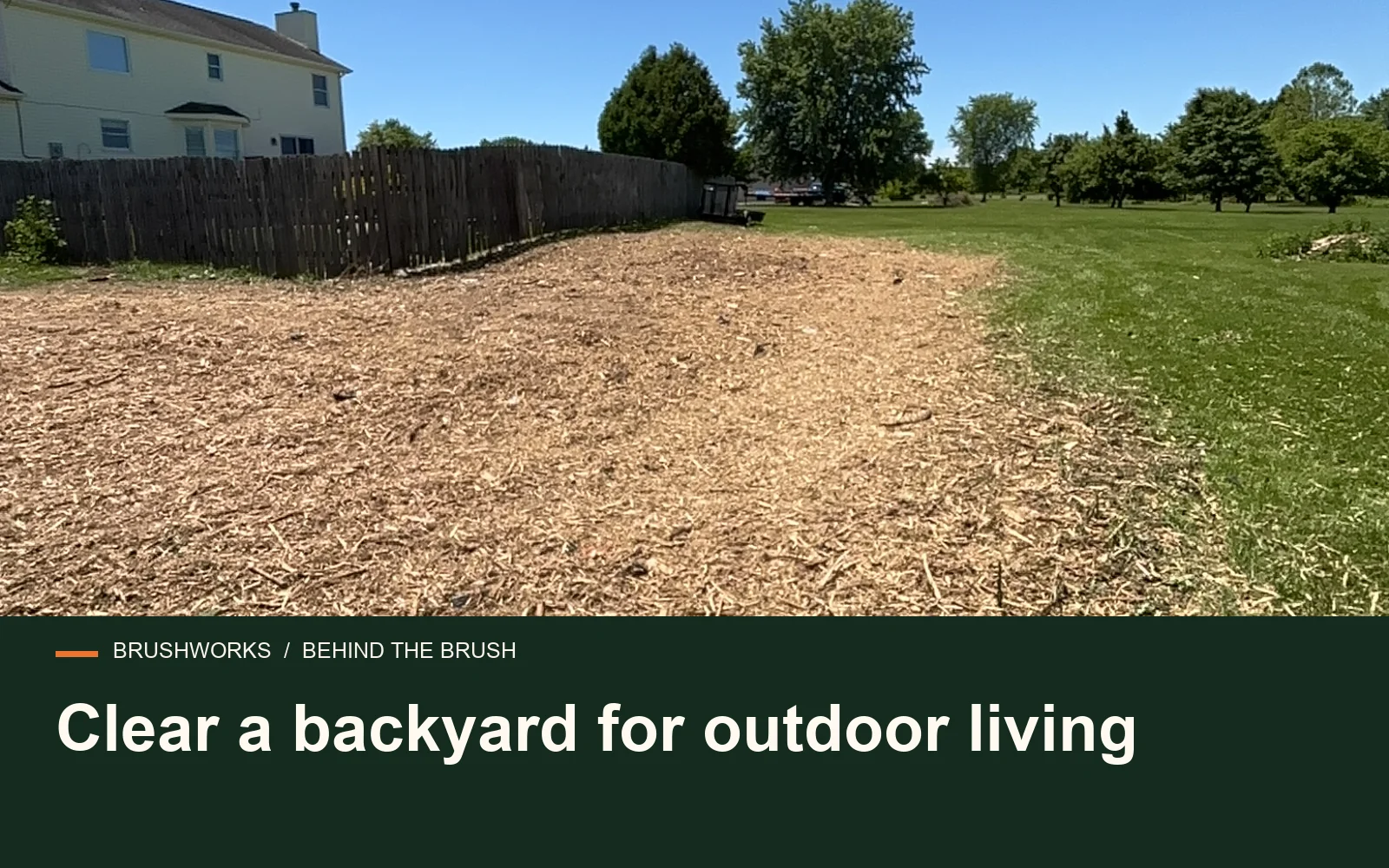
Forestry mulching is a strong first step for overgrown backyard edges, wooded lots, and brushy ground. It grinds honeysuckle, vines, saplings, and small trees into mulch. It opens visibility and access quickly, with less hauling than cut-and-drag cleanup.
That does not mean the site is ready for pavers, concrete, gravel, or a structure. Mulch is organic material. So are roots, topsoil, rotten stumps, and buried wood. Hardscape work needs proper excavation, base stone, compaction, drainage, and edge restraint. A patio built on soft organic material will settle, hold water, or move.
Think of clearing as phase one. It lets everyone see the grade, the drainage, the tree roots, the old debris, and the amount of space available. After that, the patio, landscape, or excavation contractor can remove organic material where needed and build the actual base. This sequence usually beats asking a hardscape crew to price a project through a wall of honeysuckle.
Drainage decides whether the space feels usable
Cincinnati backyards can be tricky. Clay soils hold water. Old swales may be hidden by brush. Downspouts often dump into places nobody notices until the vegetation is gone. Creek edges, low spots, and wooded slopes can move water quickly during heavy rain.
Before placing a patio or fire pit, watch where water wants to go. Clearing can reveal ruts, wet pockets, exposed roots, old drainage pipe, and washed areas. Do not block an active swale just because it is inconvenient. Do not send runoff toward the house, a neighbor, or a future seating area. If drainage is already a problem, plan that fix before spending money on the finish work.
Mulch left after clearing can help protect soil in natural areas, but it is not a drainage system. On slopes, the next step may be seed, straw, erosion blanket, stone, a shallow swale, or a designed drain. Around patios and walls, drainage needs to be part of the hardscape plan.
Common Cincinnati backyard projects that need clearing
Patios, paver areas, and outdoor kitchens need a cleaner work zone. Crews need to bring in stone, sand, block, pavers, concrete, tools, and compactors. If the edge is tangled with honeysuckle or vines, the first day gets wasted fighting brush instead of building. Clearing also makes it easier to decide where the patio should stop and where natural planting should begin.
Play areas and yard extensions usually need a softer finish. Parents often want to reclaim ground from the woods without losing every tree. That may mean removing invasive shrubs, deadwood, and thorny brush while keeping shade trees and a natural buffer. The result should be easier to mow, easier to watch, and less inviting to ticks.
Gardens and small backyard farms need sun. Many garden plans fail because the clearing area is too shaded after the brush is removed. Look at the canopy, not just the understory. Honeysuckle may be blocking access, but big trees may still block the light a vegetable garden needs. Sometimes the right garden site is along an edge, not deep in the woods.
Property lines, neighbors, and HOAs
HOA rules can also affect outdoor living projects. Some associations limit tree removal, fence placement, drainage changes, sheds, fire pits, retaining walls, or visible clearing along common areas. It is better to check before clearing than to explain afterward why the wooded buffer changed.
Neighbors care about water, privacy, noise, and property lines. A little planning helps. Keep good screening where it matters. Do not push debris across the line. Do not redirect water. If equipment must use shared access or work near a fence, sort that out ahead of time.
What to mark before clearing starts
Mark the future outdoor living area, the access route, trees to save, trees to remove, property lines, fences, septic areas, wells, private utilities, irrigation, drainage pipes, downspouts, wet spots, and anything that should be avoided. Use bright ribbon, flags, stakes, paint, or a printed aerial map.
Move furniture, grills, planters, toys, firewood, trailers, lawn equipment, and anything else that might be hidden along the work path. If the brush contains old wire, concrete, metal posts, dumped trash, tires, landscape edging, or buried debris, tell the crew. Those surprises slow the work and can damage equipment.
If another contractor is involved, share their layout. A patio contractor may need more room than the finished patio footprint. A fence crew may need a clean line plus room to work both sides. A landscaper may want certain trees or shrubs protected. The more everyone sees the same plan, the cleaner the handoff.
Plan for maintenance after the project
Clearing opens the space. Maintenance keeps it open. Around Cincinnati, honeysuckle, vines, rose, and saplings can return if the edge is ignored. The first growing season after clearing is the easiest time to stay ahead of it.
For lawn edges, that may mean grading, seeding, and mowing. For natural edges, it may mean selective planting, periodic touchups, or targeted treatment by a qualified applicator. For trails and fire pit access, it may mean mowing the path several times a year. For gardens, it may mean staying ahead of shade and encroaching vines.
A backyard project should not become a yearly fight. Build maintenance access into the layout. Leave room for a mower, hand tools, or a small machine to reach the edges. A tight, pretty design that cannot be maintained will not stay pretty for long.
Agree on the handoff
Before work begins, define what the next person needs to find on site. A rough mulched opening may still contain roots, stump remnants, and uneven ground. Grading, structural preparation, planting, surfacing, and specialist tree work are separate unless explicitly included.
Keep the marked work map with the quote. At completion, compare the limits and finish, document any follow-up, and decide who will maintain the area. Photos help record the result, but they do not replace checking the ground and access.
Plan the work for your property
Send the site address, recent photos, a marked clearing area, and the finish you want. We can discuss where clearing fits and what needs a different trade.
Discuss your project → Explore pricing