
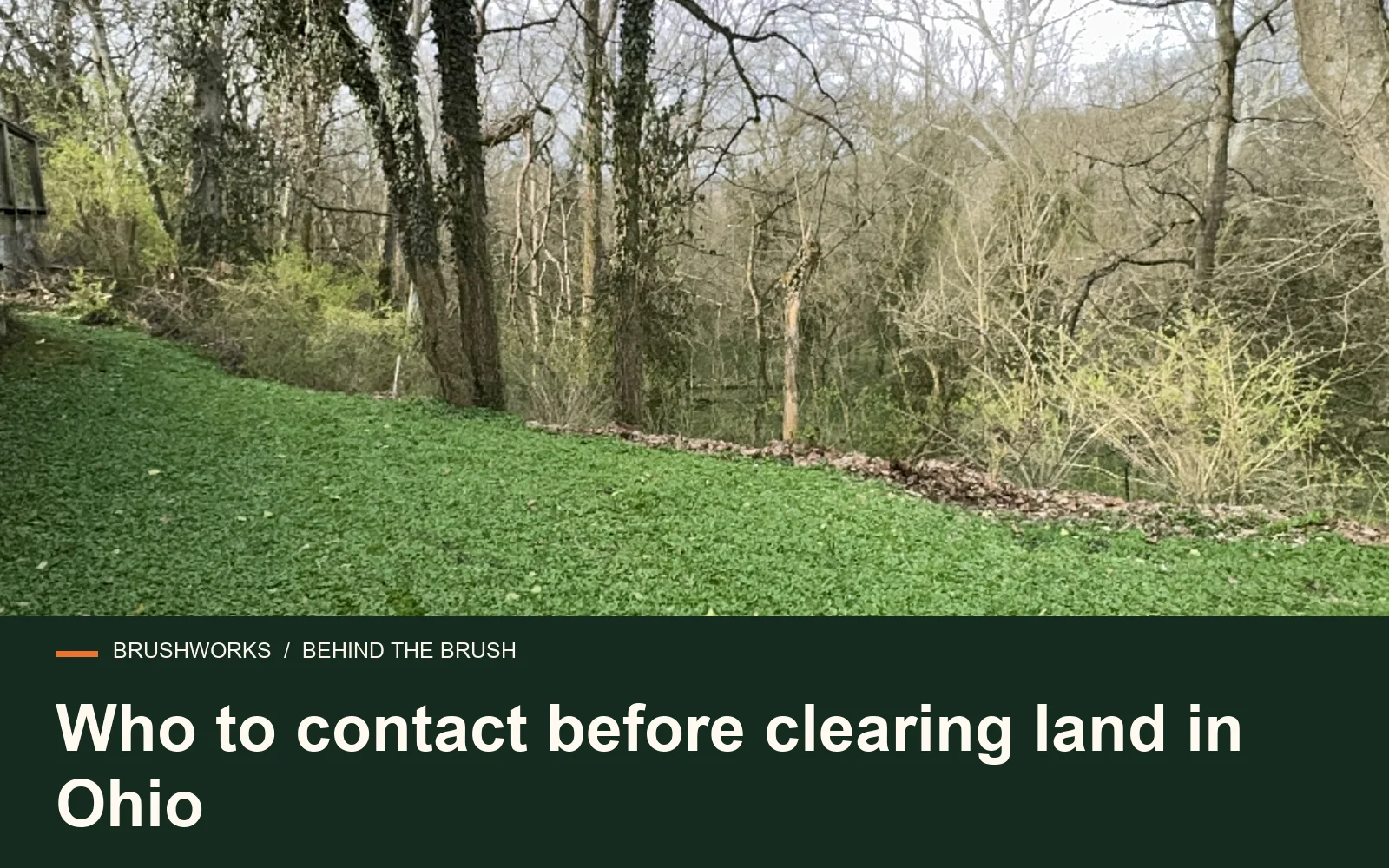
Do You Need Permits for Land Clearing in Ohio? Complete 2026 Guide

One of the most common questions we get from Ohio property owners is: "Do I need a permit to clear my land?" The short answer is usually no—but there are important exceptions you need to know about before firing up the chainsaw or calling a forestry mulching company.

Quick Answer: Ohio Land Clearing Permit Requirements

Here's the bottom line on permits for land clearing in Ohio:

Situation Permit Required? Notes
Residential lot clearing (under 1 acre) Usually No Check for local tree ordinances
Clearing for new home construction Covered by Building Permit Part of site plan approval
Projects disturbing 1+ acres Yes - NPDES Permit Ohio EPA stormwater permit required
Property with wetlands Yes - Army Corps/EPA Section 404 permit for wetland disturbance
Property in flood zone Possibly Check with local floodplain administrator
Commercial/subdivision clearing Yes - Multiple Site plan, grading, stormwater permits

The good news: Most homeowners clearing brush, invasive species, or preparing a small lot for personal use don't need any permits. Ohio is generally property-owner-friendly when it comes to managing vegetation on your own land.

Planning to clear land in Cincinnati? Get an instant estimate—we'll help you understand any requirements for your specific property.

Get Your Instant Estimate

Understanding Ohio's Land Clearing Regulations

Unlike some states that heavily regulate tree removal, Ohio takes a relatively hands-off approach to land clearing on private property. There's no statewide permit required just to clear trees, brush, or vegetation from your own land.

However, regulations come into play in specific circumstances:

1. Federal Regulations (Wetlands & Waterways)

The U.S. Army Corps of Engineers regulates activities affecting "Waters of the United States," which includes:

  • Wetlands: Any area with hydric soils, water-loving plants, and seasonal saturation
  • Streams and rivers: Including seasonal streams that only flow part of the year
  • Drainage ways: Some may be considered jurisdictional waters

Clearing vegetation in wetlands or filling/draining wetlands requires a Section 404 permit from the Army Corps and often Ohio EPA approval as well.

Penalties: Unpermitted wetland disturbance can result in fines up to $50,000 per day and mandatory restoration at your expense.

2. State Regulations (Stormwater/Erosion)

Ohio EPA administers the NPDES Construction General Permit, which applies when:

  • Your project disturbs 1 acre or more of land
  • Your project is part of a larger development that will eventually disturb 1+ acres

This permit requires:

  • Filing a Notice of Intent (NOI) with Ohio EPA
  • Developing a Stormwater Pollution Prevention Plan (SWPPP)
  • Installing erosion and sediment controls (silt fence, stabilized entrances, etc.)
  • Regular inspections and documentation

Cost: $350 permit fee for projects 1-5 acres

3. Local Regulations (Municipal Ordinances)

This is where it gets tricky. Ohio municipalities can enact their own tree and land clearing ordinances. Common local regulations include:

  • Tree preservation ordinances: Protecting trees above a certain size (often 6" or 12" diameter)
  • Heritage/specimen tree protection: Special rules for large or historic trees
  • Zoning setback requirements: Maintaining vegetation buffers
  • Riparian buffer requirements: Protecting vegetation near streams
  • Steep slope ordinances: Restricting clearing on hillsides

Always check: Call your local zoning office before clearing, especially in suburban municipalities.

When You DON'T Need Permits in Ohio

Most residential land clearing falls into situations where permits aren't required. Here's when you're typically in the clear:

✓ Permit-Free Land Clearing Situations

  • Clearing brush and invasive species: Removing honeysuckle, multiflora rose, autumn olive, and other invasive vegetation requires no permits anywhere in Ohio. These are non-native species, and clearing them is actually encouraged.
  • Small lot clearing (under 1 acre): If you're clearing less than an acre and not in a wetland, flood zone, or municipality with tree ordinances, you typically need no permits.
  • Backyard clearing: Clearing your own backyard to expand usable space is generally permit-free for residential property owners.
  • Agricultural clearing: Farmers clearing land for agricultural production have broad exemptions under Ohio law. Converting wooded land to pasture or cropland generally requires no permits.
  • Fence line and property line clearing: Maintaining clear property boundaries and fence lines is considered routine property maintenance.
  • Trail clearing: Creating hiking, biking, or ATV trails on your property is typically permit-free.
  • Fire safety/defensible space: Clearing vegetation near structures for fire safety is encouraged and doesn't require permits.

Important note: Even when permits aren't required, you're still responsible for preventing erosion and sedimentation from leaving your property. Using a professional forestry mulching service eliminates most erosion concerns because mulch holds soil in place.

When You DO Need Permits in Ohio

Here are the situations where land clearing in Ohio requires permits or approvals:

⚠️ Wetland Areas

If your property contains wetlands—or even areas that might be wetlands—tread carefully. Signs of potential wetlands include:

  • Standing water for part of the year
  • Cattails, sedges, or other water-loving plants
  • Dark, mucky soil
  • Property near streams, ponds, or drainage areas

What to do: Check the National Wetland Inventory maps online. If there's any question, consider hiring a wetland consultant for a delineation before clearing. Unpermitted wetland disturbance is a serious federal violation.

⚠️ Large Projects (1+ Acres)

Any land disturbance over 1 acre requires an NPDES permit from Ohio EPA. This applies even if you're just clearing—not building.

The process:

  1. 1. Develop a Stormwater Pollution Prevention Plan (SWPPP)
  2. 2. Submit Notice of Intent to Ohio EPA (can be done online)
  3. 3. Wait for permit coverage (typically 21 days)
  4. 4. Install required erosion controls before clearing
  5. 5. Maintain controls and conduct inspections throughout project
  6. 6. File Notice of Termination when site is stabilized

Good news: Many land clearing contractors (including Brushworks) are familiar with NPDES requirements and can help you navigate the process for larger projects.

⚠️ Flood Zone Properties

If your property is in a FEMA-designated flood zone (particularly Zone A or AE), you may need approval from your local floodplain administrator before clearing. Concerns include:

  • Changes to flood water flow patterns
  • Removal of vegetation that reduces flooding
  • Grading that affects flood storage capacity

What to do: Check your property's flood zone status on FEMA flood maps or your county auditor's website. Contact your local floodplain administrator (usually in the building/zoning department) before clearing.

⚠️ Municipalities with Tree Ordinances

Some Ohio cities and townships have adopted tree preservation ordinances. Communities in Greater Cincinnati with notable tree regulations include:

Hamilton County:

  • Indian Hill (strict tree preservation)
  • Montgomery
  • Madeira
  • Parts of Cincinnati

Warren County:

  • Mason (tree preservation in developments)
  • Some townships with overlay districts

What to do: Call your local zoning or planning department and ask: "Do you have any tree preservation ordinances or regulations on land clearing?" A 5-minute phone call can save major headaches.

⚠️ Clearing for Construction

If you're clearing land to build, the clearing itself is typically covered under your construction permits, but you'll need:

  • Building permit: Required for the structure itself
  • Site plan approval: Shows cleared area, building footprint, erosion controls
  • Zoning approval: Confirming the use is permitted
  • NPDES permit: If disturbing 1+ acres total
  • Septic permit: If using septic system (county health department)
  • Driveway/access permit: If connecting to county/township road

Your contractor or builder typically handles these permits, but it's good to understand what's required.

Cincinnati Area: Local Permit Requirements by County

Here's what you need to know about land clearing regulations in the Greater Cincinnati area:

Hamilton County

General rule: No county-wide tree ordinance, but individual municipalities vary significantly.

  • City of Cincinnati: Has a tree preservation policy primarily affecting development projects. Residential clearing generally okay.
  • Indian Hill: Strict tree preservation ordinance. Permits often required for removing large trees.
  • Anderson Township: No specific tree ordinance. Standard erosion controls apply.
  • Symmes Township: Check with zoning for projects in planned developments.

Contact: Hamilton County Planning + Development: (513) 946-4500

Clermont County

General rule: Very property-owner friendly. No county-wide tree regulations.

  • Most townships have no tree preservation requirements
  • NPDES applies for 1+ acre disturbance (Ohio EPA)
  • Floodplain regulations near the Little Miami and other waterways

Contact: Clermont County Planning: (513) 732-7920

Warren County

General rule: Moderate regulations, varies by jurisdiction.

  • Mason: Tree preservation requirements in new developments
  • Lebanon: Generally permissive for residential clearing
  • Township areas: Few restrictions outside development projects

Contact: Warren County Planning: (513) 695-1512

Butler County

General rule: Property-owner friendly. Few land clearing restrictions.

  • West Chester: Check with zoning for larger projects
  • Liberty Township: Generally permissive
  • Rural areas: Minimal restrictions

Contact: Butler County Planning: (513) 887-3413

Brown County

General rule: Very rural, minimal regulations.

  • No tree preservation ordinances
  • NPDES for 1+ acre (standard statewide requirement)
  • Floodplain rules near Ohio River and tributaries

Contact: Brown County Building: (937) 378-3008

How to Check If You Need Permits: Step-by-Step

Before clearing land in Ohio, follow this checklist to determine your permit requirements:

1

Measure Your Project Area

Calculate the total area you plan to disturb. If it's 1 acre or more, you'll need an NPDES permit. Remember: 1 acre = 43,560 square feet, roughly the size of a football field without end zones.

2

Check for Wetlands

Visit the National Wetland Inventory Mapper and look up your property. Even if nothing shows, walk the property looking for wet areas, water-loving plants, or hydric soils.

3

Check Flood Zone Status

Visit FEMA's Flood Map Service Center or check your county auditor's website. Look for Zone A, AE, or other special flood hazard areas.

4

Call Local Zoning

Call your city, village, or township zoning department. Ask specifically: "I want to clear [X area] of vegetation on my property at [address]. Are there any permits, tree ordinances, or restrictions I should know about?"

5

Call 811 Before You Dig

While not a permit, call Ohio 811 at least 48 hours before any land clearing. They'll mark underground utilities (electric, gas, cable, etc.) for free. This is legally required and protects you from hitting utility lines.

6

Document Everything

Keep notes of who you talked to, when, and what they said. If someone tells you no permit is needed, write down their name and date. This protects you if questions arise later.

The NPDES Permit Process: What to Expect

If your project disturbs 1 acre or more, here's what the NPDES permit process looks like:

Timeline & Costs

Typical Timeline:

  • SWPPP development: 1-2 weeks
  • NOI submission to approval: 21 days
  • Total before you can start: ~4-6 weeks

Typical Costs:

  • Ohio EPA permit fee: $350 (1-5 acres)
  • SWPPP development: $500-$2,000
  • Erosion controls: Varies by project

The good news: Many land clearing and excavation contractors are NPDES certified and can handle the permit process as part of your project. Ask your contractor if they can manage NPDES compliance.

Why Forestry Mulching Simplifies Permit Compliance

One of the major advantages of forestry mulching over other land clearing methods is simplified regulatory compliance:

✓ Erosion Prevention

The mulch layer left behind holds soil in place, reducing erosion concerns that trigger regulatory issues. This often means simpler or no erosion control requirements.

✓ No Soil Disturbance

Unlike bulldozing, forestry mulching doesn't disturb the soil structure. This can keep your project below thresholds that trigger NPDES or local grading permits.

✓ Immediate Stabilization

The site is stabilized immediately after clearing—no waiting for seeding to establish. This satisfies many erosion control requirements automatically.

✓ No Burning or Hauling

Burning requires permits in many jurisdictions and can be prohibited during certain seasons. Forestry mulching eliminates the need for both burning and debris hauling.

Common Questions About Ohio Land Clearing Permits

Do I need a permit to clear trees on my own property in Ohio?

In most cases, no. Ohio does not require permits for routine tree removal or land clearing on private residential property. However, exceptions exist for properties in flood zones, near wetlands, with protected trees, or within certain municipal jurisdictions that have local tree ordinances. Always check with your local zoning office if you're unsure.

What triggers permit requirements for land clearing in Ohio?

Permit requirements are typically triggered by: clearing within designated wetlands or stream buffers, removing trees in municipalities with tree preservation ordinances, grading or earth disturbance over 1 acre (NPDES permit), clearing in designated flood zones, or land clearing as part of a larger construction project requiring site plan approval.

Do I need permits for land clearing if I'm building a house in Ohio?

If you're clearing land for new home construction, the clearing itself usually doesn't require a separate permit—it's covered under your building permit and site plan approval. However, you'll need erosion control measures in place, and projects disturbing more than 1 acre require an NPDES stormwater permit from Ohio EPA.

Are there protected trees in Ohio I can't remove?

Ohio has no statewide protected tree species that prohibit removal on private property. However, some municipalities have heritage tree or specimen tree ordinances protecting large or historic trees. Additionally, if endangered species (like Indiana bats) use trees on your property, federal protections may apply. Check with your local municipality for any local ordinances.

What is the NPDES permit and do I need one for land clearing?

The NPDES (National Pollutant Discharge Elimination System) Construction General Permit is required in Ohio when you disturb 1 acre or more of land. This includes land clearing activities. The permit requires a Stormwater Pollution Prevention Plan (SWPPP) and erosion control measures. For most residential lot clearing under 1 acre, this doesn't apply.

How do I find out if my property has wetlands or is in a flood zone?

Check the National Wetland Inventory (NWI) maps online for potential wetlands, and FEMA flood maps for flood zone designations. Your county auditor's website often has flood zone information on property records. For definitive wetland determinations, you may need a professional wetland delineation. Brushworks can help you understand your property's situation during our consultation.

What Happens If You Clear Land Without Required Permits?

Clearing land without required permits can have serious consequences:

Federal Violations (Wetlands)

Unpermitted wetland disturbance is enforced by the Army Corps and EPA. Penalties can include:

  • Fines up to $50,000 per day of violation
  • Mandatory wetland restoration (often 2-3x the disturbed area)
  • Criminal prosecution in egregious cases

State Violations (NPDES)

Ohio EPA enforces stormwater violations. Consequences include:

  • Fines up to $10,000 per day
  • Stop work orders
  • Required remediation

Local Violations (Municipal)

Local ordinance violations typically result in:

  • Fines (varies by municipality, often $100-$1,000 per tree)
  • Required replacement plantings
  • Stop work orders on construction projects
  • Denial of future permits

The bottom line: A few phone calls and potentially a small permit fee is vastly preferable to fines, restoration requirements, and legal headaches. When in doubt, check first.

Ready to Clear Your Ohio Property?

Brushworks has cleared over 500 properties across Greater Cincinnati and Southwest Ohio. We understand local regulations and can help you navigate any permit requirements for your specific situation.

Related Articles

Land Clearing Cost Per Acre in Ohio

Read Article →

How to Clear a Wooded Lot in Ohio

Read Article →

Best Time to Clear Land in Ohio

Read Article →