
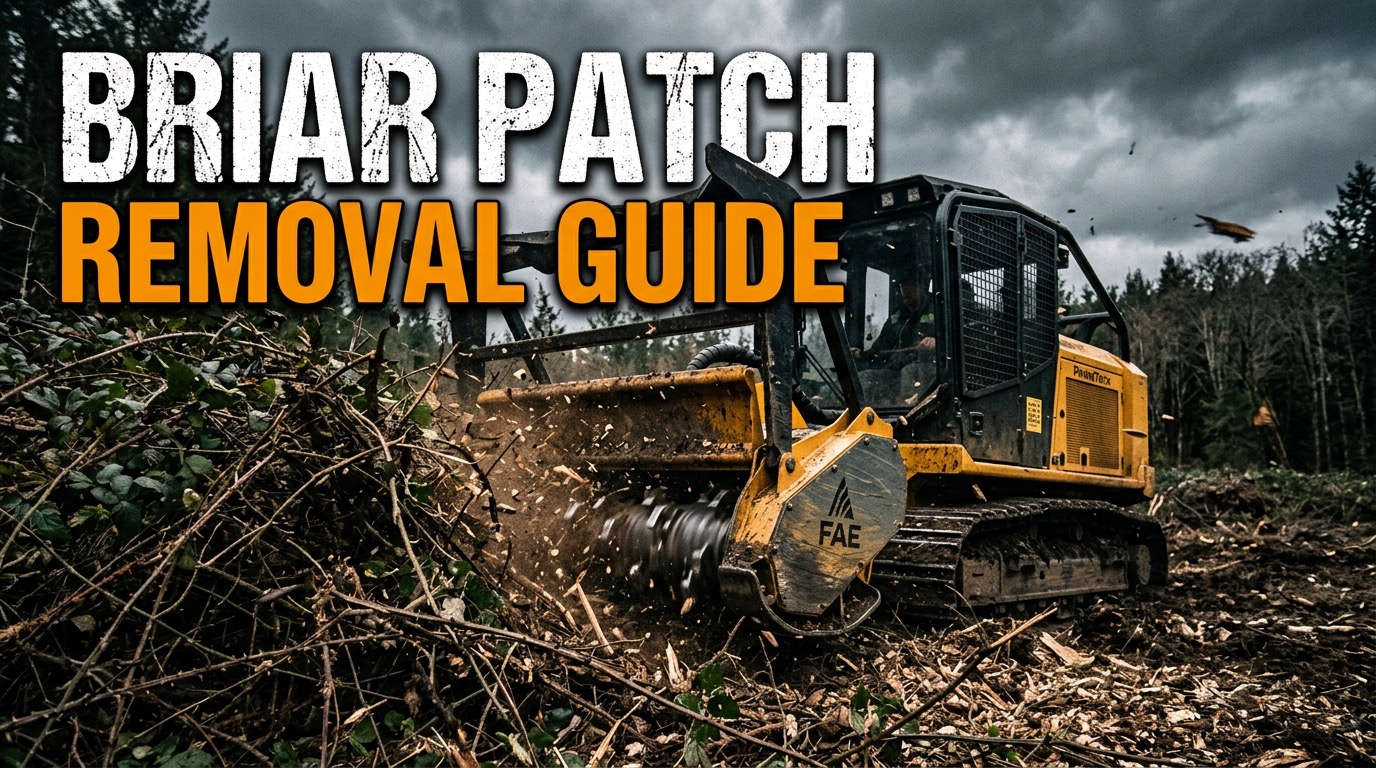
What people call a briar patch
Around Cincinnati, “briar patch” can mean several different plants growing together. Most property owners are talking about blackberry or raspberry canes, greenbrier, multiflora rose, grape vine, honeysuckle, autumn olive, and small saplings all tangled into one miserable mess. Sometimes poison ivy is woven through it too, which makes hand clearing even less fun.
The patch usually starts where mowing stopped. Fence rows, back property corners, pond banks, creek edges, old pasture, abandoned garden areas, utility easements, and wooded edges are common spots. Birds drop seed. Deer move through. Vines climb the young trees. Canes arch over and root where they touch. Before long, the growth is chest high and full of thorns.
This is why cutting only the top off with a string trimmer rarely solves it. Briars store energy below the surface. If the roots, crowns, and seed bank are strong, the patch will come back. Clearing is step one. Maintenance is what keeps the land usable.
The practical goal
Knock the thorny growth down, open safe access, expose hidden problems, protect the trees worth keeping, and make the area easy enough to mow, spray, seed, graze, or touch up later.
Why briar patches are hard to clear by hand
Hand clearing can work on a small patch near a patio or garden. On a bigger patch, it gets ugly fast. Blackberry canes snag sleeves and skin. Multiflora rose bends back like barbed wire. Greenbrier vines climb into trees and pull down in long thorny ropes. Dead canes hide under new growth and catch your legs when you step through.
The other problem is what you cannot see. Briars hide holes, stumps, old T-posts, woven wire, concrete chunks, dumped junk, yellow jacket nests, and downed limbs. If the patch is near a farm edge or old home site, assume there may be metal in it until proven otherwise.
A forestry mulcher handles this kind of work better than a crew with chainsaws and brush cutters because the machine can process the mess in place. It grinds canes, vines, saplings, and dead brush into mulch. There is less dragging, less piling, and less time spent fighting the thorns by hand.
Hand clearing makes sense when
- • The patch is small and easy to reach
- • There are tight landscape beds or utilities
- • You need detail work around fences or buildings
- • The ground is too soft for equipment
Mulching makes sense when
- • The patch covers a large area
- • Vines, canes, and saplings are tangled together
- • You need trails, fence lines, or field edges reopened
- • Hauling brush would turn into a whole second job
Where briars cause the most trouble
Thorny patches are more than an eyesore. They take away access. That matters when you are trying to inspect a fence, use a trail, maintain a pond, show land to a buyer, or get equipment through a back lot.
Fence rows
Briars grow through woven wire and around posts until the fence disappears. Clearing the row lets you see broken wire, leaning posts, neighbor growth, and trees starting to damage the line.
Trails and access paths
A trail can close in from both sides in one season. Once thorns are rubbing shoulders and legs, people stop using it. Opening the corridor brings the property back into use.
Pond and creek edges
Briars on banks block fishing access, inspection, and mowing. Clearing has to be careful around wet soil so the bank does not get chewed up.
Old fields and back lots
Fields around Loveland, Milford, Batavia, Lebanon, Mason, and rural Hamilton County can turn from grass to thorny brush fast when mowing stops.
The same pattern shows up on rental properties, estate lots, small farms, hunting ground, commercial parcels, and residential acreage. The land is still there. It is just locked behind thorns.
How forestry mulching clears briars
Forestry mulching uses a tracked machine with a mulching head to shred vegetation in place. For briar patch removal, that means the operator can work into the edge of the patch, knock down tall canes, grind small woody stems, chew up vine tangles, and leave the material as ground cover.
The mulch layer is useful. It helps protect bare soil, reduces the amount of loose debris, and makes the finished area easier to walk than a field full of cut cane stubs. It is not a lawn. If you want grass, pasture, or a clean finish, the clearing may need to be followed by grading, seeding, mowing, or herbicide work.
Good briar clearing is not just driving around until everything looks brown. The operator has to watch for grade changes, soft spots, hidden metal, desirable trees, nearby fences, utilities, and erosion risk. On steep Cincinnati hillsides or creek banks, the machine choice and direction of travel matter.
- Open access first. Create a safe way into the patch without tearing up the approach.
- Work the edges. Start where the machine can see what it is cutting.
- Preserve marked trees. Keep healthy shade trees and useful screening where they belong.
- Watch for junk. Old wire, metal, tires, and concrete should be found before they find the mulcher.
- Leave a maintainable finish. The area should be ready for the next step, not just flattened for a day.
The regrowth problem
Briars are stubborn. Blackberry and raspberry canes can push back from roots. Greenbrier has underground storage that helps it survive cutting. Multiflora rose can resprout and spread by seed. Honeysuckle and autumn olive can return if the stumps or seedlings are ignored.
That does not mean clearing is wasted. It means you should treat the first clearing as the reset. Once the big thorny mess is gone, follow-up gets much easier. A mower can reach the area. A sprayer can see the regrowth. A landowner can walk it without blood loss. Livestock can sometimes help keep new growth down if the property is set up for it.
Do not wait three years to check it
Walk the cleared area after the first growing season. If new shoots are coming up, handle them while they are young. A small touch-up beats paying to reclaim the same patch all over again.
If the finished goal is turf, pasture, or a maintained field edge, seed matters. Bare disturbed soil invites whatever seed is already waiting, and briars usually have a head start. Getting desirable grass established is one of the best ways to make the next battle smaller.
What to do before hiring briar removal
A little prep saves money and confusion. You do not need to survey the whole property before every clearing job, but you should know the basic limits and what needs protected.
- • Mark property lines if the patch is near a neighbor.
- • Flag septic lids, wells, utilities, irrigation, dog fences, and drain lines if you know where they are.
- • Mark trees, shrubs, or screens that should stay.
- • Tell the crew about old fencing, dumped metal, concrete, or farm debris.
- • Decide what the area should become after clearing: trail, mowable edge, pasture, food plot, yard, building access, or open woods.
Photos help too. Send wide shots, close shots, and one or two pictures showing access from the driveway or road. If the patch is behind a gate, around a pond, or down a hill, say that up front. The hard part is often not the briars. It is getting the right machine to the briars without creating a bigger problem.
How much briar patch removal costs in Cincinnati
Briar removal pricing depends on size, density, terrain, access, hidden debris, cleanup expectations, and whether the work is selective. A small backyard thicket with easy access is different from two acres of blackberries, honeysuckle, greenbrier, and saplings behind a creek crossing.
| Project type | Common range | What changes the price |
|---|---|---|
| Small residential briar patch | $1,200 to $3,500 | Access, detail work, fences, disposal, finish expectations |
| Fence row or trail corridor | $2,000 to $8,000+ | Length, width, old wire, slope, trees to preserve |
| Dense field edge or back lot | $1,800 to $4,500 per acre | Vegetation size, machine access, sapling density, hidden debris |
| Creek, pond, or hillside briars | Site-specific | Wet ground, bank stability, erosion risk, limited access |
For rough planning, try the instant pricing calculator. For a real number, send photos and access notes through the quote form. The more we can see before the visit, the faster we can tell whether this is a half-day cleanup or a serious reclamation job.
When to clear briars in Ohio
Late fall through early spring is often a good window. Leaves are down, visibility is better, ticks are less active, and the ground may carry equipment better if conditions are dry or frozen. Winter clearing also gives you a head start before spring growth explodes.
Summer clearing still has its place. If briars are blocking a fence project, trail, pond, building site, sale listing, or family use, waiting for the perfect season may not make sense. The tradeoff is thicker green growth, more insects, and sometimes softer ground after storms.
The bigger issue is soil. Cincinnati clay can be greasy after rain. Low areas near creeks, ponds, and swales need patience. Running equipment through saturated ground can leave ruts, damage banks, and turn a clearing job into a repair job. A good operator will tell you when waiting a few days is cheaper than forcing it.
Keeping the patch from coming back
After the first clearing, decide how the area will be managed. If it is going to be lawn, seed it and mow it. If it is a trail, keep the corridor cut wide enough for sun and maintenance access. If it is a fence row, schedule seasonal trimming before vines grab the wire again. If it is pasture, get the grass established and watch for thorny shoots.
First month
Walk the area, remove exposed trash or wire, and decide if grading, seeding, or spot treatment is needed.
First season
Mow, spray, graze, or cut new shoots while they are young. Do not let new canes harden off and spread.
Every year
Check fence rows, trails, and edges before Cincinnati spring growth gets a running start.
The best maintenance plan is the one you will actually do. A perfect plan that never happens is useless. Keep it simple and repeatable.
How Brushworks handles briar patch removal
Brushworks clears briar patches across Greater Cincinnati, including Loveland, Milford, Mason, Lebanon, Batavia, West Chester, Anderson Township, Clermont County, Hamilton County, Warren County, and Butler County. We are usually called when the patch is past the weekend-warrior stage and needs equipment.
We look at access, slope, soil, plant density, obstacles, and what the landowner wants the area to become. Some jobs are simple: clear the fence line so a new fence can go in. Some need more thought: open a creek edge without tearing up the bank, clear a hunting trail while keeping cover, or reclaim an old field while leaving good trees.
The point is not to make every property look like a golf course. The point is to give you the land back. If the briars are keeping you out, they are running the place. That can be fixed.
Need thorny brush cleared?
Send photos of the briar patch, the access route, and the area you want opened. We will help you figure out the cleanest way to reclaim it.
Frequently asked questions
What is the best way to remove a briar patch in Cincinnati?
For large patches, forestry mulching is usually the fastest way to cut and process blackberry canes, greenbrier, multiflora rose, vines, saplings, and thorny brush in place. Small patches near landscaping can be handled by hand, but regrowth still needs a plan.
Will briars grow back after clearing?
They can. Many briars regrow from roots, crowns, or seed. The first clearing resets the area. Mowing, spot treatment, seeding, grazing, or scheduled touch-up work keeps the patch from rebuilding.
Can you clear briars without removing good trees?
Yes. We can selectively remove thorny understory growth while preserving healthy mature trees, useful shade, and privacy screens. Mark what should stay before the machine starts.
Is briar patch removal safe near fences?
It can be, but old wire and hidden metal need attention. Tell the crew where fencing, posts, dog fence wire, utilities, and debris may be. Detail work near good fence may need hand cutting.
When should I clear briars in Ohio?
Late fall, winter, and early spring are often good because visibility is better and growth is down. Summer clearing works too when access, project timing, or property use matters more than waiting.
Related articles
Get the thorns out of the way
If briars are blocking a trail, fence row, field edge, pond bank, or back lot, Brushworks can help open it back up.