
Briar Removal Cincinnati: Professional Thorny Bush & Briar Patch Clearing Services
Briars are the worst. Those thorny, tangled masses of wild blackberry, raspberry, and multiflora rose turn beautiful property into painful no-go zones. Here's how to reclaim your land without shredding your arms—or your sanity.
Why Briar Patches Are So Difficult to Clear
Anyone who's tried to clear briars by hand knows the truth: it's miserable work. Briars aren't just annoying—they're specifically designed by nature to hurt you.
What Makes Briars Different from Regular Brush:
- Recurved thorns that hook into skin, clothing, and gloves—pulling away makes it worse
- Dense, tangled growth that's nearly impossible to navigate on foot
- Aggressive root systems that spread underground and send up new shoots constantly
- Arching canes that root where they touch the ground, creating impenetrable thickets
- Fast regrowth after cutting—mowing briars often makes the problem worse
A single wild blackberry plant can spread to cover 30+ feet in just a few years. Multiflora rose—an invasive species that's now illegal to plant in Ohio—can produce up to 500,000 seeds per plant, with each seed staying viable in soil for 10-20 years.
This is why briar patches seem to explode out of nowhere, and why traditional clearing methods often fail.
Ready to eliminate your briar nightmare?
Get Your Instant EstimateCommon Briar Species in Cincinnati & Ohio
Not all briars are created equal. Knowing what you're dealing with helps explain why some patches are worse than others.
Wild Blackberry (Rubus allegheniensis)
The most common briar in Ohio. Produces delicious berries but spreads aggressively through both seeds and root suckers. Canes can grow 10+ feet and arch over to root at tips.
- Thorns: Stiff, hooked thorns covering entire cane
- Spread: Fast—can colonize an acre in 3-5 years if unchecked
- Difficulty: Moderate to high
Black Raspberry (Rubus occidentalis)
Similar to blackberry but with smaller, more delicate thorns and distinctive bluish-white coating on canes. Slightly less aggressive but still forms dense patches.
- Thorns: Smaller but very sharp
- Spread: Moderate
- Difficulty: Moderate
Multiflora Rose (Rosa multiflora) — INVASIVE
The worst offender. This invasive species was planted for erosion control and "living fences" in the mid-1900s and has since become Ohio's most problematic briar. Now illegal to plant, sell, or propagate.
- Thorns: Extremely sharp curved thorns, often in pairs
- Spread: Explosive—birds spread seeds everywhere
- Difficulty: Very high—tough root crowns and dense growth
Wineberry (Rubus phoenicolasius)
An Asian species now naturalized throughout Ohio. Recognizable by reddish, sticky-hairy stems with small thorns. Less painful than other briars but spreads quickly in disturbed areas.
- Thorns: Smaller but numerous
- Spread: Moderate to fast
- Difficulty: Moderate
Wild Rose (Rosa carolina, R. setigera)
Native roses that are less aggressive than multiflora rose but still form thorny thickets. Often found along fence rows and woodland edges.
- Thorns: Large, curved thorns
- Spread: Slow to moderate
- Difficulty: Moderate
Why Hand Clearing Briars Is a Bad Idea
We understand the temptation to save money and tackle briars yourself. Here's what actually happens:
The DIY Briar Clearing Experience:
- Buy heavy gloves, long sleeves, and loppers
- Spend 30 minutes clearing 10 feet, getting scratched repeatedly
- Realize thorns go through leather gloves
- Take a break to treat bleeding wounds
- Return to find the pile you cut is now a tangled, unmanageable mess
- Spend more time untangling and dragging brush than cutting
- After 4 hours, clear maybe 200 square feet
- Wake up the next morning covered in scratches, too sore to continue
- Check back in 6 weeks—new growth is already 2 feet tall from the roots you left behind
We're not exaggerating. A briar patch that takes our equipment 2 hours to completely eliminate would take a crew of 4 people with hand tools several full days of miserable work—and the roots would survive to regrow.
| Method | Time for 1/2 Acre | Regrowth Risk | Pain Level |
|---|---|---|---|
| Hand Clearing | 20-40 hours | High (roots survive) | Extreme |
| Brush Hog/Mower | 1-2 hours | Very High (stimulates growth) | Low |
| Forestry Mulching | 2-4 hours | Low (roots destroyed) | None |
Why Forestry Mulching Is the Best Briar Removal Method
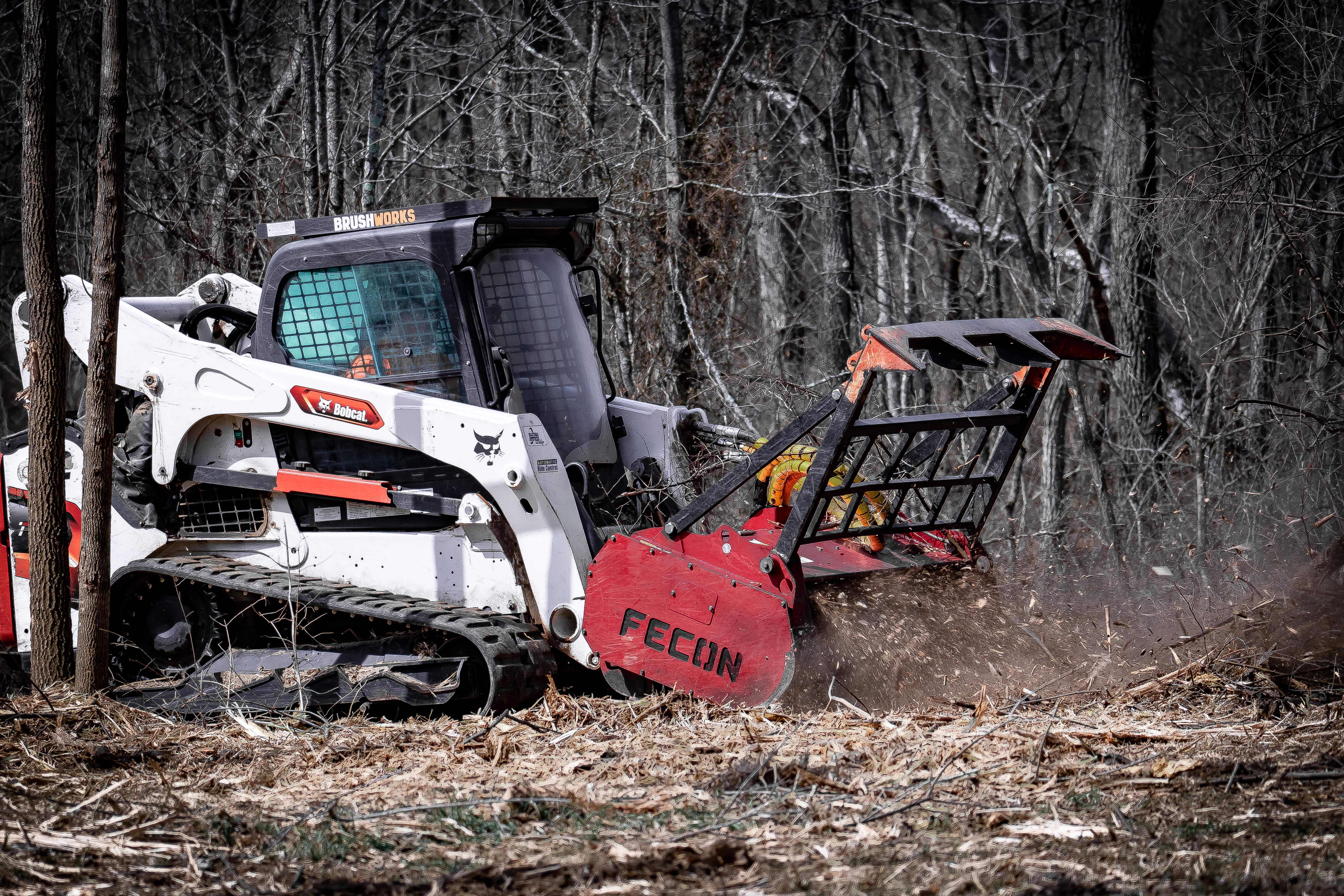
Forestry mulching doesn't just cut briars—it destroys them completely. Here's why it works where other methods fail:
✓ Complete Destruction
The mulching head grinds canes, stems, and root crowns into small pieces. The root crowns—where regrowth happens—are destroyed rather than left intact.
✓ Mulch Suppresses Regrowth
The layer of mulch left behind blocks sunlight and makes it harder for surviving root fragments to push through—natural weed suppression.
✓ No Debris Piles
Thorny brush piles are a nightmare to handle. With mulching, everything is ground in place—no dragging, piling, or burning required.
✓ One-Pass Solution
Our equipment clears, mulches, and finishes in a single pass. You go from impenetrable briar patch to clean, walkable land in hours.
What About Really Dense Patches?
Even the thickest multiflora rose thickets are no match for commercial forestry mulching equipment. We regularly clear patches that property owners have been fighting for years. The thorns that tear up your arms don't affect steel mulching teeth.
Briar Removal Pricing in Cincinnati
Briar clearing is typically priced based on area and density. Here's what to expect:
| Area Size | Typical Price Range | Notes |
|---|---|---|
| Small patch (under 1/4 acre) | $800 – $1,500 | Minimum charges apply |
| Medium patch (1/4 – 1/2 acre) | $1,200 – $2,200 | Most common residential size |
| Large area (1/2 – 1 acre) | $2,000 – $3,500 | Better per-acre value |
| Full acre+ | $2,500 – $4,500/acre | Best per-acre rates |
Factors That Affect Your Price:
- Briar density: Scattered patches cost less than wall-to-wall coverage
- Species mix: Multiflora rose with thick root crowns takes longer to grind
- Terrain: Slopes and uneven ground require more time and skill
- Access: Equipment needs a clear path to the work area
- Other vegetation: Mixed briars + trees vs. briars alone
Before & After: What to Expect
Here's the typical transformation when we clear a briar patch:
Before:
- Impenetrable wall of thorny vegetation
- Can't walk through without serious injury
- Hidden hazards (stumps, holes, debris) underneath
- Wildlife habitat for unwanted animals (heavy briar patches attract snakes, rodents)
- Spreading into adjacent areas every year
After:
- Clean, walkable ground covered in 2-4" of mulch
- Visible terrain—you can see exactly what's there
- Ready for seeding, landscaping, or just enjoying
- No thorny debris piles to deal with
- Significantly reduced regrowth compared to other methods
Important note on regrowth: While forestry mulching dramatically reduces regrowth compared to mowing or hand cutting, briars are persistent. Some root fragments will survive and send up shoots in the first growing season. Spot-treating these with herbicide or a quick follow-up is usually all that's needed to achieve complete elimination.
Best Time to Clear Briars in Ohio
You can clear briars year-round, but timing affects both the process and results:
Best: Late Fall – Early Spring (Nov-Mar)
- Plants are dormant with less moisture
- Ground is firmer (usually)
- Root reserves are depleted from winter
- Easier to see what you're dealing with
- Less regrowth energy available
Good: Summer (Jun-Aug)
- Plants are actively growing (easier to kill)
- Dry conditions mean better access
- Leaves make root crowns easier to locate
- Mulch decomposes faster in heat
- More regrowth energy—but easier to spot-treat
Frequently Asked Questions
How much does briar removal cost in Cincinnati?
Professional briar removal typically costs $2,500-$4,500 per acre using forestry mulching. Smaller patches under half an acre have minimum charges of $800-$1,500 depending on density and access.
What types of briars grow in Ohio?
Common Ohio briars include wild blackberry, black raspberry, wineberry, multiflora rose (invasive), dewberry, and wild rose. All spread aggressively and have painful thorns.
Will briars grow back after clearing?
Forestry mulching destroys root crowns and significantly reduces regrowth compared to mowing or hand cutting. Some spot treatment may be needed in the first year, but the mulch layer helps suppress new growth.
Can I remove briars myself?
For very small patches, yes—but it's extremely painful and time-consuming. A briar patch that takes professionals 2 hours to mulch could take days of hand work, and the roots often survive to regrow.
What is the fastest way to clear a briar patch?
Forestry mulching is the fastest method. A commercial mulcher can clear an acre of dense briars in 4-8 hours, grinding everything into mulch without any hauling or burning needed.
Stop Fighting Briars—Eliminate Them
Get a fast quote for professional briar removal. We'll clear your thorny nightmare so you can actually use your land again.