
Why Honeysuckle Is Such a Problem in Ohio
Invasive bush honeysuckle (Lonicera maackii and Lonicera tatarica) is one of the most destructive plant species in Ohio. Once it takes hold, it spreads rapidly and becomes nearly impossible to control without professional equipment.
Here's why honeysuckle is such a problem:
- • Grows 6–20 feet tall—creating dense walls that block sunlight and views
- • Forms dense walls that take over 10–50 feet of yard, fence lines, and wooded areas
- • Spreads via berries eaten by birds—seeds are deposited far from the original plant, creating new infestations
- • Chokes out every native plant around it—honeysuckle outcompetes native species for water, nutrients, and sunlight
- • Creates unsafe hiding areas near homes—dense thickets provide cover for unwanted wildlife and reduce visibility
- • Attracts ticks—the dense, humid environment under honeysuckle is ideal for tick populations
- • Increases fire risk when dry—dead honeysuckle creates fuel for wildfires
Ohio's climate and soil make honeysuckle extremely aggressive. The combination of fertile soil, adequate rainfall, and moderate winters allows honeysuckle to thrive year-round. Once it takes hold, it rarely stops on its own—and it spreads faster than most homeowners can remove it manually.
How to Identify Invasive Bush Honeysuckle
Many homeowners think honeysuckle is "just a big bush" until they realize how invasive it actually is. Here's how to identify invasive bush honeysuckle:
- • Hollow stems when cut—the stems are hollow in the center, unlike most native shrubs
- • Opposite leaves—leaves grow directly across from each other on the stem
- • Bright red berries in fall—small, bright red or orange berries appear in late summer and fall
- • Early green-up in spring—honeysuckle leaves emerge weeks before native plants, giving it a competitive advantage
- • Dense, tangled branching—creates impenetrable thickets that are difficult to walk through
Many homeowners think it's "just a big bush" until we show them how invasive it actually is.
If you have dense, tangled bushes with hollow stems and red berries, you're likely dealing with invasive honeysuckle—not a native plant that can be left alone.
Best Ways to Get Rid of Honeysuckle (Ranked)
Not all honeysuckle removal methods are created equal. Here's a ranked list from fastest and most effective to slowest and least practical:
METHOD #1: Forestry Mulching (Best All-Around Solution)
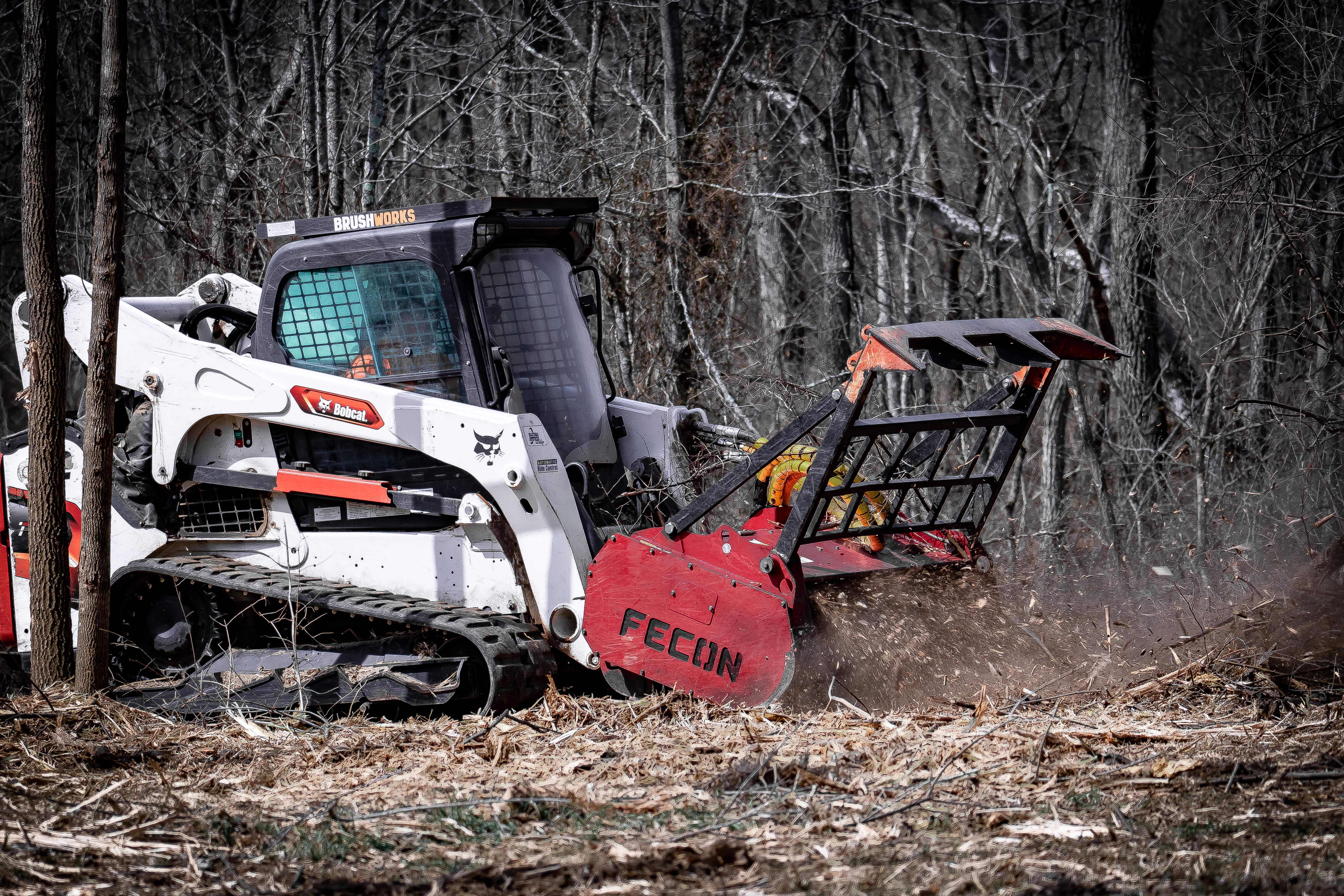
Forestry mulching removes the entire bush—branches, stems, vines—while grinding the root crown down to the soil, stopping regrowth for years. This is the fastest, most effective method for removing honeysuckle on any scale.
- ✅ Fastest method—1 acre in a day, even with dense honeysuckle walls
- ✅ Handles dense walls effortlessly—professional mulching equipment cuts through thick honeysuckle like butter
- ✅ Safe on uneven terrain and hills—our remote-controlled mulchers can operate on slopes up to 50°
- ✅ No burning or hauling required—everything is mulched in place, leaving beneficial ground cover
- ✅ Leaves mulch that suppresses regrowth—the mulch layer prevents new seedlings from establishing
Brushworks specializes in honeysuckle removal.
We use high-flow machinery and FAE mulching heads designed specifically for woody invasive species like honeysuckle. Our equipment grinds honeysuckle at the root level, dramatically reducing regrowth. For more on our forestry mulching services, see our complete guide.
METHOD #2: Cut and Treat (Manual or Tree Service Method)
How It Works:
- • Requires chainsawing bushes by hand
- • Stumps must be treated with herbicide immediately
- • Debris piles require disposal
Limitations:
- ❌ Extremely slow for large properties
- ❌ High labor cost—very expensive for acreage-level removal
- ❌ Leaves piles of debris requiring disposal
- ❌ Requires immediate herbicide treatment to prevent regrowth
Homeowner Example: If you have more than 5–10 bushes, this method becomes exhausting and expensive. For properties with hundreds of honeysuckle bushes, cut-and-treat is simply not practical.
METHOD #3: Excavation or Uprooting
How It Works:
- • Removes entire root system
- • Good for selective removal
- • Complete removal of plant
Limitations:
- ❌ Very disruptive to soil—creates holes and ruts
- ❌ Requires grading and erosion control
- ❌ Not practical for acreage-level clearing
- ❌ Expensive and time-consuming
Excavation is best for removing individual honeysuckle bushes near structures, but it's not a viable solution for large-scale removal.
METHOD #4: Herbicide-Only
How It Works:
- • Application of herbicide to kill honeysuckle
- • Can be sprayed or applied to cut stems
Limitations:
- ❌ Slow—months to take effect
- ❌ Not very effective on large or mature honeysuckle
- ❌ Leaves dead standing plants that still require removal
- ❌ Risk of damaging desired vegetation
- ❌ Doesn't address the root system effectively
Herbicide-only methods rarely solve the problem long-term.
Dead honeysuckle still needs to be removed, and new seedlings will continue to sprout. For effective, permanent removal, mechanical removal combined with proper mulching is far superior.
How Much Does Honeysuckle Removal Cost in Ohio?
Honeysuckle removal costs vary based on density, terrain, and acreage. Here are Brushworks-accurate cost ranges for forestry mulching in Greater Cincinnati:
Light Honeysuckle
$1,400–$1,800 per acre
Scattered bushes, minimal density. Easier to navigate and clear quickly.
Moderate/Dense Honeysuckle
$1,800–$2,700+ per acre
Thick walls of honeysuckle, multiple layers, tangled growth. Most common scenario in Cincinnati.
Extreme Density / Hillsides
$2,700–$3,400+ per acre
Very thick walls, steep terrain, or remote access requiring specialized equipment.
Why density matters:
Honeysuckle is woody, tangled, and often grows 2–3 layers thick. The thicker the wall, the slower the machine travels. Dense honeysuckle requires more equipment power and time, which affects the final cost.
Want Specific Pricing?
See our Forestry Mulching Pricing Guide for detailed pricing information, or learn about how we price jobs right with transparent, project-based pricing.
How Long Does Removal Take?
Timeline depends on acreage, honeysuckle density, terrain, and equipment type. Here are realistic expectations:
Small Backyard Section
A few hours—most backyard honeysuckle removal projects (under 0.5 acres) are completed in a single day, often in just a few hours.
½–1 Acre
Typically 1 day—standard 1-acre honeysuckle removal projects are usually completed in one full day, depending on density.
2–5 Acres
1–3 days—larger projects may require multiple days, especially with dense honeysuckle walls or varied terrain.
Hillsides
Depends on slope + access—steep slopes, remote access, or extremely dense growth can extend timelines. We'll provide a realistic estimate during your quote.
Most residential honeysuckle removal projects are completed in 1 day. We'll provide a timeline estimate during your initial assessment so you know exactly what to expect.
Will Honeysuckle Grow Back?
Forestry mulching dramatically reduces regrowth by grinding honeysuckle at the root level, but homeowners must remove seedlings in spring to prevent new infestations.
Here's what to expect:
- • Mature bushes won't regrow—forestry mulching grinds the root crown, preventing regrowth from existing plants
- • New seedlings will appear—birds will continue to deposit seeds, so new seedlings will sprout in spring
- • Easy to control—seedlings are small and easy to pull or treat, unlike mature bushes
- • Mulch suppresses growth—the mulch layer makes it harder for new seedlings to establish
Brushworks Provides Long-Term Guidance
We provide guidance on long-term maintenance and optional annual touch-up services. Once the mature honeysuckle is removed, maintaining the area is much easier and less expensive.
To understand how long mulching results last, see our 18-month regrowth study.
Best Time of Year to Remove Honeysuckle in Ohio
Late fall through early spring is ideal for honeysuckle removal:
- • Leaves are gone—revealing the structure and making it easier to see what needs to be removed
- • Ground is firm—frozen or dry ground provides better traction for equipment
- • Less sap flow—cleaner cuts and less mess during removal
- • Easier access—no leaves blocking visibility or creating obstacles
Brushworks removes honeysuckle year-round, weather permitting.
While late fall through early spring is ideal, we can remove honeysuckle any time of year when ground conditions allow. We'll assess your property and recommend the best timing for your specific situation.
Why Cincinnati Homeowners Choose Brushworks
Brushworks has built a reputation as Cincinnati's most trusted honeysuckle removal company. Here's what sets us apart:
Specialized Expertise
- ✅ Specialize in invasive honeysuckle removal
- ✅ High-flow mulching equipment + RCU-55 for hills
- ✅ Understand local honeysuckle growth patterns
Transparent Pricing
- ✅ Project-based pricing (not open-ended hourly)
- ✅ Know the cost before work begins
- ✅ No surprises or hidden fees
Professional Standards
- ✅ Safe around property lines, structures, and fences
- ✅ Fully insured and licensed
- ✅ Respectful of driveways and landscaping
Fast & Reliable
- ✅ Fast scheduling and communication
- ✅ 5-star reputation
- ✅ Most jobs completed in 1 day
Areas We Serve
Brushworks serves the entire Greater Cincinnati region including:
Loveland
Mason
Maineville
Lebanon
West Chester
Goshen
Milford
Batavia
Liberty Township
Greater Cincinnati
Whether you own a quarter-acre lot in Loveland with honeysuckle walls, multiple acres in Maineville with hillside infestations, or HOA common areas in Mason that need professional removal, we've likely worked on properties similar to yours. For more on brush clearing services in your area, see our complete guide.
Ready to Get Rid of Honeysuckle for Good?
If honeysuckle is taking over your land, you don't have to fight it alone. Brushworks can remove years of overgrowth in just a few hours.
Whether you're dealing with honeysuckle walls, overgrown fence lines, or lost backyard footage, we have the equipment and expertise to reclaim your property efficiently and affordably. Check our instant pricing tool for a quick estimate, or request a custom quote for a detailed assessment of your property.