
Brush Clearing for Easement Access Cincinnati
An easement is not much help if nobody can reach it. Around Cincinnati, utility routes, drainage corridors, shared access lanes, and maintenance paths often disappear under honeysuckle, vines, briars, and volunteer trees.
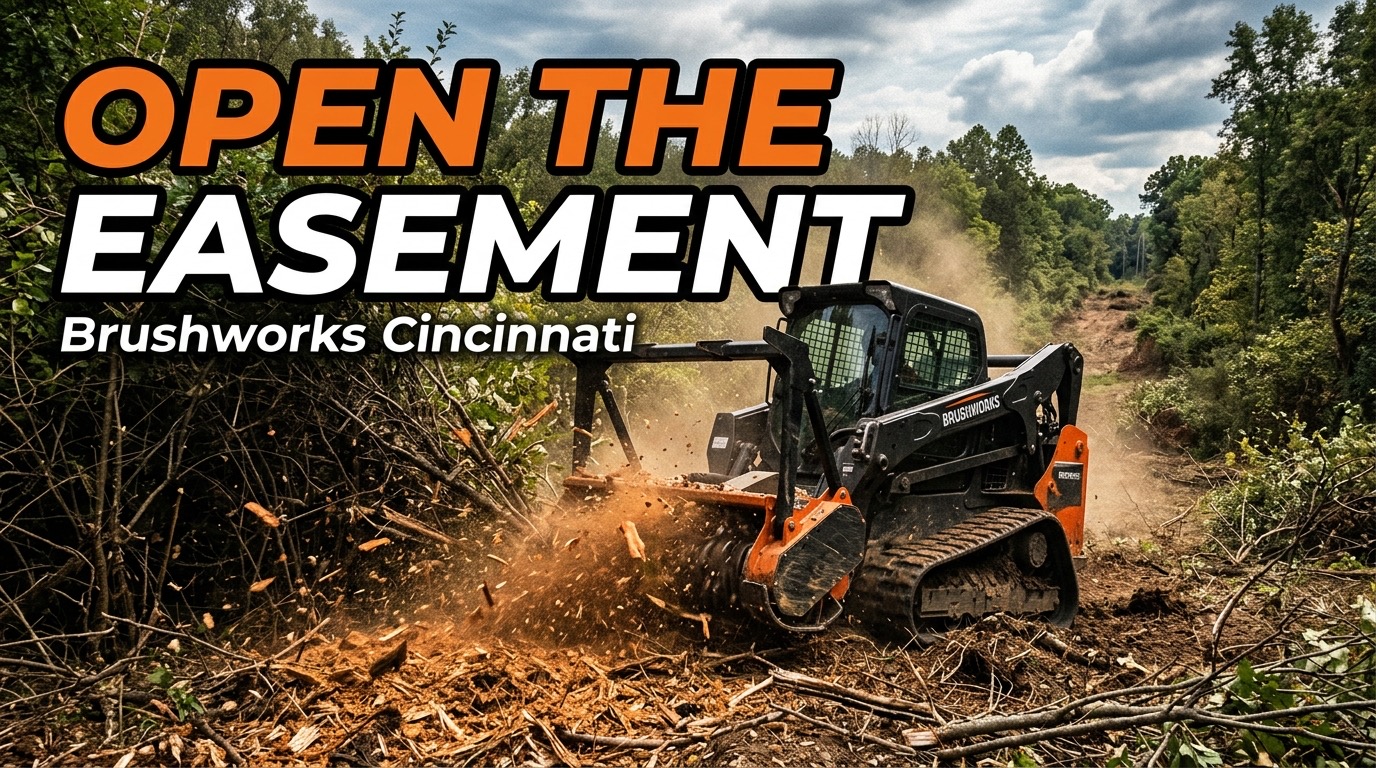
Easements are easy to ignore until somebody needs to use one. A utility company may need to reach a pole line. A neighbor may need access along a shared lane. A drainage route may need cleaning before heavy rain. A property owner may need to get a contractor, surveyor, fence crew, or maintenance truck through a strip of ground that has not been open for years.
On paper, the access is there. In the field, it may be a wall of bush honeysuckle, grapevine, thorny briars, fallen limbs, dead ash, small maples, locust sprouts, and old fence wire. That gap between the document and the actual ground is where easement access problems begin.
Brush clearing for easement access is not the same as clearing a whole lot. The goal is usually narrower and more practical: reopen the route, protect the edge, make it maintainable, and avoid disturbing ground that does not need to be touched. For Cincinnati and southwest Ohio properties, forestry mulching is often a good tool for that first pass because it can grind brush and small trees in place while leaving a workable lane behind.
The right scope depends on the easement. A utility corridor is different from a drainage easement. A shared driveway is different from a private sewer route. A fence line access strip is different from a maintenance lane across a wooded rear acre. Before machines show up, the owner needs to know what the easement is for, where it sits, and what kind of access is actually needed.
Need an overgrown easement opened?
Send the address, photos, and any easement map or marked-up parcel screenshot. Brushworks can help reopen access routes, utility paths, drainage corridors, and maintenance lanes around Cincinnati.
Why easements get blocked in Cincinnati
Many easements run through the least maintained part of a property. They may follow a side yard, wooded boundary, rear lot line, creek edge, old farm lane, utility route, or drainage path. Those areas are often out of sight from the driveway and hard to mow with normal equipment.
In the Cincinnati area, growth can close those routes quickly. Bush honeysuckle fills the understory and stays green late into the year. Wild grapevine pulls down limbs and wraps trees together. Multiflora rose and blackberry make a lane painful to walk. Box elder, maple, locust, autumn olive, and cedar saplings start filling any sunny opening. After a few seasons, even a legally recorded access strip can become almost useless on the ground.
Storm damage makes it worse. Dead ash trees and broken limbs can fall across a narrow route. Soil can wash around culverts or drainage ditches. Old wire can sink under leaves. Once access is blocked, routine maintenance gets skipped, and the easement closes in even more.
Start with the easement document, not the brush line
The visible opening on the property is not always the legal easement. Before clearing, look for the recorded easement, survey, plat, title notes, utility map, driveway agreement, or maintenance agreement that explains the route. County GIS can help as a rough reference, but it should not be treated like a survey.
Some easements give a specific width. Some describe a centerline. Some follow a utility, driveway, ditch, or property boundary. Some allow access only for certain uses. Some give maintenance rights to one party and access rights to another. That language matters because brush clearing should support the easement use without creating a fight over extra ground.
If the area is disputed, unclear, or close to a neighbor, mark the intended limits before work starts. Paint, flags, stakes, cones, map screenshots, and a simple on-site walk can prevent confusion. For anything involving property-line uncertainty, a surveyor is the clean answer.
Common easements that need brush clearing
Utility easements are a common case. Electric, gas, water, sewer, telecom, and private service routes need access for inspection and repair. Sometimes the easement has poles or boxes you can see. Sometimes the important line is underground and not obvious until it is marked.
Drainage easements are another common one around Cincinnati hillsides and clay soils. A drainage swale, ditch, culvert, basin outlet, or stormwater route can disappear under brush. When that happens, water problems are harder to spot and harder to fix. Clearing can open visibility and maintenance access, but material should not be pushed into a flow path.
Shared access easements can include private lanes, long driveways, rear-lot access, farm lanes, and routes to barns, fields, or back acreage. These need enough width and overhead clearance for the vehicles that actually use them. A pickup lane is not the same as a route for a utility truck, gravel crew, septic contractor, or emergency vehicle.
There are also maintenance easements along fence lines, retaining walls, creeks, ponds, sewer laterals, detention basins, and outbuildings. These often do not need a wide clearing pass. They need a route that a person or small machine can use again without fighting through brush every time.
What forestry mulching can do for easement access
Forestry mulching can reopen an overgrown easement by cutting and grinding brush, saplings, invasive shrubs, vines, and smaller trees into mulch on site. That avoids the need for large brush piles or hauling every piece of vegetation away. For many easements, the result is a cleaner, walkable, maintainable path with less soil disturbance than dozing or grubbing.
It works especially well when the goal is access, not finished construction. A mulcher can open a lane to a utility pole, clear around a drainage feature, cut a path to a rear fence line, or reclaim an old service route. The mulch layer helps cover exposed soil and makes the route easier to see.
There are limits. Mulching does not remove stumps below grade. It does not build a gravel road. It does not fix a washed-out culvert, repair a ditch, locate a utility, or settle a legal boundary question. If the easement needs a driveway surface, grading, engineered drainage, or utility excavation, those are separate scopes.
Mark utilities and private lines before work
Utility-related easements need extra care. Public utility marking is important, but it may not cover private lines after the meter or private runs to barns, shops, gates, wells, septic systems, irrigation, lighting, or outbuildings. Owners often know about private lines that will not appear on a public locate ticket.
Before brush clearing starts, identify visible utility equipment, poles, guy wires, pedestals, meters, cleanouts, culverts, drainage inlets, wells, tanks, and septic components. If there is a chance of buried private infrastructure, mark it clearly and discuss it before equipment enters the route.
Overhead clearance matters too. Low service drops, communication lines, and limbs tangled around wires can make a simple lane much more complicated. Brush clearing near energized lines may need utility coordination. A land clearing crew should not be asked to guess around wires or buried infrastructure.
Drainage easements need a lighter touch
Drainage routes are there for water, so clearing should not block the path water needs to take. In a drainage easement, the work may involve opening access along the edge, exposing the swale, clearing around an outlet, or removing brush that keeps maintenance crews from seeing the problem. It should not mean filling the ditch with mulch, dragging material into a culvert mouth, or disturbing a bank that is already unstable.
Cincinnati properties can have steep slopes, clay soil, narrow side yards, and hidden drainage features. A route that looks firm in August may be soft after rain. A ditch that looks minor in dry weather may carry a lot of water during a storm. Clearing can make those features easier to inspect, but it should be timed and planned with ground conditions in mind.
If the easement connects to a regulated stormwater system, detention basin, stream, wetland, or public right-of-way, the owner may need guidance from the municipality, engineer, HOA, or stormwater manager before changing the vegetation. Opening access is one thing. Reworking the drainage structure is another.
Choose the clearing width by the job, not by habit
There is no one width that fits every easement. A narrow walking path may be enough for inspection. A fence line maintenance route may need room for a mower, ATV, or small tractor. A utility access lane may need enough width for a bucket truck or service vehicle. A shared drive may need side clearance, overhead clearance, turning room, and safe sight lines.
The easement document may set the legal width, but the useful clearing width should match the next maintenance need. Clearing too little means the route closes back in or cannot serve the equipment that needs it. Clearing too much can create neighbor problems, erosion exposure, or extra maintenance.
For many properties, the best first step is selective. Open the route enough to walk, inspect, and confirm the true needs. Then widen specific sections where vehicles, turns, gates, culverts, or work areas require it.
Watch for old fence, debris, and hidden hazards
Easements often run along old boundaries and forgotten service routes. That means hidden hazards are common. Old woven wire, barbed wire, T-posts, concrete chunks, dumped tires, scrap metal, bottles, pallets, abandoned pipe, and sinkholes can sit under honeysuckle and leaf litter. A mulching head can handle vegetation, but hidden metal and debris are a different problem.
Walk what you can before work starts. If you know about old fence or dumping, point it out. If a gate has been buried in brush, mark it. If a culvert, well, cleanout, or drain is hidden, flag the area. Good information saves time and protects the equipment.
Some debris may need to be removed by hand or with another machine before mulching. Some areas may need to be left alone until they can be inspected. Reopening an easement should make access safer, not turn buried problems into damaged equipment or torn-up ground.
Plan for maintenance after the first clearing
The first clearing is only a reset. Cincinnati brush comes back if the route cannot be maintained. Honeysuckle sprouts, stump growth, vines, and field weeds can reclaim a lane faster than most owners expect. If the easement matters long-term, think about the next pass before the first one starts.
A good clearing plan leaves manageable edges. That may mean clearing enough width for mowing, trimming branches that lean into the route, leaving a defined lane that can be found again, and opening gates or access points so maintenance equipment can get in later. It may also mean scheduling seasonal touch-ups before woody growth gets established again.
Mulch does not stop every sprout. It does make the ground easier to see and easier to maintain. The follow-up plan is what keeps the easement from becoming a thicket again.
How to prepare for an easement clearing quote
A useful quote starts with clear information. Send the property address, a few photos, and a map screenshot with the easement or intended route marked. If you have a survey, plat, recorded easement, HOA map, utility plan, or driveway agreement, include the relevant page. You do not need to make it complicated. A marked screenshot and honest site photos are often enough to start the conversation.
Explain why the easement needs to be opened. Is a utility crew coming? Is drainage maintenance needed? Is a neighbor route blocked? Are you preparing for a fence repair, survey, septic work, sewer access, stormwater inspection, or property sale? The reason changes the width, timing, and equipment access.
Share known constraints. Mention gates, slopes, wet ground, soft yards, tight driveways, overhead wires, private utilities, old fence, debris, and neighbor concerns. If the route crosses another property or serves multiple owners, make sure the access rights are sorted out before the day of work.
Where Brushworks fits
Brushworks clears practical access routes for overgrown Cincinnati and Ohio properties. For easements, that usually means opening a blocked strip of ground so the right people can walk it, inspect it, maintain it, or get equipment where it needs to go. We are not a surveyor, attorney, utility locator, or civil engineer. We are the crew that can help turn an unusable route back into workable access once the scope is clear.
The best easement jobs are specific. Open this utility corridor to the pole. Reclaim this drainage access path to the basin outlet. Clear this shared lane edge so vehicles are not scraping brush. Open this fence line so a repair crew can work. Those scopes are easier to price, easier to perform, and easier to maintain.
If an easement on your property is legally there but physically blocked, start by finding the document, marking the route, and taking photos from both ends. From there, the clearing plan gets much cleaner.
Frequently asked questions
Can I clear brush from an easement on my Cincinnati property?
Often yes, but the easement language matters. Check the recorded easement, mark the access area, and confirm who has rights to use or maintain it before work begins.
What types of easements usually need brush clearing?
Common examples include utility easements, drainage easements, shared drive access, private lanes, sewer routes, fence line access, and maintenance corridors across wooded or overgrown ground.
Should utilities be marked before easement clearing?
Yes. Underground utilities, private lines, wells, septic components, and drainage structures should be marked or identified before clearing equipment works in the easement.
Is forestry mulching a good fit for easement access?
Forestry mulching is often useful when an easement is blocked by brush, saplings, honeysuckle, vines, or small trees and the goal is to reopen a maintainable access route.
How wide should an easement access lane be cleared?
The right width depends on the easement document and the equipment that needs access. A walking path, utility truck route, drainage maintenance lane, and shared drive approach all require different widths.
Related articles
Brush Clearing for Rural Property Access Ohio
How to reopen rural access lanes, gates, trails, field edges, barns, and wooded property routes.
Land Clearing for Equipment Access Roads Ohio
A practical guide to opening routes for trucks, tractors, utility crews, barns, fields, and wooded property work.
Drainage Ditch Clearing Ohio
How to reopen ditches and drainage paths before water causes bigger property problems.
Need easement access cleared?
Use instant pricing for a starting point, or send photos and a marked map so Brushworks can review the access route and clearing goal.