
Clearing Land for New Pasture Fence Ohio

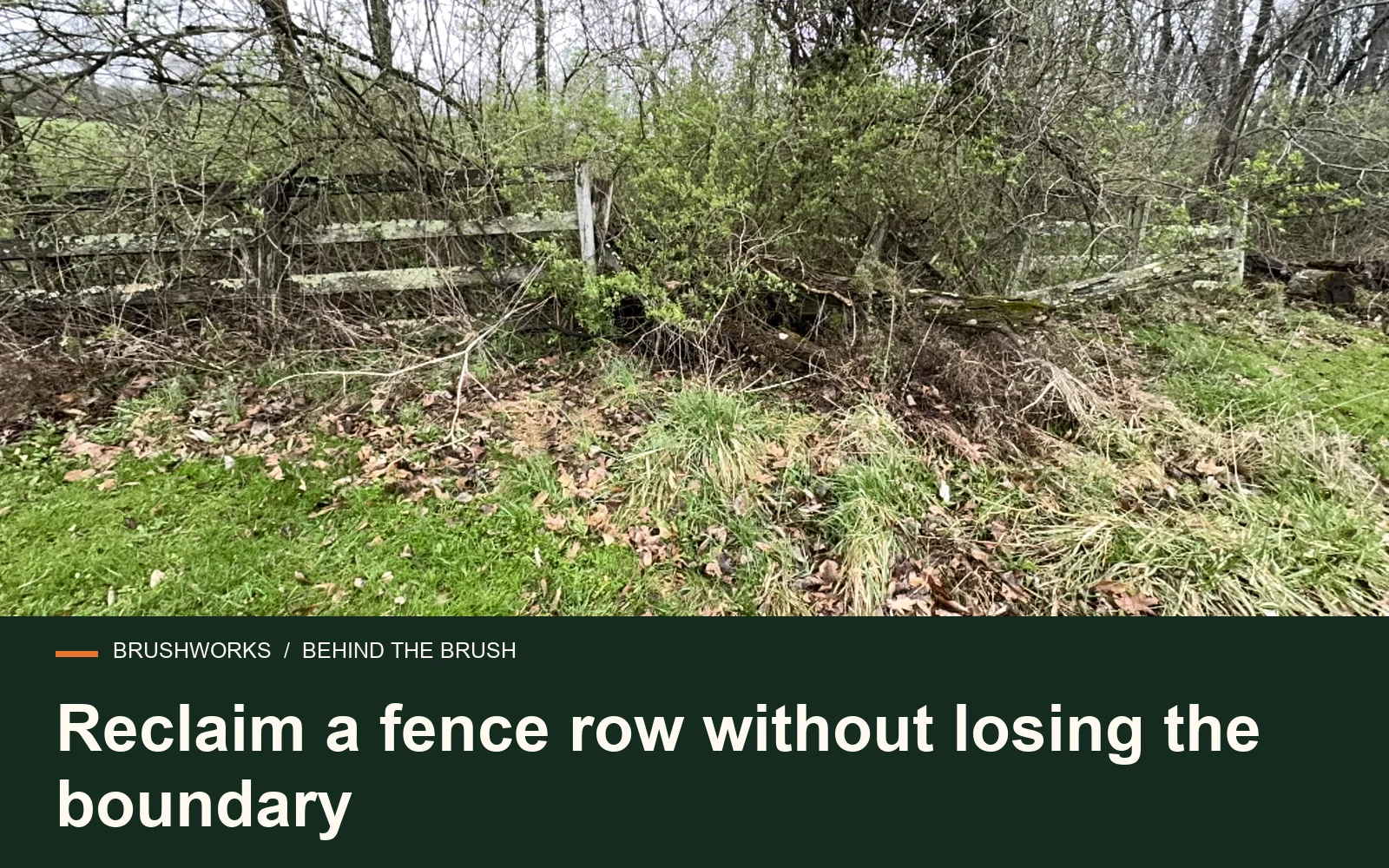
A new pasture fence is only as good as the ground it sits on. If the line is buried in honeysuckle, briars, locust sprouts, grapevine, and old wire, the fence crew is fighting the property before they ever set the first post.

Published July 17, 202612 min read
Clearing Land for New Pasture Fence Ohio
Field guide from Brushworks Services Co. — practical land clearing advice for Ohio property owners.

Pasture fence projects look simple from the road. Stretch a line, set posts, hang gates, pull wire, move animals. On real Ohio ground, the prep work is usually messier than that. The fence path may run through a brushy field edge, an old woven wire row, a wooded corner, a wet swale, or a line of thorn trees that has not been touched in years.

That mess matters. A fence contractor needs room to work. Livestock need a line that can be inspected and repaired. Landowners need gates in the right place, corners that hold tension, and enough cleared space to keep the new fence from disappearing again by next summer.

Brushworks clears overgrown ground around Cincinnati and across southwest Ohio for rural property owners, horse farms, small cattle operations, hobby farms, and acreage owners getting pasture back into use. When the goal is a new pasture fence, good clearing is not about making the whole field pretty. It is about opening the line, protecting the useful trees and ground, and leaving the property ready for the next crew.

Planning a new pasture fence?

Send photos, a map pin, and the planned fence path. Brushworks can clear brush, saplings, vines, and overgrown field edges so your fence crew has a workable line.

Start with the fence plan, not the brush

Before clearing starts, decide where the fence is actually going. That sounds basic, but a lot of pasture projects begin with a rough idea instead of a marked line. The difference shows up fast once equipment is on site. A vague line can drift into a neighbor's edge, miss a better gate location, or clear ground that never needed to be touched.

Walk the property with the future fence in mind. Mark corners, gate openings, brace locations, water gaps, lane connections, and any trees that should stay. If the fence follows an old boundary, confirm the boundary before clearing. Old fence does not always mean correct fence. Around Cincinnati and rural Ohio, older properties often have fence rows that were built around convenience, livestock habits, or a long-gone field layout.

A marked aerial map helps everyone. The clearing crew can see the intended line. The fence contractor can understand access. The landowner can separate must-do work from nice-to-have cleanup. A tight plan usually saves money because the machine spends time on the fence path instead of wandering through the rest of the acreage.

Clear enough room to build and maintain the fence

A pasture fence line needs working room on more than one day. The fence crew needs room now. You need room later to mow, tighten wire, patch a broken board, trim branches, fix a leaning post, or find the spot where a calf or horse pushed through.

The right clearing width depends on the fence type and the property. High tensile wire, woven wire, board fence, electric fence, and mixed livestock fence all have different needs. A straight open field edge may only need brush removed from the line and enough room for equipment. A wooded fence row may need a wider lane so trees and limbs are not rubbing the fence all year.

Leave too little room and the line becomes a headache. Honeysuckle leans into the wire. Thorn trees drop limbs across it. Vines pull on posts. Grass and woody sprouts hide the bottom wire. When a fence is hard to see, it is hard to maintain. Clearing a practical lane at the start makes the finished fence easier to live with.

Old wire is the thing that slows everyone down

Old pasture edges love to hide metal. Woven wire gets swallowed by trees. Barbed wire sits under leaves. T-posts lean into brush. Broken gates, cattle panels, electric wire, staples, and chunks of old fence can be buried under vines and grass. A forestry mulcher or skid steer does not enjoy finding that material the hard way.

Before clearing, look for old fence and mark what you find. If it can be pulled safely before the machine arrives, pull it. If it cannot, flag it. A little time spent finding wire can prevent damaged equipment, delays, and leftover hazards. It also protects livestock later. A clean fence line should not have loops of old barbed wire waiting under the mulch.

Some old rows are too tangled to clean by hand before brush is opened up. In those cases, the first pass may be careful and slow. The goal is to expose the mess without grinding metal into the ground. Once the brush is knocked back, the landowner or fence crew can remove the old material before the final fence work begins.

Corners, gates, and lanes deserve extra thought

Pasture fence corners carry tension. Gate areas carry traffic. Lanes carry people, animals, trucks, tractors, hay equipment, water tanks, and the occasional overloaded pickup. These spots need more than a skinny cleared line.

Open corners enough for brace assemblies and future access. If a corner is buried in brush, the fence builder may not have room to set posts square, stretch wire, or work safely. If a gate is tucked into a muddy low spot or too close to a brushy turn, daily chores become irritating. A better gate location may be a few yards away, but you only notice that if you think through animal movement and equipment access before clearing.

Farm lanes are part of the same conversation. A new pasture fence may need a lane from the barn to the field, from the driveway to a paddock, or between two grazing areas. Clearing the fence without clearing the lane can leave you with a nice boundary and no good way to use it. Think about how animals will move, how hay will get in, where a vet truck might park, and how water will be reached in bad weather.

Match the clearing method to the ground

Forestry mulching is often a strong fit for pasture fence prep. It can handle honeysuckle, autumn olive, multiflora rose, briars, grapevine, small trees, and rough field edges without hauling every piece of brush away. The mulch stays on site and gives the fence crew a clearer path to work.

Mulching is not the answer to every part of the job. Large trees may need tree work. Wet spots may need to wait for better ground conditions. Heavy trash, old metal, buried wire, and debris can change the plan. If the fence crosses a drainage ditch, creek, or swale, that area may need a careful crossing plan instead of a fast clearing pass.

The best approach may be mixed. Mulch the woody growth along the line. Cut or save selected trees. Pull visible wire. Leave a few shade trees where they help the pasture. Avoid grinding close to utilities, wells, water lines, and structures. Pasture fence prep is practical work. The method should fit the property, not the other way around.

Do not clear useful shade without thinking it through

Ohio livestock need shade, especially in summer. That does not mean every tree along a fence row should stay, but it does mean the clearing plan should be intentional. A brushy fence line may include junk trees, invasive shrubs, and vines wrapped around a few good shade trees. Clearing everything flat can make the line easy to build and still leave the pasture worse for animals.

Mark trees worth keeping before equipment starts. Good trees inside a pasture can help cattle, horses, sheep, goats, and other animals handle heat. Trees right on the fence line can be more complicated. Roots, trunks, limbs, and falling branches can all interfere with fence performance. Sometimes the better choice is to keep shade inside the field and clear the actual fence path around it.

Thorny and invasive growth usually deserves less patience. Honey locust, multiflora rose, autumn olive, bush honeysuckle, Bradford pear, and grapevine can make a fence line miserable to build and worse to maintain. Removing that growth gives the new fence a better chance to stay visible and serviceable.

Wet ground and drainage crossings need patience

Many Ohio pastures have low spots, seeps, swales, seasonal wet areas, and old drainage paths. Fence lines often cross them because the field layout demands it. Clearing those areas in the wrong conditions can leave ruts, churned soil, or a mess that the fence crew has to work around.

If the fence path crosses wet ground, plan the timing. Frozen or dry conditions may be better. Some crossings need a narrower touch. Others need a culvert, hardened crossing, water gap, or a fence layout change. If livestock will use the area, mud matters. A gate placed in a wet corner can become a problem every rainy week.

Drainage also affects how long the fence lasts. Water sitting around posts can shorten their life. Brush hiding a ditch can make the line harder to inspect after storms. Clearing should expose the drainage pattern enough that the landowner and fence builder can make decent decisions before posts go in.

Think about animals before you set the final line

Pasture fence is not just a boundary. It shapes how animals move. A line that looks fine on a map may create a blind corner, a narrow pinch point, a muddy gathering spot, or a gate that animals fight every morning. Brush clearing is the right time to see those problems.

Walk the planned line and picture daily use. Where will horses crowd the gate? Where will cattle trail along the fence? Where will goats test the low spots? Where will deer cross? Where will a mower need to turn? The answers may change how wide you clear, where the gate goes, and whether a corner should be squared up or softened.

Also think about visibility. A fence hidden in brush invites trouble. Animals push into it. Branches fall on it. People miss damage until it becomes an escape. A clear line makes inspection part of normal chores instead of a separate project with gloves and a brush cutter.

Neighbor lines need clean communication

Pasture fences often sit near property boundaries. If the new fence is close to a neighbor, do the neighbor work before the clearing work. Confirm the line, mark the limits, and talk through shared fence expectations if needed. Clearing brush on the wrong side of a boundary is a fast way to turn a farm project into a dispute.

Do not rely on an old fence row as proof. It may be close, but close may not be good enough when trees are coming down and a new fence is going up. If the line matters, get it surveyed or use existing survey pins and documents. At minimum, make sure everyone involved understands what is known and what is assumed.

Communication also helps when brush has grown over from both sides. A neighbor may want a tree kept, a gate avoided, or a drainage area left alone. Those details are easier to handle before equipment is on site than after a cleared lane appears.

Plan the follow-up before the new fence disappears

Fresh clearing gives a pasture fence a clean start. It does not stop Ohio brush from growing. Honeysuckle will resprout. Locust will send shoots. Grass will climb the lower wire. Vines will find posts. If nobody maintains the lane, the new fence can look old surprisingly fast.

Build maintenance into the plan. Leave enough width for a mower or small tractor where the ground allows it. Decide whether field edges will be mowed once or twice a year. Keep a trimmer path around gates, braces, waterers, and corners. Watch the first season of regrowth because that is when small shoots are easiest to handle.

This is where good initial clearing pays off. A line that is wide enough, visible enough, and free of hidden wire is much easier to maintain. A cramped line buried against thorn trees becomes another rescue job. The fence may still be standing, but the owner loses the ability to work on it without fighting brush all over again.

What Brushworks needs to price pasture fence clearing

A clear request makes pricing faster. Send the address or map pin, photos of the thickest sections, the approximate length of fence line, and any aerial map with the planned route marked. Note gate locations, old wire, wet areas, utilities, steep slopes, trees to keep, and any access limits for equipment.

If the fence contractor has requirements, include those too. Some crews want a specific width. Some need room for a skid steer or post driver. Some want old material removed before they arrive. If the clearing scope matches the fence crew's needs, the project moves with less friction.

Brushworks is a good fit when the fence path is blocked by brush, small trees, invasive shrubs, vines, thorn growth, field-edge saplings, and rough acreage growth. We are not the fence installer. We open the ground so the fence can be built right and maintained after it is built.

A better pasture starts before the posts go in

A pasture fence can fail before it is built if the land is not ready. Crooked access, hidden wire, wet corners, bad gate locations, low limbs, and brush pressed against the line all create problems that follow the fence for years.

Clearing first gives you a cleaner layout and a better look at the ground. You can see the slope, drainage, trees, trash, and old fence remnants. You can adjust a gate before posts are set. You can save shade where it helps and remove brush where it will cause trouble. You can give the fence crew the room they need instead of asking them to build through a thicket.

For Ohio landowners bringing pasture back into use, that is the point. The fence should hold animals, guide chores, and make the property easier to manage. Good clearing does not solve every pasture problem, but it gives the fence a fair start.

Frequently asked questions

How wide should land be cleared for a new pasture fence?

Many pasture fence projects need a working lane wide enough for posts, wire, gates, braces, mowing, and future repairs. The right width depends on the fence type, terrain, equipment, and whether the line will need regular maintenance access.

Should old fence be removed before clearing?

Old wire, T-posts, woven fence, panels, and hidden metal should be identified before machinery works the line. Some material can be pulled first, and some may need to be marked so the clearing crew can avoid damaging equipment or leaving a hazard for livestock.

Can forestry mulching clear a pasture fence line?

Forestry mulching can be a good fit for brush, saplings, honeysuckle, autumn olive, grapevine, and overgrown field edges along a planned fence line. Large trees, wet ground, heavy debris, and buried wire may need a different approach.

What should be marked before clearing for pasture fence?

Mark property boundaries, corners, gate locations, utility lines, trees to keep, wet areas, old wire, drainage crossings, neighbor limits, and the planned fence path. A marked aerial map helps keep the clearing work tight.

Does clearing for pasture fence help with livestock safety?

Yes. A clean fence line makes it easier to build straight, inspect wire, spot leaning posts, remove thorny brush, keep animals off hidden debris, and maintain the fence before small problems become escapes.

Related articles

Need a pasture fence line cleared?

Use instant pricing for a starting point, or send photos and a marked fence route so Brushworks can quote the clearing work.