
Pasture Reclamation Ohio: How to Take Back Overgrown Grazing Ground
An Ohio pasture can disappear slowly. First the fence row gets fuzzy. Then honeysuckle jumps the edge. A few locust saplings show up. Five years later, the back corner is not pasture anymore.
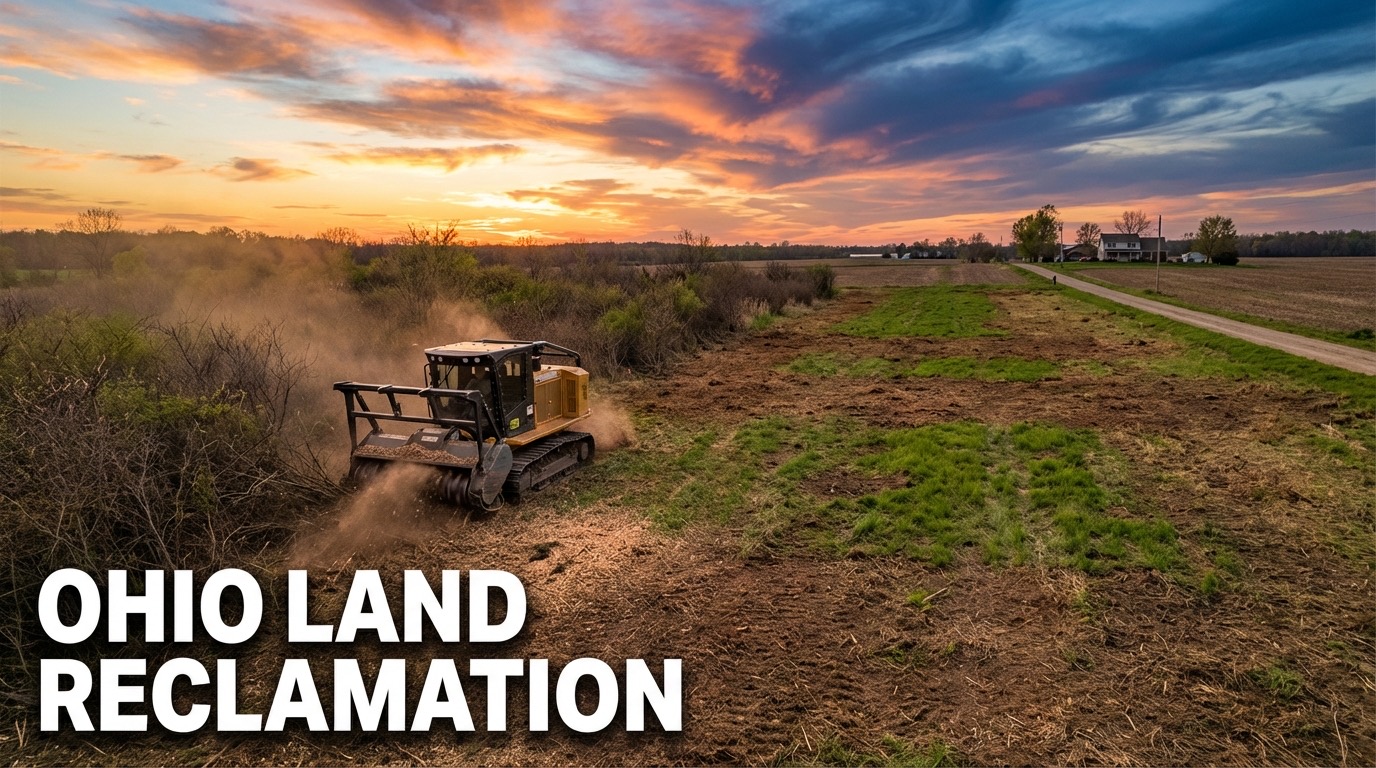
Pasture reclamation in Ohio is usually less about clearing a perfect blank slate and more about taking back ground that used to be useful. The field might have carried cattle, horses, sheep, goats, or hay years ago. Now the edges are packed with bush honeysuckle, multiflora rose, autumn olive, wild grapevine, thorny locust, cedar, and volunteer trees. The grass is thin where brush has shaded it out. Old wire is buried in the mess. Gates are tight. The mower cannot reach half of it.
That kind of pasture does not fix itself. Once woody growth gets established, it keeps pulling the field inward. Every sunny edge becomes a nursery for more brush. Birds spread seed. Vines climb good trees. Thorns block fence repair. Livestock avoid the worst corners, which gives the brush even more room. Around Cincinnati and southwest Ohio, this can happen fast on small farms, horse properties, hobby farms, inherited acreage, and rural lots that have been underused for a few seasons.
The good news is that most pastures do not need to be bulldozed to become useful again. Many need a smart first pass: open access, remove woody pressure, expose the fence rows, keep the trees worth keeping, and leave the owner with ground that can be mowed, seeded, grazed, or improved. Forestry mulching is often the right tool for that first reset.
Start by deciding what the pasture needs to become
Before any clearing starts, be honest about the goal. A reclaimed horse pasture needs different footing and follow-up than a cattle lot, hay field, goat paddock, wildlife opening, or future building site. If the land will be grazed, you need to think about fencing, water, shade, gates, toxic plants, and how animals will rotate through it. If it will be mowed or cut for hay, the finish needs to be smooth enough and open enough for equipment.
Some owners want every tree gone. Others want shade trees left, fence corners opened, and field edges pushed back. Both can be reasonable. The difference is maintenance. Open pasture needs mowing, grazing pressure, seeding, and weed control. A wooded pasture edge can work if it is intentional, but a neglected edge turns back into a wall of brush.
A good scope answers a few simple questions. Which areas are pasture, and which are woods? Which trees should stay? Where are the fences, gates, wet spots, and utilities? What machine needs to maintain the field after clearing? If the owner cannot answer those questions yet, the first phase may be access and visibility rather than full finish work.
Why Ohio pastures get overgrown
Pasture regrowth is not random. Ohio has plenty of plants that love unmanaged edges. Bush honeysuckle leafs out early and holds leaves late, so it shades out grass for a long season. Multiflora rose builds thorny clumps that livestock usually avoid. Autumn olive and privet spread along field margins. Honey locust and black locust can turn into thorny sapling patches. Wild grapevine pulls down smaller trees and tangles with old fence.
Once grass thins out, bare soil and weak sod give brush a better chance. Overgrazing can make this worse. So can undergrazing, when animals never pressure the back corners. Broken fence, poor water placement, shade patterns, wet ground, and bad access all change how livestock use the field. The result is usually uneven: the easy ground stays open while the edges and corners disappear.
Reclamation works best when you treat the cause, not just the symptoms. Clearing the brush is step one. Keeping it open takes mowing access, better grazing rotation, good fence lines, and follow-up control before sprouts become stems.
Need an overgrown pasture opened up?
Send photos, the address, and what the field needs to do next. Brushworks can help reclaim pasture edges, fence rows, trails, and rough acreage around Greater Cincinnati and southwest Ohio.
Where forestry mulching helps
Forestry mulching is useful for pasture reclamation because it cuts woody vegetation and grinds it in place. Instead of piling brush, hauling limbs, or pushing soil around, the mulcher reduces saplings, invasive shrubs, vines, and small trees into a mulch layer. That leaves the ground more open for walking, inspection, mowing plans, fencing, and future pasture work.
Mulching fits pasture edges, fence rows, rough corners, trails between paddocks, old lanes, wooded pockets, and fields where brush is too heavy for a mower. It is especially helpful when you need to see what is under the growth. Once the brush is down, you can find holes, stumps, old wire, wet spots, rock piles, broken tile, and the actual fence line.
It is not the whole pasture plan by itself. Mulching does not grade the field, remove every root, fix compaction, add lime, seed grass, or solve grazing pressure. It also does not make fresh mulch safe for immediate turnout without inspection. Think of it as the reset that lets the agronomy, fencing, and livestock plan happen.
Fence rows are usually the first priority
If the fence row is buried, start there. A pasture is only useful if animals stay where they belong and people can inspect the boundary. Overgrown fence rows hide broken wire, leaning posts, fallen trees, washouts, and places where animals can push through. They also make repairs slow and miserable.
Clearing a fence row does not always mean scraping it clean. Mature trees may provide shade or mark the line. Brush, vines, and thorny growth usually create the real problem. The best width depends on the fence plan. A repair crew may only need room to walk and stretch wire. A replacement crew may need machine access, space for posts, and a clean line on both sides.
Old wire deserves respect. Barbed wire, woven wire, electric line, and loose metal can hide inside honeysuckle and rose. That material can damage equipment and create hazards for livestock later. Walk the line before clearing if you can, and point out any known wire, gates, corners, and neighbor-sensitive spots.
Keep the good trees, remove the pressure
Pastures do not need to be treeless. Good shade matters for livestock, especially in Ohio summers. The trick is separating useful trees from brush that is shrinking the field. A healthy oak, walnut, maple, or sycamore may be worth keeping. A tangle of honeysuckle, grapevine, locust sprouts, and dead ash underneath it probably is not helping the pasture.
Selective clearing lets you keep shade and structure while removing the woody pressure that blocks grass and access. This is also where operators need clear direction. If a tree matters, mark it. If an area should stay as a windbreak or visual screen, say so before the machine arrives. If the goal is full open pasture, make that clear too.
Dead ash trees are common in Ohio and can complicate pasture work. Some are too large or hazardous for a mulcher to handle safely. Those may need a tree crew or a separate plan. Reclamation goes smoother when dead trees, leaners, and high-risk limbs are identified early.
Watch for toxic plants and livestock hazards
Before animals return to a reclaimed area, inspect it. Clearing can expose plants and hazards that were hidden. Poison hemlock, black cherry wilted leaves, nightshade, certain maples for horses, and other plants may matter depending on the livestock. Brushworks can clear vegetation, but animal safety decisions should include the owner, veterinarian, extension office, or pasture specialist when there is any doubt.
Physical hazards matter too. Freshly cut material, old wire, broken posts, holes, stumps, trash, rock, and uneven ground can all cause trouble. A mulched surface may need time to settle. Rain, freeze-thaw, and follow-up mowing can change the footing. Do not assume a field is ready for animals just because it looks open from the gate.
A cautious return is better. Walk the field. Check the fence. Look for sharp material. Confirm water access. Decide whether the area needs dragging, mowing, seeding, soil testing, or rest before turnout.
What happens after the first clearing
The first clearing gets your pasture back in play. The next steps decide whether it stays that way. In many Ohio fields, the follow-up includes soil testing, lime or fertilizer decisions, seed selection, mowing schedule, invasive regrowth control, and grazing rotation. Some owners work with OSU Extension, a local agronomist, a seed supplier, or a livestock adviser for that part.
If grass is still present under the brush, opening the canopy can help it recover. If the sod is gone, the field may need seed and time. If the ground is rutted, compacted, or full of stumps, additional work may be needed before it can become productive pasture. Heavy mulch can help protect soil, but it may also need time to break down before seeding works well in some areas.
Maintenance access is the practical test. Can you mow the reclaimed edge? Can you reach the back corner? Can you drive the fence line? Can you spot new honeysuckle sprouts while they are still small? If the answer is yes, the field has a chance.
Timing pasture reclamation in Ohio
Late fall, winter, and early spring are often good windows for pasture reclamation. Leaves are down, visibility is better, bugs are lower, and frozen or firm ground can support equipment well. Winter clearing can also make fence lines easier to read. The downside is that wet thaw cycles can still make Ohio clay soft.
Summer clearing can work when the ground is dry and access is good. It may be the right time if the owner needs a field opened before fall fencing or seeding. Heat, active growth, seed timing, livestock rotation, and nesting habitat may affect the plan. Spring can be tricky because rain and soft ground can limit access, but it is still possible on the right site.
The best time is usually the time that fits the field condition and the next step. If you want to seed, plan backward from the seeding window. If you need fence work, clear before the fence crew is scheduled. If livestock need to rotate, think about where they will go while the work area rests.
What affects pasture reclamation cost
Cost depends on acreage, brush density, sapling size, slope, access, old fence, hidden debris, wet areas, finish expectations, and whether material needs to be hauled. A flat field edge with honeysuckle and small saplings is a different job from a steep, thorny, wire-filled fence row with dead trees and wet pockets.
Small pastures can still require careful work because of gates, buildings, livestock, and existing fences. Larger fields may price better by the acre if access is good and the scope is clear. The cheapest quote is not always the best one if it ignores wire, utilities, animal safety, or how the field will be maintained afterward.
Helpful quote information includes photos from several angles, the property address, rough acreage, marked work limits, gate width, fence condition, livestock type, wet areas, trees to save, and what you want the field to become. If you have a map, mark it. If you have known hazards, share them early.
A practical reclamation sequence
Most pasture projects go better in a sequence. First, identify the useful boundaries, gates, wet areas, shade trees, and no-go zones. Second, clear access so the field can be walked and inspected. Third, reclaim the fence rows and brushy edges. Fourth, decide what needs follow-up: mowing, seeding, soil work, fence repair, invasive control, or additional tree removal.
This staged approach keeps the project from getting sloppy. It also helps owners make better decisions after they can actually see the ground. Many old pastures look different once the brush is down. You may find a better gate location, a wet corner that should stay out of rotation, or a tree line worth keeping.
Good pasture reclamation is not a one-day miracle. It is a reset plus a maintenance plan. Done right, it gives you a field you can walk, fence, mow, seed, graze, and manage again.
Where Brushworks helps
Brushworks helps Ohio landowners reclaim overgrown pasture, field edges, fence rows, old lanes, trails, and brushy acreage around Greater Cincinnati and southwest Ohio. We use forestry mulching and practical clearing methods to open land without turning every project into a grading job.
We look at access first. Then we look at fences, terrain, drainage, trees to keep, hidden debris, livestock concerns, and the next use of the field. The goal is simple: get the ground back to a condition the owner can actually maintain.
If your pasture has turned into brush, start with photos and a map. Show us the gates, the worst areas, and what you want the field to do next. From there, the scope gets much clearer.
Frequently asked questions
Can forestry mulching reclaim an overgrown Ohio pasture?
Forestry mulching can reclaim many overgrown Ohio pastures by reducing brush, saplings, vines, and invasive shrubs in place. It is usually the first step before mowing, seeding, grazing, fencing, or targeted follow-up control.
Will pasture grow back after clearing?
Pasture can return, but clearing alone does not guarantee good grass. Most reclaimed fields need mowing access, soil correction, seeding, grazing management, and follow-up control for honeysuckle, multiflora rose, locust, autumn olive, and other regrowth.
What is the best time to reclaim pasture in Ohio?
Late fall, winter, and early spring are often good windows because leaves are down and the ground may be firmer. Summer can also work when access is dry, but owners should plan around heat, seed timing, livestock rotation, and active nesting or habitat concerns.
Can livestock go onto a freshly mulched pasture?
Do not turn livestock onto a freshly mulched area until it has been inspected for sharp material, toxic plants, wire, holes, and unstable footing. The right waiting period depends on the site, livestock type, mulch depth, weather, and the follow-up pasture plan.
What should be checked before clearing an old pasture?
Check property lines, fence condition, gates, utilities, wet areas, drainage, old wire, buried debris, desirable trees, toxic plants, and how the pasture will be maintained after clearing.
Related articles
Overgrown Field Reclamation Ohio
Turn brushy acres back into usable ground with a practical clearing plan.
Land Clearing for Livestock Pasture and Cattle Grazing Ohio
Reclaim ground that can carry animals and be maintained after clearing.
Fence Row Clearing Ohio
Open old boundaries, repair access, and keep pasture edges under control.
Need an Ohio pasture reclaimed?
Send photos, maps, and what the field needs to do next. Brushworks can help open fence rows, remove brush pressure, and make pasture ground manageable again.