
Overgrown Fence Line Reclaiming Ohio
A fence line only works if you can see it, reach it, and maintain it. Ohio brush can hide posts, wire, gates, and boundaries fast.
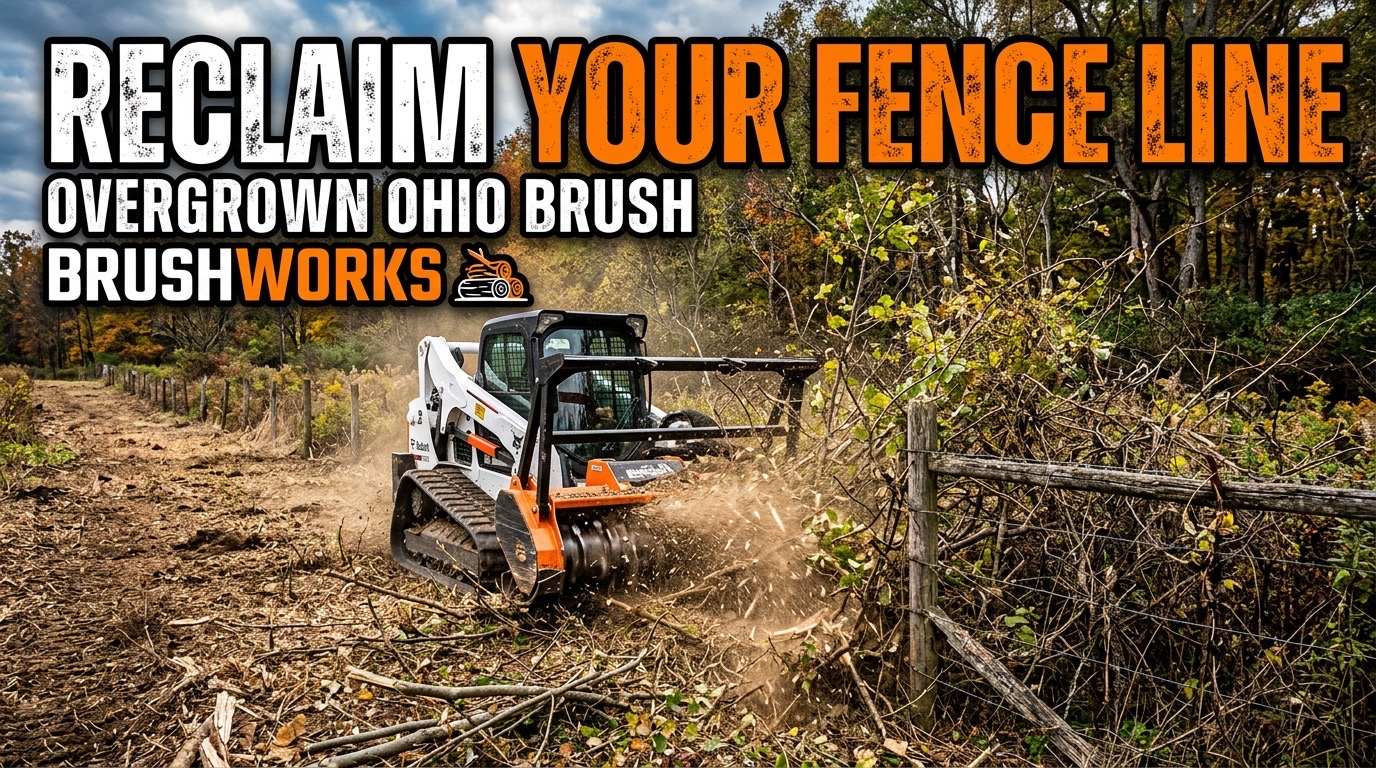
Fence lines get away from Ohio property owners one season at a time. A little honeysuckle grows through the wire. A few grapevines climb the posts. Multiflora rose fills the corners. Box elder, locust, maple, and cedar saplings show up under the birds. Before long, the fence is not a fence you can maintain. It is a brush row with wire hidden somewhere inside it.
That is a real problem on rural lots, farms, wooded acreage, horse properties, hunting ground, old homesteads, and Cincinnati-area properties with long edges. You may need to repair a fence, replace a stretch of wire, install new posts, open a gate, confirm a property line, keep livestock contained, make room for a mower, or stop invasive brush from spreading farther into the field. None of that starts cleanly when the fence row is too thick to walk.
Overgrown fence line reclaiming is the process of opening that edge back up without treating the whole property like a blank slate. The work should expose the line, protect what needs to stay, remove the growth that is causing trouble, and leave enough access for the next step. Sometimes that next step is fencing. Sometimes it is mowing. Sometimes it is a surveyor, neighbor conversation, pasture plan, or regular maintenance route.
Brushworks clears fence rows and overgrown property edges across Ohio and the Greater Cincinnati area. The best projects start with a simple question: what does this fence line need to do when the brush is gone?
Need a fence line opened up?
Send the address, photos of the brush, and what you need to do next. Brushworks can help reclaim overgrown fence rows, gates, pasture edges, wooded boundaries, and old farm lines.
Start with the purpose of the line
A fence line can mean different things. It might be a livestock barrier, a property boundary, a privacy edge, a place for a new board fence, a future pasture division, a farm lane edge, or the line a surveyor needs to follow. The right clearing plan depends on that purpose.
If the fence is still active, the work should protect usable posts, wire, gates, braces, and corners. If the fence is being replaced, the goal may be to give the fence contractor enough room to pull old wire, set new posts, stretch fence, and drive equipment along the line. If the fence row only marks a property edge, selective clearing may be enough to see the boundary and maintain it without removing every tree.
That decision matters because fence rows often contain useful trees, shade, wildlife cover, and privacy. Clearing too much can create new mowing work and expose areas you wanted screened. Clearing too little can leave the line hard to repair and easy for brush to swallow again. A practical fence line project opens enough room for the job without turning a useful edge into a bare strip of dirt.
Old fence rows hide wire, posts, and debris
Ohio fence rows are famous for hiding things. Woven wire disappears under leaves. Barbed wire gets pulled into trees. Steel T-posts lean under vines. Old wood posts rot at the bottom but still hold metal staples. Corners collect dumped stone, concrete, pipe, baler twine, scrap metal, broken gates, and old farm junk.
That hidden material changes how the work should be approached. A forestry mulcher can clear heavy brush, but wire and metal need respect. Running into buried fence can damage equipment and make the job harder. Before the machine works tight to the line, walk what you can, flag visible wire, mark posts that should stay, and point out places where old fence may be buried under vines.
Sometimes the first pass is about visibility. Once the outer brush is knocked back, the owner and crew can see the actual fence. Then decisions get easier. A line that looked like a total mess may have good corner posts worth saving. Another line may be so broken, rusted, and tree-grown that replacement makes more sense than repair.
Common Ohio growth that takes over fence lines
Fence lines collect sunlight, seed, and neglect. Around Cincinnati, Hamilton County, Clermont County, Butler County, Warren County, and rural parts of southwest Ohio, the usual problem plants are easy to recognize once you start looking for them.
Bush honeysuckle fills the understory and pushes new stems through the wire. Multiflora rose and blackberry briars make the line painful to walk. Grape vines climb trees and pull down branches. Poison ivy uses posts and trees as ladders. Autumn olive, privet, and other invasive shrubs thicken the edge. Locust, box elder, maple, hackberry, cedar, and walnut saplings grow where birds and wind leave seed.
The mix matters. Thorny growth slows hand work. Vines can pull material into the canopy. Honeysuckle and autumn olive tend to sprout again after cutting. Locust and osage orange can leave hard stems and thorns that need careful handling near tires and livestock. A fence row full of vines and wire is different from a clean line of young saplings. Good clearing accounts for what is actually there.
Confirm boundaries before clearing near neighbors
A fence is not always the legal property line. It may be close. It may be old and wrong. It may sit inside one owner's land. It may be shared. It may have been moved around a tree, ditch, creek, or old field edge decades ago. If clearing depends on the exact boundary, do not guess.
Before reclaiming a line next to a neighbor, confirm what you know. Look for survey pins, corner posts, recorded plats, county GIS, old deeds, and recent surveys. County maps can help with planning, but they are not a substitute for a survey when inches matter. If the relationship with the neighbor is good, a quick conversation before work starts can prevent a bigger problem later.
This is especially important when clearing both sides of a fence, removing trees, widening an access corridor, or working along shared pasture, subdivision edges, easements, or wooded boundaries. Brush clearing is easier to adjust before the machine starts than after the wrong side has been opened.
How wide should a fence line be reclaimed?
The right width depends on what needs to happen after clearing. A fence inspector or surveyor may only need a walkable line. A fence contractor may need room for a skid steer, post driver, wire unroller, materials, and safe footing. A pasture owner may need enough room to mow under hot wire. A property owner with a long wooded edge may want a maintainable lane for a UTV.
For fence replacement, think about working room on both sides if you have legal access. Posts have to be set, wire has to be pulled, braces need space, and turns need room. Gates need even more room because trucks, tractors, trailers, and livestock may need to move through the opening. Corners should be clear enough that the structure can be inspected and repaired later.
For boundary maintenance, the goal may be narrower. A visible line with enough room to walk, trim, or mow may be all that is needed. The mistake is clearing a pretty strip that nobody can maintain. If the brush row is opened but left too tight for any follow-up equipment, the line can close again quickly.
Forestry mulching can open a tangled fence row
Forestry mulching works well on many overgrown fence lines because it handles woody brush in place. Honeysuckle, briars, small trees, vines, and saplings can be cut and ground into mulch instead of dragged into piles. That is useful when the line is long, thick, and hard to reach with hand tools.
Mulching can open access along old pasture edges, field perimeters, wooded fence rows, hunting property boundaries, driveway fence lines, and rural residential edges. It can leave a mulch layer that protects the soil better than bare dirt and makes the line easier to walk right after clearing.
Mulching is not a magic eraser for every fence problem. It will not pull old wire cleanly from trees. It will not reset posts. It will not build a new fence, survey the boundary, remove every root, or stop invasive regrowth forever. It also needs care around existing fence material, utilities, steep ditches, culverts, landscape features, and trees that should stay.
Choose which trees stay before work starts
Fence rows often grow into rough little woodlots. Some trees are a problem. Others are useful. A leaning dead ash over a fence line is different from a healthy oak providing shade in a pasture corner. A tree grown through wire may make fence repair difficult. A tree just outside the work zone may be worth saving for privacy, shade, or habitat.
Mark trees to keep, trees to remove, and trees that need a separate tree crew. Forestry mulchers are built for brush and smaller woody growth, not every large tree situation. Large trees, dead trees under tension, storm-damaged limbs, and trees near buildings, roads, utilities, or valuable fence may require a different approach.
When in doubt, preserve the better trees until you have a reason to remove them. Once the brush is cleared, the line will be easier to judge. You may find that one shade tree works fine after the briars and honeysuckle are gone, while a smaller tree grown through the fence is causing most of the repair headache.
Gates and corners need extra attention
Fence corners, gates, and brace assemblies are where a lot of the value sits. They also collect the worst mess. Vines wrap hinges. Briars fill the swing path. Saplings grow against posts. Old wire twists around everything. A gate that technically exists may not open at all.
When reclaiming a line, clear gates wide enough to be useful. A person walking through needs less room than a tractor, trailer, mower, UTV, or livestock group. Leave space to swing the gate fully, reach the latch, pull through without scraping brush, and maintain the area later. If a gate will be replaced, open enough room for new posts, bracing, gravel, and equipment access.
Corners should be visible and serviceable. If a fence contractor cannot reach the corner, the line cannot be tightened correctly. If a property owner cannot inspect the corner, small failures become bigger ones. Clearing the corners is often one of the highest-value parts of the job.
Drainage and slopes affect the finished line
Many Ohio fence lines follow ditches, creek edges, swales, field drains, or the base of a slope. Brush can hide water problems until the vegetation is gone. A line may be washed out under the leaves. A culvert may be blocked. A ditch may be full of honeysuckle roots and debris. A wet corner may not support equipment after rain.
Clearing should keep drainage in mind. Do not pack mulch into a ditch that needs to flow. Do not remove stabilizing vegetation from a steep bank without a plan. Do not assume a low area can carry trucks just because the brush is gone. If the fence line will become a maintenance lane, the surface and water flow matter as much as the clearing width.
On steeper Cincinnati-area properties, access can decide the method. A remote-control slope mower, forestry mulcher, hand crew, or excavator may each have a place depending on the terrain. The important part is matching the equipment to the line instead of forcing the line to fit the equipment.
Plan for the fence contractor before they arrive
If the goal is repair or replacement, talk to the fence contractor before finalizing the clearing width. Ask what access they need, where materials will be staged, how they will remove old wire, whether they need one side or both sides, and how much room they need at corners and gates.
A fence crew can lose a lot of time fighting brush before they ever set a post. They may also charge more or decline the work if they cannot reach the line safely. Reclaiming the fence row first lets the fence contractor see the real conditions, price the job more accurately, and work without cutting their way in.
For livestock fencing, think about temporary containment too. If animals are on site, the clearing sequence matters. You may need temporary panels, a staged repair plan, or a separate holding area before opening a weak section. Brush removal should not create an escape route by accident.
Reclaiming the line is only the first step
After clearing, Ohio brush will try to come back. Honeysuckle sprouts from cut stumps. Briars send up new canes. Vines find sunlight. Volunteer trees appear in the mulch. If the fence line matters, maintenance should be planned while the line is open.
The easiest fence line to maintain has enough room for the tool you will actually use. That might be a mower, string trimmer, brush cutter, UTV sprayer, tractor, or hand saw. If the line is too narrow, every follow-up visit becomes harder. If it is opened to a practical width, the work stays manageable.
Some invasive plants may need targeted follow-up from a qualified applicator. Mechanical clearing can remove the bulk of the growth and make treatment easier, but cutting alone does not always kill the plant. A good plan is honest about that. The goal is not a one-day clean look. The goal is a fence line that can keep doing its job.
What to send for a fence line clearing quote
Good quote photos should show the whole situation, not just the thickest brush. Take pictures down the line from both ends if possible. Include gates, corners, the worst growth, trees in the fence, old wire, wet spots, slopes, nearby buildings, and access points for equipment. A map screenshot with the line marked is helpful, especially for long rural edges.
Tell the contractor what happens next. Are you repairing old wire, installing new fence, opening a pasture, clearing a boundary for a survey, making room to mow, reclaiming a horse property edge, or trying to stop brush from taking over a field? Also mention whether the fence is active, whether livestock are present, whether neighbors are involved, and whether any trees must stay.
For properties around Cincinnati and across Ohio, fence line reclaiming is usually worth doing before the fence work starts. It gives everyone a clearer view of the boundary, the access, the repairs, and the hazards. More important, it turns a hidden edge back into something the owner can actually manage.
Frequently asked questions
What does fence line reclaiming include?
Fence line reclaiming removes or cuts back brush, vines, saplings, briars, and small trees that have swallowed an existing or planned fence line. The work can expose posts, wire, gates, property corners, drainage, and access routes so the line can be inspected, repaired, replaced, or maintained.
Can forestry mulching clear an overgrown fence line?
Forestry mulching can be a good fit when the fence line is covered with honeysuckle, multiflora rose, grapevine, autumn olive, briars, saplings, and small trees. Existing wire, posts, gates, debris, large trees, steep ditches, and utilities need to be marked and handled carefully before equipment works near the line.
Should I clear both sides of a fence line?
Only clear what you are allowed to clear and what the fence needs. If the line is shared with a neighbor or sits near an uncertain boundary, confirm ownership and access first. Some projects need one side opened for repair. Others need a wider corridor for new fence installation, mowing, livestock, or equipment access.
What should be marked before clearing a fence row?
Mark property corners, survey pins, gates, good posts, wire to save, trees to keep, buried utilities, wells, septic areas, drain tile, culverts, wet spots, and any no-go zones. Old fence rows often hide wire and metal inside vines and leaves.
Will clearing a fence line stop regrowth?
Clearing opens the line, but it does not permanently stop regrowth by itself. Honeysuckle, briars, vines, and invasive shrubs can sprout again. A maintainable width, follow-up mowing or trimming, and targeted invasive control may be needed to keep the fence line open.
Related articles
Property Line Clearing Ohio
What to know before clearing brush along boundaries, fence rows, and wooded property edges.
Clearing Land for New Fence Installation Ohio
How to prepare brushy ground before posts, gates, and wire go in.
Pasture Reclamation Ohio
How to take back overgrown grazing ground, field edges, and pasture access.
Ready to reclaim an overgrown fence line?
Use instant pricing for a starting point, or send photos of the line, gates, corners, and brush so Brushworks can help plan the clearing.