
Fire Prevention Land Clearing Ohio: Defensible Space for Rural Homes, Barns, and Wooded Lots
Ohio is not the dry West, but brush still burns. A property with dead limbs, thick fence rows, dry grass, invasive thickets, and blocked access gives fire more fuel and gives responders fewer options.
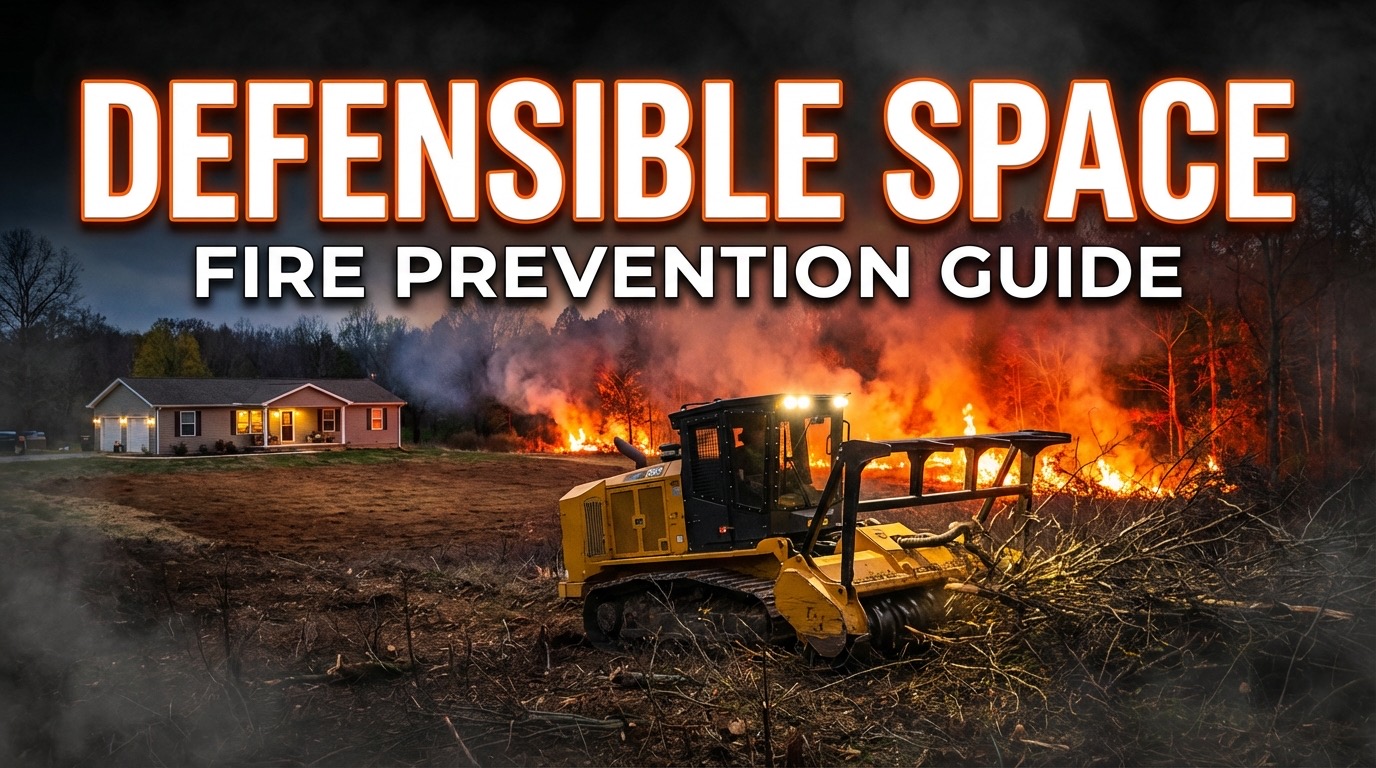
Fire prevention land clearing in Ohio is mostly practical housekeeping on a bigger scale. It is not about scraping every acre bare. It is about reducing the easy fuel around the places that matter: houses, barns, cabins, equipment yards, driveways, utility areas, and old field edges that have gone from manageable to tangled.
Most Cincinnati-area landowners do not think about fire until something gets too close. A burn pile jumps. A mower hits dry weeds. A storm drops limbs into tall grass. A neighbor burns brush on a windy day. A shed full of equipment sits against honeysuckle, dead leaves, and stacked lumber. Small problems get bigger when the property has not been opened up in years.
Brushworks clears overgrown land across southwest Ohio, and the fire prevention jobs usually have the same theme. The owner is not trying to make the place pretty for a photo. They want safer access, less dry brush, cleaner edges, and room to work around buildings without fighting vines and saplings.
What fire prevention clearing actually means
Fire prevention clearing means removing or reducing the material that helps fire move across a property. That material can be obvious, like deadfall, brush piles, dry weeds, and low limbs. It can also be hidden inside the overgrowth: old fence boards, dumped pallets, dead ash tops, grapevines, fallen cedar, leaves packed against foundations, and volunteer saplings touching sheds or barns.
The goal is to break up fuel. A continuous line of brush from the woods to the garage gives fire a path. A driveway with overgrown shoulders can trap equipment or slow a fire truck. A barn with tall grass, leaves, and stacked debris tight against it has more exposure than a barn with open ground and maintained edges.
Clearing does not make a property fireproof. No honest contractor should promise that. What good clearing can do is lower the fuel load, open sight lines, create room for maintenance, and make the property easier to reach if something goes wrong.
Ohio fire risk looks different than western wildfire risk
When people hear "fire prevention," they picture mountain towns and pine forests. Ohio has a different setup. We have humid summers, wet springs, hardwood woods, brushy fence rows, old pasture, invasive shrubs, crop fields, barns, and rural homes tucked against tree lines. That does not mean fire cannot move here. It means the work should match the land.
In southwest Ohio, the problem is often a mix of dry leaf litter, tall grass, dead ash, honeysuckle, autumn olive, cedar, multiflora rose, grapevine, and brush piles from old cleanup work. Add a windy day, a burn ban, a dry spell, or a spark from equipment and the rough ground becomes a problem fast.
Another Ohio issue is access. Many rural lots have one driveway, narrow gates, tight turns, wet shoulders, and wooded edges that have crept inward for years. If emergency crews cannot see the lane, turn around, or reach a barn without dragging hoses through brush, the property is harder to protect.
Need brush cleared away from buildings or access lanes?
Send photos of the driveway, buildings, tree lines, and overgrown edges. Brushworks can help reduce brush fuel and open usable space around the areas you need to protect.
Start closest to the structure
The first area to inspect is the strip right against the home, barn, cabin, shed, or shop. Leaves packed against siding, dead vines on walls, old wood stacked under overhangs, dry weeds under decks, and brush touching the building all matter. This work is less exciting than clearing an acre, but it is often where the risk is easiest to reduce.
From there, look outward. Are low limbs hanging over the roof? Are shrubs touching windows? Is there an old brush pile behind the barn? Does the tree line run straight into the propane tank, generator, fuel storage, or hay area? A few feet of clean separation can make future maintenance easier and reduce the amount of material sitting against expensive structures.
Forestry mulching is not always the right tool against a wall or foundation. Close work may need hand cutting, hauling, mowing, or careful machine work from a safe distance. The important part is the outcome: less fuel tight to the building and a clear path around it.
Open the driveway before you need it
Driveways are easy to ignore until they are needed. For fire prevention, they deserve a hard look. A lane that feels fine in a pickup may be tight for a fire truck, ambulance, trailer, or loaded equipment. Overgrown shoulders can hide ditches, stumps, rocks, and soft ground. Low limbs can damage tall vehicles or force responders to stop short.
Clearing driveway edges usually means cutting back brush, trimming low limbs, opening sight lines at the road, and creating places where vehicles can pass or turn around. On longer rural drives, it may also mean opening a secondary equipment path or cleaning up the area around gates.
This is not only about emergencies. Better access helps every normal job after that: mowing, gravel work, ditch cleaning, tree work, deliveries, hay movement, and equipment storage. When access is clean, the whole property becomes easier to maintain.
Reduce ladder fuel along wooded edges
Ladder fuel is the low and mid-level vegetation that helps fire climb from the ground into larger trees or structures. In Ohio, that can be honeysuckle under hardwoods, dead cedar branches, grapevine, saplings, fallen tops, and brush piles under the canopy.
Wooded edges around homes and fields often collect this material. The edge gets enough sun to grow thick, but not enough management to stay clean. Over time, it becomes a wall. Fire can move through that wall more easily than it can move through a broken-up edge with gaps, lower fuel, and maintained access.
Good clearing does not have to remove every tree. In many cases, the best move is to keep healthy trees, remove invasive shrubs and dead material, lift low limbs where appropriate, and create a cleaner transition between mowed areas and woods. The finished edge should still look like a rural property, not a scraped construction site.
Treat brush piles like fuel piles
A surprising number of fire prevention jobs start with old cleanup piles. Someone cut limbs years ago and pushed them to the edge. A storm dropped trees and they were stacked behind the barn. A fence row was trimmed, but nothing was chipped, hauled, burned legally, or mulched. The pile dries, settles, catches leaves, and becomes a fuel bank.
Brush piles can have a place for wildlife when they are planned and kept away from structures. They do not belong against buildings, under power lines, beside fuel tanks, along tight driveways, or in places where a fire could run into woods or equipment.
Forestry mulching can reduce scattered brush and small material quickly. Larger logs, trash, treated lumber, wire, metal, and buried debris need a different plan. Before any machine goes in, the area should be checked for hazards that can damage equipment or create a safety problem.
Barns, sheds, propane tanks, and equipment yards need room
Homes get most of the attention, but outbuildings often carry more fuel risk. Barns may hold hay, lumber, tractors, mowers, chemicals, fuel, or old equipment. Sheds collect boxes, tires, tools, and dry material. Propane tanks and generators need clear space around them. Equipment yards need enough room to move without parking machines in weeds.
A clean working zone around these areas helps in two ways. It reduces dry material near ignition sources, and it lets people see problems before they grow. You can spot a downed limb, leaking equipment, wasp nest, damaged fence, or drainage issue when the area is not buried in brush.
For Cincinnati and southern Ohio properties with barns close to woods, this usually means clearing the back side of the building, opening the corners, reducing saplings and vines, and connecting the building to a clean access route. The work does not need to be fancy. It needs to be maintainable.
Use forestry mulching where it fits
Forestry mulching is useful for fire prevention because it can turn dense, tangled brush into a lower layer of mulch without leaving piles everywhere. It works well on overgrown edges, old fields, trail corridors, driveway shoulders, fence rows, and areas where hauling debris would be slow or expensive.
The mulch layer is not magic. It is still organic material. Close to buildings, thick mulch should not be left piled against siding, posts, decks, or foundations. In open areas, though, a mulched finish is usually safer and easier to maintain than standing brush, dead limbs, and tangled vines.
Mulching also exposes what comes next. Once the wall of brush is down, you can see stumps, drainage, old fences, utility locations, slope, and areas that need mowing or follow-up. Fire prevention is not a one-pass trophy photo. The best results come when the property can be maintained after the machine leaves.
Think about slopes and wind
Fire moves differently on slopes. Heat rises, wind changes direction, and brush on a hillside can create a fast path toward a house, cabin, or barn above it. Around Cincinnati, wooded slopes, ravines, and creek draws are common. They can be beautiful and hard to maintain.
On sloped ground, clearing should respect erosion as much as fire fuel. Removing every bit of vegetation from a hillside can trade one problem for another. A better approach is often to reduce dense brush, remove dead material, open access paths, keep useful root structure, and avoid creating bare channels where water can run hard after storms.
If wind usually pushes from a certain direction across an open field or up a draw, pay attention to that edge. Clearing the fuel path between that edge and a structure can matter more than clearing a random patch somewhere else.
Do not forget utilities and overhead lines
Power lines, service drops, solar equipment, generators, propane tanks, meters, well houses, and communication lines all deserve clear access. Brush growing into these areas creates maintenance headaches and can make small failures harder to fix.
Utility work has limits. A land clearing crew should not work beyond its scope around energized lines or regulated utility corridors. Still, there is plenty a property owner can do safely with the right contractor: clear approach paths, remove nearby brush, open gates, clean around equipment pads, and make sure service providers can reach what they need.
If the area involves public utilities, easements, or overhead hazards, check with the utility or local authority before cutting. The goal is to make access safer, not create a different problem.
Timing fire prevention clearing in Ohio
Late fall, winter, and early spring are often good windows for this kind of clearing. Leaves are down, vines are easier to see, ticks are less active, and the ground may be firm enough to reduce rutting. Dormant vegetation also makes it easier to tell what is dead, what is invasive, and what is worth keeping.
Summer work can still make sense, especially when dry weeds and brush are obvious or when a property needs access right away. The crew just has to respect the conditions. Dry weather, heat, equipment exhaust, and tall grass require careful operation and good judgment.
If a property has a burn pile, planned debris burning, or a history of grass fires, do the clearing before the risky season if possible. It is cheaper and calmer to open access and reduce fuel before there is smoke in the air.
Maintenance is the part that keeps working
The first clearing is the reset. Maintenance is what keeps the reset from disappearing. Honeysuckle sprouts. Grass grows. Leaves fall. Storms drop limbs. Fence rows creep back in. A clean defensible space can become crowded again if nobody can mow, trim, spray, or inspect it.
That is why layout matters. A cleared lane should be wide enough for the mower or UTV that will maintain it. A building edge should be simple enough to keep clean. A field border should have room for future passes. If you create a beautiful opening that nobody can reach, it will not stay useful for long.
For many Ohio properties, the right plan is a larger first pass followed by smaller seasonal maintenance. That may be mowing, spot cutting, invasive treatment, gravel work, ditch cleanup, or another light mulching pass later.
How Brushworks approaches fire prevention clearing
Brushworks helps property owners around Greater Cincinnati, Warren County, Butler County, Clermont County, Hamilton County, and nearby Ohio communities open up overgrown land in a practical way. For fire prevention, we look at structures first, then access, then fuel paths, then maintenance.
That means walking or reviewing the property with the owner and asking plain questions. What buildings matter most? Where would emergency vehicles enter? Where is brush touching the structure? Where are the propane tank, generator, barn, equipment, driveway, gate, and utility areas? What can be maintained after clearing?
The best fire prevention clearing is not dramatic in person. It just feels easier to breathe. You can see the building. You can drive the lane. You can walk the edge. The brush is no longer pressed against everything valuable. That is the kind of work that helps long after the machine leaves.
Frequently asked questions
Can land clearing reduce fire risk on Ohio property?
Yes. Clearing can reduce fire fuel by removing dead limbs, dense brush, dry grass, invasive thickets, and debris near homes, barns, driveways, and utility areas. It does not make a property fireproof, but it can give a fire less material to burn and give firefighters better access.
What is defensible space for an Ohio rural property?
Defensible space is the managed area around a structure where flammable brush, dead wood, vines, and debris are reduced. In Ohio, that often means clearing against the house or barn, opening driveway shoulders, cleaning up fence rows, and keeping dry vegetation away from propane tanks, sheds, and equipment.
Is forestry mulching good for fire prevention?
Forestry mulching can help because it knocks down dense brush and turns large tangled fuel into a lower mulch layer. The mulch still needs to be managed, especially close to buildings, but mulching usually creates a cleaner, more accessible property than piles of cut brush left in place.
How far should brush be cleared from a house or barn?
The right distance depends on the building, slope, vegetation, and local fire guidance. As a practical starting point, keep the first few feet around buildings free of leaves, dead limbs, vines, and stacked material, then reduce dense brush and ladder fuel farther out so fire has fewer paths toward the structure.
When is the best time to clear for fire prevention in Ohio?
Late fall, winter, and early spring are often good windows because visibility is better and vegetation is dormant. Summer clearing can still be useful when dry brush is obvious, but equipment work should account for heat, dry conditions, and safe operating practices.
Related articles
Driveway Access Clearing Ohio
How to open a safer, more reliable route through wooded or overgrown property.
Emergency Storm Damage Clearing Ohio
Clearing fallen trees, blocked lanes, and storm debris before it creates bigger problems.
Fence Row Clearing Ohio
Clean up overgrown fence lines, brush walls, and woody edges across rural property.
Ready to reduce brush fuel around your property?
Send the address, photos, and the areas you are most concerned about. Brushworks can help open access, clear overgrowth, and leave the property easier to maintain.