
Land Clearing for Barn Pads Ohio: Site Prep Before You Build
A barn pad only works when the ground around it works. Before gravel, concrete, posts, trusses, or metal show up, the site needs clean access, solid drainage, and room to build.
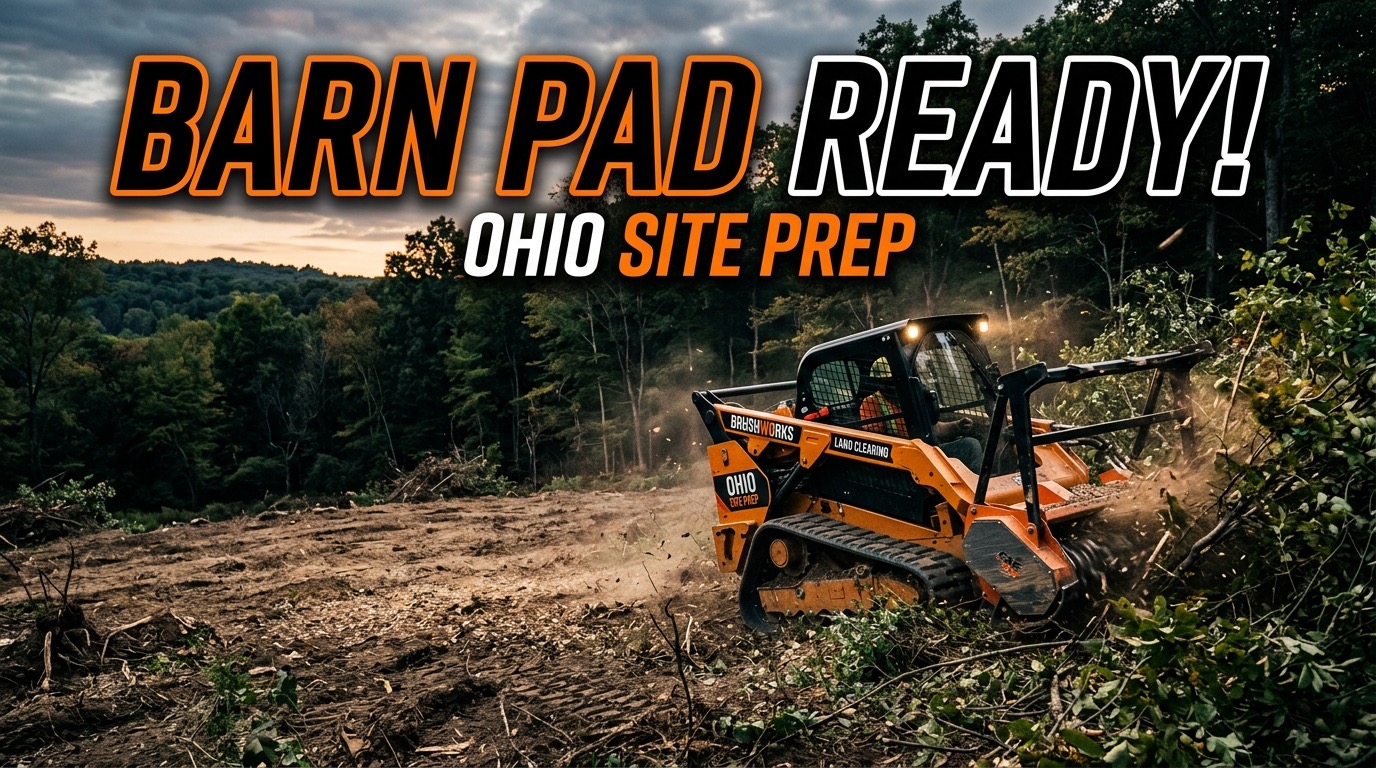
Plenty of Ohio barn projects start with a stake in the ground and a simple sentence: this is where the barn is going. Then the work starts to feel less simple. The spot is behind an old fence row. The only access crosses wet clay. Honeysuckle is hiding the slope. Dead ash trees are leaning over the future roof line. The driveway is too narrow for deliveries. The builder wants more room than the owner expected.
That is normal. A barn pad includes more than the exact rectangle under the building. It is the cleared footprint, the work area around it, the approach, the drainage, the staging space, and the future path trucks will use once the barn is finished. If those pieces are ignored, the building phase gets slower and more expensive. Worse, the barn can end up in a spot that stays wet, sits too tight to the woods, or is hard to use with equipment.
Brushworks clears land for barn pads, pole barns, equipment sheds, ag buildings, garages, and rural work sites around Cincinnati and across southwest Ohio. The best jobs happen when clearing is treated as the first construction step, not as a quick cleanup afterthought.
Planning a barn pad?
Send Brushworks the address, photos, and the rough barn location. We can help clear the access, open the pad area, and expose the ground before your excavation or building crew starts pricing the next phase.
Start with the barn use
Before anyone clears a tree, decide what the barn has to do. A hay barn, horse barn, equipment shed, workshop, storage barn, and pole barn with living or office space all ask different things from the site. Door placement matters. Truck turning matters. Water runoff matters. Future fencing, gravel, electric, trenching, concrete, and animal access matter too.
A small storage barn may only need a clean pad, a short gravel approach, and enough room to mow around it. A working equipment barn may need wide doors, a straight approach for trailers, space to back up, and a hard surface that does not turn into mud every spring. A horse or livestock barn may need clean routes to pastures, water, manure handling, and good drainage around daily traffic areas.
When the use is clear, the clearing plan gets sharper. You can decide which trees are in the way, which ones should stay as shade or screening, where the access lane should run, and how much room the builder needs around the structure. Guessing at this stage usually means moving brush twice.
Clear more than the building footprint
The biggest mistake is clearing only the exact building dimensions. A 40-by-60 barn is not a 40-by-60 clearing job. The excavation crew needs room to shape the pad. Delivery trucks need a path. Concrete, gravel, posts, trusses, metal panels, lifts, skid steers, and job trailers need space. If the building is close to woods or a fence row, the crew may not have enough room to work safely.
Most barn sites need a larger opening than the final roof line. The amount depends on the size of the building, the slope, the access, and the construction method. On a flat, open field, the extra room may be modest. On a wooded Ohio property with brush, dead trees, clay soil, and a narrow lane, the work area may need to be much wider.
Think about the finished barn too. Will you need to mow around it? Back trailers into it? Stack hay beside it? Add a lean-to later? Run a gravel apron along the doors? Store implements along one side? Clearing enough room now is usually cheaper than bringing equipment back after the barn is built.
Access can make or break the job
A good barn location on paper can be a bad location if trucks cannot reach it. Builders, concrete trucks, gravel trucks, truss deliveries, septic contractors, electricians, and fence crews all need practical access. A narrow farm lane, soft pasture, wooded trail, or sharp turn may work for a pickup but not for construction traffic.
Ohio clay is the other part of the story. Ground that feels firm in August can rut badly in March. A lane that seems fine for a mower may not hold a loaded dump truck. If the barn is set deep on the property, the access route may need brush cleared, low limbs cut, soft spots avoided, and drainage improved before heavy deliveries begin.
Clearing access first also helps the rest of the project. The builder can walk the site. The excavator can see the grade. Material suppliers can understand the route. You can figure out whether the driveway needs widened, whether a culvert is needed, or whether a different approach would save money.
Drainage deserves attention before the pad is built
Barns are often placed where the land feels convenient, not where water behaves well. That can create problems. Surface water from a slope may run toward the doors. Roof water may dump onto soft ground. A low corner may stay wet. A swale hidden by brush may be doing real work during storms.
Clearing exposes those issues. Once the honeysuckle, saplings, briars, and vines are gone, you can see the actual shape of the ground. Look for ruts, wet pockets, washed soil, standing water, old drainage ditches, buried pipe outlets, and the direction water moves during rain. If the site is close to a creek, ditch, pond edge, floodplain, or steep slope, slow down and check local rules before changing grade.
A barn pad should shed water away from the building and away from the driveway where possible. That is the excavation contractor's job, but the clearing plan affects it. If the cleared area is too tight, the excavator may not have room to feather slopes, build a gravel apron, or shape water away from the doors.
Forestry mulching opens the site, but it does not build the pad
Forestry mulching is a strong first step when a barn site is buried in brush, invasive shrubs, saplings, grapevine, thorny growth, and small trees. It can open the area quickly, leave mulch on the ground, reduce hauling, and make the site visible enough for layout and excavation.
It is not final pad construction. Organic material under a barn is trouble. Mulch, topsoil, roots, buried wood, rotten stumps, and soft soil do not belong under concrete, compacted gravel, or structural fill. After clearing, the pad builder or excavation contractor still needs to remove unsuitable material, shape the subgrade, add stone or fill, compact it properly, and handle drainage.
That sequence matters. Clear first so everyone can see what is there. Then build the pad correctly. Trying to quote and construct a barn pad through a wall of brush leads to surprises, and surprises on building sites usually cost money.
Watch the trees around the future roof line
Shade can be useful around a barn, but trees too close to the structure create work and risk. Overhanging limbs scrape roofs, drop leaves in gutters, and fall during storms. Dead ash is common across Ohio because of emerald ash borer damage. Those trees can shed limbs without much warning, especially after wind or freeze-thaw weather.
Before clearing starts, decide which trees should stay. Healthy trees outside the work area may be worth protecting, especially if they screen the barn from the road or shade animals. Trees leaning toward the pad, wrapped in heavy vine, split at the trunk, or already dead should be looked at carefully. If a large tree may threaten the finished building, deal with it before the barn is there.
Mark save trees clearly. Paint, flagging tape, stakes, or a marked map help everyone see the same plan. If tree risk is uncertain, bring in a tree professional before the site is crowded with construction activity.
What to mark before Brushworks arrives
Good marking saves time. Mark the rough barn corners if you know them. Mark the access route, gate openings, property lines, fences, trees to keep, trees to remove, septic areas, wells, overhead lines, private electric, water lines, irrigation, drain outlets, wet areas, and any spot equipment should avoid.
Call 811 before digging or construction work that may disturb utilities. Remember that public utility marking may not locate private lines running to barns, wells, lights, gates, outbuildings, irrigation, invisible fence, or past projects. If you know about private utilities, tell the clearing crew and the excavation contractor.
Old rural properties also hide junk. Woven wire, T-posts, concrete chunks, tires, dumped metal, old culverts, buried fence, and abandoned farm debris can sit under brush for years. Mention anything you have seen. It is better to pause for a hidden hazard than find it with a mulcher or skid steer.
Permits, zoning, and local rules
Ohio barn rules are local. County, township, city, floodplain, driveway, stormwater, zoning, and HOA requirements can all matter. Agricultural exemptions may apply in some cases, but not every building called a barn qualifies for every exemption. A hobby barn, commercial shop, storage building, event space, home office, barndominium, or accessory structure may be treated differently than a true agricultural building.
Check before the clearing and building schedule gets tight. Ask about setbacks, driveway permits, culverts, floodplain restrictions, erosion control, septic separation, building permits, electric service, and whether tree removal or grading rules apply. If the project is in a Cincinnati suburb, an HOA, or a more regulated township, do not assume rural rules apply.
Brushworks can help clear the site, but the owner or builder should confirm the legal placement and construction requirements. Clearing the wrong spot is an expensive way to learn about a setback.
Plan for utilities and future trenches
Most barns need something after the pad is opened: electric, water, lighting, security, frost-free hydrants, drainage pipe, or a future driveway extension. Even if the first phase is simple, it helps to think about where trenches and service routes will go.
If you clear a clean lane from the house, transformer, well, or driveway to the barn, utility work is easier. If you leave a wall of brush between the barn and the service source, the electrician or plumber may have to clear it later at a worse time. The same goes for fence lines, gates, and animal lanes. A little extra planning during clearing can save a second mobilization.
Building in wooded edges and old fields
Many barn pads around southwest Ohio sit at the edge of an old field, pasture, or woods. Those edges grow thick. Honeysuckle fills the understory. Multiflora rose and blackberry grab the fence. Osage orange, locust, autumn olive, cedar, callery pear, and volunteer maples pop up where mowing stopped. Vines pull everything together until the property line disappears.
Clearing that edge gives you better choices. You can set the barn back from the road without burying it in brush. You can open a gravel approach. You can leave a few good trees for shade while removing the tangled understory. You can see whether the old field is flat enough, wet enough, or rocky enough to change the plan.
The goal is not to scalp the whole property. The goal is to open the useful ground, remove the problem growth, and leave a site that can be built and maintained.
What happens after clearing
After the brush is gone, walk the site again with the builder or excavator. Confirm the barn orientation, door locations, access, drainage, and staging area. If the pad shifts a little once the ground is visible, that is better to discover before excavation starts.
The next steps may include stump handling, topsoil stripping, cut and fill, compacted gravel, concrete prep, erosion control, driveway work, culverts, utility trenching, seed, straw, or final grading. Some of those jobs may happen right away. Others may wait until after the barn is up.
Keep maintenance in mind. Clear enough room to mow, trim, inspect siding, reach gutters, move trailers, and keep brush from growing back against the building. The first growing season after clearing is the easiest time to keep edges clean.
How Brushworks helps with barn pad clearing
Brushworks handles the clearing phase for barn sites around Greater Cincinnati and southwest Ohio. We look at access, brush density, tree issues, working room, drainage clues, and how the next contractor will use the site. A barn pad in Warren County, Clermont County, Butler County, Hamilton County, or rural southwest Ohio may all need different clearing choices.
The best first step is simple. Send photos, the property address, and the rough barn location. If you have a builder drawing, site sketch, GIS screenshot, survey, or marked aerial photo, send that too. We can help open the land so your builder, excavator, and delivery trucks are not trying to work blind.
A barn is too expensive to place on a guessed site. Clear the ground, read the drainage, open the access, and give the pad crew room to do the job right.
Frequently asked questions
How much land should I clear for a barn pad in Ohio?
Clear the finished barn footprint plus enough room for excavation, trucks, concrete, gravel, drainage, future doors, and safe equipment movement. Many projects need a larger opening than the building dimensions suggest, especially when the site is wooded or the access route is tight.
Can forestry mulching prepare a barn pad?
Forestry mulching can open the site, remove brush, expose grade, and make access possible. It is not final pad construction. A barn pad still needs proper excavation, unsuitable material removal, compaction, drainage work, gravel, concrete, or engineered fill based on the building plan.
What should be marked before clearing a barn site?
Mark the planned barn corners, driveway or lane, trees to save, trees to remove, property lines, septic areas, wells, drainage paths, overhead wires, underground utilities, gates, fences, and any wet ground that equipment should avoid.
Do I need permits before clearing for a barn in Ohio?
Rules vary by county, township, city, zoning district, floodplain, and building use. Agricultural exemptions may apply in some places, but they are not automatic for every barn or accessory structure. Check zoning, building, driveway, stormwater, and HOA rules before clearing and construction start.
When is the best time to clear land for a barn pad?
Late fall through early spring is often good because leaves are down and brush is easier to see. Dry summer or fall windows can also work well. The best timing depends on soil moisture, access, how soon excavation will happen, and whether the site needs erosion control before construction.
Related articles
Barndominium Site Preparation Ohio
How to clear access, work areas, utilities, and drainage before a barn-home build.
Land Clearing for Detached Garage Sites Ohio
What to clear before builders need access, staging room, drainage planning, and clean working ground.
Driveway Access Clearing Ohio
How to open a practical route through wooded or overgrown Ohio property.
Need the barn site opened up?
Use the instant pricing tool for a quick starting point, or send photos and a marked barn location for a project quote.