
Land Clearing Clermont County Ohio: Costs, Permits, and What to Expect
Clermont County ground can be steep, brushy, wet in the wrong spots, and full of invasive growth. Here is how to clear it without making a bigger mess.
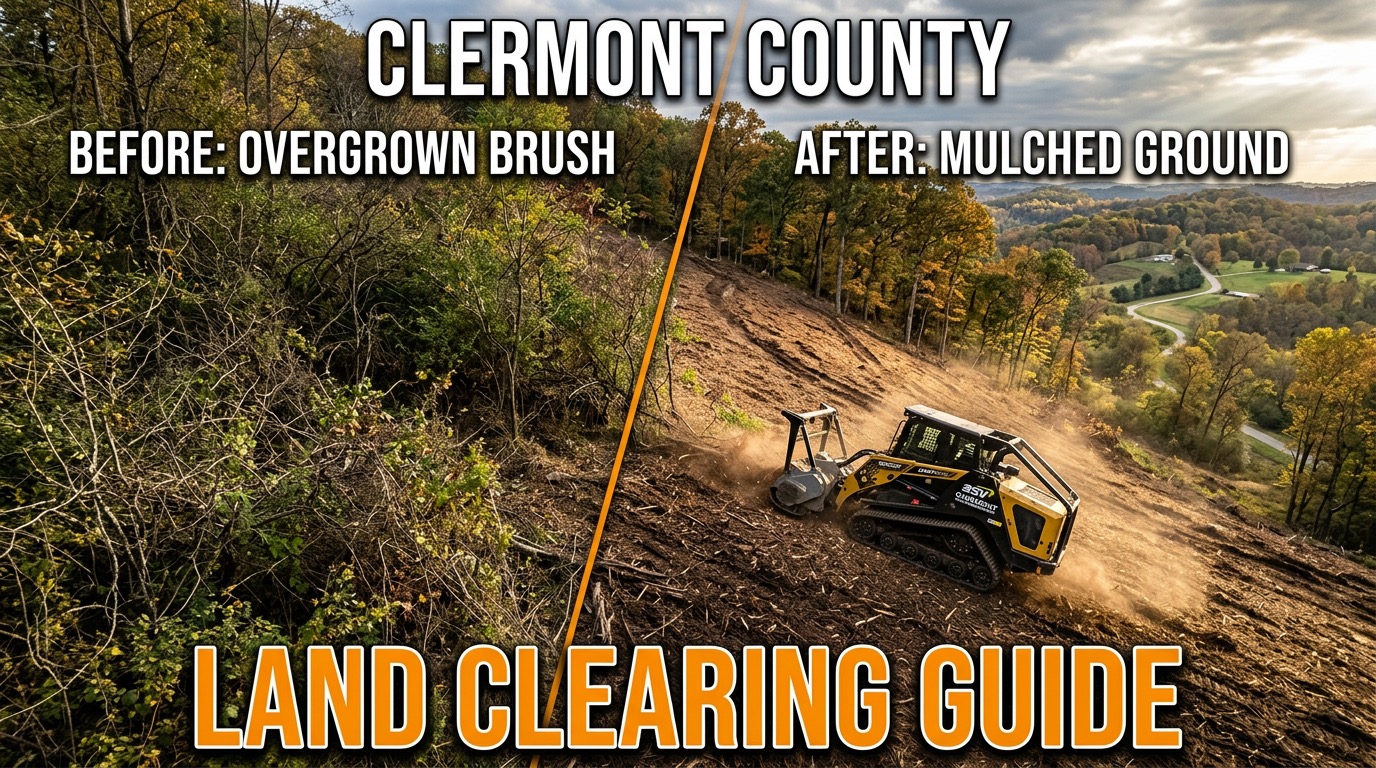
Clermont County has a little bit of everything: wooded home sites outside Milford, steep lots near the Little Miami, old farm ground around Bethel and Felicity, river-bottom properties, overgrown fence rows, neglected back acreage, and suburban edges where honeysuckle has swallowed half the yard. That variety is why land clearing in Clermont County needs more than a machine and a guess.
A clean job starts with a simple question: what are you trying to use the land for? A driveway, a pole barn, a pasture, a trail, a building site, a view, a fence line, or just a yard you can walk through again all need different clearing limits. The wrong approach can cost more, expose too much soil, or remove trees you wish you had kept.
Forestry mulching is often the right first move for Clermont County properties because it opens dense brush without scraping the ground bare. It is especially useful for honeysuckle, autumn olive, grapevine, saplings, thorny edges, and old overgrown areas where you need visibility before bigger site work happens. It is not magic, and it is not a replacement for grading or excavation, but it can turn a tangled property into something you can actually plan.
Here is what Clermont County property owners should know before hiring a land clearing crew.
Start with the end use
Land clearing sounds broad, but the end use controls the whole job. If you are clearing for a driveway, the route, width, turning radius, sight distance, and drainage matter more than making the woods look pretty. If you are clearing for a home site, the builder needs access, staging room, and enough visibility to confirm layout. If you are reclaiming pasture, the focus is invasive brush, fence rows, shade, and future mowing.
For a backyard or rural residential lot, selective clearing usually beats stripping everything. Most owners want usable ground, not a moonscape. Around Clermont County, good trees can add shade, privacy, and property value. Junk growth like bush honeysuckle, tree of heaven, dead ash, wild grapevine, and thorny locust often creates the problem. A good plan removes the growth that blocks use while protecting the trees that make the property worth owning.
Before work starts, walk the area and decide what success looks like. Do you want a path to the creek? A clean line for a fence contractor? A place to park equipment? A pad for a future barn? A better view from the house? Those details save time on site and keep the clearing limits honest.
Need land cleared in Clermont County?
Send Brushworks the address, a few photos, and what you want to use the ground for. We can help you figure out the cleanest way to open it up.
What affects land clearing cost in Clermont County
The biggest cost drivers are density, access, terrain, acreage, tree size, and what has to happen after the brush is down. A flat, dry, easy-to-reach patch of honeysuckle costs less than a steep wooded hillside with dead ash, old fence, soft ground, and no place to unload equipment.
Brush density matters because two acres on paper can be completely different jobs. Light saplings and weeds clear quickly. Mature honeysuckle with grapevine wrapped through it is slower. Thorn trees, osage orange, locust, and tangled fence rows slow everything down. So does trash, concrete, buried wire, old posts, and junk piles hidden under vegetation.
Access is just as important. A property with a wide driveway, firm ground, and room to turn around is easier to work than a narrow lane with overhead limbs and no staging area. If the machine has to travel a long distance from the road or work in tight pockets behind buildings, the day gets less efficient.
Terrain can change the method. Clermont County has plenty of rolling and steep ground. A slope that looks mild from the road may feel very different under a machine, especially when the soil is wet. Steeper work needs the right equipment and a slower pace. That costs more than mowing a flat field, but it is still cheaper than tearing up the hill and paying someone else to fix the ruts later.
Permits and local rules to check
Not every brush clearing job needs a permit. If you are opening a trail through your own woods or cleaning up an overgrown edge away from water and roads, the process may be straightforward. The problem is that some properties sit near regulated areas, and those rules are easier to respect before a machine is on site.
Check before clearing near streams, creeks, drainage ditches, ponds, wetlands, floodplain, road right-of-way, steep slopes, or areas tied to a building project. Clermont County, townships, villages, cities, the health district, the engineer, soil and water, and the Army Corps can all matter depending on the site. That sounds like a lot, but most ordinary jobs only need a quick local check.
If you are preparing for a house, garage, barn, septic system, driveway entrance, or commercial site, talk with the builder, excavator, surveyor, or local office before widening the work area. Septic locations, driveway sight distance, culverts, erosion control, and stormwater rules can affect where clearing should happen.
The practical rule is simple: if water, roads, utilities, septic, or construction are involved, ask before you clear aggressively. It is cheaper to leave a buffer than to repair a violation.
Forestry mulching versus bulldozing
Forestry mulching and bulldozing solve different problems. A forestry mulcher grinds brush, saplings, vines, and small trees in place. It leaves a rough mulch layer that helps protect the soil and makes the ground easier to walk. That is a strong fit for trails, fence rows, access lanes, invasive brush, hunting land, yard expansion, and selective clearing.
A bulldozer or excavator is better when the job requires earthmoving. House pads, final grades, pond work, driveway base construction, stump removal, basement excavation, and drainage correction belong to excavation equipment. Mulching can open the site before that work, but it should not pretend to replace it.
The cleanest projects often use both. Mulch first to reveal the site, clear the approach, and remove the brush. Then excavate only where grade, roots, stone, culverts, or construction prep require it. That sequence avoids pushing piles of brush everywhere and keeps heavy soil disturbance where it belongs.
Common Clermont County clearing projects
A lot of Clermont County calls start with access. Someone bought acreage and cannot get to the back. A driveway is too narrow for a builder. A surveyor cannot find corners. A creek, pond, or field edge is buried behind honeysuckle. Opening a sensible lane changes the whole property fast.
Another common project is reclaiming yard edges and wooded lots. In areas like Loveland, Milford, Goshen, Batavia, Amelia, New Richmond, Williamsburg, and Bethel, invasive brush can take over the line between lawn and woods. The owner still has trees, but the understory is a wall. Mulching can knock that wall back, open sight lines, and make the space maintainable again.
Rural properties often need fence rows, pasture edges, barn sites, food plots, trails, and equipment access cleared. Those jobs are less about a perfect lawn and more about useful ground. You need to move around, maintain the property, and stop brush from stealing acres every year.
Construction prep is another major category. Builders and excavators do better when they can see the ground. Clearing for a home, pole barn, detached garage, septic test area, or utility route can prevent bad layout decisions before concrete and gravel enter the picture.
Invasive brush is usually the real enemy
When someone says their land is overgrown, they often picture trees. In Clermont County, the bigger problem is usually invasive understory. Bush honeysuckle is everywhere. Autumn olive, multiflora rose, tree of heaven, callery pear, privet, grapevine, and thorny locust show up often too. These plants fill the middle layer, block access, shade out native growth, and make a property feel smaller than it is.
Cutting invasive brush once helps, but it is not always the end. Honeysuckle and autumn olive can resprout. Tree of heaven can send suckers. Multiflora rose can return from roots and seed. If the goal is long-term control, plan for follow-up. That may mean mowing, spot treatment, replanting desirable cover, or touching up regrowth before it gets woody again.
The first clearing pass gives you control. Maintenance keeps it. Waiting five years between touchups is how the same acre disappears twice.
How to prepare before the crew arrives
Good prep does not need to be complicated. Mark the work area with flags, paint, stakes, ribbon, or a simple map. Mark trees that should stay. Mark known property corners. If you have a survey, site plan, septic layout, or builder sketch, share it. If you do not, photos and a rough phone markup are still useful.
Call 811 if digging, staking, excavation, or deeper disturbance is part of the broader project. Forestry mulching is mostly surface work, but utilities still matter around driveways, yards, old farm buildings, and road frontage. Private lines to barns, wells, lights, propane, invisible fence, irrigation, or septic components may not be covered by public utility marking, so tell the crew what you know.
Move vehicles, trailers, lawn furniture, fencing supplies, firewood, and anything else you want protected. If there is hidden junk in the brush, mention it. Metal, wire, concrete, tires, and old debris are hard on machines and can change the plan.
Protect water, slopes, and good trees
Clermont County has plenty of properties with creeks, ravines, wet pockets, and clay slopes. Those areas need respect. Clearing every stem off a creek bank can make erosion worse. Running heavy traffic through a soft drainage can create ruts that hold water. Removing shade from a steep bank may create a maintenance problem that did not exist before.
Selective clearing is usually smarter around water. Open access where needed, remove invasive growth, and keep enough root structure and cover to protect the bank. If a regulated stream, wetland, or floodplain may be involved, check first.
Good trees deserve the same attention. Mature oak, hickory, walnut, maple, sycamore, and other healthy trees can be worth saving. Before clearing, decide which trees are part of the finished property. Give them room. Avoid piling mulch against trunks, changing grade around roots, or driving the same path over the root zone all day if there is a better option.
What happens after clearing
A freshly cleared property feels like the finish line, but it is really the start of maintenance. If the site will become lawn, pasture, driveway, garden, or building area, the next step should follow soon. Seed bare spots, mow regrowth, bring in stone, install fence, schedule grading, or keep traffic controlled before weeds take advantage of the sunlight.
Mulch left on the ground can help with erosion and moisture, but it is not final landscaping. In non-structural areas, that layer can be useful. Under driveways, pads, patios, and building areas, organic material may need to be removed as part of excavation and base prep.
If you cleared invasive brush, expect follow-up. Small resprouts are easy to handle. Woody regrowth that gets ignored for two summers becomes another clearing job. A simple maintenance plan is cheaper than starting over.
How Brushworks approaches Clermont County jobs
Brushworks works across Greater Cincinnati and southwest Ohio, including Clermont County. The goal is not to clear the most possible ground. The goal is to open the right ground for the way the property will actually be used.
On a site visit or photo review, we look at access, slope, brush type, good trees, wet areas, work limits, staging, and what comes after clearing. A project meant for a builder gets a different plan than a trail job or a backyard cleanup. A steep wooded lot gets a different machine strategy than an open field edge.
If your Clermont County property is buried in honeysuckle, blocked by saplings, or too thick to walk, start with the address, photos, and the reason you want it cleared. From there, the plan gets practical fast.
Frequently asked questions
Do I need a permit to clear land in Clermont County, Ohio?
Sometimes. Routine brush clearing on private land may not need a permit, but work near streams, floodplain, wetlands, road right-of-way, steep slopes, or a construction project can trigger county, township, city, or soil and water rules. Check before clearing if the property has drainage concerns or if you are preparing to build.
How much does land clearing cost in Clermont County?
Small access and brush jobs can be much less than full-acre clearing, while dense honeysuckle, thorn trees, dead ash, steep slopes, and poor access raise the price. The fastest way to price it is to send photos, an address, and a simple map of what needs opened.
Is forestry mulching better than bulldozing for Clermont County properties?
For brush, invasive growth, saplings, trails, fence rows, and selective clearing, forestry mulching is usually cleaner and leaves less mess. Bulldozing still makes sense for grading, stump removal, house pads, ponds, and major earthmoving.
Can land be cleared on steep or wooded lots near Cincinnati?
Yes, but the method matters. Steep ground, clay soil, hidden drainages, and limited access need a careful plan. Remote-control mulching equipment can help on slopes where larger machines would rut, slide, or tear up more ground than necessary.
What should I mark before a clearing crew arrives?
Mark property lines, septic areas, wells, utilities, trees you want saved, driveway routes, building corners if known, and any wet or sensitive areas. A few flags and a clear map can prevent expensive misunderstandings.
When is the best time to clear land in Clermont County?
Winter and early spring are often good because visibility is better and insects are lower, but summer and fall work fine when the ground is dry enough. The right timing depends on access, weather, soil moisture, and what you plan to do with the land after clearing.
Related articles
Land Clearing Cost Per Acre Ohio
How size, access, brush density, and terrain affect clearing prices.
Land Clearing Permits Ohio
What to check before clearing near roads, water, slopes, and regulated areas.
Bush Honeysuckle Removal Ohio
How to deal with the invasive brush taking over Ohio woodlots and yard edges.
Ready to reclaim your Clermont County property?
Send the address, photos, and the area you want opened. Brushworks can price the job and help you avoid over-clearing, rutting, and wasted work.