
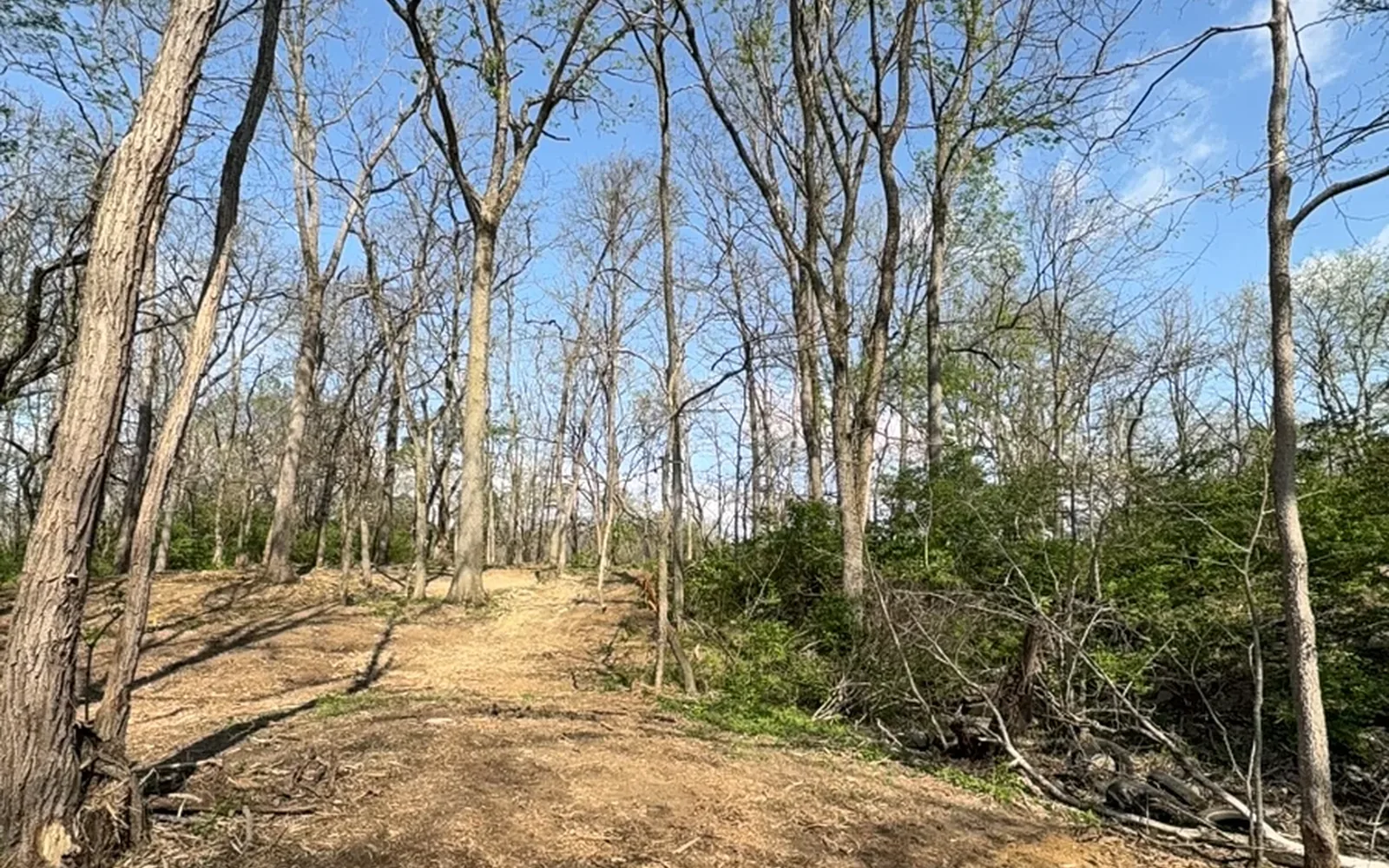
Land Clearing for Gravel Driveways Ohio
A gravel driveway only works as well as the ground prepared under it. Before stone shows up, the brush, trees, sight lines, drainage, and working room need a clear plan.

A gravel driveway looks simple once it is finished. A strip of stone runs from the road to the house site, barn, cabin, field, or back acreage. The trouble usually happens before that finished surface exists. The planned route is packed with honeysuckle, saplings, grapevine, low limbs, old fence wire, soft spots, and trees that make it hard for anyone to see what the ground is doing.
That first clearing pass matters. It gives the gravel contractor room to build the drive instead of fighting the property. It exposes drainage problems before stone gets wasted. It shows whether a turn is too tight, a slope is too steep, a culvert is needed, or the driveway is aimed at the wrong part of the road.
Brushworks clears driveway routes for rural homes, mini farms, hunting properties, pole barns, gravel parking areas, equipment yards, and wooded acreage around Cincinnati and across southwest Ohio. The job is usually part access, part site prep, and part problem finding. Good clearing does not replace proper grading or stone work. It makes that work possible.
Planning a gravel driveway through brush or woods?
Send photos from the road, the planned route, and the destination point. Brushworks can help open the path so your driveway contractor can see the ground and build from a clean layout.
Clear more than the final tire tracks
One common mistake is clearing only the narrow strip where the tires will go. That may look efficient on paper, but it leaves no room for grading, drainage, delivery trucks, stone piles, ditch shaping, or future maintenance. The gravel surface may only need one width. The work zone usually needs more.
A rural Ohio driveway often needs space for a crown or cross slope, shallow ditches, culvert ends, shoulder stone, snow push areas, and a little sunlight to dry the lane. If trees and brush stay tight to the edge, limbs scrape trucks, leaves hold moisture, and the driveway can stay soft longer after rain. On wooded lots, a narrow tunnel can also feel unsafe where it meets the road because drivers have poor sight lines.
The right cleared width depends on the driveway length, slope, curve, soil, final use, and equipment involved. A short residential lane may need a modest opening. A driveway meant for builders, concrete trucks, trailers, hay wagons, or emergency access may need wider clearing and better turnouts.
Start at the road entrance
The road entrance sets the tone for the whole driveway. If the first twenty feet are too tight, poorly angled, or hidden by brush, everything after that becomes harder. Gravel trucks need room to turn in without dropping a wheel into a ditch. Fire trucks and delivery drivers need to see the entrance. The property owner needs to pull out without guessing what is coming down the road.
Clearing near the road should open sight distance both directions where the property and local rules allow it. It should also expose the ditch line, shoulder, culvert area, mailbox location, and any overhead limbs that could hit tall trucks. In townships and counties around Cincinnati, the driveway entrance may also involve permit requirements or road department standards. Clearing helps the owner and contractor see what they are dealing with before money goes into stone.
Old farm lanes and inherited properties often have a hidden entrance already there. Brush grows over it, leaves fill the ditch, and a culvert disappears under dirt. Finding that old route can save work if it is in the right place, but it should still be checked for drainage and safety before being rebuilt.
Drainage is where gravel driveways win or fail
Water ruins lazy driveway work. It cuts ruts, carries fines away, softens the base, plugs low spots, and turns a usable lane into a muddy mess. Land clearing is the first chance to see how water moves across the route.
Brush can hide small swales, wet pockets, springs, old drain tile, ditch outlets, and low crossings. Once the vegetation is cleared, the route usually makes more sense. You can see where the lane needs to shed water, where a culvert may belong, where the drive should climb the slope, and where the route should be shifted to avoid a wet area.
Forestry mulching can help open ditches and access, but it is not a substitute for grade work. A good gravel driveway still needs proper shaping, base prep, stone depth, and drainage details. Clearing simply gives the grading crew room to do that work and helps the owner avoid putting expensive stone on top of a water problem.
Mark the route before equipment shows up
Driveway clearing goes better when the route is marked in the field. Paint, flags, stakes, or ribbon can show the centerline, edges, trees to keep, turnarounds, gate openings, culverts, and the final destination. On wooded lots, a few feet one direction can change the amount of tree work, the slope, or the drainage.
If a survey exists, use it. If property lines are uncertain, pause and get them marked. Clearing a driveway across the wrong strip of ground is an expensive mistake and a fast way to create trouble with a neighbor. Mark septic areas, wells, underground electric, propane lines, water lines, fiber, drain tile, and anything else that could be damaged by equipment.
Private utilities are easy to miss on rural property. A standard public locate may not mark the line from the pole to the barn, the water line to a hydrant, or the old electric run to an outbuilding. Ask questions, look for clues, and tell the clearing crew what is known.
Think about the vehicles that will use the driveway
A driveway for a pickup and mower is different from a driveway for dump trucks, a camper, a horse trailer, a concrete truck, or a future home build. The clearing plan should match the heaviest and longest vehicles expected during construction and regular use.
Builders need staging room. Gravel trucks need a straight enough approach to spread stone. A trailer needs turns that do not force the driver into trees. Emergency vehicles need dependable access in bad weather. Snow removal needs a place to push piles without blocking the lane.
If the driveway is going to a barn, cabin, pole building, or back field, plan the turnaround before clearing starts. Too many lanes reach the destination and stop with no practical way to turn around. A simple loop, hammerhead, or widened work pad can make the property easier to use for years.
Forestry mulching is useful for opening the path
Forestry mulching is a strong fit for the first pass on many overgrown driveway routes. It can grind brush, saplings, invasive honeysuckle, briars, grapevine, and small trees into mulch while leaving the soil more stable than heavy clearing methods that scrape everything bare. For wooded Ohio properties, that matters because disturbed soil can turn slick fast.
Mulching also creates visibility. Once the brush wall is gone, the property owner can walk the route, adjust the layout, spot drainage issues, and bring in the gravel or excavation contractor with a cleaner picture. The mulch layer can help with temporary access in some areas, though it should not be confused with a finished driveway base.
There are limits. Large trees, stumps that must be fully removed, steep cut and fill work, culverts, geotextile fabric, base stone, finish stone, and final compaction may call for other equipment. Brushworks can clear and open the site, then the driveway builder can construct the lane on a route that is no longer hidden.
Avoid leaving trees too tight to the driveway
Keeping good trees is often the right call. A gravel driveway through woods can look great when the better trees stay and the junk growth is removed. The problem is leaving trunks, leaning trees, or low limbs too close to the lane.
Branches scrape mirrors, trailers, RVs, delivery trucks, and construction equipment. Roots near the edge can complicate grading. Shade and leaf drop can keep the lane wet. Dead ash, storm-damaged maples, and weak locust trees can become a future hazard if they lean over the driveway.
The clearing plan should separate good shade from bad clearance. Keep the trees that belong. Remove the ones that will fight the driveway every season. Raise limbs where needed, clear vines, and make sure the lane has enough air and sun to dry after rain.
Plan for gates, fences, and property corners
Many new gravel driveways connect to a fence line, pasture gate, equipment yard, or future building site. If a gate is part of the plan, clear enough room for the gate swing, latch area, keypad, truck approach, and a safe place to stop off the road. A tight gate at the entrance turns into a daily annoyance.
Fence wire and old posts need attention before mulching. Old woven wire, barbed wire, T-posts, and electric fence lines can hide in weeds along old farm drives. Mark them or pull them where possible. Wire wrapped in brush can damage equipment and slow the job down.
If the driveway will run near a property line, make sure the route leaves room for future fence work and drainage. A driveway pressed too close to the boundary can limit maintenance and create awkward water issues with the neighbor.
What to clear before fabric and stone
A gravel driveway needs a stable base. Before fabric and stone go down, the route should be clear of woody growth, stumps that interfere with grade, loose organic material, and debris that will rot or move under the surface. Soft topsoil, buried roots, and wet pockets can cause settlement later if they are ignored.
Clearing is only part of that prep. After brush and trees are out of the way, the driveway contractor may strip unsuitable material, shape the subgrade, install fabric, place base stone, crown the lane, and compact the surface. On longer rural drives, they may build in lifts instead of trying to fix everything with one shallow layer of gravel.
The point is sequencing. Clear first, inspect the ground, then build the driveway. When stone is delivered before the site is opened, crews may end up placing it around brush, working blind around wet spots, or changing the route after materials are already on site.
Slopes and curves need extra room
Ohio properties are rarely flat rectangles. Around Cincinnati, gravel driveway routes often deal with rolling ground, creek crossings, wooded hillsides, old farm terraces, and road ditches. Slopes and curves need more planning than straight flat lanes.
On a slope, water control becomes more important. The lane may need cross-drainage, turnouts, a better crown, or a route that climbs gradually instead of running straight up the hill. On curves, long trucks and trailers need extra swing room. Clearing too tight on the inside of a bend can make the driveway hard to use even if the gravel surface looks wide enough.
This is where clearing and driveway design overlap. You do not want to remove more trees than needed, but you also do not want to save a tree that makes the curve unusable. Walk the route with vehicle movement in mind instead of choosing the shortest path through the brush.
Common hidden problems on old access lanes
Old access lanes can be helpful, but they come with surprises. Brushworks often finds buried wire, rotten culverts, trash piles, wet holes, old concrete, farm debris, dead ash trees, stump rows, and drainage that used to work before years of leaves and sediment filled the low spots.
Do not assume the old route is automatically the best route. It may have been made for a tractor, not a home build. It may cross the wettest part of the property because that was the easiest place to cut years ago. It may be too narrow for modern delivery trucks. Clearing exposes those issues while there is still time to adjust.
If the old lane is useful, clearing can bring it back quickly. If it is not, it is better to learn that before investing in base stone and finish gravel.
How Brushworks fits into a gravel driveway project
Brushworks is usually the front-end clearing piece. We open the route, remove the brush wall, mulch invasive growth, improve access, and give the property owner and driveway contractor a clearer site. That can include the entrance, lane, turnarounds, building approach, ditch access, and nearby work areas.
For some projects, the next step is an excavation or gravel contractor who handles grading, fabric, stone, culverts, and finish work. For others, the owner needs the path opened first so they can compare routes, walk the site, price the gravel work, or get equipment back to a cabin, barn, field, or future build site.
The best time to clear is before the driveway plan becomes expensive to change. Once the route is visible, decisions get simpler. You can see the slope. You can see the drainage. You can see where trucks will turn. That is when a gravel driveway stops being a line on a map and starts becoming usable access.
Frequently asked questions
How wide should land be cleared for a gravel driveway?
The cleared width depends on the driveway design, vehicle type, ditching, slope, tree canopy, and construction access. Many rural drives need more room cleared than the final gravel surface so crews can grade, drain, crown, and maintain the lane.
Should brush be cleared before calling a gravel contractor?
In many cases, yes. Clearing first lets the gravel or excavation contractor see the route, soil, slope, drainage, trees, culverts, and turnarounds. It can prevent quoting surprises and gives equipment room to work.
Can forestry mulching clear a driveway path through woods?
Forestry mulching can open wooded driveway routes by removing brush, vines, saplings, and smaller trees. Larger trees, stumps, grading, base stone, culverts, and final gravel construction may need additional equipment or another contractor.
What should be marked before clearing a gravel driveway route?
Mark property lines, the planned driveway centerline, trees to keep, utilities, wells, septic areas, drain tiles, culvert locations, gates, ditches, wetlands, and any old fence wire or debris hidden in the growth.
Does clearing include grading and gravel installation?
Brushworks focuses on land clearing, forestry mulching, access opening, and site prep. Gravel driveway grading, fabric, base stone, culverts, and finish gravel may be handled by an excavation or driveway contractor depending on the job.
Related articles
Driveway Access Clearing Ohio
How to open a reliable driveway route through wooded or overgrown property before regular use.
Land Clearing for Equipment Access Roads Ohio
A guide to clearing access roads for trucks, tractors, excavators, and rural property work.
Land Clearing for Farm Lanes Ohio
Clearing farm lanes for tractors, trucks, gates, fields, drainage, and long-term maintenance.
Need a gravel driveway route opened?
Use instant pricing for a starting point, or send photos of the road entrance, planned route, slopes, wet spots, and destination area.
