
Land Clearing for Hunting Cabins Ohio: Site Prep for Access, Trails, and Build Sites
A good hunting cabin starts with quiet access, dry ground, and a clearing plan that does not wreck the property you bought it for.
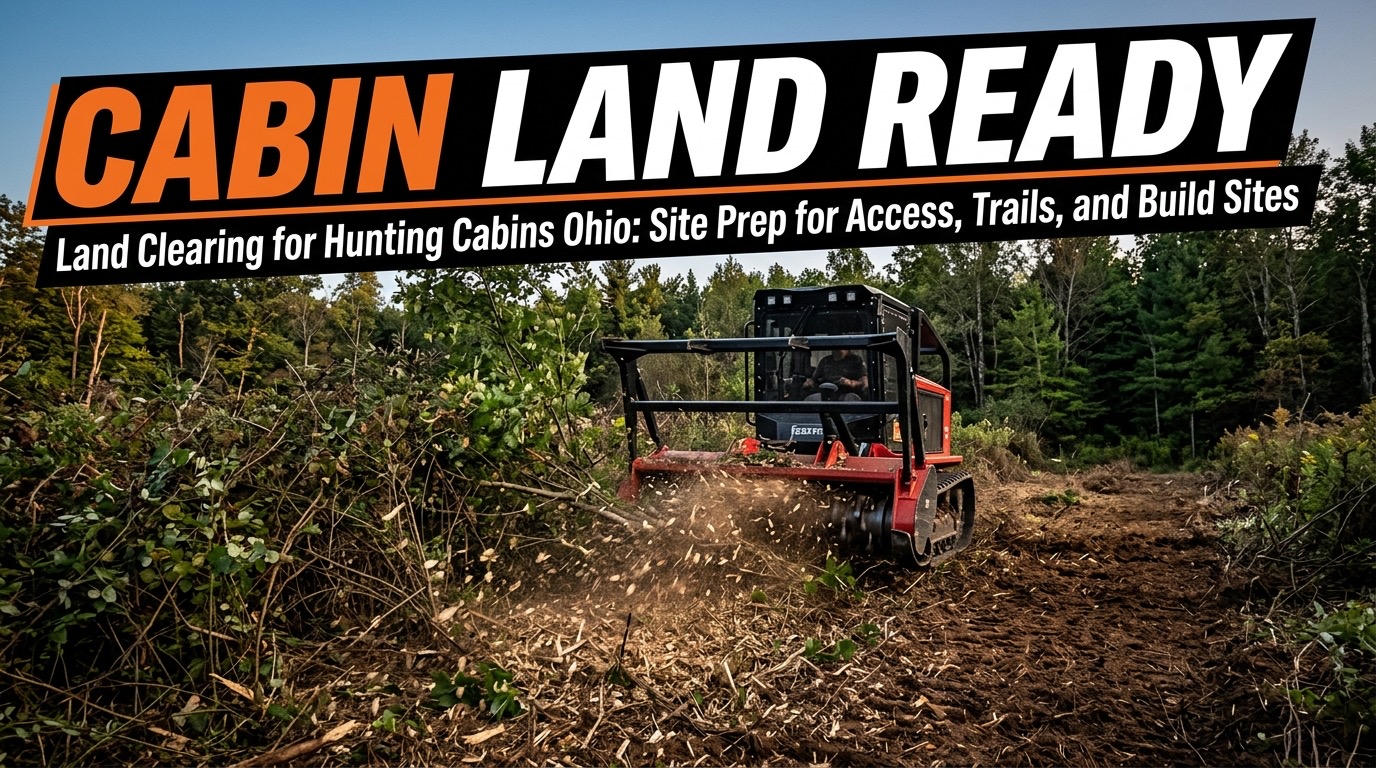
Land clearing for hunting cabins in Ohio is different from clearing a regular backyard or house lot. The cabin matters, but the land around it matters just as much. You need a buildable spot, a way to get trucks and materials in, room to park, a path for utilities or septic if needed, and enough open ground to maintain the place later. You also need to keep the parts of the property that make it worth hunting.
That balance is where a lot of cabin projects get sideways. Clear too little and every delivery, repair, and rainy weekend becomes a fight. Clear too much and the cabin sticks out, deer movement changes, bedding cover disappears, and the place starts to feel more like a construction site than hunting ground.
Brushworks clears hunting properties, cabin sites, trails, overgrown access lanes, and rural acreage around Greater Cincinnati and southwest Ohio. The best projects usually start with a simple question: what does this land need to do after the machine leaves? If the answer includes hunting, access, privacy, weekend use, and future maintenance, the clearing plan should respect all of that.
Planning a cabin on hunting land?
Send the property address, photos, a rough cabin location, and the access route you want to use. Brushworks can help open the right ground without turning the whole parcel into a bare field.
Start with access from the road
Most hunting cabin problems start at the entrance. A trail that works for an ATV may not work for a pickup, gravel truck, skid steer, cabin kit delivery, camper, septic contractor, or utility crew. Old farm lanes, logging trails, and fence row openings can look good in dry weather and then turn into ruts once the ground is wet.
Walk the route from the road to the cabin site before you mark anything else. Look at the ditch, culvert, gate width, tree limbs, turn radius, overhead lines, soft spots, steep climbs, and places where water crosses the trail. Around Ohio, clay soil can carry a truck one week and swallow tires the next. The clearing route should account for that.
Access does not have to be wide and obvious everywhere. On a hunting property, it often helps to keep the entrance clean but not flashy from the road. The route still needs enough width for the real equipment that will use it. If you plan to bring in gravel later, make sure the clearing leaves room for trucks to turn around or back safely.
Pick the cabin site with water in mind
The prettiest opening is not always the best cabin site. Low ground can look flat, but it may hold water after a hard rain. A ridge can have a great view, but the driveway may be steep, washed out, or hard to use in winter. A spot tucked into the woods may feel private until you realize every roof drip, firewood trip, and parking move happens under low limbs.
Before clearing, stand on the proposed site after rain if you can. Look for ponding, moss, soft clay, old ruts, washed leaves, and small channels where water already moves. A hunting cabin does not need a golf course lawn, but it does need a place to sit dry. If you plan to add a gravel pad, pier foundation, crawl space, septic system, or camper pad, drainage becomes part of the clearing plan.
Clearing can reveal problems, but it cannot make a wet hole into a good site by itself. Once brush and saplings are gone, an excavator or gravel contractor may still need to shape the pad, install stone, cut a swale, or improve the driveway. The clearing stage should make that work easier.
Clear enough room to build and maintain
A cabin footprint is small compared with the work area around it. You may need space for the cabin package, trailers, a lift, lumber, stone, firewood, side-by-side parking, a small shed, a propane tank, an outhouse, a well, or a septic route. Even a simple off-grid cabin needs a little breathing room for maintenance.
That does not mean opening half an acre every time. The right size depends on the cabin, the slope, the trees, and how you want the place to feel. Many owners want a modest clearing that is easy to mow or brush cut, with the woods still close enough for shade and privacy. That can work well if the trees left around the edge are healthy and not leaning over the roof.
Dead ash is a common issue on Ohio cabin sites. So are locust, hedge, grapevine, honeysuckle, cedar, and storm-damaged trees along old fence rows. If a tree is likely to fall on the cabin, driveway, power line, or parking area, decide before the cabin is built. Removing it later is usually harder.
Keep the hunting plan in the clearing plan
Cabin clearing should not be planned like a subdivision lot. Deer, turkey, and other wildlife use cover, edges, wind, terrain, food, and quiet travel routes. If the clearing ignores those things, you can make the property easier to visit but worse to hunt.
Think about where you park, where you walk in, where stands are placed, and how deer usually move through the land. A straight, wide road through the middle of the best bedding cover may be convenient for the cabin, but it may also blow up the part of the property you care about most. A better route may skirt an edge, follow an old lane, or use terrain to stay hidden.
Leave screens where they help. A strip of brush along the road can hide the cabin entrance. Cover near a bedding area may be worth keeping even if it looks messy. Hinge cuts, food plots, and habitat work can come later, but the first clearing pass should avoid removing useful cover by accident.
Trails should connect real uses
Trail clearing is easy to overdo. Once a property owner sees a machine open one route, it is tempting to cut paths everywhere. That can make the land feel smaller and push pressure into places that were better left alone.
Good cabin trails connect the places you actually use: the road, cabin, parking area, stand access, food plot, creek crossing, firewood area, recovery route, and maybe a loop for checking the property. They should be wide enough for the equipment that will use them, but not wider than needed. A walking trail, ATV trail, side-by-side trail, and gravel drive are not the same thing.
Trail turns matter too. Tight turns are hard on equipment and can rut when wet. Blind corners can be awkward in thick cover. On slopes, water will follow the trail if it has nowhere else to go. Sometimes the most valuable clearing work is not cutting a new trail, but reopening an old one and giving water a way off the path.
Where forestry mulching fits on hunting land
Forestry mulching is often a good fit for hunting cabin properties because it can clear brush, saplings, small trees, and invasive growth without hauling every piece off site. It works well for opening access routes, reclaiming old lanes, clearing cabin approaches, resetting field edges, and cutting trails through overgrown understory.
The mulch left behind can help reduce bare soil compared with scraping, but it is not a finished driveway or building pad. Organic mulch should not be treated as structural base for a cabin, gravel road, or compacted pad. After mulching, the next contractor may still need to remove topsoil, shape the grade, install stone, and compact the surface.
Mulching also has limits. Large trees, wet bottoms, deep mud, buried wire, old junk piles, steep side slopes, and heavy rock may need a different approach. Some places are better handled with saw work or left alone. A good hunting property plan uses the machine where it helps and stops where clearing would cause more trouble than it solves.
Watch for old farm debris and hidden hazards
Many Ohio hunting parcels were farms, timber ground, old home sites, or neglected back acreage before they became recreational land. Brush can hide woven wire, steel T-posts, old gates, concrete, tile, glass, tires, scrap metal, wells, cisterns, junk piles, and forgotten fence corners.
Those hazards matter for equipment and for the people who will use the cabin later. A mower can find wire the hard way. A kid can find an old well. A truck can sink into a soft spot that looked like grass. Before heavy clearing starts, walk what you can and flag anything suspicious.
If the property has old buildings, barns, dumps, ponds, or abandoned lanes, tell the clearing crew. Nobody likes surprises in tall brush. A slower pass around those areas can save equipment damage and keep the job from turning into cleanup work that was never priced.
Utilities, septic, and off-grid choices affect the clearing
Some hunting cabins are simple shelters. Others become weekend homes with electric, water, septic, propane, internet, gravel parking, and a real driveway. The more systems you add, the more the clearing plan matters.
If power will run from the road, leave a route for poles or trenching. If septic is planned, protect the approved soil area and keep equipment from compacting it. If a well is needed, leave room for drilling access. If you use propane, think about tank delivery and refill access. If the cabin is off grid, you may still need sunlight for solar panels and a spot where batteries, generators, or equipment can be serviced.
Call 811 before digging, trenching, stump removal, or any work that may disturb buried utilities. On rural properties, also remember that private lines may not be marked by a public utility ticket. Old electric to a barn, water lines to hydrants, drain tile, and abandoned service runs can still be out there.
Do not forget parking and turnaround space
Hunting cabins attract vehicles. Friends show up for opening weekend. A gravel truck needs room. A contractor needs to unload. Someone brings a trailer, side-by-side, firewood, or a small tractor. If the only parking is the driveway, the cabin will feel cramped fast.
Plan a parking and turnaround area before the cabin is installed. It does not need to be huge, but it should be usable in wet weather and placed where it will not block the main route. If you ever need emergency access, a stuck truck in a narrow lane is more than an inconvenience.
Parking also affects noise and scent when hunting. A spot too close to the main stand access may create pressure every time someone arrives late. Sometimes it is better to keep the vehicle area near the cabin and use a quieter walking route from there.
Permits and local rules still matter
A hunting cabin can feel informal, but local rules still apply. Requirements can change by county, township, driveway entrance, septic system, floodplain, creek crossing, wet area, building size, and whether the cabin is temporary, seasonal, or habitable. Hamilton County, Clermont County, Warren County, Butler County, Adams County, Brown County, Highland County, and nearby Ohio townships can all treat rural projects differently.
Before major clearing, check the basic items: zoning, driveway permits, building permits, septic approval, floodplain limits, setbacks, easements, utility rules, and any restrictions in a deed or shared access agreement. If the property has a creek, wetland edge, steep slope, or old logging road crossing water, get answers before you cut a route through it.
Clearing first and asking later can create expensive rework. It can also cause trouble with neighbors if the entrance, shared lane, or property line is unclear. Mark boundaries and confirm access rights before equipment shows up.
What to send for a hunting cabin clearing quote
Photos and maps help more than a long description. Send the property address, road entrance, current access route, proposed cabin site, and photos of the brush density. A marked aerial screenshot is useful. So is a rough sketch showing the driveway, cabin, parking, trails, stand locations, food plots, wet areas, and trees you want to keep.
Tell the clearing contractor what the cabin will be. A small off-grid shed cabin, prefab cabin, camper pad, barndominium, and finished weekend home all need different access and work room. Also mention whether gravel, septic, electric, a well, or future outbuildings are part of the plan.
If the property is mostly for hunting, say that clearly. The goal is not just a clean site. The goal is a usable cabin site that still hunts well after the work is done.
Keep maintenance realistic after the first clearing
The first clearing is the reset. Ohio brush does not stop growing because a cabin went in. Honeysuckle, briars, locust sprouts, autumn olive, grapevine, cedar, and volunteer trees will try to take back edges and trails if they are ignored.
Plan for upkeep. Mow or brush cut the cabin clearing before saplings get woody. Keep the driveway limbs high enough for vehicles. Touch up trails before they disappear. Watch wet areas after storms. If invasive shrubs are thick, mechanical clearing may need follow-up treatment from a qualified applicator to keep them from coming right back.
A hunting cabin should get easier to use over time, not harder every season. A little maintenance each year is cheaper than reclaiming the same lane every few years.
How Brushworks helps Ohio hunting cabin projects
Brushworks helps property owners open hunting cabin sites, wooded access routes, trails, overgrown field edges, and rural building areas around Greater Cincinnati and southwest Ohio. We look at the property as working ground, not just a blank spot for a structure.
That means asking about the entrance, cabin location, trees to save, drainage, slope, parking, utility plans, trail use, stand access, and cover that should stay. Some areas need opened cleanly. Some need a lighter touch. Some should be left alone until the rest of the plan is clearer.
If you are building or placing a cabin on hunting land, start with the land plan. Clear the route. Open the cabin site. Leave the cover that matters. Make the place easier to reach, build, hunt, and maintain.
Frequently asked questions
How much land should I clear for a hunting cabin in Ohio?
Clear the cabin footprint plus room for access, parking, delivery, equipment, utilities, drainage, and future maintenance. Many hunting properties do better with selective clearing instead of opening a large yard that changes privacy, deer movement, and cover.
Can forestry mulching prepare a hunting cabin site?
Forestry mulching is often a good fit for clearing brush, saplings, trails, cabin approaches, and small trees on hunting land. It does not replace excavation, foundation work, gravel installation, septic work, or final grading.
Should trails be cleared before or after choosing the cabin site?
Choose the cabin site and main access first, then clear trails that support that plan. Trails should connect the road, cabin, parking, stands, food plots, and recovery routes without cutting through every bedding area on the property.
What should I mark before clearing a hunting cabin property?
Mark the cabin location, driveway, parking, trails, trees to keep, property lines, stand locations, food plots, wet areas, steep slopes, utilities, septic area, and any places where you want cover left alone.
Do I need permits before clearing land for a hunting cabin in Ohio?
Permit needs vary by county, township, driveway entrance, septic system, floodplain, creek, wet area, and building plan. Check local zoning, driveway, septic, and building requirements before major clearing or construction.
Will clearing hurt hunting on the property?
Poor clearing can hurt hunting by removing too much cover, opening the wrong lines of sight, or pushing access through bedding areas. Good clearing keeps travel routes, screens, food sources, and quiet access in mind while making the cabin site usable.
Related articles
Clearing Land for Wildlife Habitat Improvement Ohio
How clearing can improve trails, edge cover, food plots, and usable hunting ground.
Land Clearing for Private Campsites Ohio
How to open a rural property for tents, trailers, weekend use, and family camps.
Driveway Access Clearing Ohio
What to know before cutting or widening a route through wooded property.
Need a hunting cabin site opened up?
Use the instant pricing tool for a quick starting point, or send photos, a map, and your cabin location for a project quote.