
Land Clearing for Mini Farm Properties Ohio
Mini farms work best when every cleared area has a job. The goal is not to flatten the whole place. The goal is to open the parts that let you use, fence, plant, maintain, and enjoy the acreage.
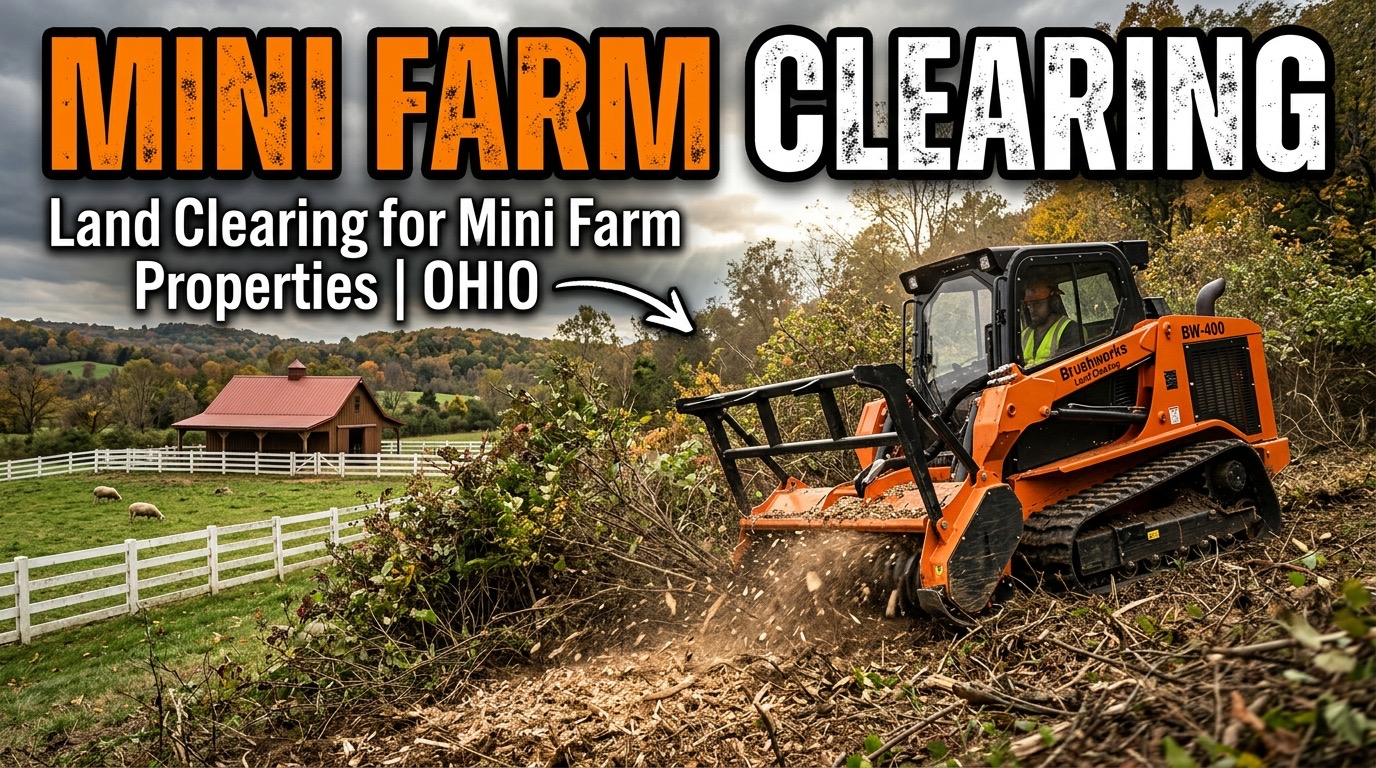
A mini farm can look simple from the road. A few acres, a driveway, maybe an old barn, a garden spot, a fenced area, and some woods or brush around the edges. Once you start trying to use it, the hidden work shows up fast. The gate is buried in honeysuckle. The old pasture edge is full of briars. The barn has no clean access for a trailer. The best garden site is shaded by volunteer trees. The back acre is technically yours, but you cannot reach it without fighting through vines.
That is the point where land clearing stops being a vague idea and becomes a practical project. Mini farm clearing is not the same as clearing a full development site. Most owners do not want every tree gone. They want usable access, safer fence lines, room for animals, a garden that gets sun, a clear work area around buildings, and trails or lanes that make the property easier to manage.
Across Cincinnati, southwest Ohio, and rural properties around the region, Brushworks sees the same pattern: small acreage owners have enough land to do something useful, but too much brush to get started cleanly. Forestry mulching and selective clearing can open the right ground without stripping the property bare.
Planning work on a mini farm property?
Send photos of the driveway, fence lines, barn access, garden area, pasture edges, and the worst brush. Brushworks can help clear the parts of the property that make the next season easier.
Start with access before anything else
Access is the first problem to solve on most mini farms. If a truck, trailer, mower, tractor, fence crew, gravel truck, or hay delivery cannot reach the work area, every other project gets harder. A property may have enough acreage on paper, but if the lane is pinched by brush or the turn into the barn is too tight, the useful part of the land is smaller than it should be.
Good access clearing usually starts at the driveway and works toward the places that get used most: barns, sheds, gardens, livestock areas, wood lots, ponds, gates, and field edges. Overhanging limbs, honeysuckle walls, low saplings, briars, and hidden stumps can all make routine work frustrating. Clearing does not have to create a wide road everywhere. It has to give equipment enough room to move without scraping paint, catching mirrors, or dropping tires into soft edges.
On Ohio mini farm properties, access also matters for emergencies. Fire trucks, utility crews, veterinarians, farriers, fuel deliveries, and repair trucks need room. If the only route to the barn disappears under summer growth, the property is harder to manage when something goes wrong.
Clear for the next real project, not a fantasy map
Mini farm owners often have a long list: chickens, goats, sheep, a garden, berries, fruit trees, a greenhouse, a pole barn, trails, firewood, compost, a pond edge, a small pasture, and maybe a market garden later. That is good energy, but clearing everything at once can waste money and create more maintenance than one family can handle.
The better approach is to clear for the next real phase. If fencing comes first, open the fence lines, gates, corners, and equipment route. If the garden comes first, clear the garden area, access path, compost location, and enough edge growth to get sun and airflow. If animals come first, clear the shelter approach, water access, handling area, and a manageable turnout or pasture edge.
Land that gets cleared but not used will grow back. In sunny openings, Ohio brush can return quickly with honeysuckle sprouts, multiflora rose, locust, briars, maple, box elder, and ragged volunteer growth. Clearing should match the maintenance plan. If you cannot mow, graze, plant, seed, fence, or maintain an area soon, it may be better to wait.
Fence lines need room to work
Fencing is one of the biggest reasons mini farm owners call for land clearing. Old fence rows collect everything: honeysuckle, grapevine, autumn olive, multiflora rose, poison ivy, dead limbs, broken wire, t-posts, and volunteer trees. New fence lines are not much easier if they run through field edges or woods that have not been touched in years.
A fence contractor needs room to set posts, stretch wire, turn equipment, hang gates, and see grade changes. The owner needs room to walk the fence after it is built. Animals need a line that can be inspected before a small problem turns into an escape. Clearing the fence line before installation saves labor and gives everyone a better look at the ground.
Old fence rows deserve caution. Wire can be wrapped into trunks, buried under leaves, hidden in vines, or stretched across the ground where a mulcher or mower can catch it. If you know there is old wire, say so. Sometimes the clearing plan needs hand work, careful cutting, or a different order of operations so equipment does not get tangled in metal.
Pasture edges should be opened with maintenance in mind
A small pasture can disappear from the edges inward. The middle may still look grassy, while the perimeter fills with brush, shade, briars, and low branches. Animals avoid some of it. Mowers cannot reach all of it. Fence access gets worse. Before long, the pasture is smaller than it looks on a map.
Forestry mulching can push those edges back and reclaim usable space without digging up the whole field. It is especially useful for honeysuckle, autumn olive, cedar, locust sprouts, multiflora rose, and small trees along pasture margins. Once the brush is opened, the owner can decide where to mow, seed, fence, or keep shade.
Do not clear every bit of shade without thinking about the animals that will use the area. Goats, sheep, horses, chickens, and other small farm animals all need different setups. Shade, drainage, footing, shelter location, water, and fence type should shape the clearing plan. The best pasture clearing supports daily chores, not just a clean photo the day the machine leaves.
Gardens and growing areas need sun, airflow, and access
A garden site can fail before anything is planted if the clearing is wrong. Too much shade, poor drainage, no room for compost, no route for mulch or soil delivery, and brush crowding the edges can make a promising spot frustrating. On a mini farm, the best garden area is often close enough to the house for daily use but open enough to get reliable sun.
Clearing for a garden may mean removing brush along the south or west edge, opening a path for a cart or small tractor, pushing back invasive shrubs, or clearing a flat staging area for soil, mulch, fencing, and tools. It may also mean leaving wind protection or privacy where it helps. Not every tree near a garden is a problem. Some are useful. The goal is to make the growing area workable.
Food plots, berry rows, orchards, and cut flower beds have similar needs. They need access, light, and room to maintain the edges. If the surrounding brush stays too close, vines and woody growth will keep reaching back in. A clean start makes the first season easier.
Barns, sheds, and outbuildings need breathing room
Old barns and small outbuildings often sit in the middle of the worst growth on a mini farm. Honeysuckle grows against siding. Vines climb corners. Saplings crowd the roof edge. Fallen limbs block doors. Old equipment, scrap metal, and wire hide in the weeds. Clearing around buildings is partly about appearance, but it is also about safety and daily use.
A clear work zone around a barn makes it easier to park trailers, unload feed, stack firewood, move tools, service equipment, check siding, and spot drainage problems. It also makes it easier to see what should not be hit by a machine: buried concrete, old foundations, wellheads, utilities, drain lines, fence posts, and junk left by previous owners.
Building edges require slower work than open field clearing. The operator has to watch for glass, metal, old wire, loose boards, and ground that changes near foundations. If a structure is fragile or unsafe, it may need hand clearing first. A good clearing plan protects the building while making it usable again.
Drainage problems show up after the brush is opened
Brush can hide water problems. A low spot may look like a green thicket until it is cleared and you see standing water, soft soil, old ruts, broken tile, or a blocked swale. Mini farms often have driveways, barn pads, small fields, gardens, and animal areas close together, so water from one area can create a problem in another.
Land clearing does not replace drainage work, but it makes drainage visible. Opening swales, ditch edges, culvert approaches, and wet field margins helps owners see where water enters, where it stalls, and where it should leave. That can guide later grading, stone, culverts, water bars, or rerouting.
For livestock and gardens, drainage matters more than the first impression. Animals standing in mud will tear up soil and fences. Gardens in wet pockets struggle. Equipment routes that stay soft will rut. If a mini farm has clay soil, shaded slopes, or low ground, plan clearing with water in mind from the start.
Use trails and lanes to make chores easier
Mini farms run on repeated chores. Feeding, watering, mowing, hauling compost, moving animals, checking fences, gathering firewood, and walking the property all need routes. A small trail or lane can save hours over a season if it connects the right places.
Some lanes need to carry equipment. Others only need to be wide enough for a wheelbarrow, garden cart, UTV, or mower. A path from the driveway to the barn, from the barn to the pasture, around a garden, or back to a woodlot can change how usable the property feels. It also helps you notice problems earlier because you actually walk the land.
When clearing trails, avoid the habit of making every route straight and wide. Curves can avoid wet ground, save good trees, protect privacy, and make the property feel better. The route should fit the land instead of forcing the land to fit a sketch.
Know what forestry mulching can and cannot do
Forestry mulching is a strong fit for many mini farm jobs because it cuts and grinds brush in place. It can handle honeysuckle, briars, autumn olive, privet, grapevine, saplings, small trees, and rough field edges when site conditions allow. The mulch left behind helps cover bare soil and reduces the amount of debris that has to be hauled or burned.
It is not finish grading. It will not make a barn pad, install fence, fix a wet driveway, remove every root, or turn rough ground into lawn in one pass. It can open the site so the next work is possible. That may be mowing, seeding, fencing, drainage, gravel, stump grinding, soil work, or building prep.
Some areas may need a different tool. Large trees, dangerous dead trees, saturated ground, steep banks, utility conflicts, heavy trash, buried wire, and work tight against buildings may require separate planning. On a small farm, using the right method in each area matters more than forcing one machine to do everything.
Mark the property before the clearing crew arrives
Marking saves time and prevents mistakes. Before equipment starts, mark property lines, corners, utilities, wells, septic fields, drain tile, private electric or water lines, livestock waterers, garden areas, desired fence lines, gates, trees to keep, wet spots, and no-go areas. If there are old dump piles, scrap metal, buried wire, or known hazards, point them out.
Photos and map screenshots help. Take pictures of the driveway, the worst brush, each work area, and the route between them. Draw lines on an aerial image if the property is hard to describe. Mini farms often have several small zones instead of one big clearing area, so a simple map can keep the scope clear.
If public utility locates are needed, call before the job. Remember that many private farm lines are not marked by public locate services. Electric to an outbuilding, water to a trough, old drain tile, propane lines, invisible fencing, and previous-owner surprises can all be outside the standard utility map.
Plan for regrowth before it happens
Clearing is the reset. Maintenance is what turns the reset into a working mini farm. Ohio brush is persistent. Honeysuckle resprouts. Briars move toward sunlight. Vines climb edges. Locust and maple seedlings show up. If cleared ground is left alone, it will start changing again quickly.
The maintenance plan should match your tools and schedule. If you have a mower, clear enough width to use it. If goats will browse a section, fence and water need to be ready. If the area will become garden, get soil prep and fencing moving. If the route is for equipment, keep the shoulders trimmed before they close in.
Targeted follow-up may be needed for invasive plants. Mechanical clearing can knock growth back hard, but some species need repeated mowing, cutting, grazing, or herbicide treatment by a qualified applicator. The right plan depends on the plant, the season, and how the area will be used.
How Brushworks approaches mini farm clearing
Brushworks looks at mini farm projects in terms of use. What needs to happen first? Where does equipment need to go? What should stay shaded? Which fence lines matter now? Where will animals, gardens, barns, drainage, and daily chores fit? Those questions shape the clearing plan.
On some properties, the best first step is opening a lane and clearing around an old barn. On others, it is fence line clearing and pasture edge reclamation. Some owners need a garden and compost area opened before spring. Others need enough back acreage reclaimed to mow, walk, or fence in phases.
The goal is practical ground. A mini farm should not feel like a construction site unless construction is actually happening. It should feel easier to use, easier to maintain, and easier to plan. Good clearing gives the owner room to work without taking away the character that made the property worth buying.
Frequently asked questions
What should be cleared first on an Ohio mini farm?
Start with access, safety, and the areas needed for the next real project. Driveways, gates, barn approaches, fence lines, garden sites, pasture edges, and equipment routes usually come before cosmetic clearing.
Is forestry mulching a good fit for mini farm land clearing?
Forestry mulching is often a good fit because it clears brush, saplings, honeysuckle, briars, and field edges without hauling every piece of debris away. It is best for opening usable ground, trails, fence rows, and rough pasture edges, not for finished grading.
How much land should a mini farm owner clear at once?
Clear enough to support the next phase without stripping the whole property. Many owners start with access, a work area, a garden or livestock zone, and the fence lines needed for the first season.
Can clearing help prepare for fencing and livestock?
Yes. Clearing fence lines, gates, corners, lane edges, and overgrown pasture margins gives fence contractors room to work and helps owners see drainage, old wire, weak trees, and uneven ground before animals arrive.
What should be marked before clearing a mini farm property?
Mark property lines, utilities, wells, septic areas, drain tile, desired fence lines, trees to keep, wet spots, garden areas, barn access, livestock zones, and any no-go areas before equipment starts.
Related articles
Pasture Reclamation Ohio
How to take back overgrown grazing ground before mowing, fencing, seeding, or livestock use.
Clearing Land for New Fence Installation Ohio
What to clear before a fence contractor starts work on rural Ohio property.
Small Acreage Land Clearing Ohio
A practical guide to opening usable space on small Ohio acreage without over-clearing.
Ready to make your mini farm easier to use?
Use instant pricing for a starting point, or send photos of the access, fence lines, barn area, garden site, and pasture edges so Brushworks can help plan the clearing.