
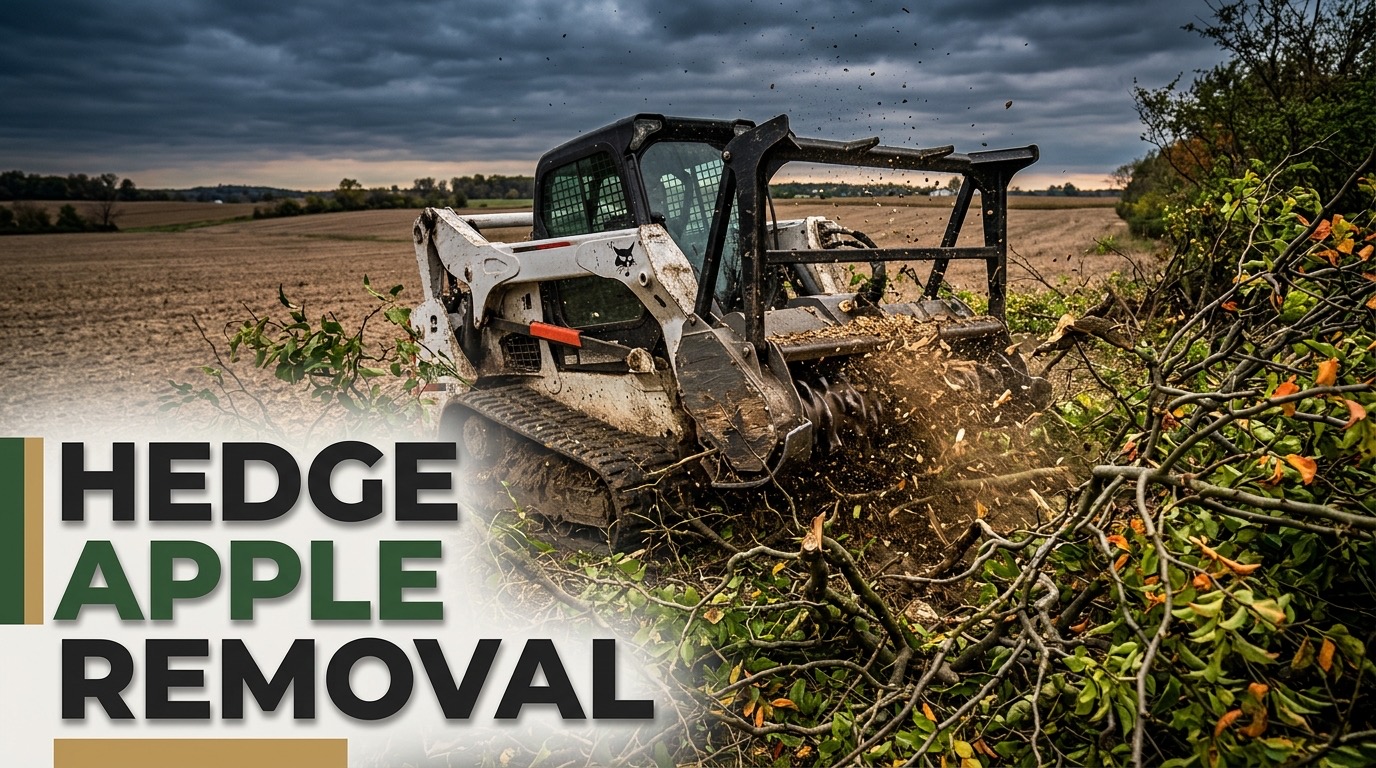
Why osage orange gets out of hand on Ohio properties
Osage orange was planted all over farm country long before modern fencing was common. Farmers used it as living fence because it grows dense, tolerates rough ground, and punishes anything that tries to push through it. That worked well when livestock pressure and regular maintenance kept the rows managed. That changes when the old farm changes hands and the fence row sits untouched for twenty years.
Around southwest Ohio, old hedge rows often mark property lines, field edges, lane borders, and creek bottoms. The original trees may be big, crooked, and full of orange heartwood. Around them are usually thousands of younger sprouts, thorny limbs, dead ash, honeysuckle, grapevine, multiflora rose, and pieces of old woven wire. By the time someone wants to build a driveway, clear a fence, reclaim a field edge, or clean up a rental property, that hedge row is not a row anymore. It has become a wall.
Brushworks clears thorny hedge apple thickets, old fence rows, and overgrown property edges across Greater Cincinnati, Clermont County, Warren County, Brown County, Butler County, and nearby parts of southern Ohio. The goal is not always to erase every tree. The goal is to open the ground you need, protect what should stay, and leave the site maintainable rather than half-cleared and bleeding you every time you walk through it.
Know what you are dealing with before you cut
A mature osage orange is easy to spot once you know it. The bark is rough and ridged. The wood is bright orange when freshly cut. The fruit looks like a green brain or a lumpy softball, which is why people call them hedge apples. Young growth often carries sharp thorns that can rip skin, puncture tires, and make hand clearing miserable.
The tree itself is not useless. The wood is rot resistant and heavy. Old trees can hold a property line, create wildlife cover, or shade a creek edge. The trouble starts when hedge grows in the wrong place or gets mixed with wire and invasive brush. A few useful boundary trees are one thing. A tangled thorn fence blocking access to half an acre is another.
Signs your hedge row needs attention
- • You cannot see or service the fence line
- • Thorns are blocking mowing, pasture access, or trails
- • Trees are growing through woven wire or barbed wire
- • Hedge apples and limbs are falling where people drive or work
- • Honeysuckle, grapevine, and rose have tied the row together
- • The row is hiding trash, dead trees, or drainage problems
- • You need room for a new fence, driveway, barn, or gravel area
Before any machine starts, decide what the finished edge should do. Are you opening a clean property line? Preparing for new fence? Reclaiming pasture? Making room for a building? Clearing a view? The answer changes how much stays and how much goes.
The thorns are only part of the problem
People remember osage orange because of the thorns, and old hedge rows cause several problems at once. The limbs are tough. The trunks are often crooked. The root flare can be awkward. Trees grow around wire and posts until metal disappears inside the wood. Vines pull crowns together. Dead limbs hang above the work area. The ground underneath may be full of holes, stumps, old glass, scrap metal, and hidden farm junk.
That is why a hedge apple job can look small from the driveway and still take real time. If an operator has to work through old fence wire every ten feet, production slows down. If the row is along a property boundary, the crew needs to know exactly where the line is. If the trees are leaning toward a neighbor, barn, power line, or road, the work may need selective cutting before mulching.
The smart approach is boring: inspect first. Walk both sides if you can. Flag wire, corners, utilities, septic areas, wells, and trees you want saved. If the row is the legal boundary, get the pins or survey information figured out before clearing. A mulcher can make a mess disappear fast, including evidence you wish you had marked.
Forestry mulching works well, when used with some judgment
Forestry mulching is a strong tool for hedge apple cleanup because it handles dense thorny brush without dragging piles across the property. Smaller osage orange stems, honeysuckle, rose, vines, saplings, and dead brush can be processed in place. The finished mulch layer helps protect soil and makes the row easier to walk, mow, spray, or fence afterward.
That does not mean every hedge tree should be shoved into a mulcher without thought. Large osage orange trunks can be hard on equipment. Wire hidden in the row is dangerous and expensive. A boundary tree tangled with a neighbor's fence may need careful cutting. A tree leaning toward a structure may need a sawyer or tree service approach before the mulcher cleans the rest.
| Site condition | Good clearing approach | Watch for |
|---|---|---|
| Young hedge thicket | Mulch stems and brush, then maintain with mowing or spot treatment | Root sprouts and thorny regrowth |
| Old fence row | Clear selectively and expose wire before final cleanup | Woven wire, posts, neighbor boundaries |
| Large mature trees | Evaluate which trees stay, which get cut, and how wood is handled | Heavy limbs, lean, equipment limits |
| Future fence line | Open a clean corridor wide enough for installers and maintenance | Stumps, grade, corner posts, gates |
A good hedge clearing job uses the machine where it shines and slows down where the row can bite back. That separates efficient clearing from an expensive repair bill.
Do not forget the old fence wire
Wire is the enemy on hedge apple jobs. Old farm fence gets swallowed by osage orange trunks, buried under leaves, wrapped in vines, and hidden under thorny sprouts. From ten feet away it may look like brush. From inside a mulching head, it is a bad day.
If you know the row used to hold livestock, assume there is wire. Walk it with gloves, loppers, and flagging tape before work starts. Mark visible woven wire, barbed wire, T-posts, old gates, braces, and corner posts. If a section is too tangled to inspect safely, say so. The crew can plan around it instead of discovering it the hard way.
This is also where property owners can save money. Pulling loose wire and obvious junk ahead of time can speed up the work. You do not need to cut every thorn by hand. Just identify the metal that could damage equipment or affect the clearing line. If Brushworks is doing the whole cleanup, we still need to know where the old fence ran and whether it matters legally.
Stumps, sprouts, and why hedge comes back
Osage orange does not give up because you cut it once. Young hedge can resprout from stumps and root systems. Seedlings can show up where fruit drops and wildlife moves seed around. If the goal is a permanent clean fence line or open field edge, the first clearing pass is only the start of control.
The right follow-up depends on the site. Some property owners want the row mulched low enough to mow and keep it handled mechanically. Some need stump treatment because new sprouts would be a problem. Some are preparing for grading, fence installation, pasture reclamation, or gravel, so the next contractor will remove or cover remaining stumps. The common mistake is treating one pass through a twenty-year hedge row as permanent removal.
Plan the maintenance before you clear. If you can mow the edge afterward, regrowth is much easier to control. If you leave a rough strip nobody can reach, hedge, honeysuckle, and rose will start rebuilding the wall. Access is part of removal.
Need thorny hedge apple cleared?
Send photos of both sides of the row, the access route, any old fence wire, and what you want the finished ground used for. We will help you decide whether it is a mulching job, selective tree removal, fence prep, or a mix.
When to save osage orange instead of removing it
Not every hedge tree is a problem. Some old osage orange trees are worth keeping, especially along a boundary, creek edge, wildlife corridor, or screen between properties. They can provide cover for birds and deer, mark an old farm line, and hold soil in places where removing the root system would create erosion risk.
The question is whether the tree serves the property you have now. A tree that shades a creek and stays out of the way may be useful. A tree growing through the only place a new fence can run is not. A row that gives privacy along the road might be worth thinning instead of wiping out. A thorn maze beside a driveway where kids, customers, or equipment move through every week should probably be opened up.
Selective clearing is usually better than emotional clearing. Keep the useful trees. Remove the brush, deadfall, vines, and problem trunks. Leave enough room to maintain the edge. That gives you the benefit of the old hedge while keeping control of the property.
Best time of year for hedge apple removal in Ohio
Fall and winter are often the easiest seasons for osage orange and hedge row clearing in Ohio. The leaves are down, visibility is better, and frozen or drier ground can make access cleaner. You can see wire, stumps, property corners, and dead limbs more easily. It is also easier to tell which trees are part of the original row and which are just brush that filled in around it.
Spring and summer work is possible, especially if the project is tied to a fence install, driveway, pasture opening, or building schedule. Just know what comes with it. Dense foliage hides wire and hazards. Poison ivy is active. Ticks are worse. Soft ground near creek bottoms or field edges may limit where equipment can travel after heavy rain.
If the row blocks a project, do not wait just because winter would be cleaner. If you have the option, scheduling hedge row work before everything leafs out usually makes the job easier to quote and easier to execute.
Cost factors for osage orange removal
Hedge apple removal is priced by what is actually on the ground. A hundred feet of young sprouts along a flat field edge is not the same job as a hundred feet of mature trees grown through woven wire beside a neighbor's barn. Tree size matters, and access and hazards usually matter more.
The main cost factors are length of row, density of thorns, tree diameter, hidden metal, slope, wet ground, proximity to roads or structures, cleanup expectations, and whether stumps need treatment or later excavation. Disposal can matter too. Mulching brush in place is efficient, while large trunks may need cut, stacked, hauled, or left depending on the plan.
Photos are the fastest way to start. Send wide shots from both ends, close-ups of the biggest trees, pictures of wire or posts, and a photo showing how equipment can reach the row. If you are clearing for fence, driveway, pasture, or building work, say that in the first message. It changes how wide and clean the corridor needs to be.
How Brushworks clears thorny fence rows
Brushworks treats hedge apple jobs like access problems, more than brush problems. First we look at what the row is blocking. Then we look for wire, boundary issues, trees to save, trees that need cut differently, and where the machine can safely work. That keeps the project focused rather than turning the whole edge into a random mulch strip.
On many Ohio properties, the best result is a clean, maintainable corridor. That might be wide enough for a mower and fence crew. It might be a trail along a property line. It might be a reclaimed field edge where pasture can come back. It might be selective thinning that keeps the best boundary trees while removing the thorny mess around them.
If your hedge row has been ignored for years, do not judge the project from the road. Walk it, mark the metal, decide what the finished ground needs to do, and get a quote based on the real mess. Osage orange is tough, but it is not unbeatable. With the right machine and a little planning, that thorn wall can turn back into usable ground.
Frequently asked questions
Are osage orange and hedge apple the same tree?
Yes. In Ohio, people often call Maclura pomifera osage orange, hedge apple, horse apple, bodark, or hedge. It is the same tough tree with orange wood, heavy green fruit, and nasty thorns on younger growth.
Should I remove every osage orange tree on my property?
Not always. Some old hedge trees mark boundaries, hold banks, provide wildlife cover, or make good visual screens. Remove the ones blocking access, wrecking fence lines, dropping limbs near work areas, or taking over ground you need to use.
Can forestry mulching clear hedge apple thickets?
Yes, forestry mulching is a good fit for osage orange sprouts, thorny brush, fence row overgrowth, and smaller trees. Larger trunks, boundary trees, and trees tangled in wire may need cutting, sorting, or a more careful plan before mulching.
Will osage orange grow back after clearing?
It can. Osage orange can resprout from stumps and roots, especially when young stems are cut without follow-up. A good plan includes stump treatment where appropriate, mowing access, and follow-up control for new sprouts.
What makes hedge apple tree removal expensive?
Cost depends on tree size, thorn density, hidden fence wire, access, slope, dead limbs, cleanup expectations, and whether the job is selective fence row cleanup or full clearing. Old woven wire inside the trees is one of the biggest time killers.
When is the best time to clear osage orange in Ohio?
Fall and winter are often easiest because leaves are down, visibility is better, and ground may be firmer. Spring and summer work can still happen, but dense foliage, ticks, poison ivy, and soft ground can slow the job down.
Related articles
Ready to clear the hedge row?
Send the photos, address, and what you need the ground used for next. We will help you open the row without pretending thorny osage orange is a weekend chore.