
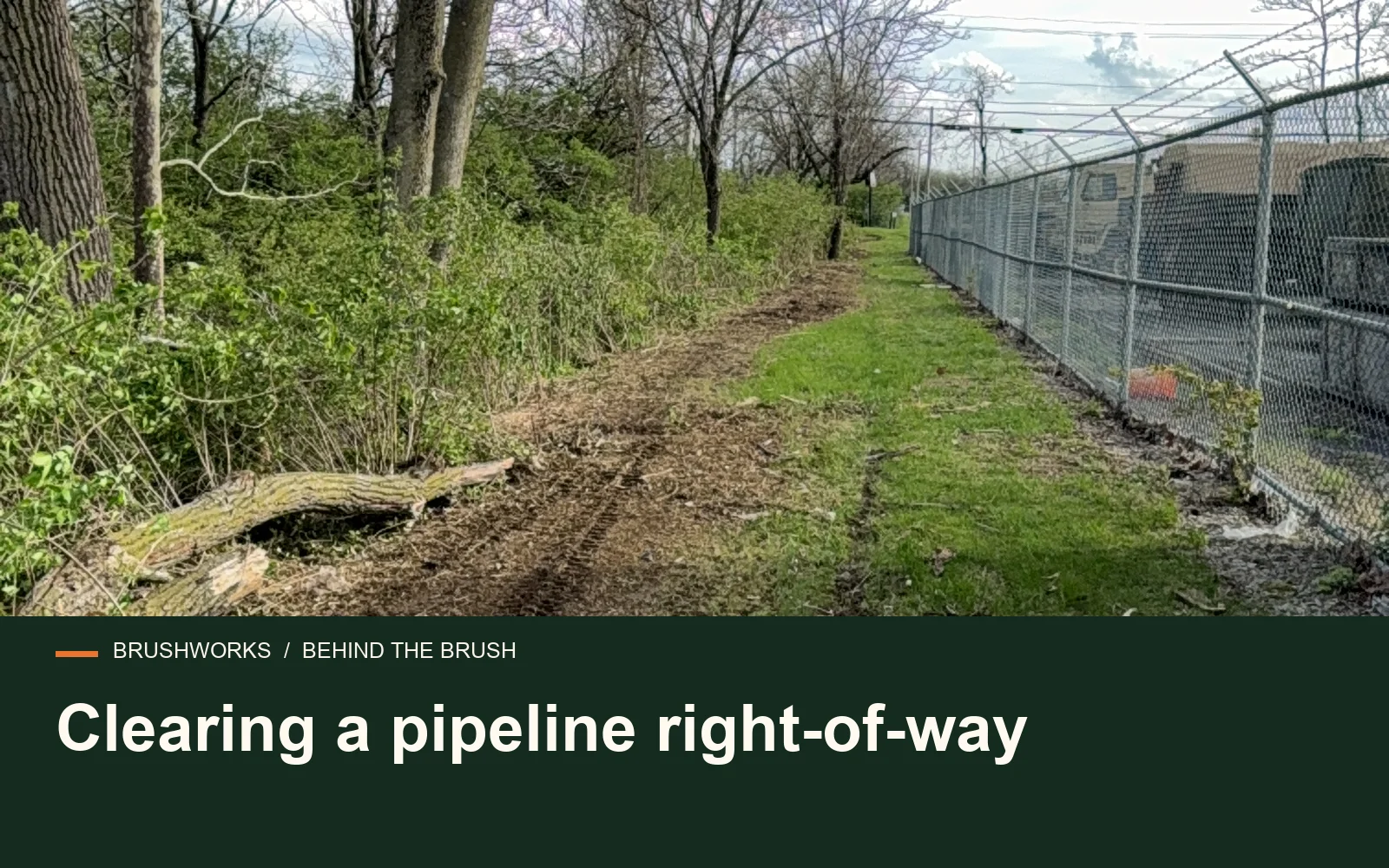
Pipeline Right-of-Way Clearing in Ohio: What Energy Companies and Landowners Need to Know

Ohio has over 50,000 miles of natural gas and petroleum pipelines buried under farms, forests, and suburban neighborhoods. Every one of those pipelines needs a clear corridor above it. If you're a pipeline operator, land company, or property owner with an easement on your land, here's what you need to know about keeping those rights-of-way clear.

Why Pipeline ROW Clearing Isn't Just Mowing Grass

Pipeline right-of-way maintenance is a different animal from regular land clearing. You're working directly over buried infrastructure that carries natural gas, crude oil, or refined products under pressure. One wrong move with the wrong equipment and you've got a safety incident, a regulatory violation, or both.

The Pipeline and Hazardous Materials Safety Administration (PHMSA) requires operators to keep their ROWs clear enough for aerial and ground patrols. Inspectors need to spot signs of leaks, erosion, third-party encroachment, and ground subsidence. Trees and dense brush make that impossible.

In Ohio specifically, the terrain makes ROW maintenance tricky. You're dealing with rolling Appalachian foothills in the east, flat agricultural land in the west, and dense suburban development in between. Each environment creates different clearing challenges—and different regulatory requirements.

Ohio Pipeline Facts

Ohio ranks in the top 10 states for total pipeline mileage. The Rover Pipeline, NEXUS Gas Transmission, and Utopia Pipeline all cross the state. Utica and Marcellus shale development has added thousands of new gathering line miles since 2015, and all of them need regular vegetation management.

The Two Types of Pipeline ROW Clearing

Pipeline clearing breaks down into two categories, and they need very different approaches.

New Construction Clearing

When a new pipeline goes in, the entire construction corridor needs to be stripped. That means removing all trees, brush, stumps, and root systems within the work area. For a typical 36-inch transmission line, the construction corridor runs 100 to 125 feet wide. That's the trench zone, the spoil side, the travel lane, and staging areas combined.

New construction clearing is aggressive. Stumps in the trench zone have to come out completely because root balls interfere with pipe installation and backfill compaction. The top of the pipe needs uniform contact with the soil around it—gaps from rotting roots create voids that lead to stress points and eventual failures.

In Ohio's Appalachian region, new construction clearing often involves steep hillsides covered in mature hardwoods. This is where equipment selection matters. A tracked forestry mulcher can handle the initial vegetation removal, but stump extraction in the trench zone usually requires an excavator with a thumb or a dedicated stump grinder.

Maintenance Clearing

This is the ongoing work—keeping vegetation from reclaiming the corridor after the pipe is in the ground. Maintenance clearing happens every 3 to 5 years on most Ohio pipelines, though high-growth areas in southern Ohio might need attention every 2 years.

The goal with maintenance is different from construction clearing. You're not ripping out every root and stump. You're managing vegetation height to maintain visibility for inspections and preventing trees from growing large enough to damage the pipeline if they fall. Grass and low ground cover are actually good—they prevent erosion and stabilize the soil over the pipe.

This is where forestry mulching is the clear winner. A mulcher grinds saplings, brush, and small trees flush with the ground without disturbing the soil. No stump pulling, no ground disruption over the pipe, no exposed soil that erodes during Ohio's spring rains.

Why Forestry Mulching Is the Best Method for Pipeline ROW Maintenance

Pipeline operators have tried everything over the years: herbicide spraying, hand cutting with chainsaws, bulldozing, and forestry mulching. Here's why mulching keeps winning the contract renewals.

No Ground Disturbance

This is the big one. Bulldozers and excavators dig into the ground. When you're working over a pipeline with 4 to 6 feet of cover, ground disturbance is a liability. Forestry mulchers ride on top of the surface and grind vegetation down. The mulch layer stays on the ground as erosion protection. The soil over the pipe stays undisturbed.

Single-Pass Efficiency

Hand cutting with chainsaws means you cut everything down, then chip it, then haul the chips out. That's three operations and three times the labor cost. A forestry mulcher does all three in one pass—it cuts, chips, and spreads mulch simultaneously. For pipeline ROWs that run for miles, this time savings adds up fast.

Access in Tight Spots

Pipeline ROWs in Ohio cross all kinds of terrain. They go through suburban backyards, across farm fields, through river bottoms, and over ridgelines. Compact tracked mulchers can get into spaces that larger equipment can't. Our FAE RCU55 remote-controlled mulcher handles slopes up to 60 degrees—which matters in eastern Ohio where pipelines cross some steep Appalachian hollows.

Mulch Prevents Regrowth

The 3 to 4 inch layer of wood chips left behind by a forestry mulcher suppresses new growth. That means your maintenance cycle stretches from every 2 years to every 3-4 years. Over a 50-mile pipeline, that one extra year between clearings saves a lot of money.

Cost Comparison

Forestry mulching for pipeline ROW maintenance in Ohio runs $2,000-$5,000 per acre. Hand cutting with removal runs $4,000-$8,000 per acre. Herbicide programs cost less up front ($500-$1,500/acre) but need annual application and come with growing regulatory scrutiny, especially near waterways in Ohio's Muskingum and Ohio River watersheds.

Ohio-Specific Regulations for Pipeline ROW Clearing

Pipeline clearing in Ohio involves multiple regulatory layers. Miss one and you're looking at fines, stop-work orders, or both.

Federal Requirements

FERC-regulated interstate pipelines must follow 18 CFR Part 380 environmental requirements. PHMSA regulations under 49 CFR Parts 192 (gas) and 195 (liquid) set minimum standards for ROW maintenance. The key requirement: vegetation cannot obstruct leak surveys or prevent patrol access.

Ohio Power Siting Board

Major transmission pipelines in Ohio need OPSB approval, which includes vegetation management plans. These plans specify what gets cleared, what gets preserved, and how the work protects sensitive areas like wetlands and stream crossings.

Stormwater and Erosion Controls

If your clearing project disturbs more than one acre—and pipeline ROW clearing almost always does—you need an NPDES stormwater permit from the Ohio EPA. That means a Stormwater Pollution Prevention Plan (SWPPP), erosion and sediment controls, and post-construction stabilization. This is another area where forestry mulching helps: the mulch layer left behind counts as ground cover for erosion control purposes.

Wetland and Stream Crossings

Ohio has strict rules about vegetation removal near wetlands and streams. Army Corps Section 404 permits and Ohio EPA Section 401 water quality certifications apply to any work in or near waterways. Many pipeline ROWs in Ohio cross streams—sometimes dozens of them along a single route. Each crossing needs to be handled according to the permit conditions, which usually means restricting clearing to specific seasons and maintaining buffer zones.

County-Level Requirements

Don't forget local rules. Many Ohio counties require erosion and sediment control plans submitted to the county soil and water conservation district. Hamilton, Warren, Clermont, and Butler counties in the Cincinnati area all have their own submission requirements and review timelines.

Planning a Pipeline ROW Clearing Project in Ohio

Whether you're a pipeline operator scheduling routine maintenance or a land company clearing for new construction, here's the process that works.

1. Review the Easement

Every pipeline easement is different. Some give the operator full clearing rights within the permanent easement. Others restrict the types of vegetation that can be removed. Old easements from the 1950s and 1960s often have vague language that creates disputes with current landowners. Know exactly what your easement allows before the first mulcher hits the ground.

2. Call 811

Yes, even pipeline companies need to call Ohio 811 before clearing their own ROW. There are often other utilities in or near the pipeline corridor—fiber optic lines, water mains, electric cables. Get everything marked. No exceptions.

3. Walk the Corridor

A pre-clearing survey identifies problem areas: washouts, encroachments, wetland boundaries, threatened species habitat, and areas where the vegetation is too large for standard mulching equipment. This survey also documents the starting condition for regulatory compliance.

4. Coordinate with Landowners

In Ohio, pipeline ROWs cross private property. Landowners have a legal right to notice before clearing work begins. Smart operators communicate early and often. Explain what's happening, when, and how the land will look afterward. Most landowners are reasonable when you treat them with respect. The ones who aren't get a lot more cooperative when you can show them the easement language.

5. Stage and Execute

For large-scale ROW clearing, staging is everything. Equipment access points, material laydown areas, fuel storage, and crew access all need to be planned before work starts. In Ohio's agricultural areas, timing around crop cycles matters—nobody wants a track loader driving through standing corn to reach the ROW.

Equipment for Pipeline ROW Clearing

The right equipment depends on what you're clearing and where.

  • Tracked forestry mulchers (200+ HP): The workhorse for most pipeline ROW maintenance. Handles saplings, brush, and trees up to 8-10 inches in diameter. Can process 1-2 acres per day depending on vegetation density.
  • Skid steer mulcher attachments: Good for lighter maintenance work and areas with access restrictions. Lower production rate but more maneuverable.
  • Remote-controlled mulchers: Essential for steep slopes and areas too dangerous for manned equipment. Ohio's pipeline corridors in the Appalachian foothills often cross grades that would tip a conventional machine.
  • Excavators with mulcher heads: Best for selective clearing where you need to reach over obstacles or work from a fixed position.

For new construction, you'll also need excavators for stump removal, dozers for grading, and sometimes hydroseeders for stabilization.

Common Mistakes in Pipeline ROW Clearing

We've seen contractors and operators make these mistakes repeatedly. They all cost money.

Clearing Outside the Easement

This happens more often than it should. A mulcher operator drifts 10 feet past the easement boundary and takes out a row of mature oaks on the landowner's property. The landowner sues, wins, and the timber value alone can run $10,000-$50,000. Always stake the easement boundaries before clearing begins.

Ignoring Seasonal Restrictions

Many Ohio pipeline permits have seasonal clearing windows tied to migratory bird nesting (typically April 1 through August 31) and mussel reproduction in streams. Violating these windows triggers USFWS enforcement and can shut down a project for months.

No Erosion Controls

Clearing a pipeline ROW and leaving bare soil without erosion controls is a guaranteed EPA violation in Ohio. Silt fence, erosion blankets, and temporary seeding need to be installed immediately after clearing in any area with exposed soil. Forestry mulching reduces this problem because the mulch layer protects the ground, but you still need controls at drainage crossings and steep slopes.

Using the Wrong Equipment Over Active Pipelines

Heavy equipment operating over active pipelines needs to stay within weight limits specified in the operator's crossing agreements. A 60,000-pound dozer might exceed the allowable ground pressure for a shallow pipeline. Always verify depth of cover and equipment weight restrictions before bringing heavy iron onto an active ROW.

Pipeline ROW Clearing Costs in Ohio

Costs vary depending on vegetation type, terrain, access, and regulatory requirements. Here's what to expect in the Cincinnati and Ohio markets.

Clearing Type Cost Per Acre Notes
Light brush maintenance$1,500-$2,500Saplings and brush under 4" diameter
Medium density clearing$2,500-$4,000Mixed brush and small trees 4-8" diameter
Heavy timber clearing$4,000-$6,000Mature trees 8"+ requiring heavy mulching
New construction (full clear)$5,000-$8,000Complete stump removal, grading included
Steep terrain premium+30-50%Appalachian foothills, remote-control equipment

Volume discounts apply for large-scale projects. A 10-mile pipeline maintenance clearing project costs significantly less per acre than a one-acre suburban easement clearing because mobilization and fixed costs get spread across more production.

Need a Quote for Pipeline ROW Clearing?

We clear pipeline corridors across Ohio, from suburban Cincinnati to rural Appalachian routes. Get a project-based price with no daily rate surprises.

Specific Ohio Pipeline Corridors We Service

Brushworks provides pipeline ROW clearing along several major corridors in Ohio:

  • Southwest Ohio: Duke Energy and Cincinnati Gas & Electric transmission and distribution corridors through Hamilton, Warren, Clermont, and Butler counties
  • Central Ohio: Columbia Gas and Dominion Energy gathering and transmission lines in Fairfield, Pickaway, and Hocking counties
  • Appalachian Ohio: Utica and Marcellus shale gathering lines in Monroe, Belmont, Noble, and Guernsey counties
  • Northern Kentucky crossings: Interstate pipelines crossing the Ohio River into Boone, Kenton, and Campbell counties

We run multiple crews and can handle long-distance ROW clearing projects that need consistent quality over many miles. Each crew operates with GPS-tracked equipment so the operator has real-time progress data.

Working with Landowners on Pipeline Easements

If you're an Ohio property owner with a pipeline easement on your land, here's what to expect when the clearing crew shows up.

The pipeline operator or their contractor will usually notify you 2-4 weeks before clearing begins. They have a legal right to access the easement for maintenance, but they also have to minimize damage to your property outside the easement boundaries.

After clearing, the ROW should look clean—not destroyed. With forestry mulching, there's no bare soil, no stumps sticking up, and no burn piles. The mulch layer breaks down over 1-2 years and grass fills in naturally. If the contractor leaves ruts, damaged gates, or a mess outside the easement, document it and contact the pipeline operator. They're responsible for restoration.

Some landowners try to plant trees or build structures on pipeline easements. Don't. The operator will remove them, and most easement agreements say they're not liable for the cost. If you're unsure what your easement allows, have a real estate attorney review the document.

The Bottom Line on Pipeline ROW Clearing in Ohio

Pipeline right-of-way clearing is specialized work. It combines land clearing skills with regulatory knowledge, safety protocols, and an understanding of buried infrastructure. The cheapest bid from a general land clearing company often turns into the most expensive project when they trigger a permit violation or damage a pipeline coating.

Forestry mulching is the right method for most pipeline ROW maintenance in Ohio. It's fast, it protects the ground over the pipeline, it meets erosion control requirements, and it extends the time between maintenance cycles. For new construction, mulching handles the initial vegetation while specialized excavation equipment handles stump removal in the trench zone.

If you're a pipeline operator, land company, or project manager looking for ROW clearing in Ohio, contact Brushworks for a project-based quote. We've cleared pipeline corridors from suburban Cincinnati to deep Appalachian Ohio, and we know the regulatory requirements in every county we work in.