
Before you start
- Choose lawn, path, play, and screening zones separately.
- Check shade and drainage before planning grass.
- Budget for stumps, grading, and seedbed work where needed.
Thinking about expanding into a wooded backyard?
Send the address, photos from the house toward the woods, and a rough idea of what you want the space to become. Brushworks can help plan a selective clearing project that fits the lot.
Start with the finished use
Before cutting starts, decide what the new backyard space needs to do. A play area needs different clearing than a walking trail. A dog fence needs clean lines and visibility. A garden needs sun and access to water. A fire pit needs room to sit, move, and keep flame away from low limbs and dry brush. A shed or garage approach needs enough clearance for delivery, gravel, and later maintenance.
That finished use decides the clearing line. If the purpose is a larger lawn, the edge should be shaped so a mower can turn without fighting stumps, roots, and awkward corners. If the purpose is a natural sitting area, the crew may leave more canopy and focus on removing honeysuckle, vines, deadfall, and thorny growth. If the purpose is a trail, the route should follow better ground instead of forcing a straight line through wet spots.
This is where many backyard projects go sideways. A homeowner says, "clear the woods back there," but the real goal is a level spot for a swing set or a clean view from the patio. Say that up front. The more practical the target, the better the finished space will be.
Do not clear away the trees that make the yard better
Most wooded backyard edges have a mix of good and bad growth. Mature oaks, maples, walnuts, sycamores, beeches, and tulip poplars may be worth keeping. They give shade, structure, and a finished look. The problem is often underneath them: bush honeysuckle, grapevine, multiflora rose, greenbrier, poison ivy, dead limbs, storm debris, and crowded saplings.
Selective clearing can remove the rough lower layer without turning the yard into a bare field. That matters in Cincinnati neighborhoods where privacy is part of the value of the lot. It also matters on hot summer afternoons. A yard that keeps good shade can be more comfortable than a fully opened yard that bakes all day.
Mark the trees you want to keep before the crew arrives. Use flagging tape, paint, or a clear map. If there are trees you are unsure about, talk through them on site. Some trees look fine from the house but are hollow, leaning, split, or wrapped in vines. Others may look messy in winter but are healthy and useful. The goal is not to save every tree. The goal is to avoid losing the good ones by accident.
Cincinnati wooded lots often mean honeysuckle first
For many backyard expansion jobs in southwest Ohio, the first fight is bush honeysuckle. It grows thick along wooded edges, fences, creek corridors, ravines, and old farm lots. It leafs out early, holds leaves late, and blocks light from reaching the ground. Under a heavy honeysuckle layer, a backyard can feel smaller than it really is.
Removing honeysuckle can change the whole property. Suddenly you can see the grade. You can walk to the back line. You can spot old fence, trash, drainage problems, or trees that need attention. You may also find that the woods are deeper, steeper, wetter, or cleaner than expected. That is useful information before you commit to lawn, fencing, grading, or a larger backyard project.
Honeysuckle also comes back if it is ignored. Mechanical clearing opens the ground, but roots and seed can push new growth. Some properties need mowing, follow-up cutting, or targeted invasive plant treatment from a qualified applicator. If you want the expanded yard to stay open, plan the second season before the first season ends.
Watch the property line before the brush is gone
This matters most when the project opens visibility. A thick wall of brush may have hidden a property line disagreement for years. Once it is gone, everyone can see the change. A survey, marked pins, or a clear agreement with the neighbor can prevent a small clearing job from turning into a long argument.
It is also worth thinking about what the neighbor will see after the work. You may want a larger yard, but you may not want a direct view into the next patio. Leaving a screen of better trees or a softer wooded strip can make the expanded yard feel more private on both sides.
Access decides what equipment can do
Backyard clearing is often limited by how equipment reaches the work area. A wide open rural lot is simple. A Cincinnati backyard with a narrow side gate, retaining wall, soft lawn, septic area, overhead wires, steep slope, or tight turn is different. The machine may need a clear route from the driveway to the woods, or the work may need to be staged by hand in tighter spots.
Before the job, walk the access route. Measure gates. Look for low branches, landscape beds, downspout drains, sprinkler heads, invisible fence, private electric, gas lines, septic components, and soft areas that could rut. If access crosses finished lawn, talk about weather and ground conditions. Waiting for drier ground can be cheaper than fixing turf damage afterward.
Drainage can change after the woods open
Clearing a wooded backyard edge changes sunlight, leaf cover, and how people use the ground. It can also expose drainage patterns that were hidden under brush. Cincinnati clay, ravines, creek edges, shallow swales, and old downspout routes all need attention. A new lawn area will not work well if storm water runs through the middle of it.
Look for low spots, wet weather flow, standing water, soft soil, and erosion before clearing. If the area sits below the house, pay attention to downspouts and sump discharge. If it sits near a creek, ditch, or steep slope, be careful about removing stabilizing vegetation without a plan. Brush clearing can make maintenance easier, but it should not send water where it does not belong.
Forestry mulching leaves material on the ground, which can help cover exposed soil. It is still not a drainage system. If the expanded backyard will become lawn, patio space, or a play area, you may need grading, soil work, seeding, sod, drains, or stone after clearing. Opening the woods is often the first phase, not the finish line.
Forestry mulching leaves a rough natural surface
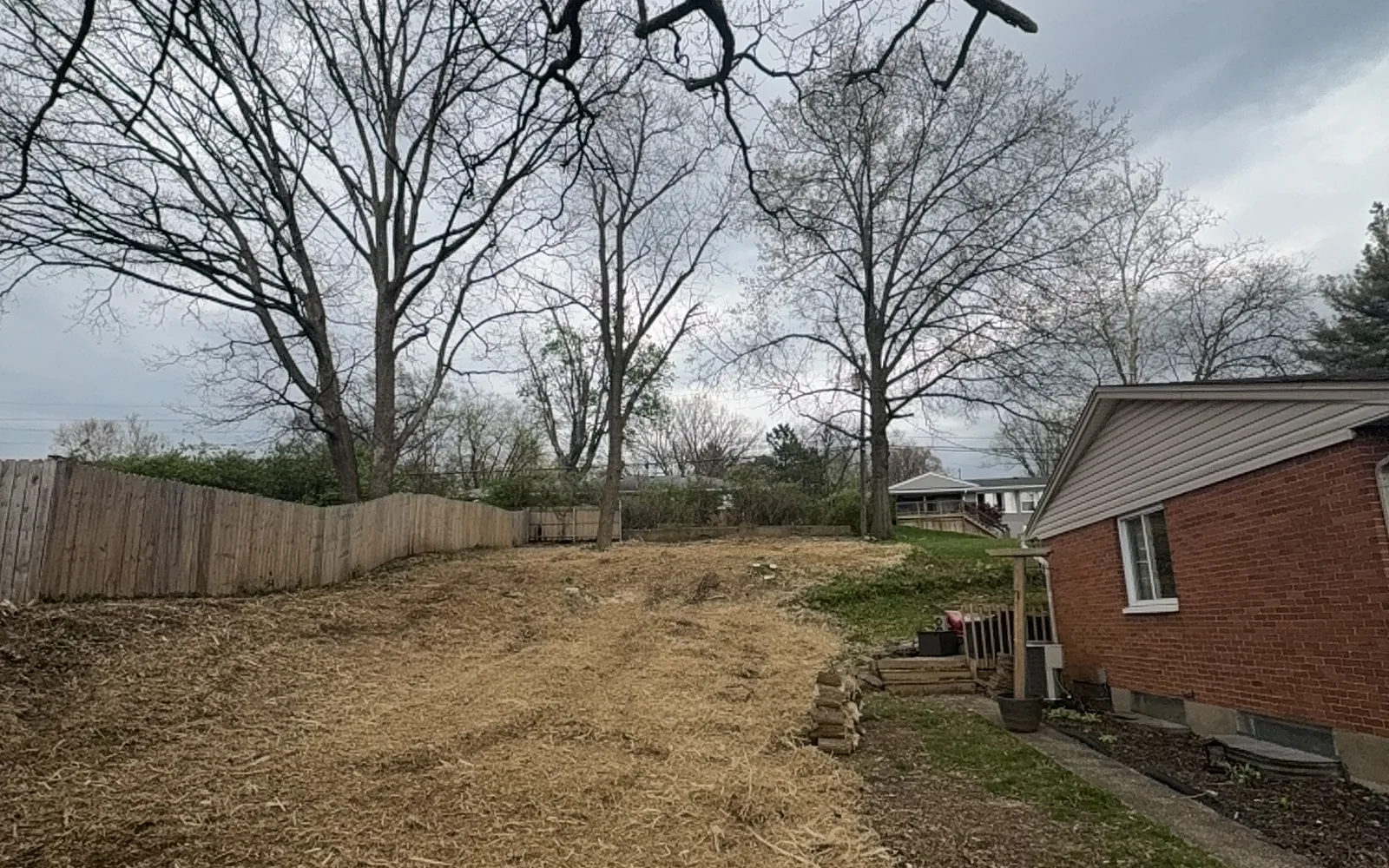
Forestry mulching is a good fit for many wooded backyard expansion projects because it grinds brush and small trees in place. Instead of dragging piles through the yard or hauling brush away, the machine turns the growth into mulch. The result is cleaner than a tangled brush pile, and the owner can walk the area right away in many cases.
Plan the transition from lawn to woods
The edge between yard and woods is where maintenance usually succeeds or fails. If the line is too jagged, too narrow, or full of stump clusters, mowing becomes annoying. If the line is cut too hard, the yard may feel exposed. If the edge is left with vines and invasive shrubs, the woods will start moving back into the lawn.
A clean transition might be a mowable curve, a mulched natural edge, a trail, a fence line, or a planted buffer. The right answer depends on how the family uses the yard. Kids and dogs may need open sight lines. A fire pit may need a wider cleared pocket. A garden may need more sun. A quiet sitting area may work better under partial shade.
Think about where the mower turns, where leaves will collect, where snow or rain will move, and where new sprouts will be easy to spot. A backyard expansion should make weekly maintenance simpler, not leave behind a shape that only looked good on the day the machine left.
Agree on the handoff
Before work begins, define what the next person needs to find on site. A rough mulched opening may still contain roots, stump remnants, and uneven ground. Grading, structural preparation, planting, surfacing, and specialist tree work are separate unless explicitly included.
Keep the marked work map with the quote. At completion, compare the limits and finish, document any follow-up, and decide who will maintain the area. Photos help record the result, but they do not replace checking the ground and access.
Plan the work for your property
Send the site address, recent photos, a marked clearing area, and the finish you want. We can discuss where clearing fits and what needs a different trade.
Discuss your project → Explore pricing