
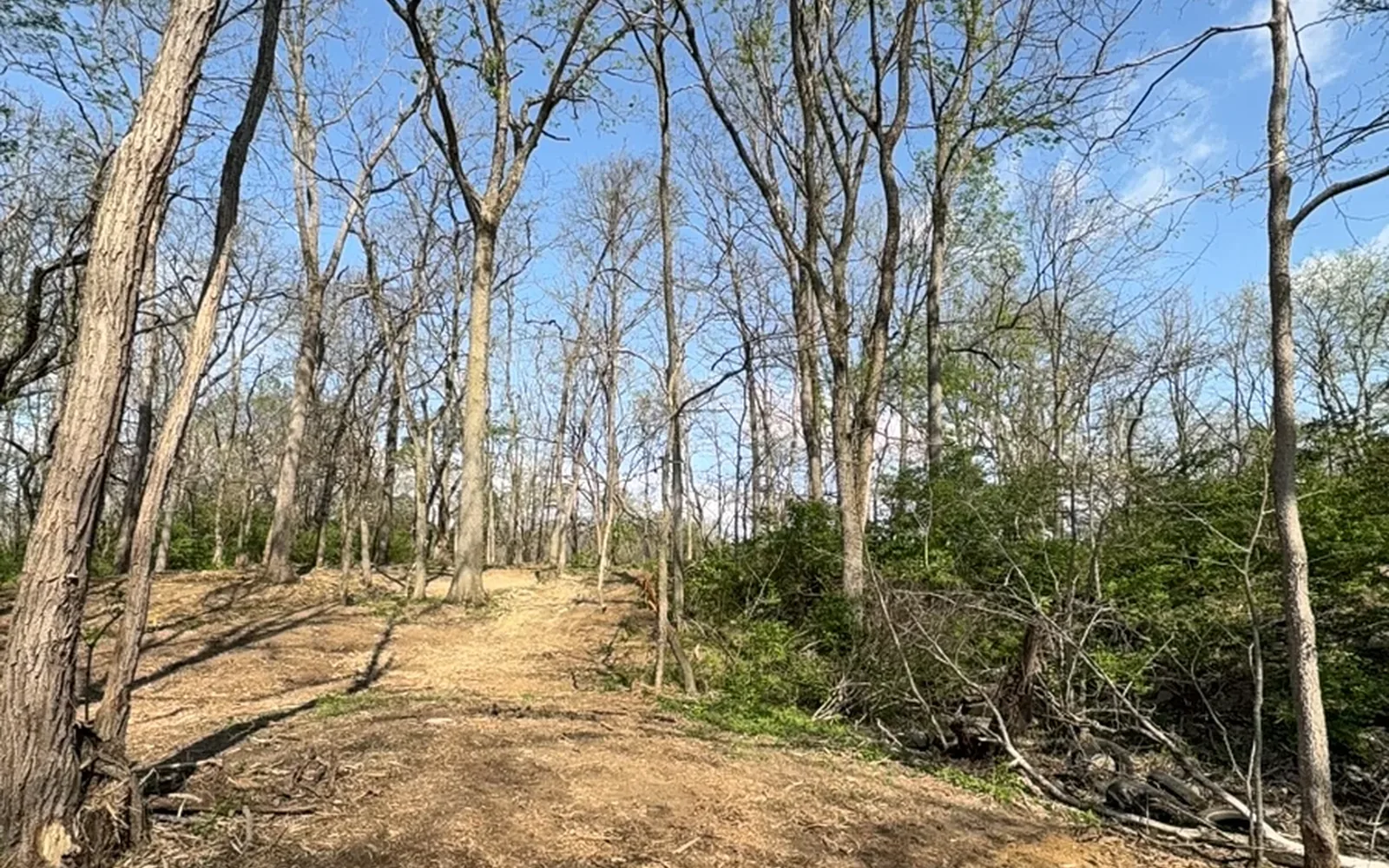
Clearing Overgrown Driveway Entrances Cincinnati
A driveway entrance should be easy to see, easy to use, and open enough for the vehicles that actually need to get in.

Overgrown driveway entrances are easy to ignore until they start causing daily problems. A few low limbs turn into scratches down the side of a truck. Honeysuckle and grapevine swallow the ditch. Saplings grow tight to the culvert. The mailbox disappears behind brush. Pulling out onto the road becomes a slow creep because you cannot see around the corner.
In Cincinnati and the surrounding Ohio townships, driveway entrances take a beating from fast summer growth, clay soil, roadside drainage, snow plows, storm debris, and years of "we will get to it later." Rural lots, wooded parcels, old farm lanes, long gravel drives, and back acreage often have the same issue: the entrance still technically exists, but it is no longer working well.
Clearing the entrance is not just a cosmetic cleanup. It can make the property easier to find, safer to enter, easier for contractors to access, and simpler to maintain. It can also reveal problems that were hidden under the brush, including plugged culverts, washed ditches, broken pipe, buried fence, leaning trees, and tight turn angles.
Brushworks clears overgrown driveway entrances, wooded access points, road edges, fence line openings, and rural property approaches around Greater Cincinnati. The best results come from treating the entrance like a working access point, not just a strip of brush to knock down.
Need your driveway entrance opened up?
Send photos from the road, photos looking out from the driveway, and the property address. Brushworks can help clear the brush, expose the entrance, and make access easier to use.
Why driveway entrances get out of hand
Most driveway entrances are cleared once when the drive is built, then left alone until the brush catches up. That may work for a few years, but the edge of a driveway is a perfect place for fast growth. Sun hits the opening. Water runs toward the ditch. Birds drop seed along fence rows. Honeysuckle, multiflora rose, grapevine, autumn olive, box elder, locust, maple, and volunteer trees take advantage of the light.
Roadside growth is also harder to mow than a yard. The ditch may be too steep. The shoulder may be soft. The culvert ends may be hidden. There may be traffic close by. By the time the entrance looks bad from the road, the root systems and woody stems are often already established.
Older Cincinnati-area properties can be worse because the entrance may have been cut for smaller vehicles. A lane that once handled a pickup may now need to handle delivery trucks, dump trailers, skid steers, campers, emergency vehicles, tree crews, or gravel trucks. If the opening never gets widened or cleaned up, every trip in and out becomes harder than it needs to be.
Sight lines matter more than neat edges
A clean-looking entrance is nice. A visible entrance is better. The first thing to look at is whether a driver can see enough of the road before pulling out. Brush at eye level, low branches, vines on fence posts, tall weeds, and saplings near the shoulder can all block the view.
Sight-line needs change from one driveway to the next. A slow residential street is different from a country road with hills, curves, and fast traffic. Some entrances sit below the road grade. Some come out at an angle. Some are tucked close to a bend where even a few feet of brush can make the difference between seeing traffic and guessing.
Clearing for sight lines does not always mean clear-cutting both sides. It means opening the view where drivers need it. Often that includes removing brush at the road edge, trimming or mulching back saplings, lifting low limbs, and cleaning the ditch line enough that the entrance reads clearly from both directions.
Expose the culvert before you add more gravel
Many rough driveway entrances are drainage problems wearing a gravel disguise. If water cannot get through the culvert or along the ditch, it will find the driveway. It will wash stone into the road, cut ruts at the entrance, hold mud where tires turn, and soften the shoulder.
Brush often hides the real issue. Honeysuckle grows over the pipe. Leaves and sticks pack into the inlet. Soil builds up around the outlet. Grass and roots narrow the ditch until water jumps the entrance instead of passing through it.
Before spending money on more stone, expose the culvert ends and the ditch. You may find that the pipe is plugged, crushed, too small, set too high, buried, or missing altogether. Brushworks can clear the vegetation so the drainage problem can be seen. Culvert repair, ditch regrading, and gravel work may still need a road contractor or excavator, but they will be working from a clearer picture.
Make room for real vehicle turns
A driveway entrance that works for a compact car may not work for the vehicles that service the property. Firewood deliveries, mulch trucks, gravel trucks, moving trailers, concrete crews, septic trucks, utility crews, and equipment trailers all need more room than a daily driver.
Overgrown corners make the turn feel tighter than it is. Branches drag along mirrors. Saplings crowd the inside radius. Brush hides a drop-off at the ditch. Drivers swing wide to avoid limbs and end up too close to the opposite shoulder.
Clearing the entrance can restore useful width without changing the driveway surface. In some cases, the brush removal shows that the stone base is already wider than it looked. In other cases, it shows that the entrance needs more gravel, a wider apron, or a better turn radius. Either way, clearing first helps keep the next step honest.
Do not ignore the road right-of-way
Driveway entrances sit in a sensitive area because private access meets public road drainage. Cincinnati-area properties may connect to a city street, township road, county road, or state route. The rules are not the same everywhere.
Light vegetation clearing on your side of the entrance is one thing. Changing a culvert, widening the apron, altering ditch flow, cutting in a new entrance, or working close to the paved road can require approval from the road authority. On some roads, the right-of-way extends farther from the pavement than property owners expect.
Before changing the shape of the entrance, check who controls the road. Hamilton County, Clermont County, Warren County, Butler County, and local townships may each have their own process. If the entrance touches a state route, expect a different level of review. Clearing brush so the site can be inspected is often a good first step, but do not assume every roadside change is yours to make.
Forestry mulching can clean up thick entrance growth
Forestry mulching is useful around overgrown entrances when the problem is woody brush, small trees, vines, invasive shrubs, and tangled understory. The machine can chew material down in place and leave a layer of mulch instead of a pile of brush waiting to be hauled away.
That can work well along rural driveway shoulders, wooded lane openings, old farm access points, field entrances, and brushy road edges where the goal is to restore visibility and access. It is especially helpful when honeysuckle or vines have made the entrance feel like a tunnel.
Mulching is not the answer for everything. It does not pave, grade, compact stone, install pipe, fix asphalt, or remove every stump below ground. It also should not be used blindly around utilities, buried wire, mailboxes, signs, fences, culvert ends, or unknown debris. The entrance should be walked and marked before equipment starts cutting.
What to mark before clearing
Marking saves time and prevents expensive mistakes. Start with the obvious items: mailbox, address sign, gate posts, fence corners, culvert ends, ditch line, driveway edge, underground utilities, landscape stones, survey markers, and trees you want to keep.
If you have an invisible dog fence, private electric line, water line, irrigation line, drain tile, old phone line, or anything else that may not be covered by a public utility locate, mark it clearly. Call 811 before any digging, stump removal, trenching, post work, or grading. For vegetation-only clearing, public locates may not mark every private line, so the owner still needs to share what they know.
It also helps to mark the desired view. Stand where the driver sits when pulling out and point to the brush that blocks traffic. Stand on the road and look back at the entrance. If delivery drivers miss the driveway, ask why. Sometimes the highest-value work is not the thickest brush, but the few stems blocking the line of sight.
Gates, posts, and address signs need space
A gate can make a rural entrance more useful, but only if there is room to use it. If the gate sits too close to the road, a truck and trailer may stop in the lane while someone gets out to unlock it. If brush crowds the hinge side, the gate may not open fully. If the keypad, chain, or lock is buried in vines, the entrance becomes a hassle every time it rains or snows.
Address signs matter too. Emergency responders, delivery drivers, contractors, and guests need to identify the property quickly. A good entrance clearing plan keeps the sign visible from both directions and leaves enough room to maintain around it later.
Posts and fencing should be protected during clearing. Old wire can hide in leaves and vines. A forestry mulcher does not enjoy finding woven wire, cable, chain, or steel posts. If the entrance has old farm fence on either side, assume there is more wire than you can see.
Think about winter before you clear in summer
Summer brush makes the entrance feel narrow. Winter use proves whether it actually works. Snow plows need somewhere to push. Ice makes tight turns less forgiving. Bare branches hang lower after storms. Gravel shoulders soften during freeze-thaw cycles. What feels acceptable in June may be a problem in January.
For Cincinnati-area driveways, think about where plowed snow will go and whether brush is already occupying that space. Low limbs near the entrance can catch on plow trucks, salt trucks, delivery vans, and emergency vehicles. A little extra clearance near the road can prevent winter damage later.
If the driveway serves a cabin, farm lane, rental, equipment yard, or back acreage, winter access may be occasional but important. The entrance should be open enough that someone can find it and use it when the ground is not perfect.
How much should you clear?
There is no single width that fits every entrance. A short city driveway, a wooded residential lot, a farm field entrance, and a half-mile gravel lane all need different work. The right amount depends on road speed, ditch depth, driveway angle, vehicle size, drainage, the amount of growth, and what the property is used for.
As a practical rule, clear enough to make the entrance visible, restore safe sight lines, keep vehicles from rubbing brush, expose the culvert and ditch, and leave room for maintenance. Do not clear so aggressively that you remove useful privacy, destabilize a steep ditch, or create a bare muddy slope that will erode.
Selective clearing often works best. Keep healthy trees that frame the driveway if they are not blocking sight lines or threatening the road. Remove leaning, dead, invasive, or poorly placed growth. Open the corners where vehicles turn. Clear the ditch enough to see and maintain it.
What photos help with a quote
Good photos make driveway entrance estimates easier. Take one photo from across the road looking at the entrance, one from each direction on the road, one from the driveway looking out, and a few close photos of the thickest brush or culvert area. If the driveway is hard to see from the road, include that too.
Tell the contractor what problem you want solved. Is the entrance hard to find? Are vehicles scraping? Is the sight line blocked? Is water washing stone into the road? Are delivery trucks refusing to enter? Are you preparing for gravel, a gate, a new home build, or regular equipment access?
A marked screenshot from Google Maps or your county GIS can help show property lines, driveway length, road name, and where the work should stop. If there are utilities, fences, signs, or culverts to protect, mention them before the quote.
Keep it maintainable after the first clearing
The first clearing gets the entrance back under control. The next few seasons decide whether it stays that way. Cincinnati brush grows fast, especially where sunlight hits the edge of the woods. Honeysuckle, briars, grapevine, locust sprouts, and volunteer maples will try to close the opening again.
Plan a maintenance routine that matches the property. Mow what can be mowed. Trim low limbs before they rub vehicles. Keep the culvert ends visible. Cut sprouts while they are small. Watch the ditch after heavy rain so washouts do not surprise you later.
If invasive shrubs are heavy, mechanical clearing may need follow-up treatment from a qualified applicator. Cutting honeysuckle or autumn olive without a plan can lead to thick regrowth. The goal is not a one-day clean look. The goal is an entrance you can keep open without fighting it every year.
How Brushworks handles driveway entrance clearing
Brushworks looks at driveway entrances as access, drainage, and visibility problems first. We want to know how the entrance is used, what vehicles need to get in, where the sight line is blocked, whether the culvert is visible, and what needs protected before cutting starts.
For some properties, the work is a simple brush and limb cleanup. For others, it is the first step before gravel, culvert repair, a gate installation, driveway widening, construction access, or reclaiming an old lane. Clearing makes those next decisions easier because everyone can finally see the shape of the entrance.
If your Cincinnati driveway entrance has disappeared into brush, do not wait until a delivery truck, storm, or drainage problem forces the issue. Open it enough to see, turn, drain, and maintain. That is the difference between an entrance that only exists on a map and one that works every time you use it.
Frequently asked questions
When should I clear an overgrown driveway entrance?
Clear it when brush, vines, saplings, or low limbs block sight lines, hide the culvert, rub vehicles, narrow the turn, or make the entrance hard to find from the road. It is easier to fix early than after woody growth takes over both shoulders.
Can forestry mulching clear a driveway entrance?
Forestry mulching can be a good fit for clearing brush, small trees, honeysuckle, vines, and saplings around driveway entrances. It does not replace culvert installation, gravel work, asphalt repair, drainage pipe replacement, or final grading.
How much should be cleared for driveway sight lines?
The right amount depends on road speed, hills, curves, ditch depth, entrance angle, and local rules. Clear enough so drivers can see oncoming traffic before pulling out and so vehicles on the road can see the entrance in time.
Should I clear around a culvert before replacing gravel?
Yes. Exposing the culvert, ditch, and water flow before adding gravel helps show whether the entrance has a drainage problem. Covering a plugged culvert with more stone usually makes the repair harder later.
Do Cincinnati driveway entrance projects need permits?
Permit needs vary by city, township, county road, state route, right-of-way, culvert work, and new or widened entrance plans. Check with the local road authority before changing a driveway connection, ditch, culvert, or roadside drainage.
Related articles
Driveway Access Clearing Ohio
How to cut, reopen, or improve access routes through wooded Ohio property.
Property Line Clearing Ohio
What to know before clearing brush along boundaries, fence rows, and access edges.
Land Clearing Warren County Ohio
Costs, local considerations, and site prep for Cincinnati-area properties north of the city.
Ready to reclaim the entrance?
Use instant pricing for a quick starting point, or send photos of the entrance, culvert, road view, and driveway approach for a project quote.
