
Land Clearing Warren County Ohio: Costs, Permits, and What to Expect
Warren County has fast-growing suburbs, old farms, wooded lots, creek bottoms, and brushy back acreage. Clearing it well starts with knowing what the land needs to become.
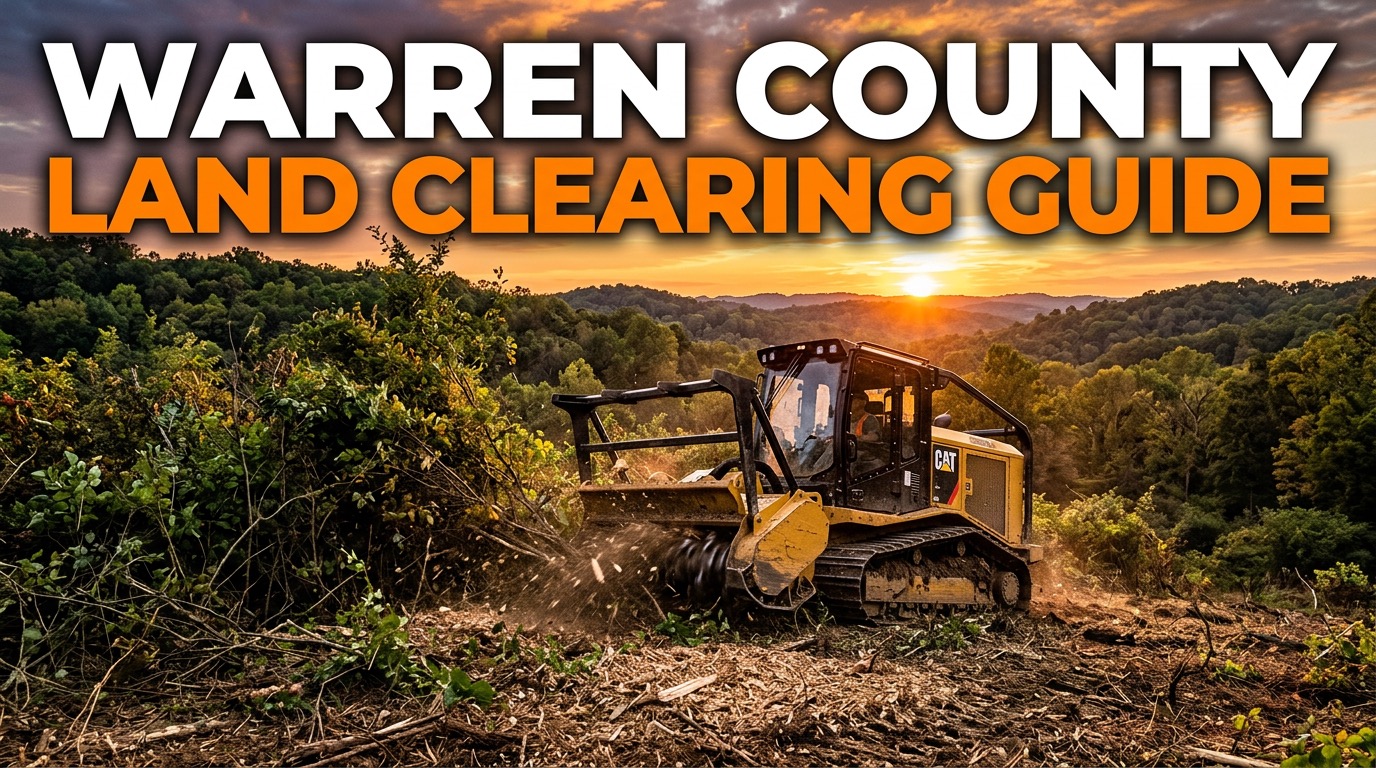
Land clearing in Warren County can look simple from the road. A wooded edge behind a Mason house. A brushy field outside Lebanon. A fence row near Waynesville. A future driveway in Turtlecreek Township. The work is often more complicated once you walk it.
Southwest Ohio grows brush fast. Bush honeysuckle fills the understory. Multiflora rose and grapevine tie everything together. Dead ash drops limbs into the mess. Locust, osage orange, autumn olive, callery pear, cedar, and volunteer saplings move into old farm edges and unmanaged lots. After a few seasons, land that used to be mowable becomes ground you cannot see, walk, fence, sell, or build on.
The right clearing method depends on the next use. Clearing for a custom home near Mason is different from opening trails on hunting land, cleaning a subdivision common area, preparing a barn site, reclaiming pasture, or clearing a lane for a surveyor. The goal is not to flatten everything. The goal is to open the right ground without creating drainage trouble, unnecessary erosion, or a follow-up mess for the next contractor.
Start with the finished use
Before asking what land clearing costs, decide what the property needs to do after the work is done. That answer controls the work limits, machine choice, finish level, and cleanup.
If you are clearing for a driveway, the route needs enough width, overhead clearance, turning room, and drainage planning. If you are clearing for a house, barn, or detached garage, the builder or excavator may need a larger work area for trucks, stone, dumpsters, concrete, utilities, and staging. If you are opening a backyard, the focus may be privacy, mowable edges, and keeping shade trees. If you are clearing a fence line, the line needs to be visible and workable for the fence crew.
Warren County has a lot of properties where selective clearing makes more sense than stripping the whole parcel. Good oaks, walnuts, hickories, maples, and sycamores are worth saving. The problem growth is often the middle layer: honeysuckle, vines, thorny brush, and saplings that block the land from being used. Marking what should stay is just as important as marking what should go.
Need land cleared in Warren County?
Send Brushworks the address, photos, and what you want to do with the property next. We can help you price the job and choose the cleanest clearing method.
What affects land clearing cost in Warren County
Cost is not just acreage. A half-acre of dense honeysuckle, wild grapevine, hidden wire, and soft ground can take more care than two open acres of light saplings. The biggest cost drivers are brush density, tree size, access, slope, wet ground, hidden debris, finish expectations, and whether hauling or follow-up work is required.
Access matters right away. Can equipment get through the gate? Is there room to unload? Are there low wires, narrow drives, culverts, retaining walls, soft shoulders, or neighbors who need room to pass? A Warren County lot in a newer subdivision can be tight even if the work area itself is small. A rural parcel may have plenty of space but a long, rough approach.
Terrain also changes the price. The county has flat farm ground, rolling fields, wooded ravines, creek corridors, and clay slopes that get slick after rain. Steep or wet work needs a slower pace and sometimes a different machine. That is still better than rutting the site so badly that grading and repair become the next bill.
Finish level matters too. Forestry mulching leaves a mulch layer and a rough natural surface. That can be perfect for trails, field edges, fence rows, and low-maintenance open ground. It is not the same as lawn prep, building pad prep, or gravel base prep. If the next step is turf, stone, concrete, or construction, plan that phase separately.
Permits and rules to check before clearing
Many routine brush clearing jobs do not need a special clearing permit. Still, Warren County properties can have rules tied to water, roads, slopes, subdivisions, and construction. It is better to ask early than to find out after the machine is already working.
Check before clearing near streams, creeks, ditches, ponds, wetlands, floodplain, road right-of-way, stormwater basins, steep slopes, or protected common areas. If the clearing is part of a building project, talk to the builder, surveyor, excavator, or local zoning office first. Septic layouts, driveway entrances, culverts, sediment control, and limits of disturbance can all affect where clearing should happen.
Rules can differ between Mason, Lebanon, Springboro, Franklin, Carlisle, South Lebanon, Waynesville, Morrow, Maineville, townships, HOAs, and unincorporated areas. Warren County Soil and Water is also worth checking when erosion, drainage, streams, or construction disturbance may be involved.
The practical rule is simple: if the job touches water, roads, utilities, grading, septic, or new construction, slow down and confirm the limits first. A small buffer can save a large problem.
Forestry mulching versus bulldozing
Forestry mulching and bulldozing are different tools. A forestry mulcher grinds brush, vines, saplings, and small trees in place. It is a strong fit for overgrown lots, trails, fence rows, invasive brush, field edges, hunting access, utility paths, and selective clearing around trees you want to keep.
Bulldozers and excavators are for earthmoving. They make sense for house pads, driveway base work, stump removal, final grading, pond work, drainage correction, and major site prep. They also disturb more soil. On Warren County clay, that can mean mud, erosion, and rough cleanup if the work is done too early or too broadly.
Many projects go best in phases. Mulch first to open visibility and access. Then bring in excavation only where grade, stone, culverts, foundation work, or stump removal is actually needed. That sequence keeps soil disturbance under control and gives the next contractor a cleaner site.
Common Warren County land clearing projects
New home and outbuilding prep is common around Mason, Lebanon, South Lebanon, Maineville, and the surrounding townships. Property owners need a lane opened, a building corner exposed, or a wooded lot thinned before survey, septic testing, excavation, or construction layout. A careful first pass can help everyone see the real site.
Backyard and lot reclamation is another steady need. Older properties and wooded subdivision edges can get swallowed by honeysuckle, privet, vines, and saplings. Owners often do not want every tree removed. They want to walk the ground, mow the edge, install a fence, protect privacy, and stop losing usable yard each year.
Rural parcels around Waynesville, Morrow, Turtlecreek Township, Clearcreek Township, Harlan Township, and Union Township often need fence rows, pasture edges, farm access, trails, and hunting lanes opened. These jobs are more about function than a manicured finish. The land needs to be reachable, maintainable, and ready for the next use.
HOAs and commercial property managers also have recurring clearing needs. Detention basins, walking paths, common wooded areas, fence backs, and utility access can become overgrown quietly until access is gone. A periodic clearing plan is usually cheaper than waiting until the whole area has to be reclaimed.
Invasive growth is usually the real problem
When people call about land clearing, they often say the property is full of trees. Sometimes it is. More often in Warren County, the real problem is invasive understory. Bush honeysuckle creates a wall under the canopy. Multiflora rose turns fence rows into thorn traps. Wild grapevine pulls down small trees. Autumn olive, privet, tree of heaven, and callery pear move into disturbed ground and old field edges.
Forestry mulching can knock these plants back quickly and open the land for mowing, walking, fencing, or follow-up treatment. It does not mean the site is finished forever. Honeysuckle and autumn olive can resprout. Tree of heaven can sucker. Rose and vines can return from roots and seed. The first clearing pass gives you control. A maintenance plan keeps it.
For long-term results, decide what will compete with the regrowth. That may be mowing, grass, pasture, food plot seed, native plantings, targeted herbicide by a qualified applicator, or scheduled touchups before sprouts turn woody again. Ignoring the site for three years is how the same acre disappears twice.
How to prepare for a cleaner quote
A good quote starts with clear information. Send the property address, photos from several angles, the access point, and the worst brush. If the area is hard to explain, send a marked aerial screenshot with the clearing limits drawn in. Show where equipment can enter and which trees or areas should stay untouched.
Useful details include gate width, driveway condition, slope, wet spots, private utilities, septic areas, old fence, dumped debris, overhead limbs, neighbor-sensitive edges, and what happens after clearing. If the job is tied to a builder, fence contractor, surveyor, or excavator, share the plan or work limits if you have them.
Photos beat long descriptions. A short video walking the edge can help too. The goal is to reduce guessing before anyone gives you a number.
What to mark before the crew arrives
Mark property lines, survey stakes, septic areas, wells, utilities, trees to save, wet spots, driveway routes, building corners, and any no-go areas. Use flags, paint, ribbon, stakes, or a simple printed map. If the work is near a boundary, confirm the line before clearing. Old fences are helpful clues, but they are not always the legal line.
Call 811 when digging, staking, excavation, or deeper disturbance is part of the project. Public utility marks are important, but they may not cover private electric, irrigation, invisible fence, propane lines, septic components, or drainage tile. Tell the crew what you know.
Move trailers, vehicles, lawn furniture, firewood, fencing supplies, and anything else you want protected. If there is hidden metal, concrete, wire, tires, or trash in the brush, say so. Those surprises can damage equipment and change the safest way to work.
Plan for the next step after clearing
Freshly cleared land looks like the finish line, but it usually needs a next step. If the goal is lawn, plan grading, seed, straw, and watering. If the goal is pasture, plan seed, fencing, and mowing access. If the goal is a driveway or pad, plan excavation and stone base. If the goal is a trail, plan enough maintenance access to keep it open.
Mulch left on the ground can help protect soil and reduce erosion in non-structural areas. It should not be treated as base material for concrete, asphalt, gravel drives, or building pads. Organic material has to be handled correctly before hardscape or construction work begins.
The first year after clearing matters most. Small sprouts are easy to mow or treat. Woody regrowth is slower, uglier, and more expensive. A simple maintenance plan turns a one-time clearing job into land you can keep using.
How Brushworks approaches Warren County jobs
Brushworks works across Greater Cincinnati and southwest Ohio, including Warren County. We look at access, slope, brush type, good trees, wet areas, work limits, staging, and what comes after the clearing. A wooded Mason backyard gets a different plan than a Lebanon building site, a Waynesville fence row, or a Turtlecreek hunting trail.
The best first step is simple. Send the address, a few photos, and what you want the land to become. We can help sort out whether forestry mulching, selective clearing, hand work, excavation, or a phased approach makes the most sense.
Good clearing should make the next step easier. It should help the surveyor find corners, the builder reach the site, the fence crew follow the line, the owner maintain the ground, and the property drain the way it should. That is the standard worth aiming for.
Frequently asked questions
Do I need a permit to clear land in Warren County, Ohio?
Routine brush clearing may not need a special permit, but rules can apply near streams, wetlands, floodplain, road right-of-way, steep slopes, subdivision common areas, or active construction sites. Check with the city, township, county, HOA, builder, or Warren County Soil and Water when water, grading, or building work is involved.
How much does land clearing cost in Warren County?
Cost depends on acreage, brush density, tree size, slope, access, wet ground, hidden debris, finish expectations, and whether material must be hauled away. Photos, the property address, and a marked work area are the fastest way to get a useful estimate.
Is forestry mulching a good fit for Warren County properties?
Forestry mulching works well for Warren County brush, honeysuckle, saplings, fence rows, trails, field edges, and selective clearing. It is not a substitute for grading, stump removal, driveway base work, or house pad excavation.
What areas of Warren County does Brushworks serve?
Brushworks serves Warren County communities including Mason, Lebanon, Springboro, Waynesville, Maineville, South Lebanon, Morrow, Franklin, Carlisle, Turtlecreek Township, Deerfield Township, Clearcreek Township, Union Township, and nearby Cincinnati-area properties.
What should I mark before land clearing starts?
Mark property lines, septic areas, wells, private utilities, trees to save, wet spots, fence lines, driveway routes, building corners, and any areas that should stay untouched. A simple map or marked aerial image helps avoid confusion on site.
When is the best time to clear land in Warren County?
Winter and early spring offer better visibility and fewer bugs, while summer and fall work well when the ground is dry. The best timing depends on soil moisture, access, the next phase of work, and whether the property needs to be mowed, seeded, built on, or fenced afterward.
Related articles
Land Clearing Butler County Ohio
Costs, permits, and clearing considerations for a neighboring southwest Ohio county.
Land Clearing Clermont County Ohio
A practical guide for wooded, steep, brushy, and rural Cincinnati-area properties.
Land Clearing Cost Per Acre Ohio
How access, density, terrain, and finish expectations affect clearing prices.
Ready to clear land in Warren County?
Send the address, photos, and the area you want opened. Brushworks can help you price the work and plan the next step.