Ohio's Invasive Plant Crisis: Beyond the Headlines
Invasive plants cost Ohio landowners millions of dollars annually in reduced property values, agricultural losses, and removal expenses. The problem isn't just aesthetic—these species fundamentally alter ecosystems, crowd out native plants that wildlife depends on, and create fire hazards.
Greater Cincinnati sits at a particularly vulnerable intersection. Our climate, fertile soil, and fragmented woodlands create ideal conditions for invasive species to thrive and spread. What starts as a few bushes along a fence line becomes an impenetrable wall within 5-10 years.
The Economic Impact
Dense invasive growth can reduce property values by 10-20%. A wooded lot overtaken by multiflora rose and honeysuckle becomes unusable—and increasingly expensive to restore the longer it's left untreated.
The "Big Six" Invasive Species in Cincinnati
While dozens of invasive plants exist in Ohio, six species cause the overwhelming majority of property damage in the Greater Cincinnati area:
1. Bush Honeysuckle (Lonicera maackii & L. tatarica)
The most notorious invasive in Ohio. Forms dense walls 6-20 feet tall that block sunlight and eliminate all understory vegetation.
Identification:
- • Hollow stems when cut
- • Opposite leaves
- • Bright red berries in fall
- • First to leaf out in spring, last to drop leaves in fall
Why It's Destructive: Produces allelopathic chemicals that inhibit native plant growth. A single bush can produce over 1 million seeds in its lifetime, spread by birds across hundreds of acres.
2. Multiflora Rose (Rosa multiflora)
Originally planted for erosion control and "living fences," multiflora rose is now one of Ohio's worst invasive species. Creates impenetrable thorny thickets that make land completely unusable.
Identification:
- • Arching canes covered in curved thorns
- • Small white flowers in spring (rose-scented)
- • Red rose hips in fall/winter
- • Fringed stipules at leaf base (key identifier)
Why It's Destructive: Each plant produces up to 500,000 seeds annually that remain viable in soil for 10-20 years. Thorns make manual removal dangerous and slow. Can grow 10+ feet in a single season.
Multiflora rose is particularly difficult to remove manually.
The dense thorns create a serious hazard, and cut canes can re-root if left on the ground. Forestry mulching is the safest and most effective removal method.
3. Autumn Olive (Elaeagnus umbellata)
Another "beneficial" planting that became invasive. USDA promoted autumn olive for wildlife habitat in the 1950s-70s. It now dominates old fields, roadsides, and forest edges throughout Ohio.
Identification:
- • Silvery-green leaves with silver undersides
- • Fragrant yellow flowers in spring
- • Red berries with silver speckles in fall
- • Can grow as shrub (6-15 ft) or small tree (20+ ft)
Why It's Destructive: Fixes nitrogen in soil, fundamentally altering soil chemistry and favoring other invasive species over natives. Produces 200,000+ seeds per plant, spread by birds who prefer the berries over native fruits.
4. Bradford/Callery Pear (Pyrus calleryana)
Once the most popular ornamental tree in America, Bradford pear is now recognized as a serious invasive threat. Ohio banned sales in 2023, but millions of existing trees continue spreading into wild areas.
Identification:
- • Distinctive "Bradford pear smell" in spring (unpleasant)
- • White flowers before leaf-out
- • Glossy dark green leaves turning red/purple in fall
- • Small hard fruits (pomes) in fall
- • Thorns on wild seedlings (unlike cultivated trees)
Why It's Destructive: Cross-pollination between cultivars produces viable seeds. Wild seedlings develop large thorns and aggressive growth. Displaces native trees in forest edges and old fields. A single street of Bradford pears can seed an entire woodlot.
5. Japanese Knotweed (Reynoutria japonica)
Called "the plant from hell" for good reason. Japanese knotweed can grow through concrete, damage foundations, and reduce property values by up to 15% on its own.
Identification:
- • Bamboo-like stems with visible nodes
- • Heart-shaped or triangular leaves
- • Grows 10-15 feet tall in dense stands
- • White flower plumes in late summer
- • Dies back to the ground each winter
Why It's Destructive: Root systems can extend 20+ feet and penetrate 10 feet deep. A fragment of root as small as 1 inch can regenerate a new plant. Nearly impossible to eradicate without professional treatment over multiple years.
6. Tree of Heaven (Ailanthus altissima)
Fast-growing tree that produces toxic chemicals to eliminate competition. Also the preferred host for the spotted lanternfly, making it a double threat.
Identification:
- • Large compound leaves (1-4 feet long)
- • Distinctive "burnt peanut butter" smell when crushed
- • Smooth gray bark with light streaks
- • Twisted, papery seed clusters (samaras)
- • Smooth leaflet edges with 1-2 glands at base
Why It's Destructive: Produces allelopathic toxins that kill surrounding vegetation. A single female tree can produce 300,000+ seeds annually. Cutting stimulates aggressive root sprouting—a cut tree can produce 50+ new stems.
Best Removal Methods for Invasive Species
Different invasive species require different approaches. Here's what actually works—and what doesn't—for each type:
Forestry Mulching: The Most Effective Solution for Most Species
For bush honeysuckle, multiflora rose, autumn olive, and most woody invasives, forestry mulching is the fastest, safest, and most cost-effective removal method.
- ✅ Grinds plants at root crown level—stopping regrowth from established root systems
- ✅ Processes thorny species safely—no manual handling of multiflora rose or wild pear thorns
- ✅ Mulch layer suppresses new seedlings—creating unfavorable conditions for germination
- ✅ No debris hauling required—everything is processed in place
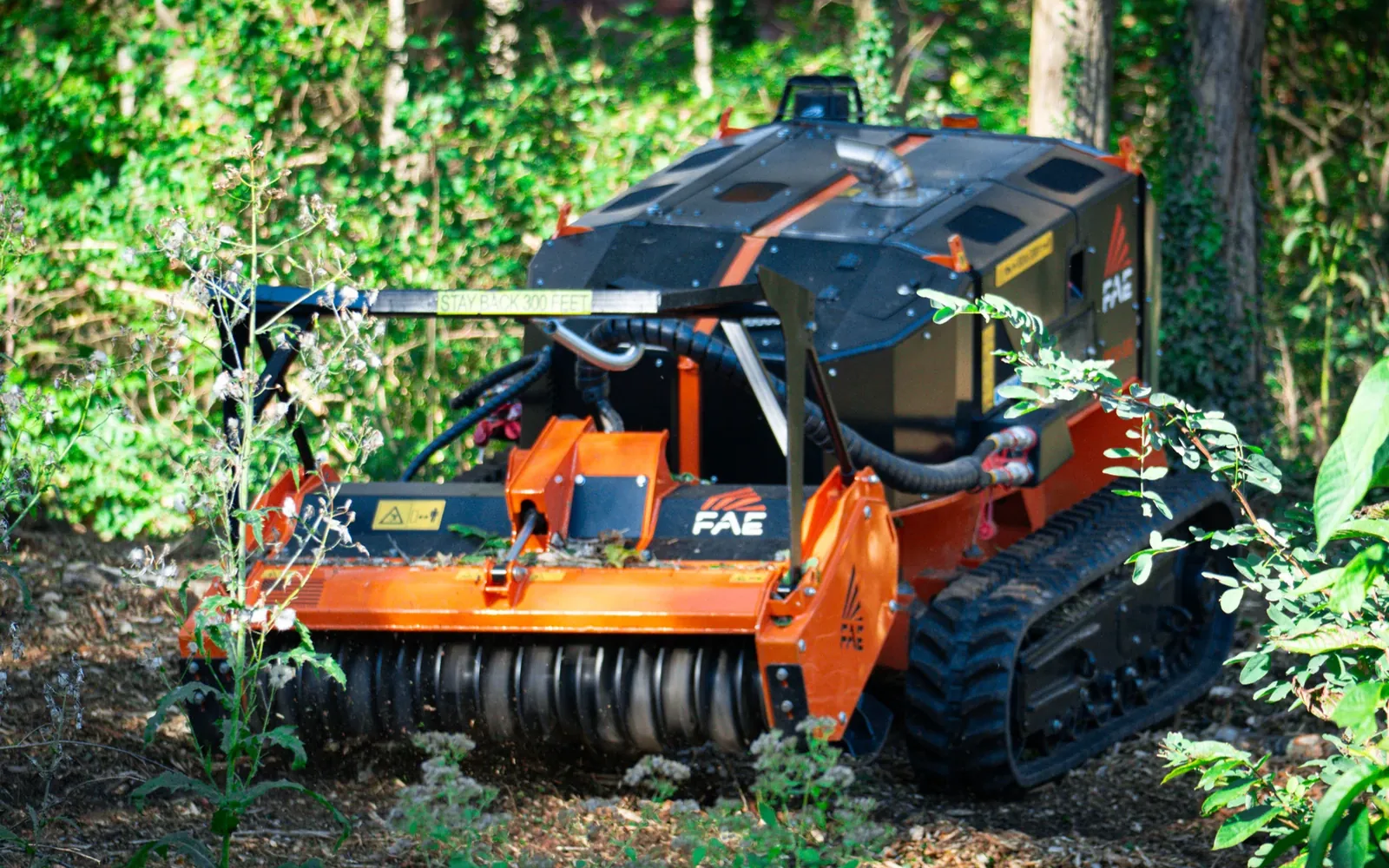
- ✅ Works on hills and slopes—our RCU-55 handles terrain up to 50°
For more on our forestry mulching services, see our complete guide.
Cut-Stump Treatment
Best For: Tree of heaven, scattered invasive trees
- • Cut trunk and immediately apply herbicide to stump
- • Prevents root sprouting
- • Good for isolated specimens
Limitations: Too slow for large infestations. Requires immediate herbicide application (within 15 minutes of cutting).
Foliar Spray
Best For: Japanese knotweed, small infestations
- • Herbicide applied to leaves in late summer/early fall
- • Translocates to root system
- • Requires multiple years of treatment
Limitations: Cannot be used near water. Risk of drift to desired plants. Dead material still requires removal.
What Doesn't Work
- ❌ Simple cutting without treatment—stimulates regrowth in most species
- ❌ Burning alone—many invasives resprout aggressively from roots
- ❌ Single herbicide application—most species require multi-year treatment
- ❌ Ignoring the problem—infestations double every 2-3 years
Invasive Species Removal Costs in Cincinnati
Costs depend on species, density, terrain, and total acreage. Here are typical ranges for forestry mulching removal:
Light Infestation
$1,400–$1,800 per acre
Scattered invasives, 30-50% coverage, easy terrain
Moderate Infestation
$1,800–$2,400 per acre
50-75% coverage, mixed species, some difficult access
Dense Infestation
$2,400–$2,700+ per acre
75%+ coverage, impenetrable thickets, multiflora rose dominant
Hillside/Steep Terrain
$2,700–$3,400+ per acre
Steep slopes, remote access, requires specialized equipment
For detailed pricing information, see our land clearing cost guide or use our instant pricing calculator for a quick estimate.
When to Remove Invasive Species
Timing affects both removal effectiveness and cost:
Late Fall – Early Spring (Best)
Dormant season removal is ideal. Ground is often frozen or dry, providing good equipment access. No leaves means better visibility and faster work. Plants have moved energy reserves to roots, making them more vulnerable.
Summer (Good for Some Species)
Japanese knotweed is best treated in late summer when actively translocating nutrients to roots. Tree of heaven responds well to "hack and squirt" treatment July-September.
Year-Round for Mechanical Removal
Forestry mulching can be performed any time ground conditions allow. Brushworks operates year-round, weather permitting.
For seasonal recommendations specific to Ohio, see our guide on the best time to clear land in Ohio.
Preventing Reinfestation
Removal is only the first step. Without follow-up management, invasives will return from the seed bank within 2-5 years.
Immediate Actions
- • Seed with native grasses to establish competition
- • Monitor for seedlings in first spring
- • Hand-pull or spot-treat new growth
- • Maintain mulch layer where possible
Long-Term Management
- • Annual inspection and spot treatment
- • Address neighboring infestations if possible
- • Establish native plantings to fill niches
- • Consider maintenance mulching every 3-5 years
Brushworks provides guidance on long-term maintenance and offers annual touch-up services for ongoing invasive management.
Areas We Serve for Invasive Species Removal
Brushworks provides professional invasive species removal throughout Greater Cincinnati:
Loveland
Mason
West Chester
Liberty Township
Maineville
Lebanon
Milford
Goshen
Batavia
Indian Hill
Madeira
Montgomery
For local service information, see our lot clearing services in Cincinnati.
Why Choose Brushworks for Invasive Removal
Specialized Equipment
- ✅ High-flow mulching heads designed for woody invasives
- ✅ FAE RCU-55 for hillside and steep terrain work
- ✅ Equipment that processes thorny species safely
Local Expertise
- ✅ Deep knowledge of Cincinnati-area invasives
- ✅ Can identify species requiring special treatment
- ✅ Understand local soil and regrowth patterns
Transparent Pricing
- ✅ Project-based quotes (not open-ended hourly)
- ✅ Know the cost before work begins
- ✅ No surprises or hidden fees
Complete Service
- ✅ Professional assessment and identification
- ✅ Safe around structures and property lines
- ✅ Long-term maintenance guidance included
Ready to Reclaim Your Land?
Invasive species won't go away on their own—they'll only get worse. The sooner you act, the less it will cost and the faster your land will recover.
Whether you're dealing with honeysuckle walls, multiflora rose thickets, or a mix of invasive species, Brushworks has the equipment and expertise to restore your property efficiently. Get an instant price estimate or request a custom quote for a detailed assessment.
