
Poison Hemlock Removal Ohio: How to Identify and Get Rid of It Safely
This plant kills people, livestock, and pets. It's all over Ohio right now, and most property owners don't even know what they're looking at.
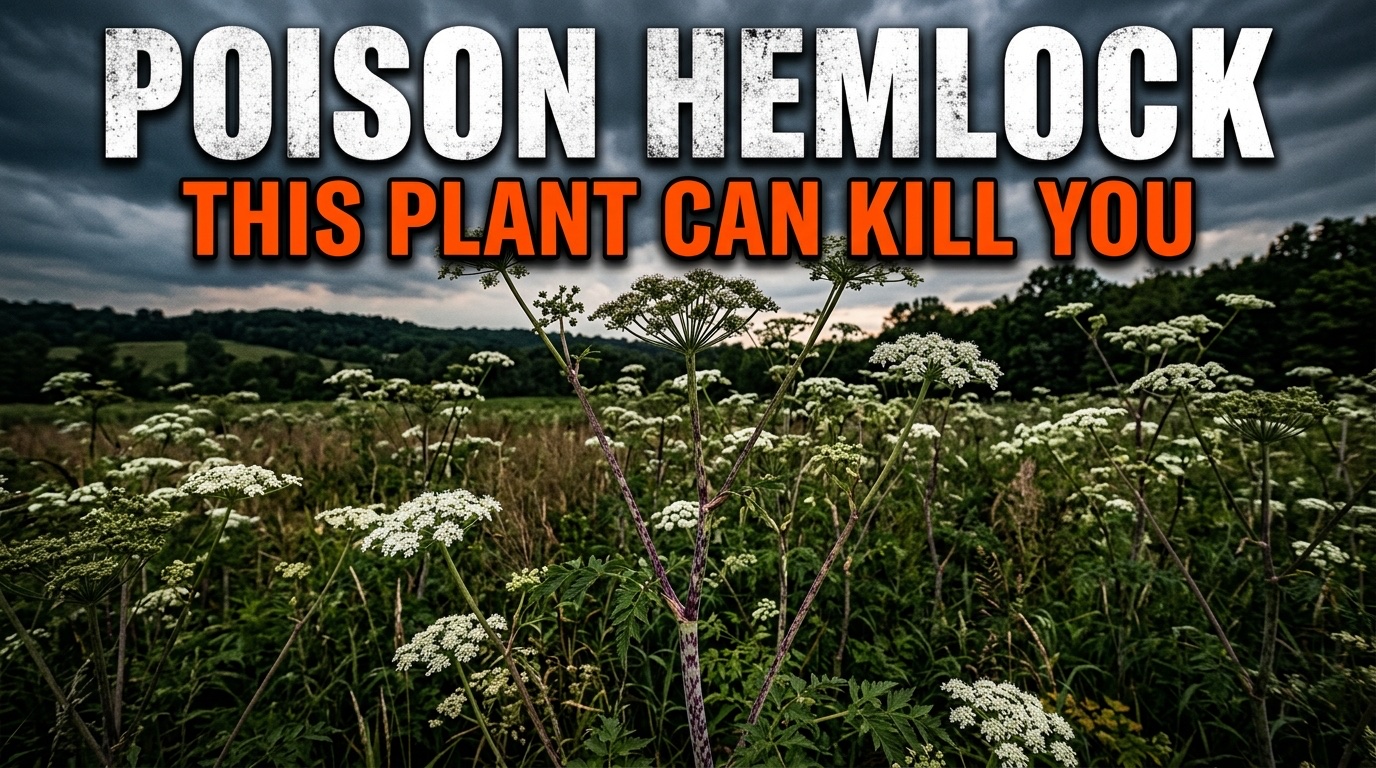
If you own property in Ohio, you need to know about poison hemlock. Not in a "that's interesting" kind of way. In a "this plant can kill your dog, your horse, or your kid" kind of way.
Poison hemlock (Conium maculatum) has exploded across Ohio over the past decade. It's in every county. It grows along roadsides, fence rows, ditches, creek banks, pasture edges, and vacant lots. And every March and April, it comes roaring back with new growth that catches people off guard.
We clear poison hemlock from properties across Greater Cincinnati regularly, especially in spring when it's actively growing and property owners start noticing those tall, fern-like plants popping up everywhere. This guide covers everything you need to know: identification, why it's dangerous, removal methods that work, and what it costs to get it off your property for good.
What Makes Poison Hemlock Dangerous
Poison hemlock contains a group of chemicals called piperidine alkaloids. The most toxic one is coniine. If you remember anything from history class, this is the plant that killed Socrates.
Every part of the plant is toxic. Roots, stems, leaves, flowers, seeds. All of it. The toxins don't break down when the plant dries, so dead hemlock is just as dangerous as live hemlock.
Here's what exposure looks like:
Ingestion is the primary danger. For humans, eating even a small handful of leaves can cause tremors, respiratory failure, and death. Children are at highest risk because the hollow stems look like they'd make great straws or pea-shooters. For livestock, especially cattle and horses, grazing on hemlock is fatal. It takes surprisingly little to kill a 1,000-pound animal.
Skin contact with the sap causes dermatitis in many people. It's not as severe as giant hogweed, but repeated exposure or contact with large amounts of sap can cause painful rashes and blistering, especially when combined with sun exposure (phytophotodermatitis).
Inhaling particles while mowing, weed-whacking, or brush hogging hemlock can cause reactions. Throat irritation, headaches, and nausea are common. If you're going to mechanically remove hemlock, wear respiratory protection.
Poison hemlock is not something you ignore. If it's on your property, it needs to go. If it's on your fence line where neighbors' kids play, it really needs to go.
How to Identify Poison Hemlock
Poison hemlock gets confused with several other plants, including Queen Anne's lace (wild carrot), wild parsnip, and even parsley. Getting this wrong means either panicking over a harmless plant or ignoring a deadly one. Here's how to tell the difference.
The Purple Spots on the Stem
This is the single most reliable identifier. Poison hemlock stems have purple or reddish-purple blotches and streaks, especially on the lower portions. No other common look-alike has this. If you see purple spots on the stem, it's hemlock. Period.
Smooth, Hollow Stems
Hemlock stems are smooth and hairless. Wild carrot (Queen Anne's lace) has hairy stems. If the stem is smooth and has purple spots, you're looking at poison hemlock. If the stem is fuzzy or hairy, it's probably wild carrot.
Leaves
The leaves look like fern fronds or flat-leaf parsley. They're triangular in outline and divided into many small, toothed leaflets. When crushed, they give off a musty, unpleasant odor. Some people describe it as "mousey." Wild carrot leaves smell like carrots when crushed.
Size
First-year hemlock plants grow as flat rosettes close to the ground, usually 6 to 12 inches across. In their second year, they bolt upward and can reach 6 to 10 feet tall. A mature second-year hemlock is enormous. If you've got something that looks like a 7-foot parsley plant with purple-spotted stems growing along your fence line, that's hemlock.
Flowers
Hemlock flowers in June and July in Ohio. The flowers are small, white, and arranged in umbrella-shaped clusters (umbels) about 2 to 3 inches across. They look very similar to wild carrot flowers, but wild carrot typically has a single small purple or dark flower in the center of the cluster. Hemlock doesn't.
Where It Grows
In Ohio, poison hemlock grows just about everywhere, but it prefers disturbed, moist soil. Common spots include:
- Roadside ditches and right-of-ways
- Creek banks and stream corridors
- Fence rows between pastures
- Edges of farm fields
- Vacant lots and construction sites
- Utility easements
- Overgrown yard edges and tree lines
If you have a moist, partially shaded edge on your property that doesn't get mowed, check it for hemlock. Odds are good in SW Ohio.
Why Poison Hemlock Is Getting Worse in Ohio
Ohio has always had poison hemlock. It was introduced from Europe in the 1800s as a garden plant, and it's been naturalized ever since. But the population has grown dramatically in the past 10 to 15 years. A few reasons why:
Reduced roadside mowing. State and county highway departments have cut back on mowing schedules due to budget constraints. Road ditches that used to get mowed three or four times a season now get mowed once or twice. That gives hemlock plenty of time to mature and produce seeds.
Climate patterns. Milder winters and earlier springs give hemlock a head start. Plants that would have died back harder in cold winters are surviving and growing larger the following spring.
Seed production. A single poison hemlock plant produces 30,000 to 40,000 seeds. Those seeds wash downstream in rain, get carried by equipment tires, and spread along mowing corridors. One untreated patch can colonize an entire creek corridor in just a few years.
Lack of awareness. Most Ohio property owners don't recognize poison hemlock until it's 6 feet tall and flowering. By then, it's too late for that year. The seeds are already forming.
When to Remove Poison Hemlock in Ohio
Timing is everything with hemlock control. Miss the window and you're fighting a losing battle for another year.
The Critical Window: Late March Through Early May
Right now. This is it. In southern Ohio (Cincinnati, Clermont, Warren, Hamilton, Butler counties), hemlock rosettes are actively growing in late March and April. The plants are low to the ground, 6 to 18 inches across, and haven't bolted yet.
This is when herbicide treatment is most effective. This is when the plants are easiest to remove manually. This is when you have the best chance of stopping seed production for the year.
May and June: You're Running Behind
By mid-May, second-year hemlock plants are bolting upward fast. They're putting energy into stem growth and flower production. Herbicide still works at this stage, but you need to hit it harder and the plants are bigger and harder to handle.
July and August: Too Late for This Year
Once hemlock flowers and sets seed (late June through August), you've lost that round. You can still remove the plants to reduce the amount of seed that drops, but the seeds are already forming. Focus shifts to planning for next spring.
Fall and Winter
First-year hemlock rosettes are often visible in fall, growing low to the ground while everything else goes dormant. A fall herbicide application (October or November) can knock out these first-year plants before they become second-year monsters next spring. This is an underused strategy that smart property managers are starting to adopt.
Poison Hemlock Removal Methods
Herbicide Treatment
For most infestations, herbicide is the most effective approach. It kills the root system, which prevents regrowth from the same plant.
What to use: Products containing 2,4-D, triclopyr, or glyphosate all work on poison hemlock. For selective treatment in grassy areas (pastures, lawns, roadsides), 2,4-D or triclopyr kills the hemlock without killing the grass. For non-selective treatment where you're clearing everything, glyphosate works.
When to spray: Early spring (March-April) when plants are in the rosette stage. The leaves are actively growing and absorb herbicide well. Fall applications (October-November) on first-year rosettes also work.
Application tips: Spray on a calm day (wind under 5 mph). Use enough spray volume to wet the leaves thoroughly. Add surfactant to help the herbicide stick. Mark treated areas so you can check them later. Wear gloves, long sleeves, and consider a respirator if you're walking through dense hemlock.
Manual Removal (Small Infestations)
If you've got a handful of plants, you can dig them out. But do it right:
- Wear nitrile gloves (not cloth, which absorbs sap)
- Wear long sleeves and pants
- Pull or dig the entire root
- Bag the plants in heavy trash bags
- Do not compost poison hemlock. The toxins persist
- Throw bags in the trash, not yard waste
- Wash hands, arms, and tools thoroughly afterward
Manual removal is practical for 10 or 20 plants scattered around a yard. It is not practical for a half-acre fence row choked with hemlock. That's where mechanical or chemical methods take over.
Mowing and Brush Hogging
Mowing reduces hemlock but doesn't kill it. The plants resprout from the crown if the root survives. However, mowing before seed set (before late June) prevents that year's crop from reproducing.
The biggest risk with mowing hemlock is airborne plant material. A brush hog throws hemlock sap and stems everywhere. If you're going to mow hemlock:
- Wear a respirator or N95 mask minimum
- Use a cab tractor with windows closed and recirculating air
- Mow when the plants are still short (under 3 feet)
- Don't mow in the heat of the day when the sap is most volatile
- Follow up with herbicide treatment 2 to 3 weeks later when regrowth appears
Forestry Mulching
For large infestations mixed with other brush, trees, and invasive plants, forestry mulching handles everything at once. The mulcher grinds the hemlock along with honeysuckle, multiflora rose, tree saplings, and whatever else is growing in the area.
Forestry mulching for hemlock-infested areas works best as part of a combined approach:
- Spray the hemlock with herbicide 2 to 3 weeks before mulching (kills the root system)
- Mulch the area, grinding everything to ground level
- Monitor for regrowth the following spring
- Spot-treat any new hemlock plants that germinate from the seed bank
This approach clears the hemlock, removes the other brush and invasives, and sets you up for ongoing management.
Poison Hemlock Removal Costs in Ohio
Professional Removal Cost Estimates (2026)
Herbicide treatment, small area (under 1/4 acre): $300 - $800
Herbicide treatment, 1/4 to 1 acre: $800 - $2,000
Herbicide + mowing combo (1 acre): $1,500 - $3,000
Forestry mulching hemlock-infested area (per acre): $2,500 - $4,500
Annual follow-up treatment: $200 - $600 per acre
Most residential jobs: $500 - $2,500
Depends on infestation size, terrain, and whether hemlock is mixed with other brush that also needs clearing. Properties along creek corridors or fence rows tend toward the higher end.
The cost of NOT removing hemlock is harder to quantify but very real. Livestock losses, liability if someone gets hurt on your property, and a population that doubles or triples each year you wait.
Poison Hemlock vs. Other Look-Alikes
Misidentification goes both ways. People either panic about harmless plants or ignore dangerous ones. Here's a quick comparison of the most common mix-ups in Ohio:
Poison hemlock vs. Queen Anne's lace (wild carrot): Queen Anne's lace has hairy stems. Hemlock has smooth stems with purple spots. Queen Anne's lace typically has a single small dark flower in the center of the cluster. Crushed Queen Anne's lace smells like carrots. Crushed hemlock smells musty. Queen Anne's lace rarely exceeds 3 feet tall. Hemlock can hit 10 feet.
Poison hemlock vs. wild parsnip: Wild parsnip has yellow flowers. Hemlock has white flowers. Both are dangerous plants (wild parsnip sap causes severe burns), but they're easy to tell apart when flowering. Before flowering, check the stem: hemlock has purple spots, wild parsnip doesn't.
Poison hemlock vs. water hemlock: Water hemlock (Cicuta maculata) is actually more toxic than poison hemlock, drop for drop. It grows in wet areas (pond edges, stream banks, wet ditches). Water hemlock has a chambered root (cut it lengthwise and you'll see distinct chambers). Both are deadly. If you're not sure which one you have, it doesn't matter much. Both need to go.
Poison hemlock vs. giant hogweed: Giant hogweed is much larger (can reach 15+ feet), has thick, deeply ridged stems with coarse white hairs and purple blotches, and massive leaves up to 5 feet across. Hemlock is tall but its leaves are finely divided like fern fronds. Giant hogweed is rarer in Ohio but present. Both are hazardous.
Protecting Livestock from Poison Hemlock
If you have horses, cattle, goats, or sheep in Ohio, hemlock is a serious threat. Animals generally avoid it when other forage is available because it tastes bad. But they'll eat it in these situations:
- Overgrazed pastures. When grass runs out, animals eat whatever is available. If hemlock is growing along the fence line, hungry livestock will try it.
- Early spring. Hemlock is one of the first green plants to emerge. In early March, when pastures are still brown, that bright green hemlock rosette is the only fresh thing growing. Animals are attracted to it.
- Cut or dried hemlock. Fresh hemlock tastes bad and animals avoid it. But hemlock that's been mowed and is wilting or drying actually becomes more palatable. If you mow a pasture edge that has hemlock and leave the clippings where livestock can reach them, you've created a real danger.
- Hay contamination. Hemlock in hay doesn't lose its toxicity when dried. If hemlock gets baled into hay, the animals eating that hay are at risk.
The solution for livestock producers: walk your fence lines and pasture edges every spring. Identify and remove hemlock before turnout. If you can't clear it all, fence off the infested areas until treatment is complete.
Long-Term Hemlock Management
One round of treatment won't end your hemlock problem. The plant is a biennial (two-year lifecycle), and the seed bank in the soil can produce new plants for 3 to 6 years. Here's a realistic management plan:
Year 1: Identify and treat all visible hemlock on the property. Hit it hard with herbicide in spring (March-April). Follow up with mechanical removal or a second spray if regrowth appears. Prevent any seed production.
Year 2: Walk the property in early spring. Seeds from previous years will germinate as new rosettes. Treat them while small. The population should be significantly reduced from Year 1.
Year 3: Spot-treat any remaining plants. By now, if you've prevented seed production for two consecutive years, the population is collapsing. You're dealing with scattered individual plants, not large patches.
Ongoing: Check the property annually. New hemlock can arrive via water, animal activity, or contaminated soil. A quick walk-through in April catches any new arrivals before they become established.
The key is preventing seed production. If hemlock never flowers on your property, the seed bank runs out in a few years and the problem is over. If you let it flower even once, you're resetting the clock.
Ohio Laws and Poison Hemlock
Ohio doesn't have a specific law requiring private landowners to remove poison hemlock. However, some municipalities and townships have weed ordinances that can be applied to hemlock. Hamilton County, for instance, has noxious weed regulations that allow the county to require removal and bill the property owner if they don't comply.
More practically, if your hemlock spreads to a neighbor's pasture and kills their livestock, you could face a civil liability claim. If it's on a commercial property where customers or employees are exposed, there are workplace safety and premises liability issues.
ODOT (Ohio Department of Transportation) treats hemlock on state right-of-ways, but county roads are hit or miss depending on the county's budget and awareness.
Get Poison Hemlock Off Your Property
Spring is the time. The plants are up, they're growing, and they're vulnerable to treatment right now. Every week you wait, they get bigger and harder to deal with.
Brushworks clears hemlock-infested areas across Greater Cincinnati, including properties in Warren, Hamilton, Clermont, Butler, Clinton, and Brown counties, plus Northern Kentucky. We handle hemlock as part of larger clearing projects (fence rows, creek corridors, overgrown edges) and as standalone invasive removal jobs.
If you've got hemlock mixed in with honeysuckle, multiflora rose, and other brush, we can clear the whole mess at once. One machine, one day, done.
Need Poison Hemlock Removed?
Get an instant estimate for clearing your property, or contact us for a site visit. Spring is the best time to deal with hemlock. Don't wait until it's 8 feet tall.
Or call us directly: (513) 790-4150