Why Poison Ivy Is So Bad in Cincinnati
Cincinnati sits in one of the worst poison ivy zones in North America. The combination of humid summers, rich soil, and dense hardwood forests creates ideal growing conditions. Every county in the Tri-State area has it: Hamilton, Clermont, Warren, Butler, and Brown counties in Ohio, plus Northern Kentucky and Southeast Indiana.
Rising CO2 levels have made the problem worse over the past 20 years. Research from Duke University showed that elevated CO2 causes poison ivy to grow faster, produce larger leaves, and generate more urushiol, the oil that triggers the allergic reaction. The poison ivy your grandparents dealt with was literally less potent than what's growing in your backyard right now.
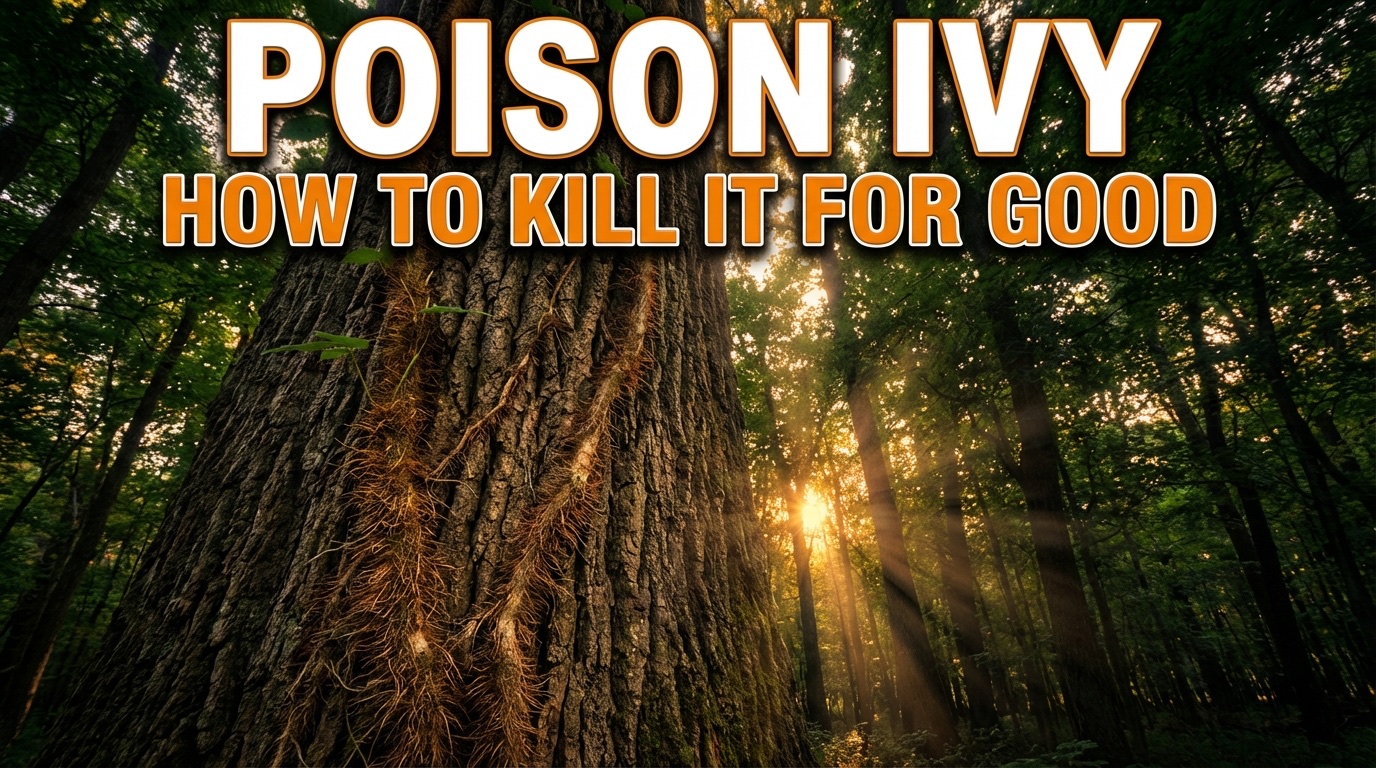
In the Cincinnati area, poison ivy grows in three forms. It's a ground cover that creeps across lawns and garden beds. It's a shrub that grows 2 to 4 feet tall in open areas. And it's a climbing vine that runs up tree trunks with hairy, rope-like aerial roots. The climbing form is the most dangerous because mature vines can be 4 inches thick and produce enormous amounts of oil. We've pulled vines off trees in Indian Hill and Loveland that were 30 feet up into the canopy.
About 85% of people are allergic to urushiol. The other 15% who think they're immune can develop sensitivity at any time. One bad exposure can trigger a reaction in someone who's handled it for years without problems.
How to Identify Poison Ivy in Ohio
"Leaves of three, let it be" is the starting point, but it's not enough. Plenty of harmless plants have three leaves. You need to know what makes poison ivy different from box elder seedlings, Virginia creeper, and wild raspberry.
The Leaf
Three leaflets on a single stem. The center leaflet has a longer stalk than the two side leaflets. Leaf edges can be smooth, toothed, or lobed, and all three variations grow on the same plant. In spring, new leaves are red or bronze. Summer leaves are glossy green. Fall leaves turn red, orange, or yellow. The glossy sheen on summer leaves is a dead giveaway.
The Vine
Climbing poison ivy produces aerial rootlets that make the vine look hairy or fuzzy. "Hairy vine, no friend of mine" is the other rhyme worth remembering. These hairy vines on tree trunks are one of the easiest ways to identify poison ivy in winter when there are no leaves. The rootlets grip bark so tightly that dead vines stay attached for years.
The Berries
White or grayish berries in loose clusters appear in late summer and fall. Birds eat them and spread seeds across properties. If you see white berry clusters on a three-leaved plant, you've found poison ivy.
Common Look-Alikes in Cincinnati
Box elder seedlings have opposite leaves (poison ivy leaves alternate on the stem). Virginia creeper has five leaflets, not three. Wild raspberry has thorns (poison ivy never has thorns). Fragrant sumac looks very similar but its terminal leaflet has no stalk, and the leaves smell when crushed.
When in doubt, don't touch it. Take a photo from a distance and compare at home. The few minutes of caution beats a two-week rash.
Understanding Urushiol: The Oil That Ruins Your Week
Urushiol is in every part of the plant: leaves, stems, roots, berries, and even dead wood. It's an oily resin, not water-soluble, which is why water alone doesn't wash it off your skin. You need a surfactant like dish soap to break it down.
The oil stays active on surfaces for years. Tools, gloves, shoes, clothing, pet fur, and equipment can all carry urushiol long after contact with the plant. One Ohio State Extension study found urushiol still active on stored tools after five years.
It takes about 10 to 20 minutes for urushiol to bind to your skin. If you wash with cold water and soap within that window, you can prevent or reduce the reaction. Hot water opens pores and spreads the oil, so always use cold water first.
The rash itself isn't contagious. The fluid in blisters doesn't contain urushiol. But if you didn't fully wash the oil off your skin, you can spread it to new areas by touching them. This is why the rash seems to "spread" over several days.
Never burn poison ivy. Inhaling urushiol-contaminated smoke can cause severe reactions in your airway, lungs, and eyes. People end up in the ER from burning brush piles that contained poison ivy. This is especially important for Cincinnati properties where brush burning is common in rural areas of Clermont and Brown counties.
Need poison ivy cleared from your property? Get an instant estimate for professional removal.
Get Instant PricingDIY Poison Ivy Removal Methods
Small patches can be handled yourself if you take proper precautions. Large infestations need professional help.
Hand Pulling
Works for small patches under 100 square feet. Wear heavy-duty chemical-resistant gloves (not cloth garden gloves, the oil soaks through), long sleeves, long pants tucked into boots, and eye protection. Pull the entire plant including roots. Bag everything in heavy-duty plastic bags. Do not compost poison ivy. Throw it in the trash.
After pulling, wash all clothing separately in hot water with detergent. Wipe down tools with rubbing alcohol. Shower immediately with cold water and dish soap. Wash the soles of your shoes.
Herbicide Application
Triclopyr-based herbicides (Crossbow, Garlon) are the most effective options for poison ivy. They kill broadleaf plants without harming grass. Glyphosate (Roundup) also works but kills everything it touches, including grass and nearby plants.
Apply herbicides when the plant is actively growing and leaves are fully expanded, typically May through August in Ohio. Spray on calm days (no wind) to prevent drift. For climbing vines, cut the vine at chest height and immediately apply concentrated herbicide to the fresh-cut stump. This is called "cut stump treatment" and it delivers the chemical directly to the root system.
One application rarely kills established poison ivy. Plan for two to three rounds spaced 4 to 6 weeks apart over one growing season.
Smothering
For ground-level patches in garden beds, you can smother poison ivy with heavy black plastic sheeting or thick cardboard topped with 4 to 6 inches of mulch. Leave it in place for at least one full growing season. This works but takes time, and you'll need to check edges where the vine might escape.
What Doesn't Work
Vinegar and salt: You'll see this all over the internet. Household vinegar (5% acetic acid) browns the leaves temporarily but doesn't kill the roots. The plant comes back within weeks. Horticultural vinegar (20% acetic acid) works slightly better but is dangerous to handle and still doesn't reach the root system.
Boiling water: Kills the leaves and some surface roots. The plant regrows from deeper roots within a month.
Goats: Goats eat poison ivy and aren't affected by urushiol. But they're a temporary solution since they don't kill the roots. The ivy grows back as soon as the goats leave. Also, the urushiol in their fur can transfer to you when you touch them.
Professional Poison Ivy Removal in Cincinnati
When poison ivy covers a large area, climbs 30 feet up your trees, or infests terrain you can't safely work on by hand, professional removal makes sense.
Forestry Mulching for Large Infestations
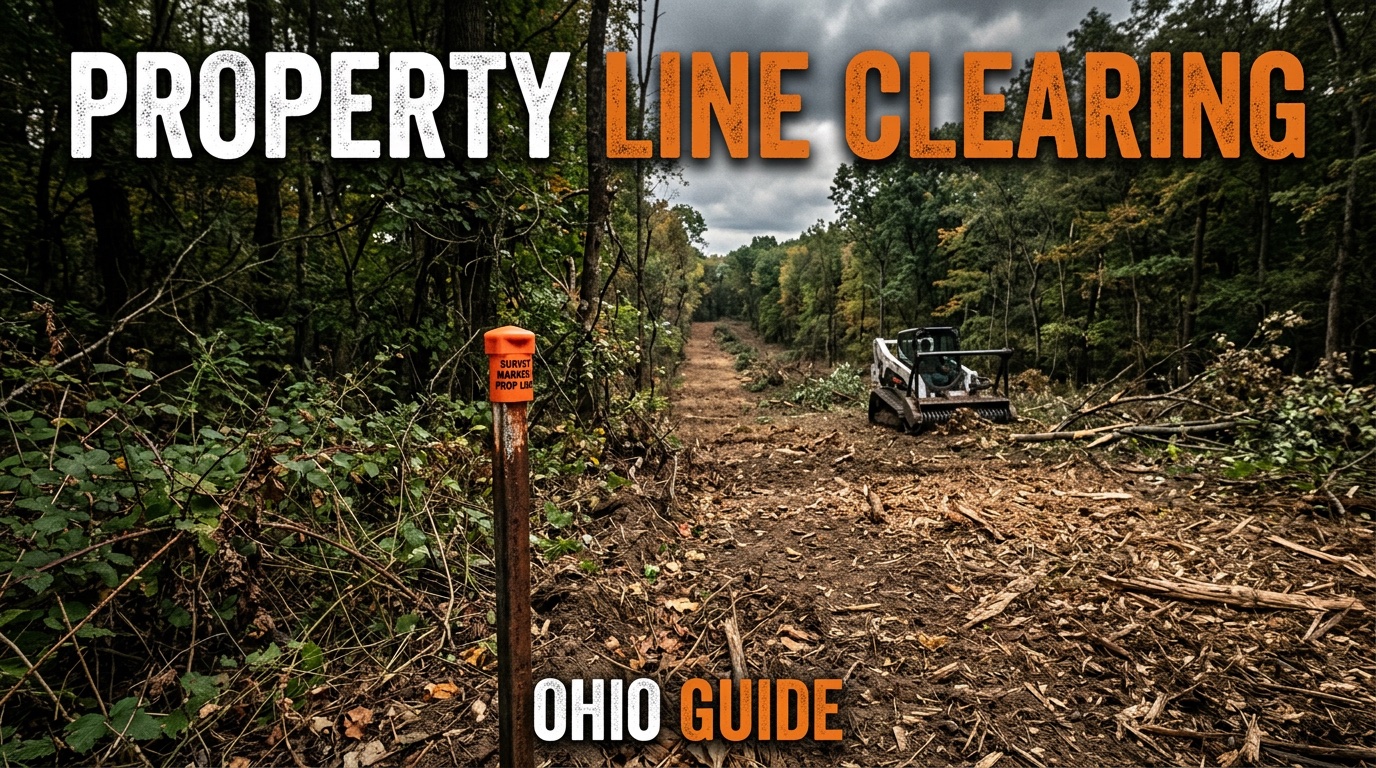
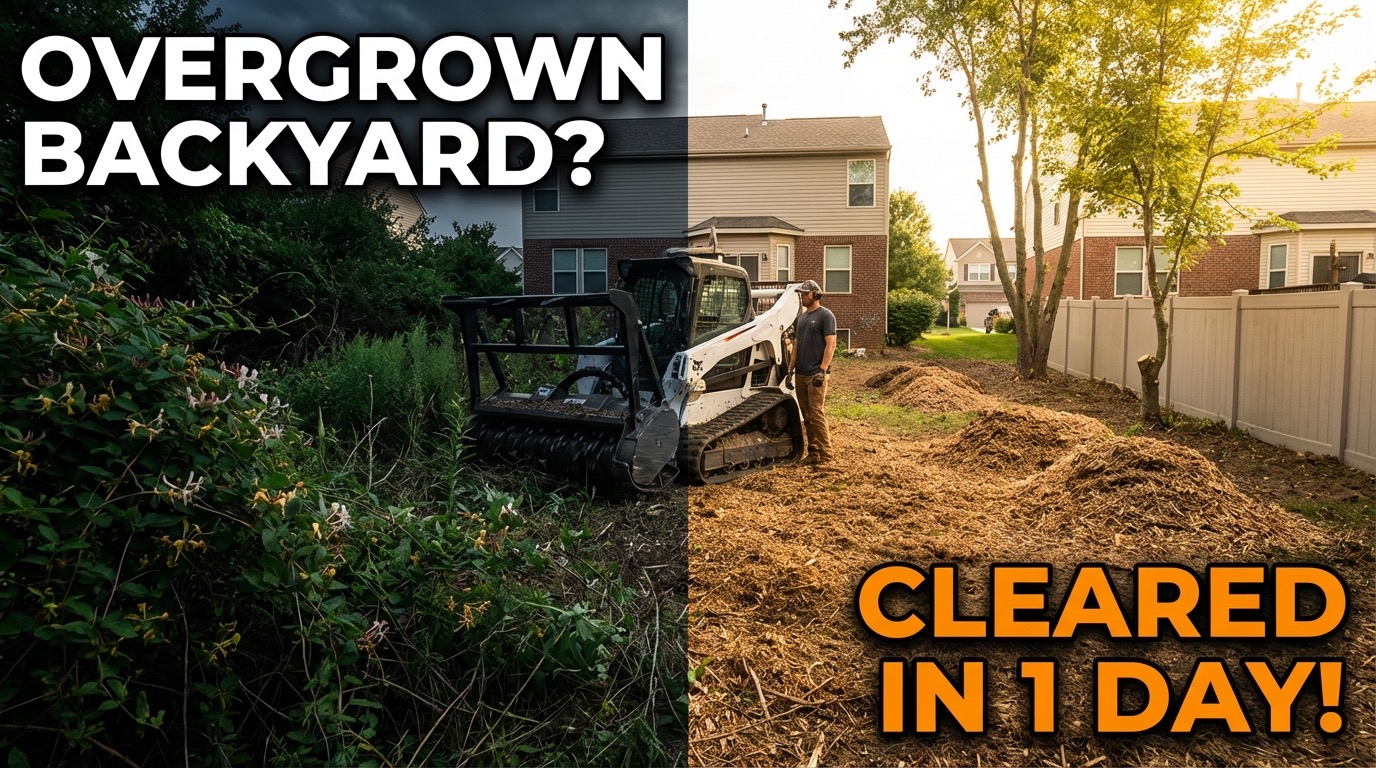
A forestry mulching head on a skid steer grinds through the above-ground growth, including mature vines, in a single pass. This is the fastest way to clear large areas of poison ivy mixed with brush and overgrowth, which is how it usually grows in the Cincinnati area. Poison ivy rarely exists alone. It intertwines with honeysuckle, multiflora rose, and wild grape to form dense tangles.
Mulching alone doesn't kill the roots. But it removes all the above-ground material and exposes the root zone for targeted herbicide treatment on the regrowth. When new shoots emerge from the roots (usually 3 to 6 weeks after mulching), they're small and easy to spray. One or two follow-up herbicide applications on regrowth after mulching kills most established infestations.
The operator sits inside an enclosed cab, so there's no direct contact with the plants. All the debris gets ground into mulch and left on-site. No hauling, no disposal, and no brush piles full of urushiol-contaminated wood.
Cut Stump Treatment for Climbing Vines
For poison ivy vines climbing valuable trees, we cut the vine at the base and apply concentrated triclopyr to the fresh cut. The vine above the cut dies in place and falls off the tree over one to two seasons as it decays. We don't pull dead vines off trees because the hairy rootlets are still coated in urushiol and tearing them off rains contaminated debris down on whoever is standing below.
Targeted Herbicide Programs
For properties that need ongoing poison ivy management, we offer seasonal treatment programs. A spring inspection followed by two to three targeted herbicide applications over the growing season keeps poison ivy under control year after year. This is popular with HOAs in Anderson Township, Mason, and West Chester where common areas and walking trails need to stay poison-ivy-free.
Poison Ivy Removal Costs in Cincinnati
What you'll pay depends on the size of the infestation, the terrain, and whether the ivy is growing on the ground or climbing trees.
Small Residential Patches
Isolated patches in a backyard or garden area, under a quarter acre. Hand removal and herbicide application costs $200 to $500. Includes initial clearing and one follow-up treatment.
Medium Infestations
Poison ivy mixed with other brush covering a quarter to a half acre. Mechanical clearing (forestry mulching or brush cutting) plus herbicide treatment runs $800 to $2,000. This is the most common job size we see in suburban Cincinnati neighborhoods like Loveland, Milford, and Batavia.
Large Property-Wide Infestations
Rural properties with widespread poison ivy across multiple acres. Full forestry mulching plus a seasonal herbicide program costs $2,500 to $6,000 depending on terrain and density. Properties in hilly areas of Clermont County and Brown County run higher because of equipment access challenges.
Climbing Vine Removal
Individual vine cutting and stump treatment costs $50 to $150 per tree, depending on vine size and tree access. A property with 20 trees hosting poison ivy vines would run $500 to $1,500 for vine treatment alone.
Ready to get poison ivy off your property? Contact Brushworks for a free assessment.
Get a Free QuoteWhere Poison Ivy Grows on Cincinnati Properties
Poison ivy isn't random. It follows predictable patterns, and knowing where to look helps you catch infestations early.
Fence Lines and Property Boundaries
The number one spot. Nobody mows or maintains fence lines, so poison ivy establishes there first. It uses the fence as a trellis and spreads in both directions along the boundary. In suburban neighborhoods across Hamilton and Warren counties, we find more poison ivy on fence lines than anywhere else on the property.
Tree Lines and Forest Edges
The transition zone between maintained lawn and wooded areas is poison ivy's favorite habitat. Partial shade, rich soil from leaf litter, and vertical structure from trees create perfect conditions. If your backyard borders woods, check the edge zone at least twice a year.
Stream Banks and Drainage Areas
Poison ivy thrives along creek banks and drainage ditches where moisture is consistent. In the Cincinnati area, this includes properties along the Little Miami River corridor, Indian Creek, and dozens of smaller streams that cut through Clermont and Warren counties. Water also carries seeds downstream, spreading infestations to new properties.
Hillsides and Slopes
Cincinnati's hilly terrain creates slopes that nobody can mow or maintain easily. Poison ivy colonizes these areas aggressively. Properties in Mt. Adams, Columbia Tusculum, Anderson Township, and the eastern hillsides of the Little Miami valley are especially prone to hillside poison ivy infestations.
Around Structures
Poison ivy grows along foundations, up exterior walls, around sheds, and through deck supports. The vine doesn't damage masonry or siding the way true ivy does, but it puts urushiol within reach of anyone walking past. Check around the base of structures every spring before leaves emerge.
Preventing Poison Ivy from Coming Back
Removal without a prevention plan is a waste of money. Poison ivy seeds stay viable in soil for years, and birds bring new seeds from neighboring properties constantly.
Monitor Cleared Areas Monthly
After removal, walk the cleared area every 3 to 4 weeks during the growing season. Poison ivy seedlings are easy to spot and pull when they're small. A 10-minute walk-through each month prevents re-establishment.
Establish Competing Ground Cover
Bare ground invites poison ivy. After clearing, seed the area with a dense ground cover that outcompetes poison ivy for light and space. In sunny areas, fescue or a native grass mix works well. In shady areas, pachysandra or wild ginger are aggressive enough to hold ground against poison ivy.
Maintain Edges
Mow or trim the transition zone between lawn and woods regularly. A maintained edge 3 to 5 feet wide creates a buffer that you can monitor easily. Poison ivy that starts in the woods has to cross this open zone to reach your yard, and you'll spot it quickly.
Annual Herbicide Treatment
For properties with chronic poison ivy problems (common in wooded areas of Indian Hill, Terrace Park, and rural Clermont County), an annual targeted herbicide application in late May or early June catches new growth before it establishes. This is cheaper than dealing with a full infestation every few years.
What to Do If You Get a Poison Ivy Rash
You're going to get exposed at some point if you live in the Cincinnati area. Here's what works.
Immediate Response (First 20 Minutes)
Wash the exposed area with cold water and dish soap (Dawn works well). Not warm water, not hot water. Cold water closes pores and prevents the oil from absorbing deeper. Scrub for at least 2 minutes. Wash under fingernails where oil hides. Products like Tecnu and Zanfel are specifically designed to break down urushiol and work better than regular soap if you have them on hand.
If the Rash Develops
Most rashes appear 12 to 72 hours after exposure. Over-the-counter hydrocortisone cream and calamine lotion help with itching. Cool compresses reduce swelling. Oral antihistamines (Benadryl) help at night but can cause drowsiness.
For moderate rashes, colloidal oatmeal baths (Aveeno) provide significant relief. The rash typically runs its course in 2 to 3 weeks.
When to See a Doctor
See a doctor if the rash covers more than 25% of your body, affects your face, eyes, or genitals, shows signs of infection (pus, increasing redness, warmth), or if you inhaled smoke from burning poison ivy. Doctors prescribe oral prednisone for severe cases, which works fast and dramatically reduces symptoms. Don't tough it out if the rash is bad. A 2-week prednisone course costs $10 at the pharmacy and saves you weeks of misery.
Poison Ivy and Your Pets
Dogs and cats are not affected by urushiol. They can walk through, roll in, and eat poison ivy without getting a rash. But the oil transfers to their fur, and then transfers to you when you pet them.
If your dog runs through a patch of poison ivy, bathe them with dog shampoo before you handle them. Pay attention to their belly, legs, and face where fur is thinner and oil clings. Use rubber gloves during the bath.
This is a bigger problem than most Cincinnati property owners realize. We've heard from customers who couldn't figure out where their repeated rashes were coming from until they realized their dog's favorite path through the backyard ran directly through a poison ivy patch.
Best Time to Remove Poison Ivy in Ohio
Late winter to early spring (February through April) is the best time for mechanical removal and forestry mulching. No leaves means better visibility of vine structure. You can see exactly which trees have climbing vines and trace ground runners back to their source. Ground conditions are usually good for equipment access before spring rains soften things up.
Late spring to early summer (May through June) is the best time for herbicide treatment. The plants are actively growing and pulling nutrients down to the roots. Herbicide applied during this peak growth period reaches the root system most effectively.
The worst time is fall. In autumn, poison ivy pulls nutrients and energy down into its root system for winter dormancy. Disturbing the roots in fall spreads root fragments that can each produce a new plant. The oil concentration in fall roots is also at its highest.
The ideal approach for Cincinnati properties: mulch and clear in late winter, then spray regrowth with triclopyr in late May or June. Follow up with a second spray in July or August. By fall, most of the root system is dead or dying.
Frequently Asked Questions
How do I get rid of poison ivy on my property in Cincinnati?
Small patches: pull by hand with proper protection and bag everything. Medium areas: apply triclopyr or glyphosate herbicide during active growth. Large infestations: professional forestry mulching followed by targeted herbicide on regrowth. Always wash tools, clothing, and skin with cold water and soap after contact.
How much does professional poison ivy removal cost in Cincinnati?
Small residential patches cost $200 to $500. Medium infestations run $800 to $2,000. Large property-wide clearing costs $2,500 to $6,000. Most jobs include follow-up herbicide treatment.
Can you get a rash from dead poison ivy?
Yes. Urushiol stays active on dead plants, roots, and stems for up to five years. Dead vines, dried leaves, and old root systems can all cause reactions. Never burn poison ivy because the smoke carries urushiol and can cause severe respiratory reactions.
What kills poison ivy permanently?
No single treatment does the job in one application. The best approach is mechanical removal (cutting or mulching) followed by triclopyr herbicide on regrowth. Plan for two to three treatments over 12 to 18 months to fully eliminate established plants.
When is the best time to remove poison ivy in Ohio?
Late winter or early spring for mechanical clearing (better visibility, firm ground). Late spring through early summer for herbicide treatment (peak growth means better root absorption). Avoid fall removal when root disturbance spreads the plant.