Ohio's Growing Tick Problem
Twenty years ago, Lyme disease was mostly a New England problem. Not anymore. The Ohio Department of Health now reports over 300 confirmed Lyme disease cases per year, up from fewer than 100 in 2010. The actual number is almost certainly higher because many cases go unreported or misdiagnosed.
The blacklegged tick (also called the deer tick) has spread into every Ohio county. It used to be concentrated in the northeast corner of the state. Now it's established across southern Ohio, including Hamilton, Clermont, Warren, and Butler counties in the Cincinnati metro.
But Lyme disease isn't the only concern. The lone star tick has been moving north from Kentucky and Tennessee into southern Ohio for the past decade. This tick carries ehrlichiosis, tularemia, and Heartland virus. It also causes alpha-gal syndrome, an allergy to red meat that develops after a bite and can be permanent. Cases of alpha-gal syndrome have been confirmed in the Greater Cincinnati area.
The Asian longhorned tick showed up in Ohio in 2020. Unlike other tick species, it can reproduce without mating. A single female can start an entire population. This tick has been found attached to livestock, pets, and people in multiple Ohio counties. It carries a virus in its native Asia that kills 15 to 30 percent of people infected, though that virus hasn't been detected in US tick populations yet.
Why Ticks Love Overgrown Properties
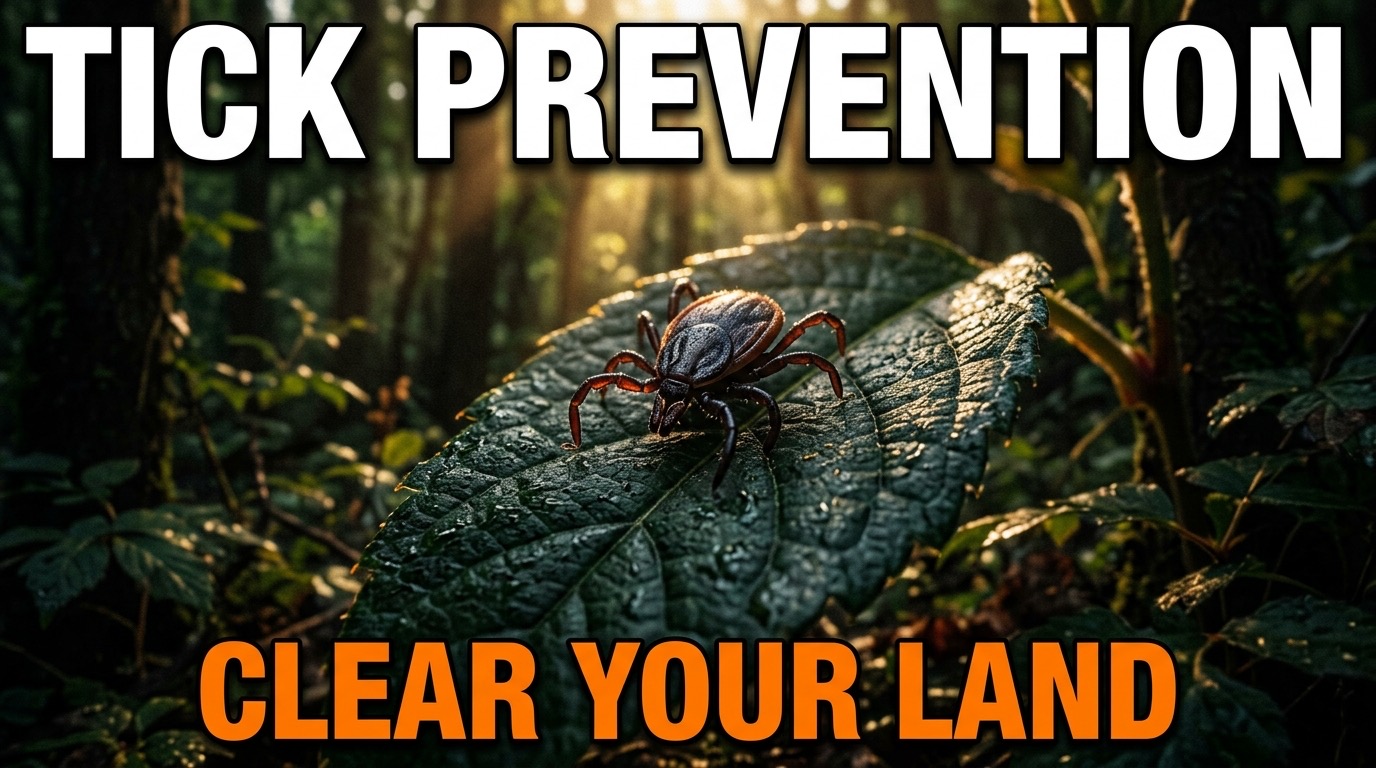
Ticks don't jump. They don't fly. They don't drop from trees. They sit on the tips of grass blades, leaf litter, and low-growing brush with their front legs outstretched, waiting for something warm-blooded to walk by. This behavior is called "questing."
For questing to work, ticks need specific conditions. They dry out fast in direct sun and low humidity. They need shade, moisture, and protection from wind. Dense brush, tall grass, leaf litter, and overgrown vegetation create exactly these conditions.
Research from the Connecticut Agricultural Experiment Station found that 82% of blacklegged ticks on residential properties were found in the transition zone between lawn and woods. Not deep in the forest. Not in the middle of the yard. Right at that brushy edge where mowed grass meets overgrowth.
This is why clearing that transition zone is the single most effective thing property owners can do. You're not trying to eliminate every tick in the woods. You're breaking the bridge between where ticks live and where your family walks.
The same research showed that properties with a maintained buffer zone between lawn and woods had 50 to 75% fewer tick encounters than properties where brush grew right up to the yard edge. That's a massive reduction from just clearing a strip of land.
The Four Tick Species in Cincinnati
Blacklegged Tick (Deer Tick)
The one that carries Lyme disease. Adults are small, about the size of a sesame seed, with dark brown to black legs and an orange-brown body. Nymphs are the size of a poppy seed and cause most Lyme disease cases because they're so small people don't notice them. Active in spring (April through June) and fall (September through November). In mild winters, they're active any day temperatures hit 35 degrees.
American Dog Tick
The most common tick in Ohio. Larger than blacklegged ticks, brown with white or gray markings on the back. You'll find them in tall grass along trails, roads, and field edges. They carry Rocky Mountain spotted fever and tularemia. Most active from April through August. These are the ticks that latch onto your dog after a walk through tall grass.
Lone Star Tick
Identified by a single white dot on the female's back. Aggressive feeders that actively move toward hosts instead of just waiting on vegetation. Found in shaded, wooded areas with dense undergrowth. Carries ehrlichiosis and causes alpha-gal syndrome (red meat allergy). The lone star tick has spread rapidly through southern Ohio over the past 10 years. Clermont, Hamilton, and Brown counties all have established populations.
Asian Longhorned Tick
First confirmed in Ohio in 2020. Small, round, and uniformly brown. The alarming trait of this species is parthenogenesis: females reproduce without males. One tick becomes thousands in a season. They cluster on livestock and pets in large numbers. While they haven't been confirmed to carry diseases in the US yet, they're known vectors for severe fever with thrombocytopenia syndrome (SFTS) virus in Asia and Australia.
Want to know what clearing your property would cost? Get an instant estimate.
Get Instant PricingHow Land Clearing Reduces Tick Populations
Land clearing attacks tick habitat in three ways: it removes the vegetation ticks hide in, it eliminates the shade and moisture they need to survive, and it breaks the connection between wooded tick habitat and the areas where people spend time.
Removing Brush and Undergrowth
Ticks quest on vegetation that's 6 inches to 3 feet off the ground. That's the height zone where their front legs can grab onto a passing ankle, leg, or hip. Dense brush, honeysuckle thickets, tall grass, and weedy undergrowth all put tick questing habitat right where people walk. Clearing this vegetation removes the launching pad.
Forestry mulching is particularly effective because it doesn't just cut the brush, it grinds it down to the soil surface. The result is a layer of dry wood chips over bare ground. Ticks can't quest from wood chips. They need living vegetation with enough structure to climb.
Creating Dry, Sunny Conditions
Ticks lose water through their exoskeleton and need high humidity (above 80%) to survive for extended periods. When you clear brush and open the canopy, the ground gets direct sun. The soil surface dries out. Humidity drops. Ticks that were protected in a shaded, moist thicket are now exposed on open, dry ground where they dehydrate and die within hours.
A study from the Journal of Medical Entomology found that tick survival dropped by over 90% in areas where canopy cover was reduced below 50%. Opening up overgrown areas to sunlight is one of the most effective non-chemical tick control methods available.
Breaking the Woodland Edge
The CDC recommends creating a "tick-safe zone" around your home by maintaining a clear buffer between your yard and any wooded or brushy areas. A 3-foot-wide gravel or wood chip barrier is the minimum. A 9 to 12 foot cleared and mowed buffer is better. Properties with serious tick pressure should maintain a 20 to 30 foot cleared zone.
In the Cincinnati area, we see the worst tick problems on properties where the woods have slowly crept toward the house over years of neglect. Honeysuckle, multiflora rose, and wild grape fill in that gap between lawn and forest, creating a perfect tick highway from the woods to your front door. Clearing that strip back changes everything.
What to Clear for Maximum Tick Reduction
You don't need to clear your entire property. Focus on the areas where tick habitat overlaps with human activity.
Yard Perimeters
The single highest priority. Clear all brush, tall grass, and undergrowth from the border between your lawn and any wooded or wild areas. A minimum 9-foot buffer zone of mowed grass, gravel, or wood chips creates a dry, sunny strip that ticks won't cross. Think of it as a moat around your yard.
Walking Paths and Trails
Every path through your property should have vegetation cleared back at least 3 feet on each side. When brush hangs over a trail, you're brushing against tick questing habitat with every step. Wider paths that let sunlight reach the ground are much safer than narrow paths tunneling through brush.
Around Play Areas and Gathering Spots
Swing sets, fire pits, garden areas, and anywhere kids play should have a wide cleared zone separating them from tall vegetation. At least 20 feet of mowed or cleared ground between play areas and the tree line. If your kids' swing set backs up to honeysuckle thickets, those kids are picking up ticks every time they play.
Fence Lines
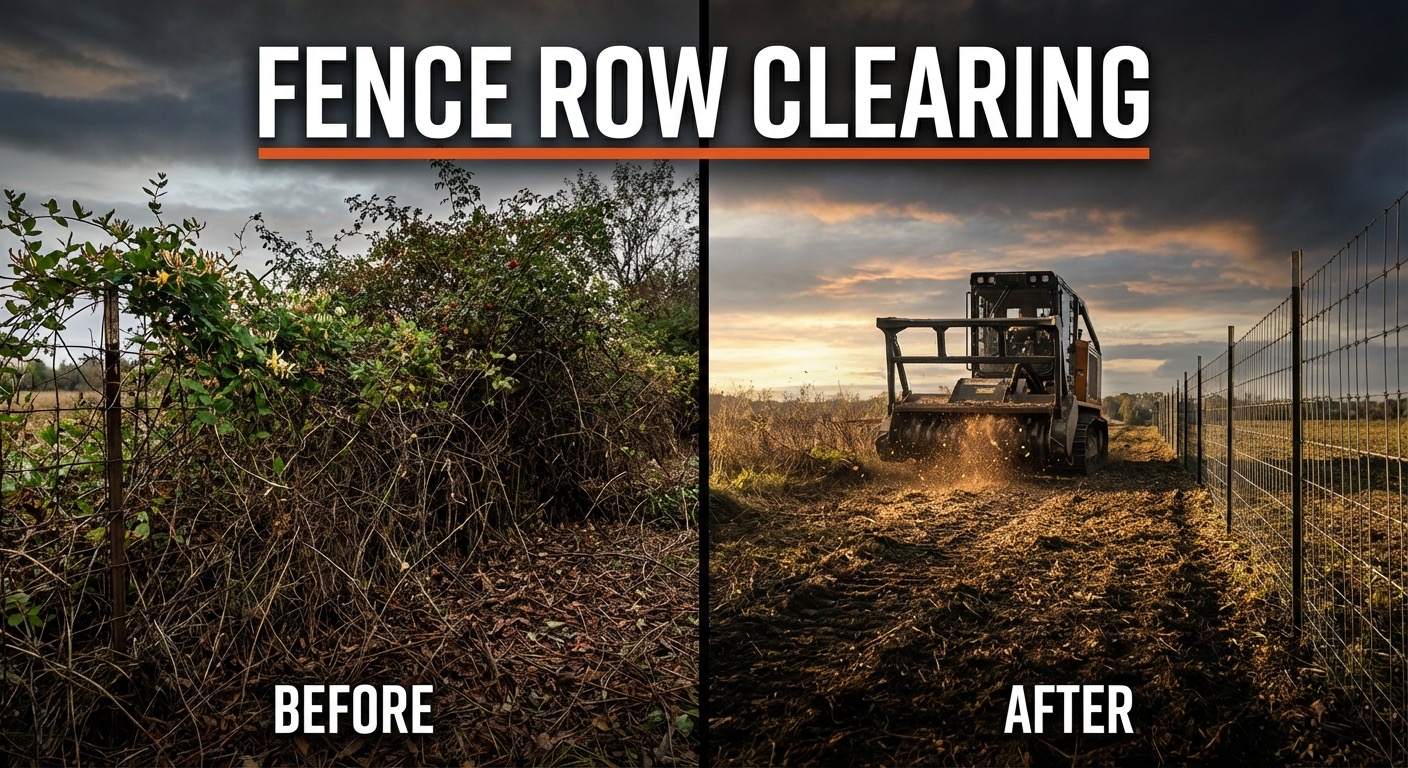
Unmaintained fence lines become linear tick habitats. Brush and vines grow up through and over fences, creating a shaded, humid strip that connects different parts of your property. Clearing fence lines removes these corridors and reduces tick movement across your land.
Around Outbuildings
Sheds, barns, and detached garages that sit near overgrown areas are tick magnets. Mice and chipmunks nest in and around these structures, and they're the primary hosts for tick larvae and nymphs. Clear vegetation at least 10 feet around all outbuildings and keep grass mowed short.
Forestry Mulching for Tick Control
Forestry mulching is the fastest and most thorough method for clearing tick habitat on larger properties. A mulching head on a skid steer grinds brush, saplings, and undergrowth down to ground level in a single pass. The result is dry wood chips over bare ground, which is hostile terrain for ticks.
Why Mulching Works Better Than Other Methods
Versus mowing: A mower cuts grass and light weeds but can't handle brush, saplings, or vines. The same overgrowth comes back in weeks. A mulching head processes material up to 6 inches in diameter and grinds it fine enough that regrowth is slow and sparse.
Versus brush hogging: A brush hog cuts woody material but leaves stumps and debris on the ground. Ticks can still hide in the cut debris. Mulching grinds everything into small chips that dry out in the sun.
Versus hand clearing: Hand clearing is thorough but painfully slow on anything over a quarter acre. A forestry mulching crew can clear an acre of dense brush in a few hours. The cost per square foot drops dramatically at scale.
Best Time to Mulch for Tick Control
Late winter through early spring (February to April) is ideal. You get several advantages:
Ground is typically firm enough for equipment before spring rains soften things up. Vegetation is dormant, so clearing is faster and more complete. You're done before tick season peaks in April and May. Cleared areas have time to dry out and establish grass cover before ticks become most active.
Right now, in March, is one of the best windows to get this done. The ground has thawed, dormant vegetation is easy to identify, and you'll have full tick protection by the time warm weather arrives in April.
Spring is the ideal time to clear tick habitat before peak season hits. Get a free assessment of your property.
Get a Free QuoteAdditional Tick Prevention Measures
Land clearing is the foundation, but combining it with other measures gets the best results.
Manage Deer Access
Adult blacklegged ticks feed primarily on deer. Properties that attract deer have more ticks. Deer fencing around yard areas is expensive but effective. At minimum, avoid planting deer-attracting landscaping (hostas, daylilies, arborvitae) near your home, and don't put bird feeders where spilled seed draws deer close to the house.
Control Rodents
White-footed mice are the primary host for tick larvae and nymphs, and they're the main reservoir for the Lyme disease bacterium. Keep wood piles elevated and away from the house. Remove rock walls and stone borders near living areas where mice nest. Seal gaps in foundation walls, sheds, and garages. Less mice means fewer infected ticks.
Keep Lawns Mowed Short
Ticks don't survive in mowed grass. They need vegetation tall enough to climb. Keeping your lawn at 3 inches or shorter eliminates questing habitat. This includes mowing all the way to property edges and fence lines, not just the flat, open areas.
Remove Leaf Litter
Leaf litter holds moisture and provides shelter for ticks during hot, dry weather. Rake or blow leaves from yard edges and under bushes near the house. In wooded areas you're keeping, leaf removal isn't practical, but clearing leaves from the buffer zone between woods and yard makes a difference.
Consider Tick Tubes
Tick tubes are cardboard tubes filled with permethrin-treated cotton. Mice collect the cotton for nesting material, and the permethrin kills ticks on the mice. Place them around your property in spring and late summer. They target the mouse-tick cycle that drives Lyme disease transmission. Available at most hardware stores and garden centers in the Cincinnati area.
Professional Perimeter Spraying
Targeted pesticide application along the yard-woodland border and in known tick habitat areas can reduce tick populations by 85 to 95%. Most pest control companies in Cincinnati offer seasonal tick spraying programs. This works best combined with land clearing, not as a substitute for it. Spraying overgrown brush kills the ticks present that day, but the habitat remains for new ticks to move in.
What Tick Prevention Costs in Cincinnati
Buffer Zone Clearing (Residential)
Clearing a perimeter strip around a typical suburban yard, removing brush and undergrowth between the lawn edge and the tree line. For most properties in Anderson Township, Loveland, or Milford, this runs $500 to $1,500 depending on how much brush has built up and how long the perimeter is.
Trail and Path Clearing
Widening and clearing walking paths through wooded sections of your property. Usually $300 to $800 depending on trail length and brush density. Most customers combine this with perimeter clearing since the equipment is already on site.
Full Property Tick Habitat Reduction
For larger rural properties where you want comprehensive tick control, clearing fence lines, perimeters, around outbuildings, and creating wide buffer zones. Half-acre to two-acre clearing projects run $2,000 to $5,000.
The Math on Prevention
A single case of Lyme disease costs an average of $3,000 to $12,000 in medical bills when you factor in testing, antibiotics, and follow-up visits. Chronic Lyme cases with ongoing symptoms can run over $50,000 in treatment over several years. Clearing brush around your yard for $1,000 is cheap insurance.
Tick-Safe Landscaping After Clearing
After clearing, what you plant and how you maintain the area determines whether ticks come back.
Ground Cover Choices
Short grass is the simplest option for cleared buffer zones. Fescue blends do well in Ohio shade conditions. In areas you don't want to mow, gravel or wood chip ground cover creates an inhospitable surface for ticks.
Avoid planting pachysandra, English ivy, or other dense ground covers right against the woodland edge. These create the same humid microenvironment that ticks need. If you want ground cover, stick to low-growing options that stay under 4 inches and let air circulate.
Strategic Plant Selection
Some plants help with tick control. Lavender, rosemary, and chrysanthemums contain natural compounds that repel ticks. Planting them along borders won't eliminate ticks, but it adds another layer of deterrence. At minimum, avoid dense shrubs and ground covers near the house that create tick habitat in your landscaping.
Maintenance Schedule
Plan to mow buffer zones every 2 to 3 weeks during the growing season. Walk the perimeter monthly to catch any brush regrowth before it gets established. Invasive species like honeysuckle and multiflora rose grow fast and can reclaim a cleared area in a single growing season if you don't stay on top of it.
Protecting Yourself During Tick Season
Even with cleared buffer zones, you'll encounter ticks when you walk in wooded areas. Here's what actually works for personal protection.
Permethrin-Treated Clothing
Spray boots, pants, and socks with permethrin spray or buy pre-treated clothing. Permethrin kills ticks on contact and lasts through multiple washes. This is the single most effective personal tick prevention measure. It's what forestry workers, military personnel, and field biologists use.
Tick Checks
After spending time in wooded or brushy areas, do a full-body tick check within 2 hours. Pay attention to hairlines, behind ears, armpits, the beltline, behind knees, and between toes. Nymph-stage blacklegged ticks are the size of a poppy seed. You have to look carefully. Shower within 2 hours of coming indoors, and throw clothes in the dryer on high heat for 10 minutes. The heat kills ticks that survived the wash cycle.
Tick Removal
If you find an attached tick, grab it with fine-tipped tweezers as close to the skin as possible and pull straight up with steady pressure. Don't twist, squeeze, or burn it. Save the tick in a sealed bag with the date written on it. If you develop symptoms (fever, rash, joint pain) in the next 30 days, the saved tick can be tested to identify what disease it might have transmitted.
For Lyme disease, the tick generally needs to be attached for 36 to 48 hours before transmission occurs. Finding and removing ticks quickly is genuine protection, not just peace of mind. This is why daily tick checks during spring and summer matter.
Frequently Asked Questions
Does clearing brush reduce ticks on my property?
Yes. Ticks need shade, moisture, and leaf litter to survive. Removing brush and undergrowth eliminates the humid microhabitat ticks depend on. Properties with a maintained buffer zone between lawn and woods have 50 to 75% fewer tick encounters than properties where brush grows up to the yard edge.
What types of ticks are found in Ohio?
Ohio has four common tick species. The blacklegged tick (deer tick) carries Lyme disease. The American dog tick carries Rocky Mountain spotted fever. The lone star tick causes alpha-gal syndrome (red meat allergy). The Asian longhorned tick, confirmed in Ohio in 2020, can reproduce without mating and populations grow rapidly.
When is tick season in Ohio?
March through November, with peak activity in April through June and September through October. Blacklegged ticks can be active any time temperatures are above 35 degrees, including during winter warm spells.
How wide should a buffer zone be between my yard and the woods?
The CDC recommends a minimum 3-foot barrier of wood chips or gravel. For better protection, clear a 9 to 12 foot zone and keep it mowed. Properties with heavy tick pressure benefit from 20 to 30 foot cleared buffers.
Can ticks give you a red meat allergy?
Yes. The lone star tick transmits alpha-gal syndrome, which causes allergic reactions to red meat, pork, and sometimes dairy. Reactions happen 3 to 6 hours after eating and can include anaphylaxis. The lone star tick has been expanding into southern Ohio, with confirmed cases in the Cincinnati area.
How much does it cost to clear land for tick prevention in Cincinnati?
Residential perimeter clearing typically costs $500 to $1,500. Larger property-wide clearing runs $2,000 to $5,000 depending on acreage and brush density. Compare that to a single Lyme disease case costing $3,000 to $12,000 in medical bills.