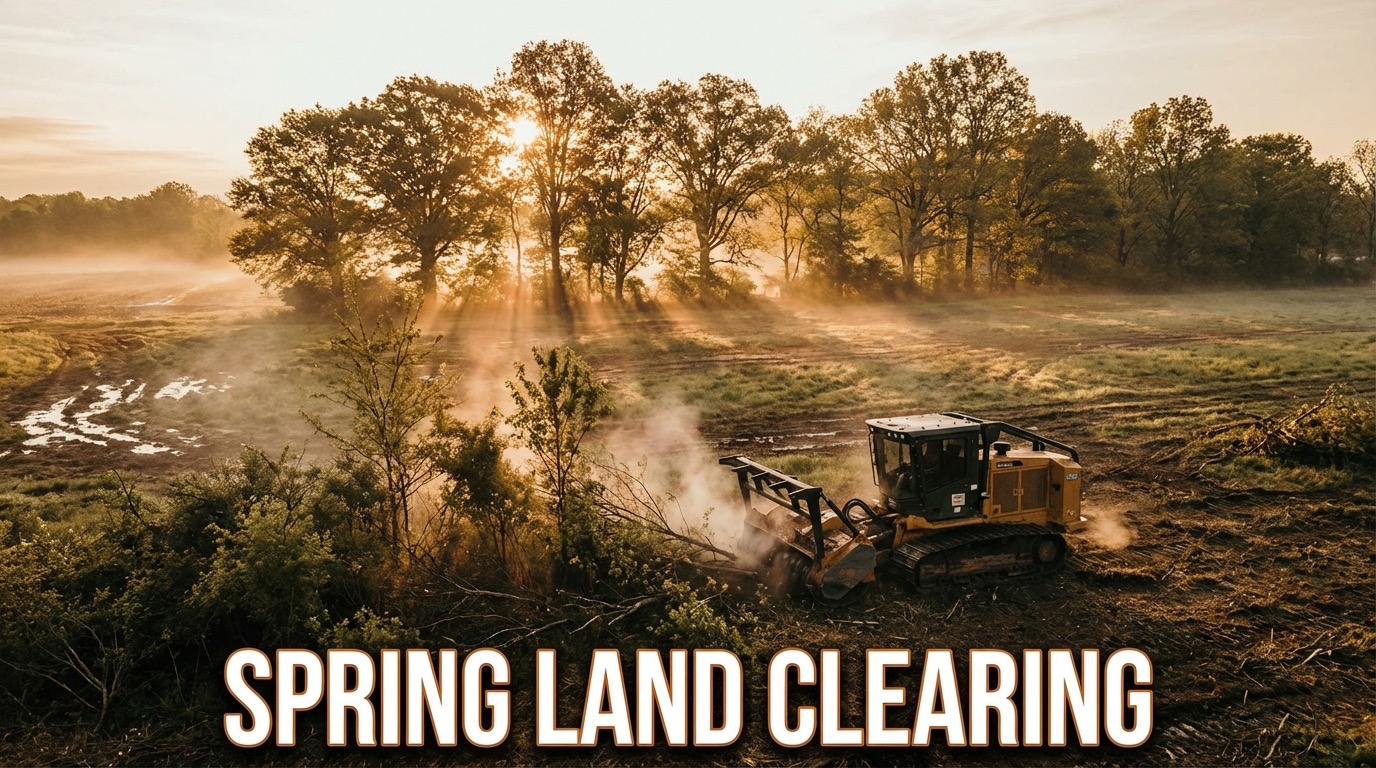
Erosion Control After Land Clearing Ohio: Protect Your Property This Spring
You cleared the land. Now keep the soil from washing away.
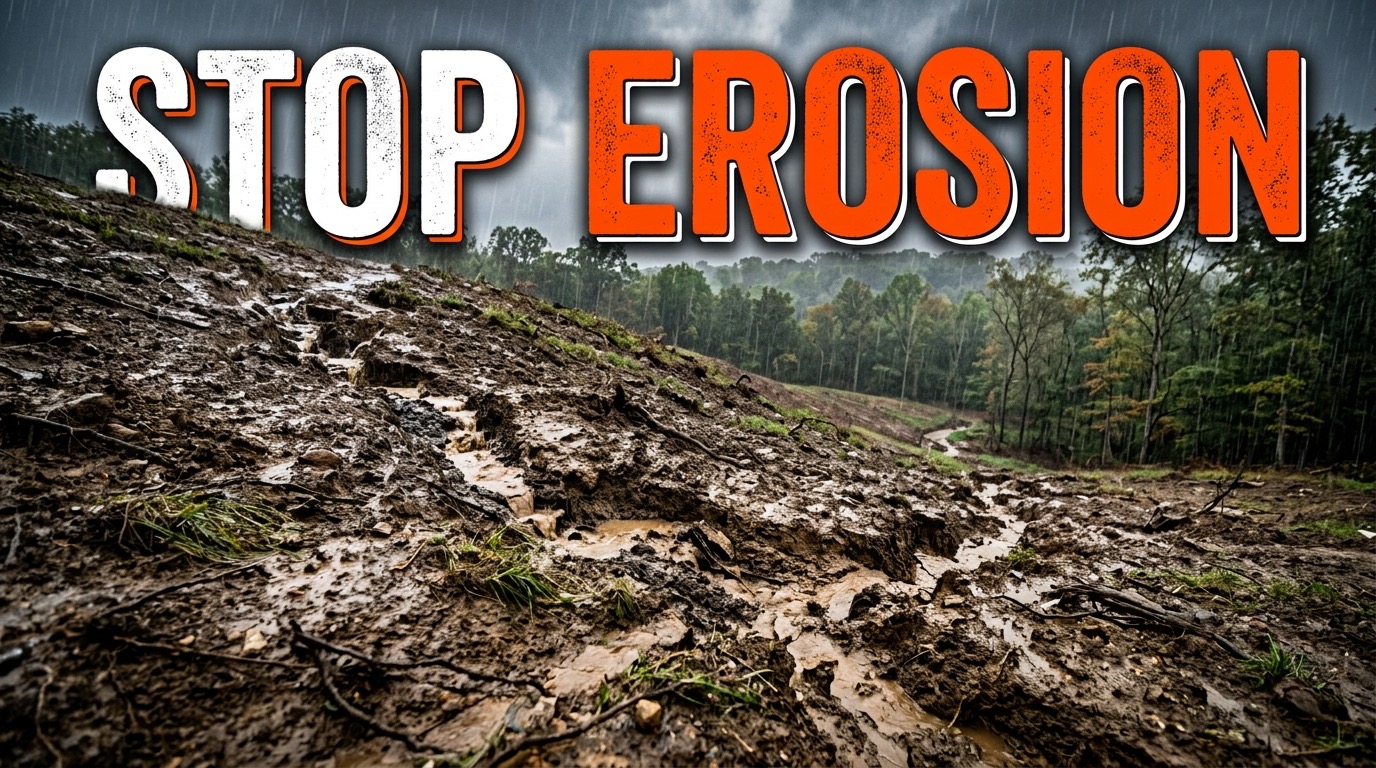
Ohio gets about 40 inches of rain per year. Most of that falls between March and July. If you just cleared land and left bare soil exposed, you have a problem that's measured in tons per acre.
Every spring, we talk to Ohio property owners who cleared their land in winter or early spring and now have gullies forming, mud running into their neighbor's yard, or sediment filling their new pond. The clearing went great. The part they skipped was erosion control.
This guide covers exactly what you need to do after clearing land in Ohio to keep your topsoil in place, stay legal with Ohio EPA, and set your property up for whatever comes next.
Why Erosion Happens After Land Clearing
Trees, brush, and ground cover do three things for your soil:
- Root systems hold soil together. A single mature tree has thousands of feet of roots binding the ground. Remove the tree, and those roots decay over 2-5 years. During that time, soil loosens.
- Canopy breaks rainfall impact. Raindrops hit bare soil at about 20 mph. That impact dislodges soil particles and starts the erosion process. A tree canopy absorbs most of that energy.
- Ground cover slows water movement. Leaves, brush, and grass act like speed bumps for water flowing across the ground. Remove them, and water picks up speed, picks up soil, and carves channels.
When you clear an acre of Ohio woodland, you remove all three of these protections at once. Heavy clay soils in Hamilton County, Warren County, and Clermont County make the problem worse because clay compacts easily and doesn't absorb water well once the organic layer is gone.
How Forestry Mulching Gives You a Head Start
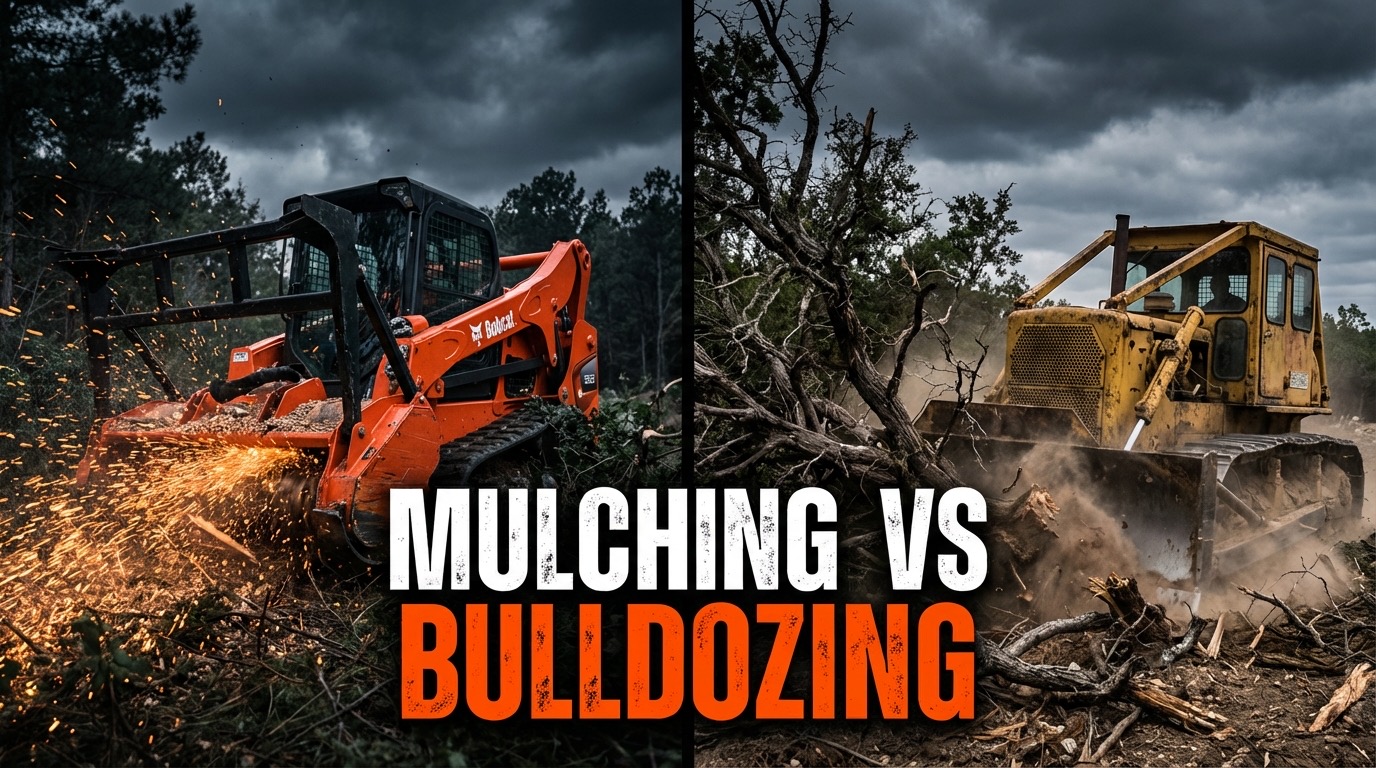
This is the single biggest reason we push forestry mulching over bulldozing for land clearing.
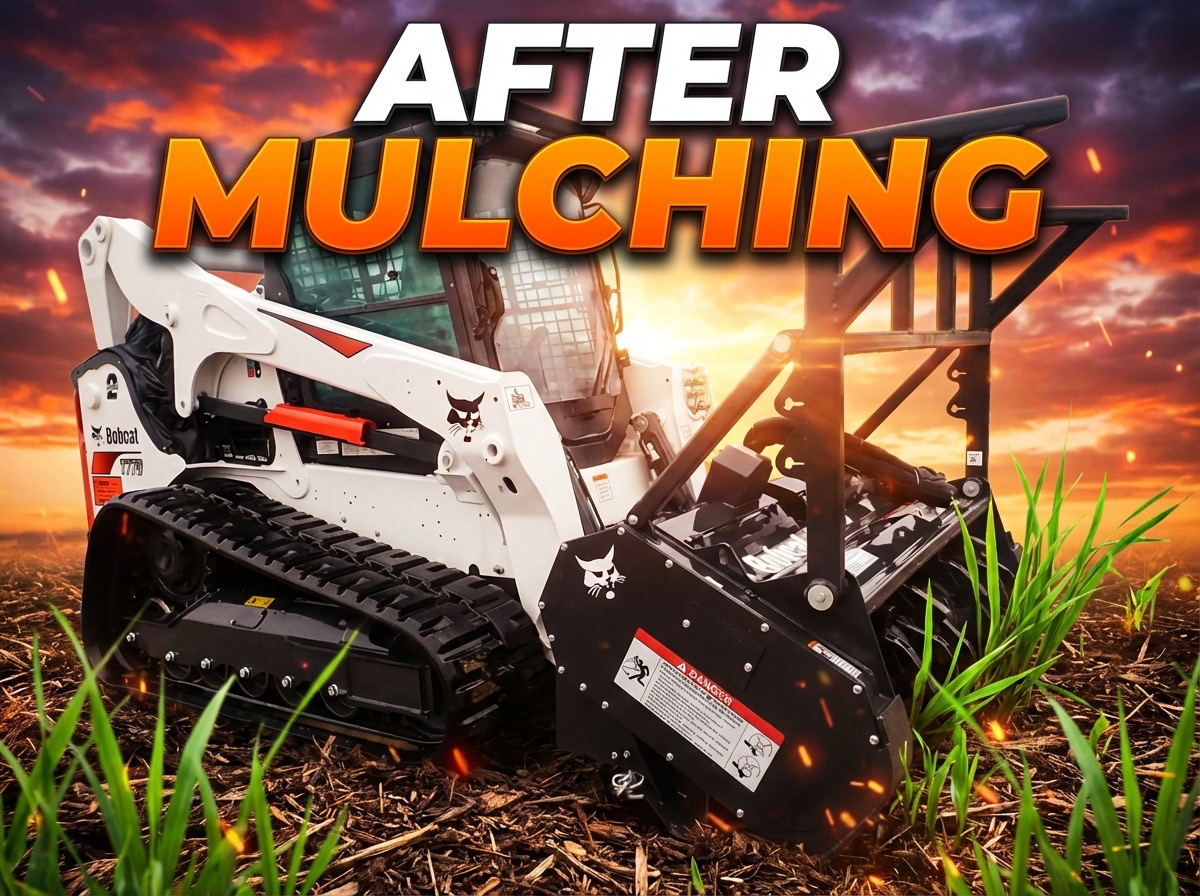
When a forestry mulcher grinds trees and brush, it leaves behind a 2-4 inch layer of shredded organic material directly on the soil surface. That mulch layer does most of what the original vegetation was doing:
- Absorbs rainfall impact so soil particles stay put
- Slows water flow across the surface
- Holds moisture in the soil, which helps new vegetation establish
- Breaks down over 12-18 months and adds organic matter back into the soil
A bulldozed site needs immediate erosion control because the soil is completely exposed and often compacted. A mulched site gives you a 2-3 week window before you need to add anything, and in many cases the mulch layer alone handles erosion on flat to moderate terrain.
We've cleared hundreds of properties across Greater Cincinnati, and the ones where erosion becomes a real problem are almost always the ones that were bulldozed or grubbed.
Want to see how forestry mulching protects your soil?
Use our instant pricing calculator to get an estimate for your property. We'll include erosion control recommendations with every quote.
Get Instant PricingErosion Control Methods That Work in Ohio
The right approach depends on your slope, soil type, project timeline, and what you're building next. Here's what actually works, starting from the cheapest and simplest.
1. Seeding and Straw Mulch
Cost: $200-500 per acre
Best for: Flat to moderate slopes, residential lots, future lawn areas
Broadcast a seed mix and cover it with straw. Simple and cheap. For Ohio spring planting, use:
- Annual ryegrass for fast cover (germinates in 5-7 days)
- Tall fescue for permanent, low-maintenance cover
- White clover to fix nitrogen and fill gaps
Spread straw at about 2 bales per 1,000 square feet. Don't use hay. Hay is full of weed seeds and you'll spend the next three years fighting whatever grows from it.
This works well on slopes up to about 3:1 (roughly a 30% grade). Anything steeper and the straw washes away before the seed germinates.
2. Silt Fencing
Cost: $3-6 per linear foot installed
Best for: Perimeter protection, keeping sediment off neighboring properties and out of waterways
Silt fence is a black geotextile fabric stretched between stakes along the downhill edge of a cleared area. It catches sediment-laden runoff and lets clean water pass through.
Critical installation detail: the bottom 6 inches of fabric must be buried in a trench. If it's just stapled to the surface, water runs right under it. We see improperly installed silt fence on Ohio construction sites constantly. It does nothing if it's not trenched in.
Silt fence is required on most commercial clearing projects in Ohio and on any residential project that disturbs more than one acre.
3. Erosion Control Blankets
Cost: $1-3 per square yard
Best for: Steep slopes, channels, areas that need to establish vegetation quickly
These are biodegradable mats (usually straw, coconut fiber, or a blend) that you roll out over seeded ground and stake down. They hold the seed in place, retain moisture, and break down over 6-12 months as grass fills in.
On Cincinnati's hillsides, erosion blankets are often the only thing that keeps seed on steep slopes long enough to germinate. We use them on hillside clearing projects in Mt. Adams, Indian Hill, and along the Little Miami River corridor where slopes commonly hit 40-50%.
4. Hydroseeding
Cost: $1,000-3,000 per acre
Best for: Large cleared areas, commercial projects, slopes where hand-seeding isn't practical
Hydroseeding sprays a slurry of seed, mulch, fertilizer, and a tackifier (sticky binding agent) onto the soil. The tackifier glues everything to the ground surface, which makes it work much better than broadcast seeding on slopes.
For large clearing projects (5+ acres), hydroseeding is often cheaper per acre than hand-seeding with straw because it's so much faster. A hydroseeding crew can cover an acre in about 30 minutes.
5. Rock Check Dams and Swales
Cost: $500-2,000 per structure
Best for: Concentrated water flow, drainage channels, properties with existing gullies
If water is already channeling across your cleared property, you need to slow it down before it cuts deeper. Small rock dams placed across drainage paths force water to spread out and drop its sediment load.
Swales are shallow, wide ditches that redirect water flow across a slope instead of straight down it. They're permanent, low-maintenance, and work well combined with seeding.
6. French Drains
Cost: $1,500-5,000 depending on length
Best for: Properties with high water tables, clay soils that pond water, foundation protection
After clearing, many Ohio properties discover they have a water problem they didn't know about. The trees were drinking 50-100 gallons of water per day each. Remove the trees, and that water has to go somewhere.
French drains collect subsurface water and route it to a safe discharge point. They're common in Warren County and Clermont County where clay soils and rolling terrain create persistent wet spots after clearing.
Ohio EPA Requirements: What's Legal
Ohio takes erosion control seriously, especially near waterways. Here's what you need to know:
Projects disturbing more than 1 acre: You need an NPDES Construction Stormwater General Permit from Ohio EPA. This requires a Stormwater Pollution Prevention Plan (SWPPP) that details your erosion controls before any dirt moves.
Projects near streams or wetlands: Additional requirements under Ohio's 401 Water Quality Certification. Buffer zones are typically 50-120 feet depending on the waterway classification.
Residential clearing under 1 acre: Generally no state permit required, but Hamilton County, Warren County, Butler County, and Clermont County all have their own sediment control rules. Check with your county soil and water conservation district before starting.
The penalty for skipping this: Ohio EPA fines start at $10,000 per day for unpermitted discharge of sediment into waterways. Neighbors can also sue for damages if your runoff causes problems on their property. It happens more than you'd think.
Erosion Control Timeline: Spring Clearing in Ohio
Here's the timeline we recommend for spring clearing projects in the Cincinnati area:
Day of clearing: If using forestry mulching, the mulch layer provides immediate protection. If using other methods, install silt fencing on the downslope perimeter before work begins.
Within 1 week: Seed all disturbed areas. Use annual ryegrass for fast temporary cover mixed with your permanent seed selection. Apply straw mulch or erosion blankets on slopes.
Within 2 weeks: Inspect for any channeling or concentrated flow. Install rock check dams if water is cutting paths. Repair any silt fence damage.
Week 3-4: Ryegrass should be germinating. Water if conditions are dry (unusual in Ohio spring, but it happens). Reseed any bare spots.
Week 6-8: Permanent grasses should be establishing. Mow annual ryegrass high (4+ inches) to reduce competition but maintain cover.
Month 3-6: Full grass establishment on flat areas. Steep slopes may need a second application of seed in fall.
Common Mistakes We See in Ohio
Waiting too long to seed. "I'll get to it next weekend" turns into a month, and by then you have 6-inch gullies. Every rain event on bare soil makes the problem worse. Seed the day after clearing if possible.
Using hay instead of straw. This is Ohio's most common landscaping mistake. Hay is full of seeds. Straw has had the seeds removed. One gives you erosion control. The other gives you a weed farm.
Ignoring slope angles. Seed and straw work great on flat ground. On a 2:1 slope, they wash away in the first heavy rain. Match your erosion control method to your actual slope conditions.
Not accounting for removed tree water uptake. Ten mature trees can pull 500-1,000 gallons of water out of the ground per day during growing season. Remove them, and your property gets wetter. Plan for drainage, not just surface erosion.
Bulldozing when you should have mulched. If erosion is a concern (slopes, clay soil, near waterways), forestry mulching should be your first choice for clearing. The built-in mulch layer saves you hundreds to thousands in erosion control costs.
Cost Comparison: Erosion Control by Clearing Method
Here's the real math on erosion control costs based on how the land was cleared. These numbers come from actual projects we've worked on in Greater Cincinnati:
| Scenario | Clearing Cost | Erosion Control Needed | Total |
|---|---|---|---|
| Forestry mulching (1 acre, moderate slope) | $3,000-5,000 | $200-500 (seed only) | $3,200-5,500 |
| Bulldozing (1 acre, moderate slope) | $2,500-4,000 | $1,500-3,000 (seed + blankets + silt fence) | $4,000-7,000 |
| Forestry mulching (1 acre, steep slope) | $4,000-6,000 | $500-1,000 (seed + blankets) | $4,500-7,000 |
| Bulldozing (1 acre, steep slope) | $3,500-5,000 | $3,000-5,000 (full erosion package) | $6,500-10,000 |
Bulldozing looks cheaper up front, but once you add the erosion control that bare, compacted soil requires, forestry mulching costs less overall. On steep terrain, the difference is even bigger.
Planning a Spring Clearing Project?
We include erosion control guidance with every project. Tell us about your property and we'll recommend the right approach for your terrain and timeline.
Get a Free QuoteWhen to Call a Professional
You can handle erosion control yourself on small, flat properties. Spread seed, throw down straw, done.
Call a professional when:
- Your cleared area is on a slope steeper than 3:1
- Water is running toward a neighbor's property or a stream
- You're seeing active gullying (channels deeper than 6 inches)
- Your project disturbs more than 1 acre (permit requirements)
- You're clearing near a creek, wetland, or floodplain
Erosion problems compound fast. A small rill that you could fix with a bag of seed and a Saturday afternoon turns into a 3-foot gully that needs heavy equipment if you wait a month. Spring rain in Ohio doesn't care about your schedule.
Frequently Asked Questions
How soon after land clearing should I start erosion control?
Start immediately. Bare soil exposed to even one heavy rain event can lose several tons of topsoil per acre. If you cleared in spring, get seed down within the first week. If you used forestry mulching, the mulch layer gives you a 2-3 week buffer before you need additional measures.
Does forestry mulching cause erosion?
No. Forestry mulching is the best clearing method for erosion prevention. The mulch layer left behind acts as a natural ground cover that absorbs rainfall, slows runoff, and protects topsoil. Bulldozing and grubbing are far more likely to cause erosion because they strip the ground bare and disturb the soil profile.
What is the cheapest erosion control method after clearing?
Seeding with straw mulch at roughly $200-500 per acre for seed and straw. Broadcast a mix of annual ryegrass and clover for fast cover. This works well on flat to moderate slopes. For steep grades, you'll need silt fences or erosion blankets, which cost more but are necessary.
Do I need a permit for erosion control in Ohio?
If your project disturbs more than one acre, Ohio EPA requires a NPDES Construction Stormwater General Permit. You'll need a Stormwater Pollution Prevention Plan (SWPPP) before work begins. Smaller residential projects usually don't need permits, but your county may have local requirements.
What grass seed works best after land clearing in Ohio?
For fast temporary cover, annual ryegrass germinates in 5-7 days. For permanent cover, use a mix of tall fescue, Kentucky bluegrass, and white clover. Fescue handles shade, slopes, and heavy clay soils. Seed in spring (March-May) or fall (September-October) for best results.
How much does professional erosion control cost in Ohio?
Seeding with straw: $200-500/acre. Silt fencing: $3-6 per linear foot installed. Erosion control blankets: $1-3 per square yard. Hydroseeding: $1,000-3,000 per acre. French drains: $1,500-5,000. Most residential clearing projects need $500-2,000 in erosion control.
Bottom Line
Erosion control isn't optional in Ohio. Skip it, and you'll lose topsoil, create drainage problems, and potentially face EPA fines or neighbor lawsuits. The good news: if you chose forestry mulching for your clearing, you're already 80% of the way there.
For most residential clearing projects in Cincinnati, $200-500 in seed and straw on top of a forestry mulched surface is all you need. For steep slopes and larger projects, budget $1,000-3,000 for proper erosion control. Either way, it's the cheapest insurance you'll buy for your property this year.