
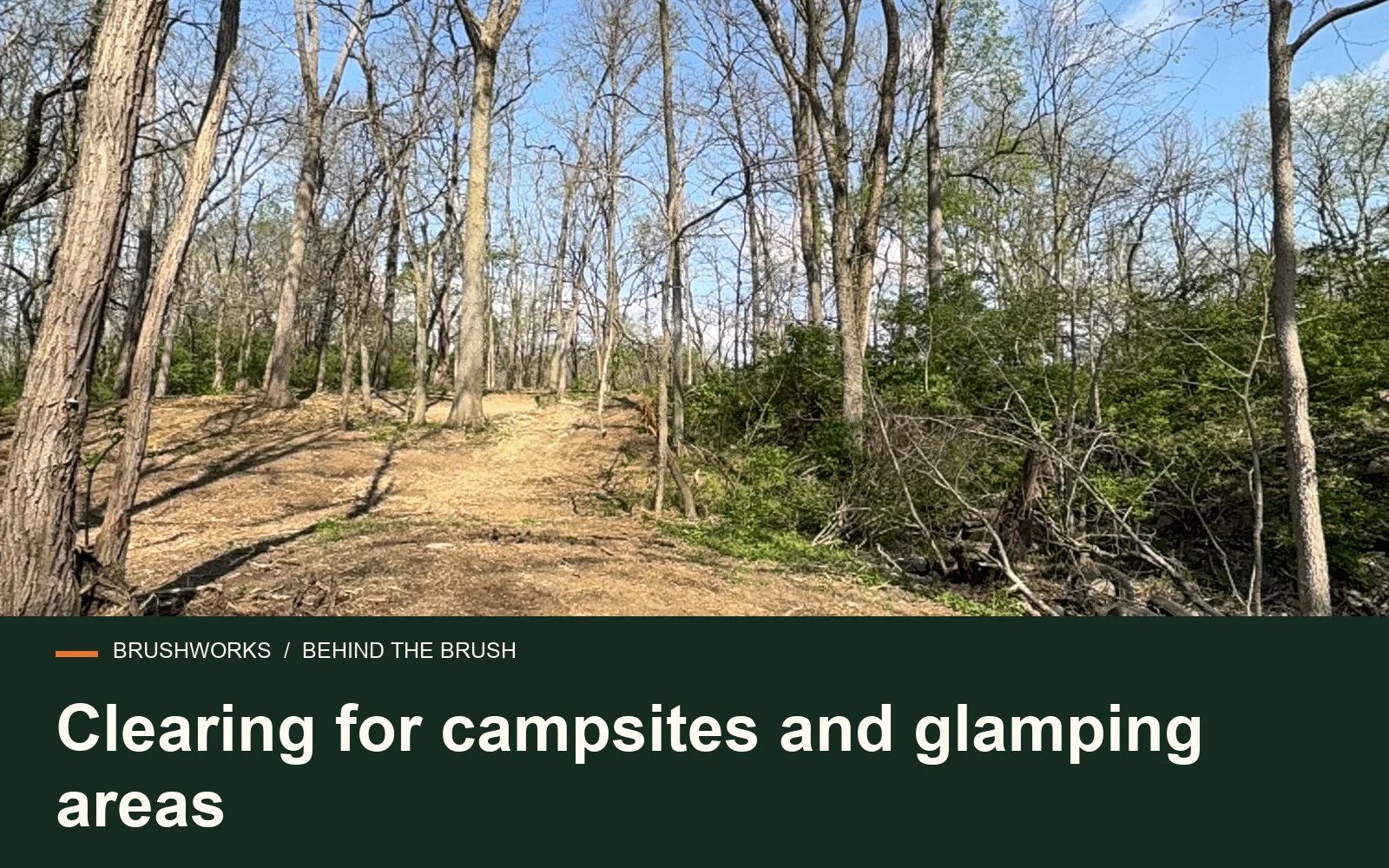
Before you start
- Confirm the intended use with the local planning office.
- Retain suitable shade while assessing overhead hazards.
- Plan guest circulation and service access before clearing.
Why Ohio Is a Prime Market for Camping and Glamping
And the barrier to entry is lower than most people think. You don't need to build a hotel. You need cleared pads, access trails, basic utilities, and a good booking platform. The land clearing is the single biggest physical transformation your property will go through, and getting it right sets up everything else for success.
Types of Camping and Glamping Sites You Can Build
Before you start clearing, you need to decide what kind of operation you're building. Each type has different clearing requirements, and the difference matters for budgeting and planning.
How to Plan Your Campsite Layout Before Clearing
Walk your property multiple times before you clear anything. Walk it in the morning and the evening to understand how light moves through the trees. Walk it after a rain to see where water collects and flows. Walk it with a GPS app running to map out distances and elevations. The more you know about your land before the mulcher arrives, the better your finished product will be.
Where guests park depends on your site type. RV sites have built-in parking at the pad. For tent and glamping sites, you have two options: a central parking area where guests walk to their sites, or individual pull-off spots near each site. Central parking is cheaper to build and keeps vehicles away from the camping experience. Individual parking is more convenient for guests hauling gear. Many glamping operations use a central lot and shuttle guests to their sites with a UTV, which adds to the premium experience.
Think about where water, electric, and sewer lines will run before you clear. Burying utility lines after the fact is expensive and disruptive. Plan your clearing to include utility corridors that connect to each site or to a central utility hub. For off-grid glamping, you still need to think about where solar panels will get sun, where composting toilets drain, and how you'll handle gray water from outdoor showers.
Why Forestry Mulching Is Ideal for Campsite Clearing
First, it's selective. A forestry mulcher can remove the underbrush, honeysuckle, small trees, and dead wood while leaving the mature canopy trees standing. This is critical for camping properties because the whole appeal is being in the woods. Bulldozing strips everything and leaves you with a barren field. Mulching gives you a park-like forest floor under a mature tree canopy, which is exactly what guests want.
Fourth, the environmental impact is minimal. Forestry mulching doesn't disturb the soil layer the way grading and bulldozing does. The root systems of removed trees stay in place and continue to hold soil. The mulch layer protects against erosion. For properties near creeks, streams, or in floodplain areas, which is common in southern Ohio, this lower environmental impact can simplify your permitting process.
Permits and Regulations for Ohio Campgrounds
Ohio has specific regulations for campgrounds and recreational camps, and ignoring them can shut your operation down before it starts. Here's what you need to know.
Start with your county planning department. Ask specifically about campgrounds, glamping, and agritourism. Get answers in writing. Some Ohio counties have been slow to update their codes for the glamping trend, which means you may need to educate your zoning board about what you're proposing and how it differs from a traditional RV park.
Any campground that provides water or sanitation facilities needs health department approval. This covers drinking water sources, wastewater systems, shower and restroom facilities, and food service if you're providing meals. For small glamping operations, composting toilets and well water may be acceptable depending on your county. Larger operations typically need a septic system engineered for the expected guest volume.
Properties near streams, rivers, or wetlands may have additional clearing restrictions. The Army Corps of Engineers regulates activities in waterways and wetlands under the Clean Water Act. Ohio EPA has its own requirements for stormwater management during land-disturbing activities. If your property includes or borders a waterway, get a consultation before clearing. Forestry mulching typically has a lighter regulatory footprint than grading or bulldozing because it doesn't involve soil disturbance, but you should still check.
Design Tips for Campsite Properties That Book
Southern Ohio gets rain in every month, and some of your bookings will hit wet weather. Grade your cleared sites so water flows away from tent pads and platforms. Create drainage swales along trails so they don't become mud channels. Consider a covered communal space where guests can gather when it rains. A campsite that handles rain well gets booked year-round. One that turns into a swamp after two days of rain gets one-star reviews.
Common Mistakes to Avoid
Over-clearing for the sake of "opening it up." More clearing is not better for camping properties. Guests want to feel surrounded by nature. Clear only what you need for pads, trails, and safety, and leave the rest wild.
Ignoring drainage until it's a problem. Ohio clay soil plus spring rains equals standing water. Plan your drainage during the clearing phase, not after you've already installed platforms and hosted your first guests in ankle-deep mud.
Packing sites too close together. Revenue per site goes up dramatically when guests can't see or hear their neighbors. Fewer sites with more spacing will outperform a packed campground on both reviews and repeat bookings.
Forgetting about winter access. If you plan to operate any part of your property in the colder months, make sure your access roads and trails can handle wet, frozen, and muddy conditions. Gravel access roads are a worthwhile investment over bare dirt.
Agree on the handoff
Before work begins, define what the next person needs to find on site. A rough mulched opening may still contain roots, stump remnants, and uneven ground. Grading, structural preparation, planting, surfacing, and specialist tree work are separate unless explicitly included.
Keep the marked work map with the quote. At completion, compare the limits and finish, document any follow-up, and decide who will maintain the area. Photos help record the result, but they do not replace checking the ground and access.
Plan the work for your property
Send the site address, recent photos, a marked clearing area, and the finish you want. We can discuss where clearing fits and what needs a different trade.
Discuss your project → Explore pricing