
Choose what stays
Walk through the clearing limits, mark desirable trees, and identify fences, utilities, and areas to avoid. Tell us whether your goal is a view, a path, usable yard space, or an easier-to-manage woodline.
Invasive bush honeysuckle · Greater Cincinnati
Open Up Dense Honeysuckle and Plan for Lasting Maintenance
The problem
Bush honeysuckle (Amur honeysuckle) is the most aggressive invasive plant threatening Greater Cincinnati. Introduced from Asia, this fast-spreading shrub has taken over forests, backyards, and fence lines throughout Ohio—and it's getting worse every year.
Left unchecked, invasive honeysuckle Cincinnati property owners face will destroy native ecosystems, block sightlines, reduce property value, and create impenetrable thickets that make land unusable.
Not sure it is honeysuckle? Our bush honeysuckle ID and control guide shows how to tell.
Straight answer
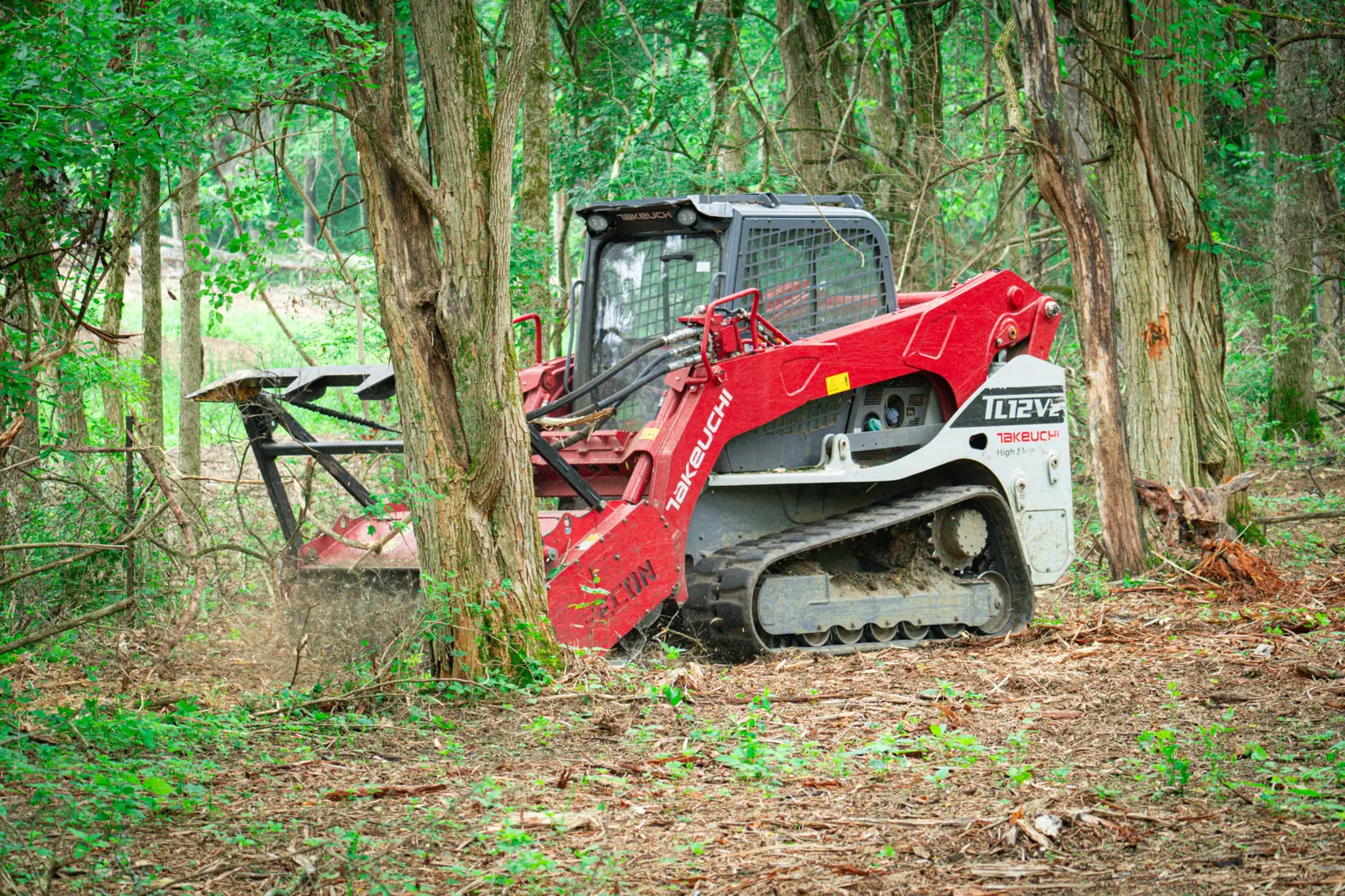
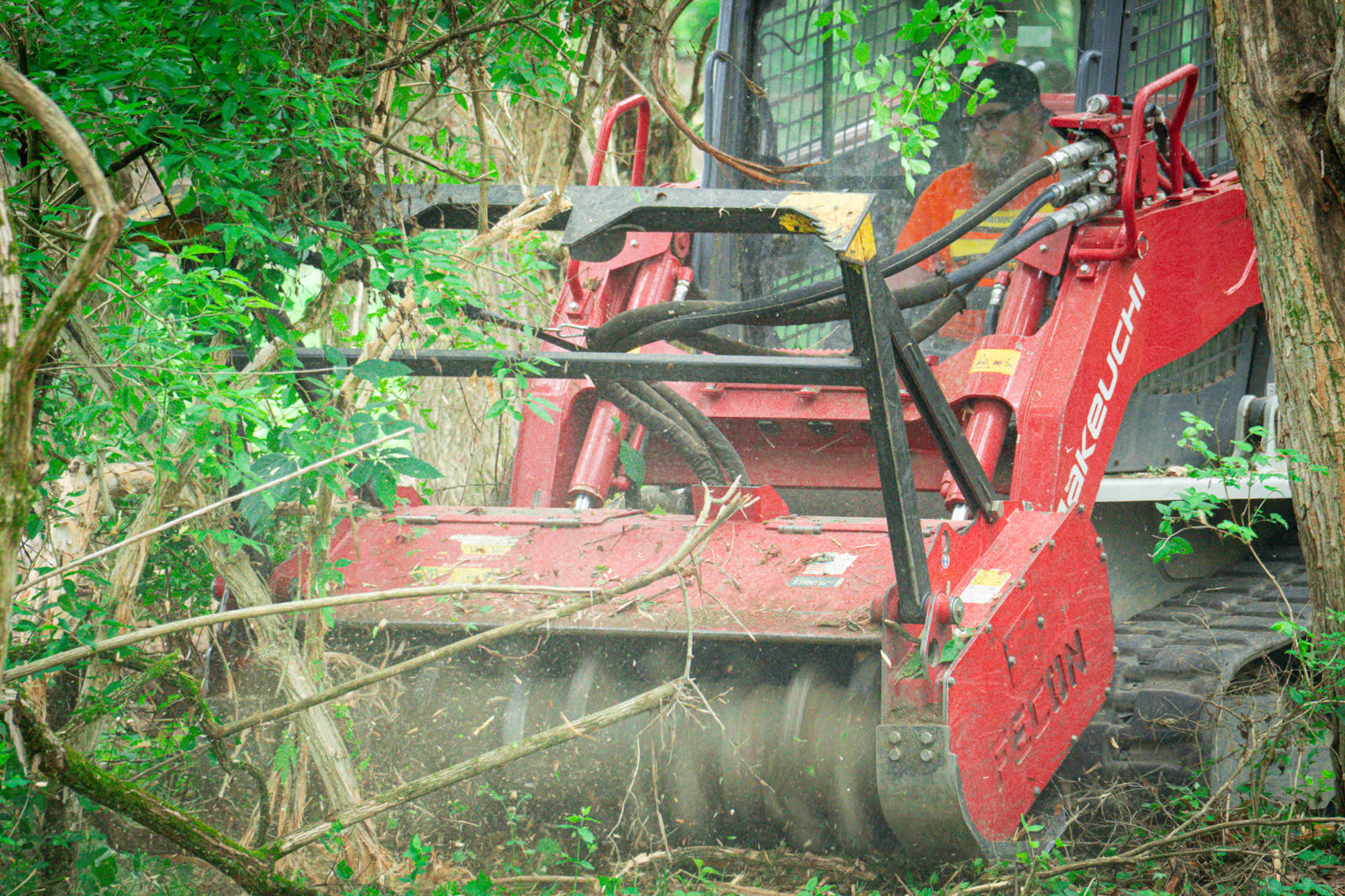
Unlike hand-cutting or herbicide-only approaches, our forestry mulching equipment processes standing honeysuckle into mulch, opening access for inspection and follow-up maintenance.
The result? Clean, usable land in a single visit, with a natural mulch layer that helps suppress regrowth and returns nutrients to your soil.
What clearing does
What it doesn't do
Project proof
Dense brush opened into usable space. Explore the clearing project and plan the finish and maintenance that fit your property.
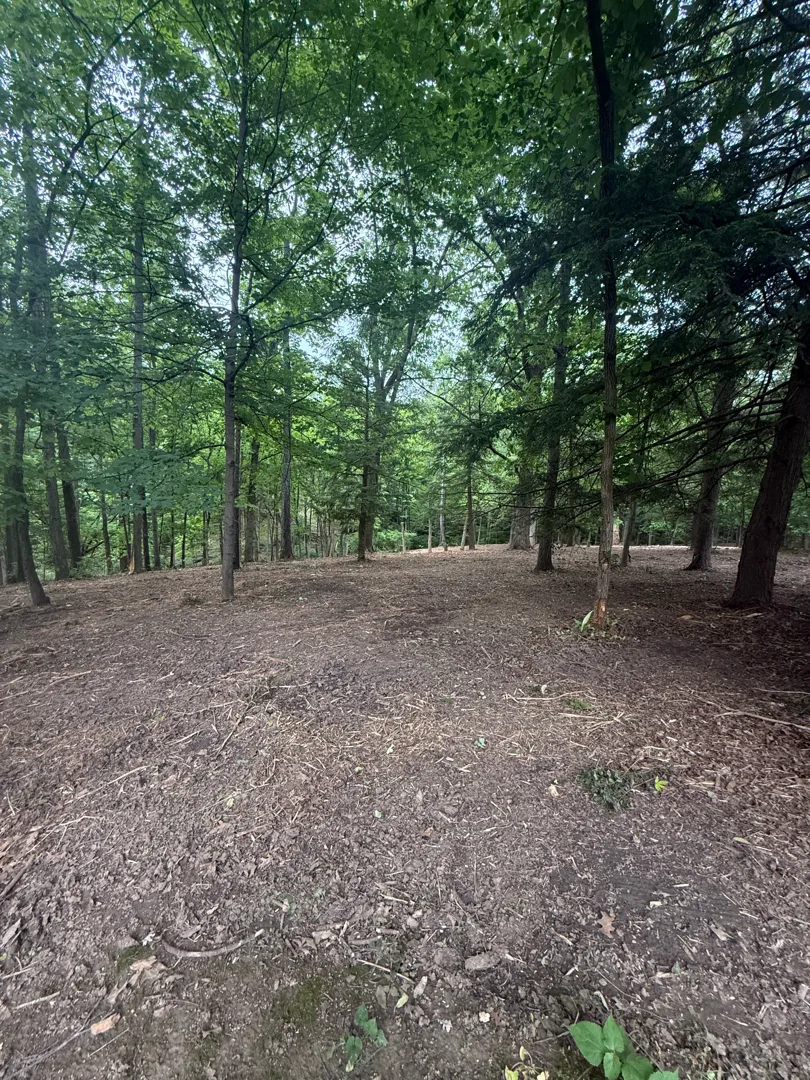
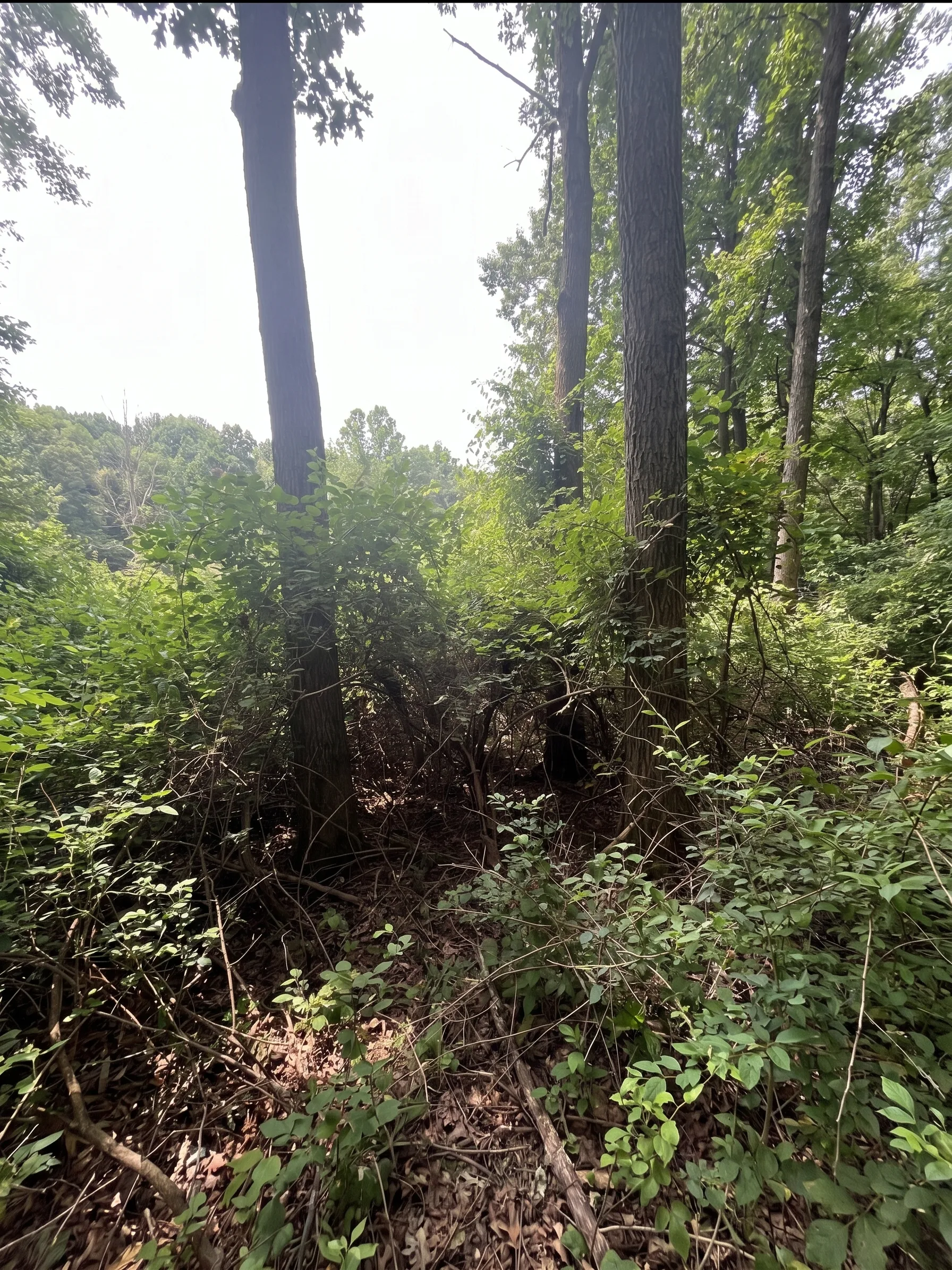 BeforeAfter
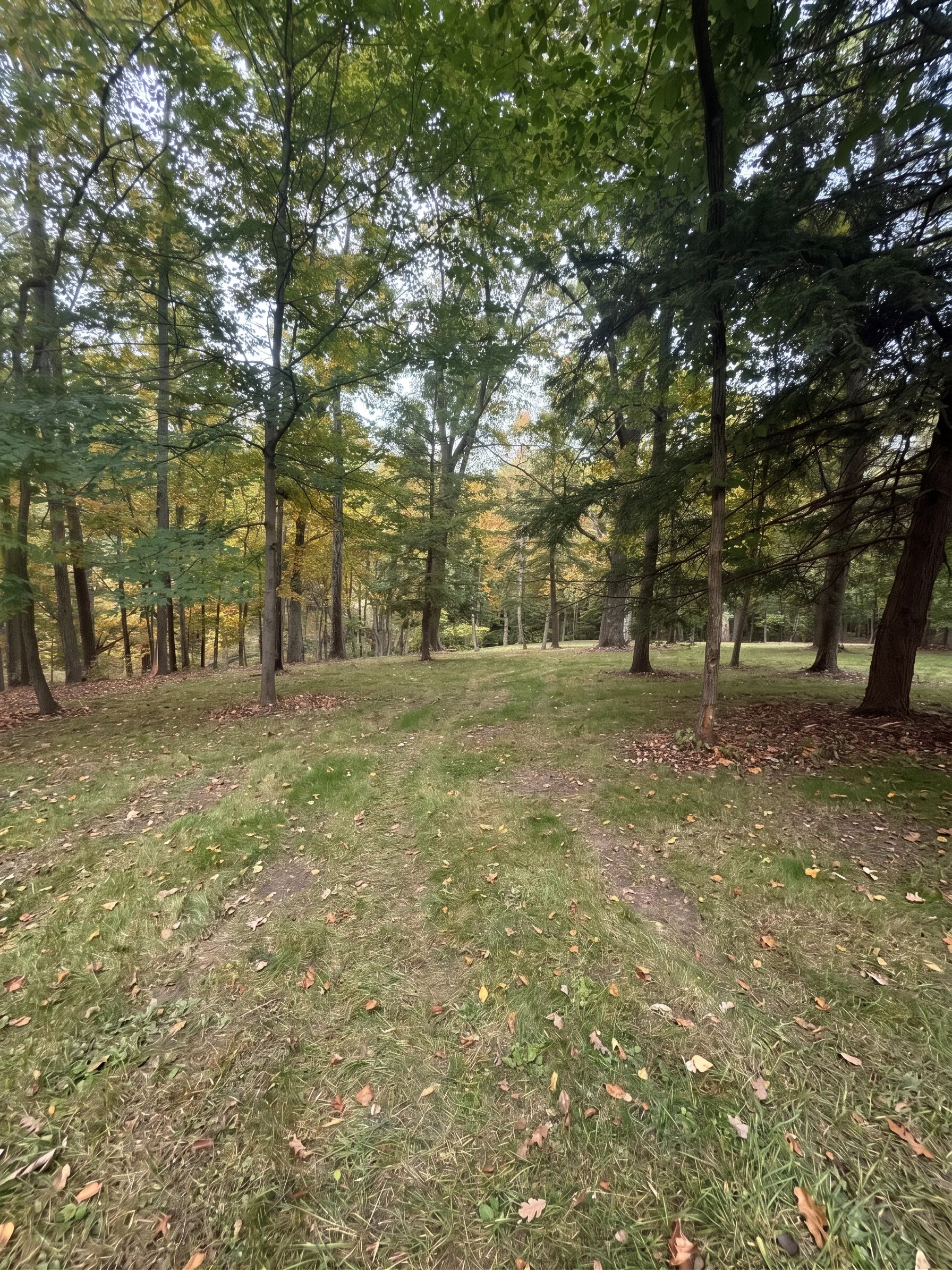 Illustration
Your property. A clear plan.
Open up the thicket, keep the trees you value, and make the space usable again. Brushworks clears dense honeysuckle and woody overgrowth for property owners throughout our Loveland-centered service area.
Walk through the clearing limits, mark desirable trees, and identify fences, utilities, and areas to avoid. Tell us whether your goal is a view, a path, usable yard space, or an easier-to-manage woodline.
Access, slope, plant size, and surrounding vegetation determine the equipment and approach. Mechanical clearing opens the above-ground growth; it does not mean every root has been removed.
Honeysuckle can regrow after clearing. Plan for monitoring and follow-up maintenance rather than waiting for a dense thicket to return. We can discuss the next step for your cleared area.
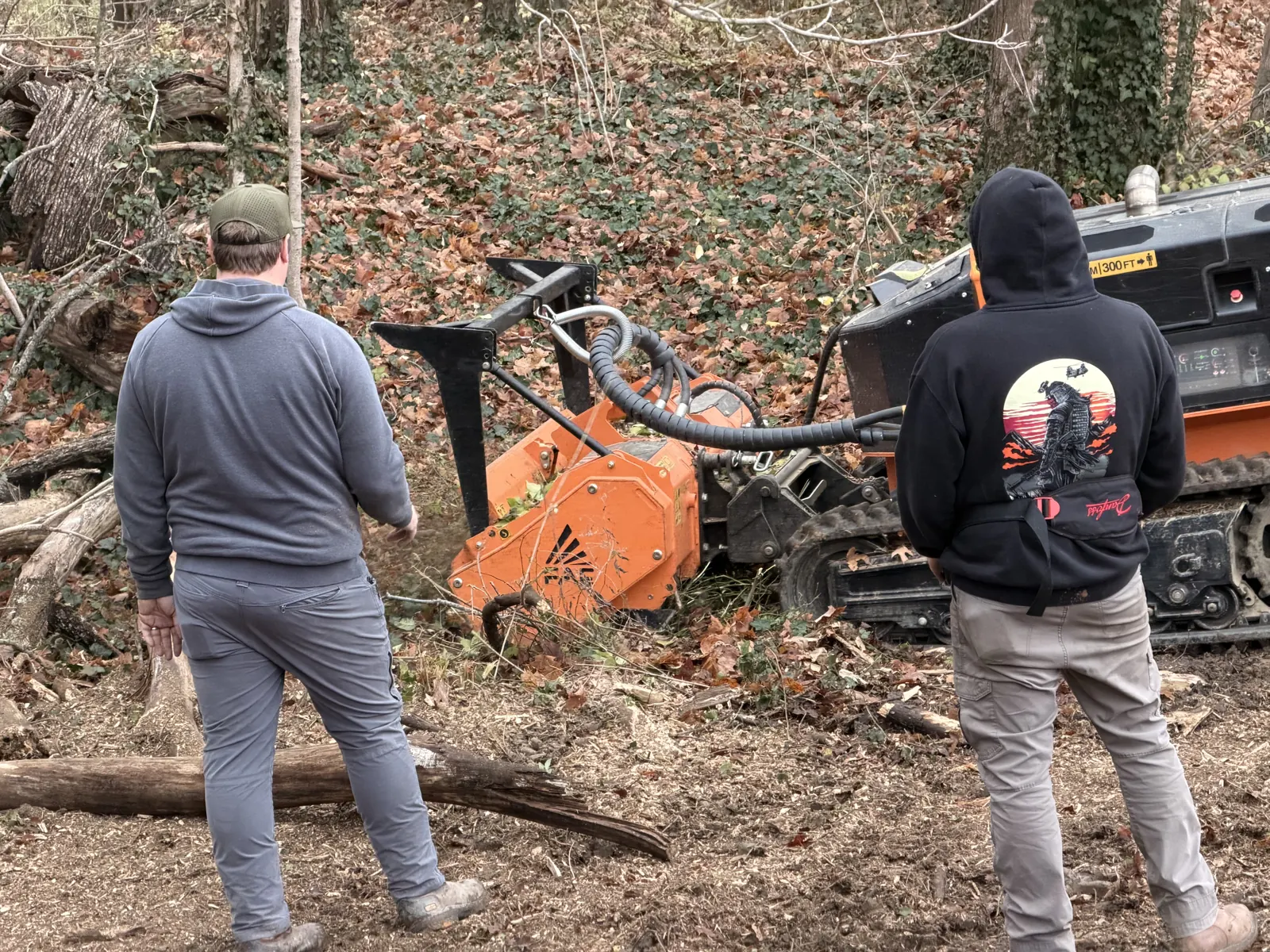
Real project
See the existing brush-and-honeysuckle project, from overgrowth through clearing and the maintained view.
For a useful honeysuckle quote, include the approximate area, photos of the growth and access, any slope, and the trees you want to retain.
Process
Our three-step approach combines clearing with a plan for regrowth
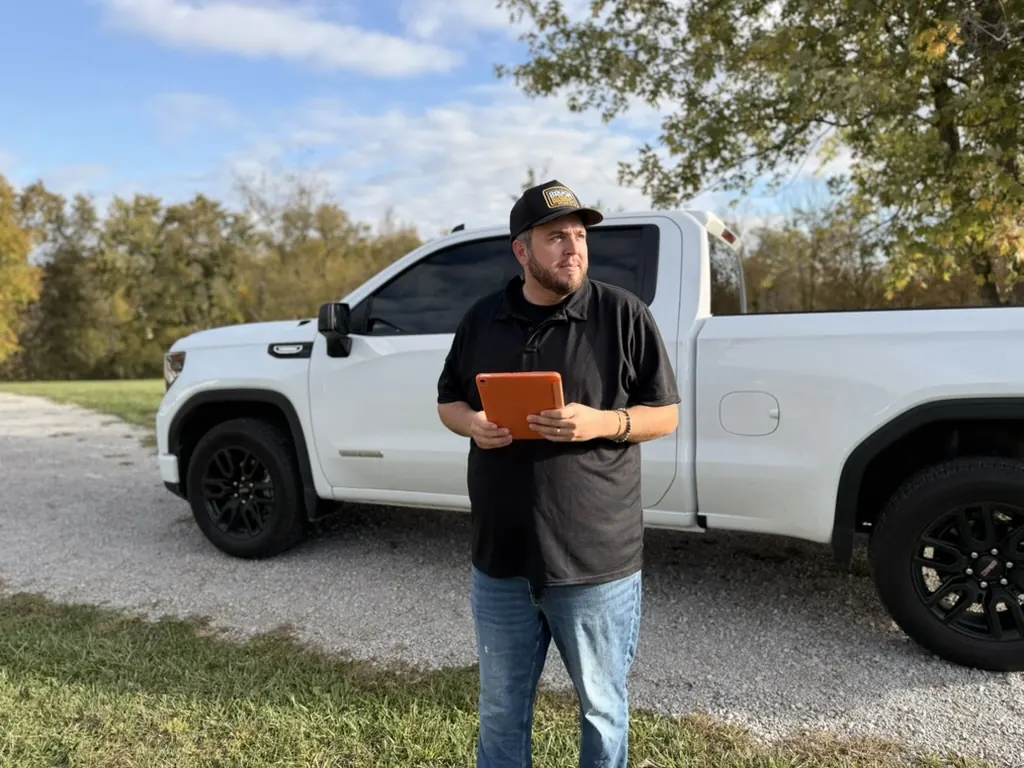
We evaluate your property to identify honeysuckle density, map protected trees, and plan the most efficient clearing approach.
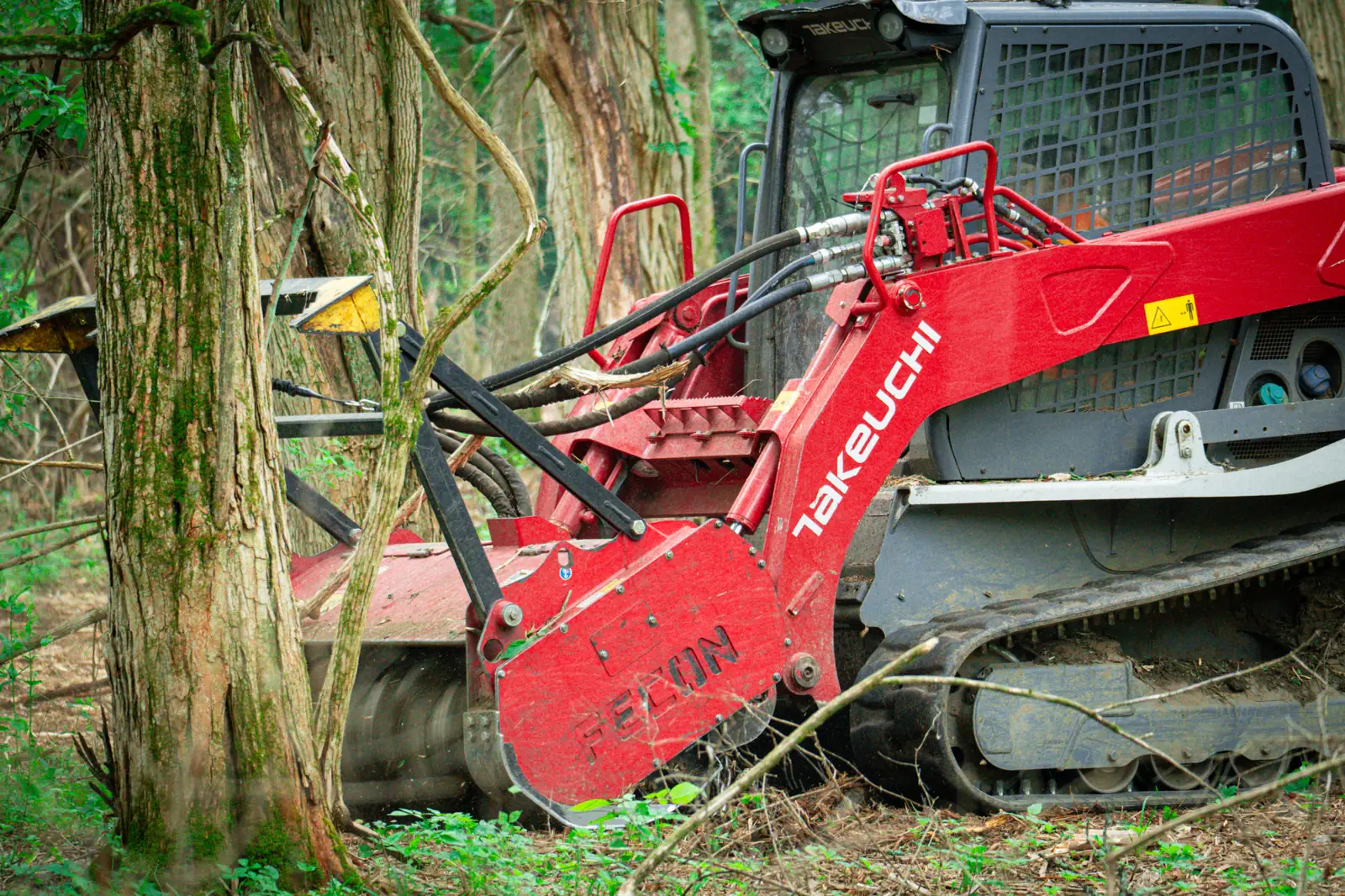
Our specialized equipment processes suitable stems and branches into mulch on site. Roots can remain alive after clearing.
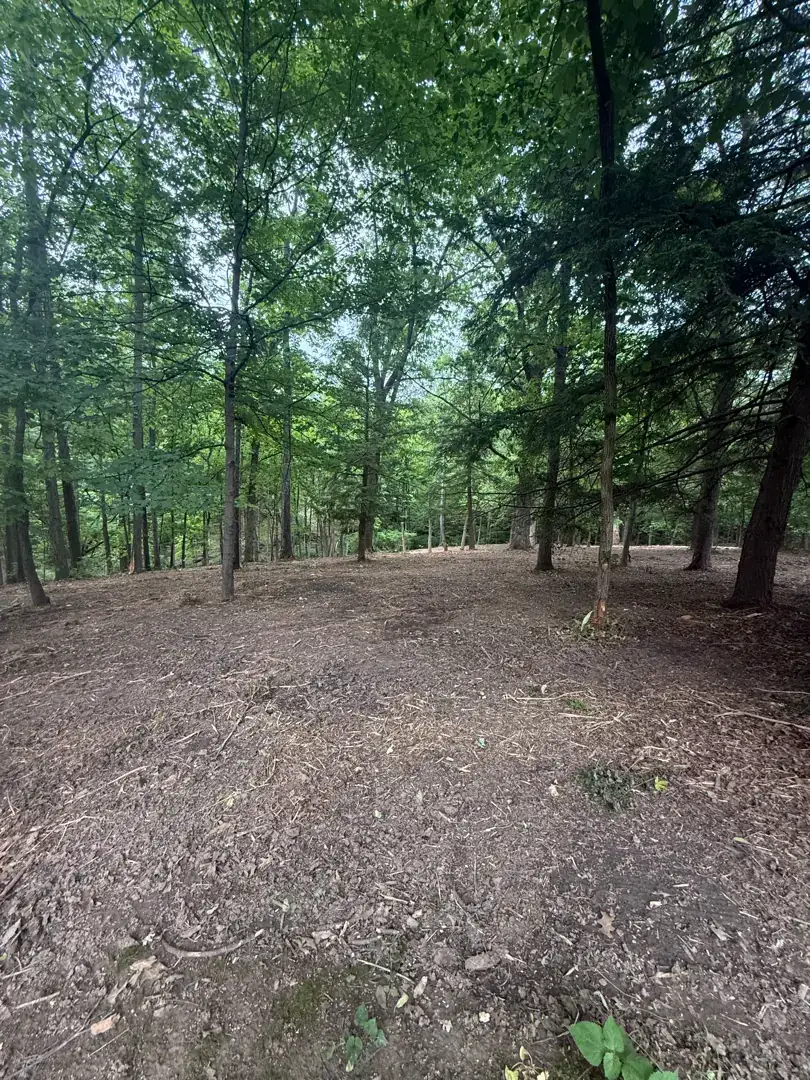
Your land is immediately usable. We can recommend native plantings or follow-up treatments to support long-term management.
After the mulcher leaves · Applied by 
Brushworks worked with TruGreen on a 3-treatment post-clearing vegetation plan for machine-accessible honeysuckle and invasive-growth areas. We clear and prep the site, then coordinate the treatment program.
See the Post-Clearing Treatment Plan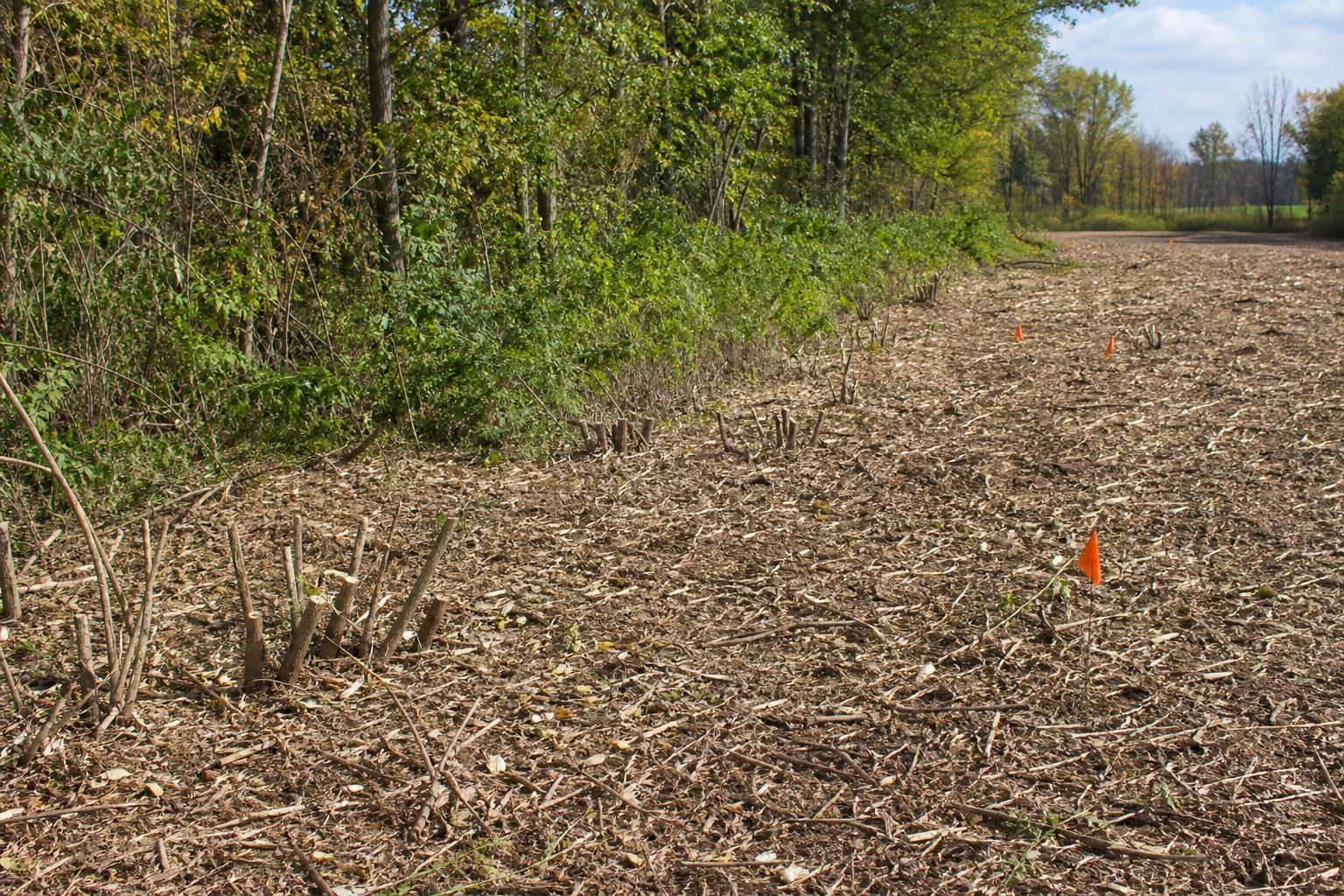
Pricing
Honeysuckle removal costs depend on the size of the area, density of growth, terrain, and accessibility.
Scattered growth, easy access
Typical residential clearing
Heavy infestation, difficult terrain
Why Brushworks
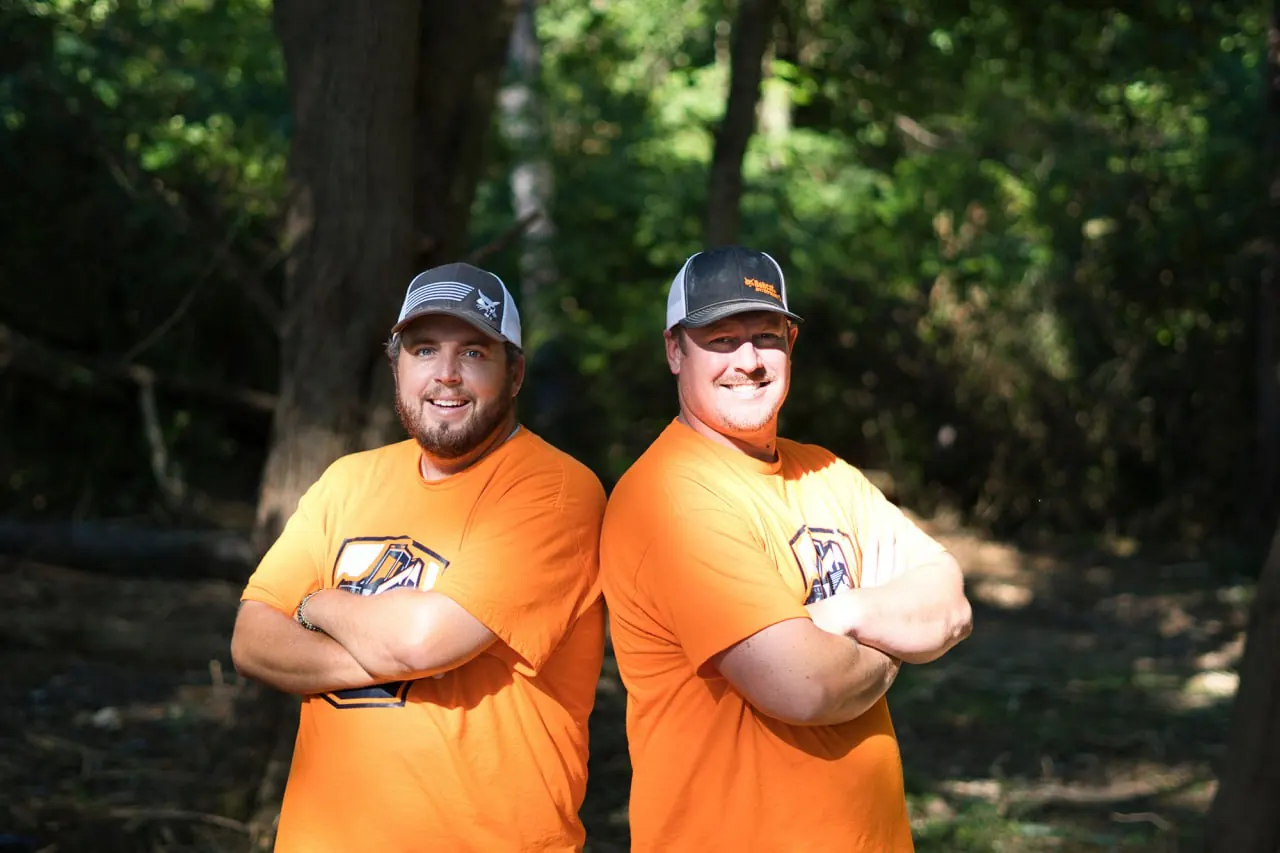
Local experience with invasive brush clearing
FAQ
Everything you need to know about honeysuckle removal in Cincinnati
Have a question that isn't here? Call 513-790-4150.
Honeysuckle removal costs vary based on acreage, density of growth, and terrain. Most residential projects in Cincinnati range from $1,500 to $5,000 per acre. Use our instant pricing calculator for a customized estimate, or contact us for a free on-site assessment.
Bush honeysuckle (Amur honeysuckle) is one of Ohio's most aggressive invasive species. It leafs out earlier and holds leaves longer than native plants, shading out native trees and shrubs. It destroys wildlife habitat, reduces property values, and spreads rapidly through bird-dispersed seeds. The Cincinnati area is particularly affected due to our climate and forest composition.
Yes. Established honeysuckle can resprout after mechanical clearing, and new seedlings can appear. We recommend monitoring and a site-specific follow-up plan; our post-clearing treatment program is one option.
Honeysuckle can be removed year-round, but fall through early spring is ideal. During this time, honeysuckle is easy to identify (it keeps its green leaves when native plants are bare), and the frozen or dry ground allows better equipment access with less soil disturbance.
Yes! We provide honeysuckle removal services throughout Greater Cincinnati including Hamilton, Warren, Clermont, and Butler counties. We serve Loveland, Mason, West Chester, Blue Ash, Indian Hill, Milford, and surrounding communities.
Unlike cutting or chainsaw removal, forestry mulching processes suitable standing vegetation in place. It opens access without creating a separate brush pile, but does not remove all roots or eliminate the need for maintenance.
We provide professional honeysuckle removal Cincinnati residents trust throughout Greater Cincinnati and surrounding counties.
Based in Loveland, Ohio, serving properties within a 50-mile radius across Greater Cincinnati and surrounding parts of Southwest Ohio, Northern Kentucky, and Southeast Indiana. Check your property on our service-area map.
Explore local clearing services, then request a site-specific assessment for access, scope, and follow-up needs.
Take back your property from invasive honeysuckle. Get a free quote or calculate your price instantly.
Get a free quote Calculate my price Call (513) 790-4150
We give you your land back.
Based in Loveland, Ohio. Forestry mulching, land clearing and property care within a 50-mile radius across Greater Cincinnati and surrounding parts of Ohio, Kentucky and Indiana.
513-790-4150team@brushworksco.com