
Before you start
- Confirm the proposed use with local authorities.
- Map accessible routes and service movements.
- Protect shade and plan the finished walking surface.
Why Ohio Is Perfect for Outdoor Wedding Venues
The landscape helps, too. Warren County and Clermont County have gently rolling terrain with mature hardwood forests that photograph beautifully. The Little Miami River corridor is packed with scenic properties that have the bones of a world-class venue hiding under decades of honeysuckle and brush.
What most of these properties need isn't construction. It's subtraction. Remove the invasive species, thin the underbrush, open up sight lines, and the natural beauty of southern Ohio does the rest.
Planning Your Venue Layout Before Clearing
The biggest mistake property owners make is clearing first and planning second. Walk your property with a venue layout in mind before a single tree comes down. Here's what you need to account for:
Grade matters. Guests sitting on the ground need to be able to see the couple, so a gentle natural slope works better than dead flat. Think amphitheater: if the ceremony area slopes slightly downward toward the altar, every row has a clear view.
This is your largest cleared zone, typically a half acre to one full acre. It needs to be flat enough for tables and a dance floor, accessible from the ceremony area, and positioned so that a tent or pavilion can be set up without hitting trees.
Think about sun exposure. A reception area that faces west gets blasted with afternoon sun in June and July. A tree canopy on the west side provides natural shade and creates golden-hour lighting that photographers love. Don't clear everything.
Permits and Zoning for Ohio Wedding Venues
This is where most venue dreams hit their first real obstacle, and where doing your homework upfront saves you months of headaches.
If you're serving food and providing restroom facilities, your county health department needs to sign off. For outdoor venues, this usually means an approved septic system or connection to sanitary sewer for permanent restrooms, or a licensed portable restroom provider for events.
The Clearing-to-Event Timeline
Here's a realistic timeline for turning raw Ohio woodland into a functioning wedding venue:
If you start clearing in March, you can realistically host your first events by August or September. Many venues do a soft launch in fall and open fully the following spring with a full booking calendar.
Design Tips From Venues That Book Out
After working on several venue sites, here's what separates the properties that book every weekend from the ones that struggle to fill their calendar.
The most photogenic venues in Ohio use mature trees as structural design elements. A canopy of white oaks over the ceremony area creates cathedral-like light filtering. A single massive sycamore becomes the altar backdrop. These aren't obstacles to clear around. They're the reason people book your venue over a hotel ballroom.
Great venues have separate areas for the ceremony, cocktail hour, dinner, and dancing that feel like different rooms even though they're outdoors. Use tree lines, hedgerows, and terrain changes as natural walls. Clear pathways between zones that guide guests from one space to the next.
If your property has a creek, pond, or natural spring, design around it. Water features are a massive draw for couples. But you need to manage drainage so that a week of April rain doesn't flood your reception area. Grade your cleared zones to shed water away from event spaces and toward natural drainage channels.
Common Mistakes to Avoid
Ignoring drainage. Ohio clay soil and spring rains mean you need to think about water flow from day one. Every cleared area needs a plan for where water goes.
Agree on the handoff
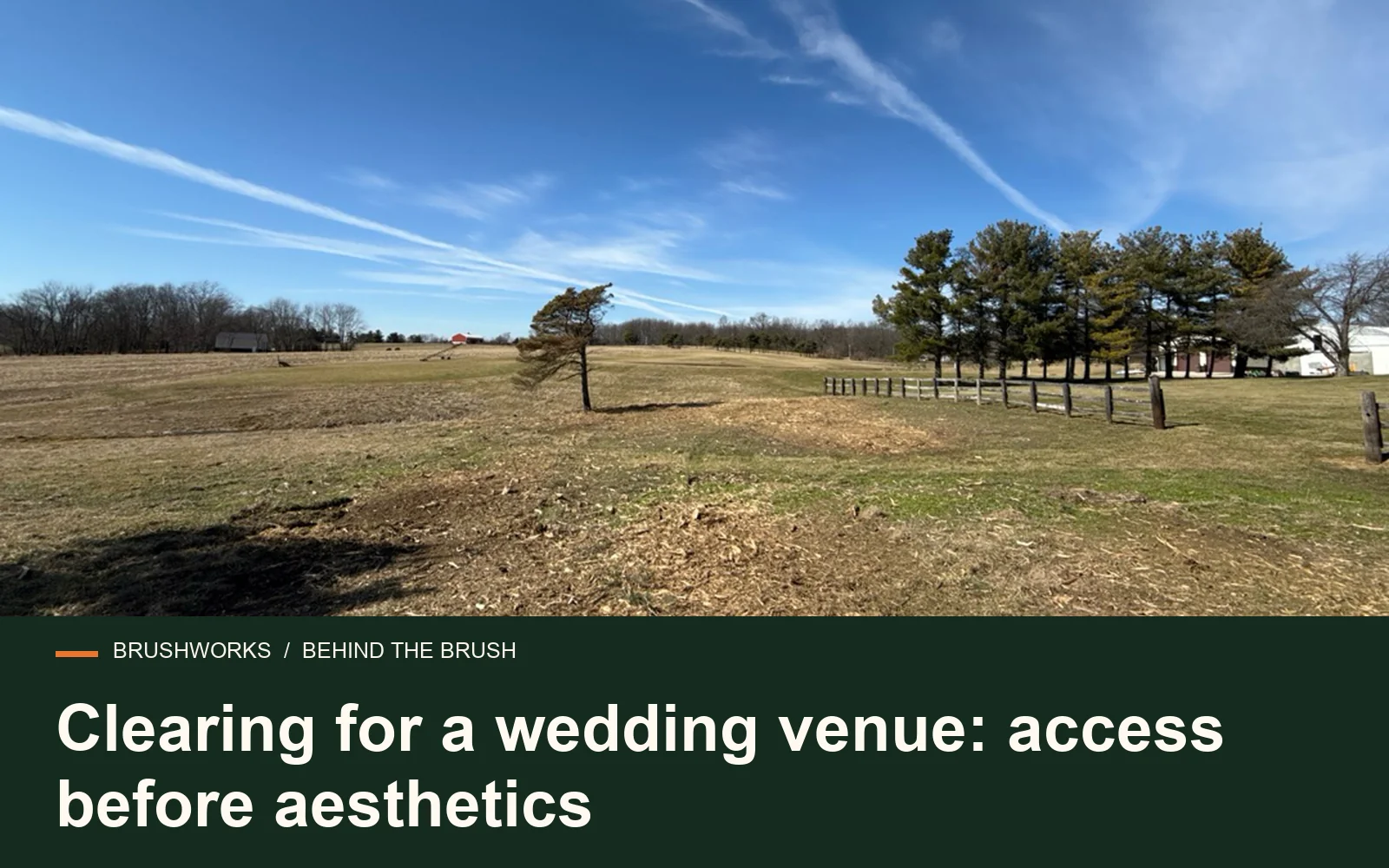
Before work begins, define what the next person needs to find on site. A rough mulched opening may still contain roots, stump remnants, and uneven ground. Grading, structural preparation, planting, surfacing, and specialist tree work are separate unless explicitly included.
Keep the marked work map with the quote. At completion, compare the limits and finish, document any follow-up, and decide who will maintain the area. Photos help record the result, but they do not replace checking the ground and access.
Plan the work for your property
Send the site address, recent photos, a marked clearing area, and the finish you want. We can discuss where clearing fits and what needs a different trade.
Discuss your project → Explore pricing