
Before you start
- Provide a marked map and recent photos.
- List access restrictions and known debris.
- Ask what additional work the final use will require.
First, define the lot clearing goal
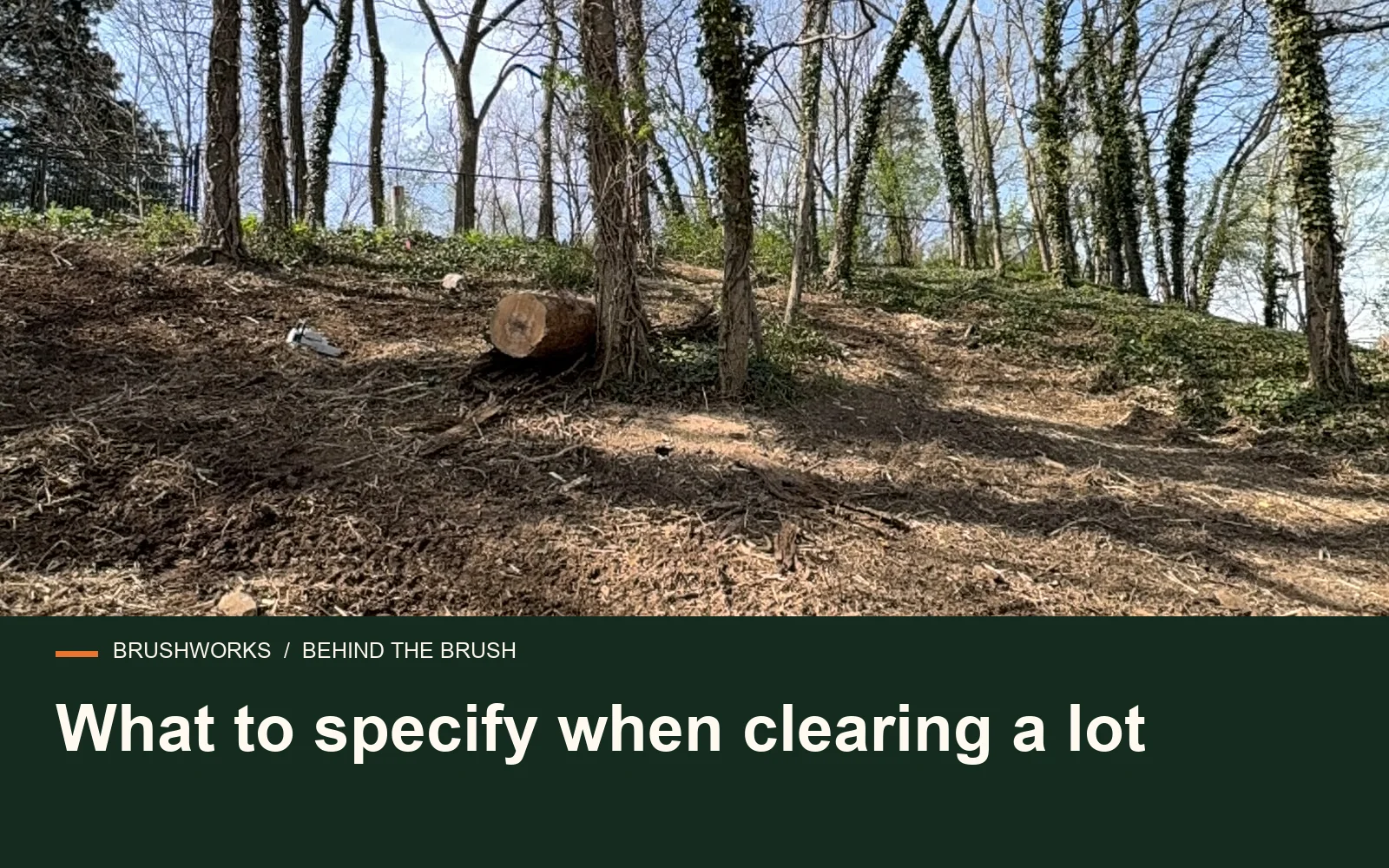
Before talking price, decide what the lot needs to become. Clearing for a future home site is different from clearing for a backyard, fence line, gravel parking area, walking trail, or property sale. A builder may need room for excavation, drainage, dumpsters, concrete trucks, and material staging. A homeowner may only need the back half opened enough for mowing, fencing, and a play area. A seller may want visibility without stripping every good tree.
A clear goal keeps the scope tight. It also protects good features. Some lots have mature trees worth saving, natural privacy along the edges, or shade that makes the property feel better once the junk growth is gone. Other lots are so packed with invasive brush that the first pass is about visibility. Once the work area is open, the owner can decide what stays and what needs a second phase.
What Cincinnati lots are usually fighting
Greater Cincinnati has a mix of steep yards, wooded ravines, old farm ground, narrow city lots, suburban backyards, and rural acreage around the outer townships. The plants are just as mixed. Bush honeysuckle is one of the biggest problems. It leafs out early, shades out native growth, hides trash and fence, and turns open areas into thick walls. Multiflora rose, wild grapevine, privet, autumn olive, poison ivy, black locust, honey locust, cedar, and dead ash show up often too.
Once these plants take hold, mowing is usually out. A brush hog can handle tall grass and light brush, but it is not the right answer for heavy saplings, vines, thorny brush, and hidden debris. A chainsaw crew can cut selectively, but hauling and pile management can get expensive. Forestry mulching often fits the middle ground because it reduces woody growth in place and leaves a more walkable surface.
Hidden material is the part people underestimate. Vacant lots and neglected backyards collect tires, wire, concrete, old posts, metal, bottles, lumber, and dumped material. Brush can hide everything. That is one reason a quote based only on square footage can miss the real work.
Forestry mulching versus cut and haul
Lot clearing is not one method. The common choices are forestry mulching, brush hogging, chainsaw cutting, excavator work, tree removal, and cut-and-haul cleanup. Sometimes one method handles the whole job. Sometimes the cleanest plan uses two or three.
Forestry mulching is useful when the lot has brush, vines, saplings, small trees, and invasive growth that can be reduced on site. The machine grinds material into mulch instead of stacking brush piles everywhere. That mulch can help reduce bare soil exposure and make the lot easier to walk. It is a strong fit for opening access, trails, backyard edges, fence rows, and future work zones.
If the lot is overgrown but you do not know what is underneath, mulching can be the first reset. After that, you can see whether the property needs grading, gravel, seeding, tree work, or cleanup.
Check property lines before clearing
For a simple backyard cleanup far from the edge, a survey may not be needed. For a narrow city lot, wooded side yard, fence row, driveway cut, or neighbor-sensitive area, it is smarter to locate pins, review the plat, or hire a surveyor. If stakes are already set, protect them. If they are buried, clear access carefully or have them found first.
Tell the clearing contractor which trees are yours, which areas are off limits, and where the neighbor concerns are. A few minutes of marking can prevent a much bigger problem.
Utilities, drainage, and slopes matter
Steep Cincinnati clay can be slick, especially after rain. A machine that is fine on flat ground may not be right on a hillside. Some slopes need a smaller machine, a remote-controlled mulcher, hand work, or a staged plan that avoids tearing up the site.
How to get a better quote
The fastest way to get a useful quote is to send useful information. Start with the address. Add photos from the street, access point, work area, and the worst brush. If the lot is hard to photograph, send a marked aerial screenshot with arrows or outlines. Mark what should be cleared, what should stay, where equipment can enter, and any hazards you know about.
Good quote details include gate width, slope, wet areas, utilities, old fence, debris, trees to save, neighbor-sensitive edges, and the reason for clearing. If the project is for a builder, include the site plan or limits of disturbance if you have them. If the project is for a fence, mark the line. If it is for a sale, say whether you want visual cleanup, access, or a more finished look.
Clear photos beat long descriptions. A short video walking the edge can help too. The goal is to reduce guessing before anyone gives you a number.
Plan for what happens after clearing
Freshly cleared lots need a next step. If you leave the property alone, honeysuckle, vines, locust, and weeds can come back. If you want lawn, you may need grading, topsoil, seed, straw, and watering. If you want a gravel pad, you need base prep and drainage. If you want a building site, the builder or excavator may need a different finish than a mulcher provides.
Regrowth control matters most in the first year. Small sprouts are easy to handle. Five-foot saplings and thorny clumps are another project.
Where Brushworks helps
If you are searching for lot clearing near me because the property has gotten away from you, start with photos and the address. Show us the worst area, the access point, and the final use. From there, the scope gets clearer and the quote gets more honest.
Agree on the handoff
Before work begins, define what the next person needs to find on site. A rough mulched opening may still contain roots, stump remnants, and uneven ground. Grading, structural preparation, planting, surfacing, and specialist tree work are separate unless explicitly included.
Keep the marked work map with the quote. At completion, compare the limits and finish, document any follow-up, and decide who will maintain the area. Photos help record the result, but they do not replace checking the ground and access.
Plan the work for your property
Send the site address, recent photos, a marked clearing area, and the finish you want. We can discuss where clearing fits and what needs a different trade.
Discuss your project → Explore pricing