
Before you start
- Look for old wire and dumped material.
- Mark useful screening or berry patches to retain.
- Choose a corridor your mower or maintenance tools can reach.
Decide what the patch contains
Briar can mean blackberry, rose, greenbrier, or mixed thorny growth. Some may be desirable in the right place. Identify what you want to remove and what should remain before treating the patch as uniformly unwanted.
Inspect the margins for wire, dumped material, and fences. Avoid pushing through a dense patch just to estimate its depth.
Choose a method around the site
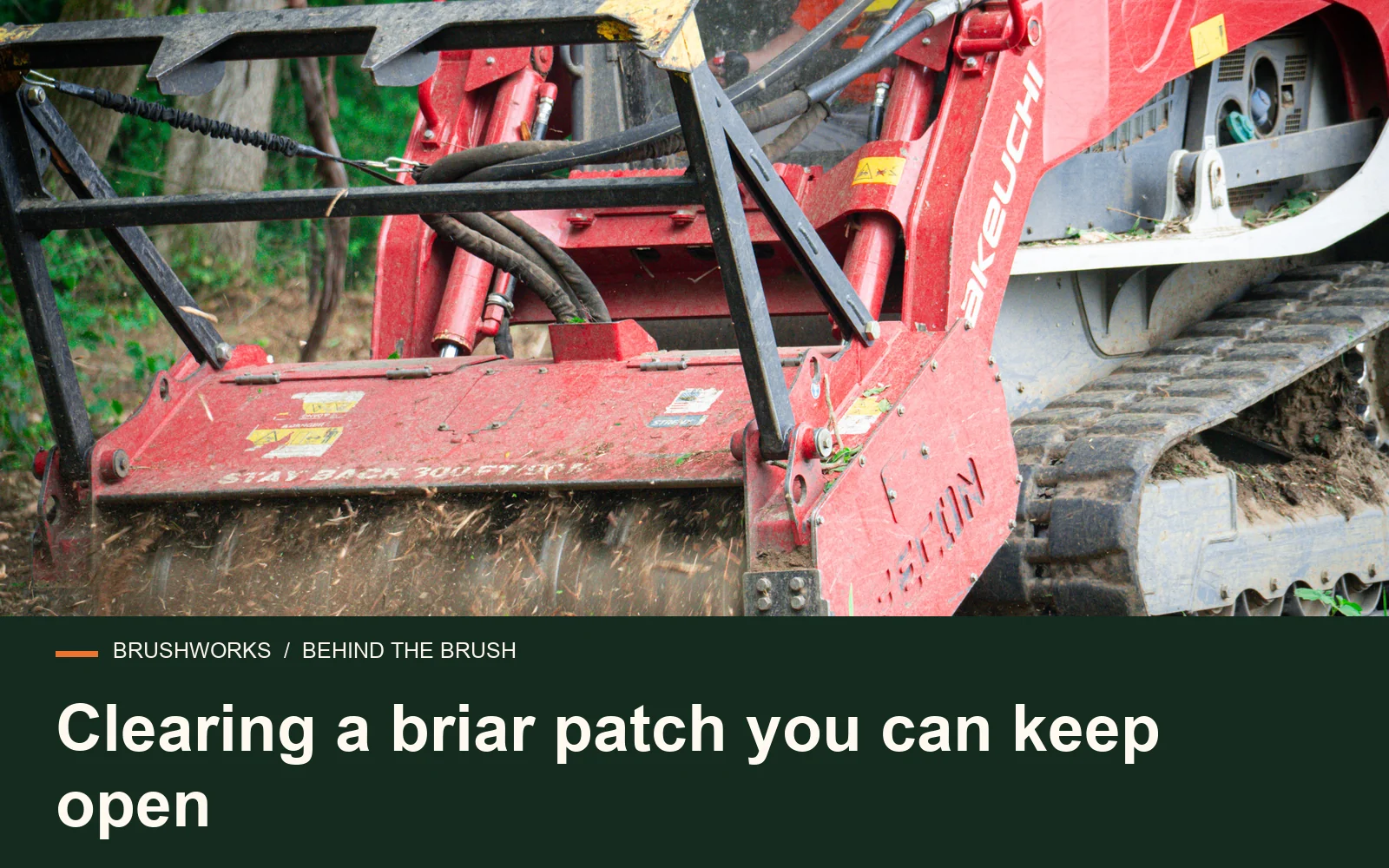
Hand work can be appropriate for a small patch beside a garden or a fence that needs protection. Machinery may help with accessible larger areas, but slopes, soft ground, and hidden debris affect the choice.
Specify the finished result: a passable path, a rough cleared edge, or preparation for a lawn or bed. Those require different amounts of follow-up work.
Keep a route for returning growth
Initial clearing opens the patch; it does not guarantee permanent control. Plan how you will mow, inspect, or selectively manage returning plants. Do not put the maintenance route behind a gate your equipment cannot pass.
After work, check the ground for remaining hazards before people or animals use it. Review the edge during the growing season and act on new growth before it becomes another inaccessible tangle.
Define the finish before choosing the first pass
A path through the stand, a rough woodland opening, and a prepared lawn or planting area are different requests. Tell the contractor which you want and ask what additional work follows the initial vegetation removal. Stumps, roots, loose woody material, and uneven ground can affect the next use.
Walk the margins with the person who will maintain the area. Check that gates, turns, and the surface suit that work. If you plan to hire follow-up treatment, confirm that the applicator can reach the relevant plants. Keep dated photographs from matching positions so you can distinguish returning growth from areas that were deliberately retained.
Plan the work for your property
Send the site address, recent photos, a marked clearing area, and the finish you want. We can discuss where clearing fits and what needs a different trade.
Discuss your project → Explore pricing