
Before you start
- Map existing cover and approach routes.
- Check sunlight and drainage in the proposed opening.
- Use soil testing to guide the planting plan.
Start with deer movement, not a blank map
The first mistake people make is picking a plot location because it looks easy to clear. Easy is nice. Huntable is better. Before any machine shows up, ask a few plain questions. Where are deer bedding? Where do they enter the property? What wind can you actually hunt there? Can you get in without crossing the food source or skylineing yourself on a ridge?
If your property is in Clermont County, Brown County, Adams County, Warren County, or out toward the hill country east of Cincinnati, this matters even more. A plot that looks perfect on aerial imagery can be a complete dud once you stand on it and realize the access is terrible or the ridge dumps your scent right into the bedding cover.
What usually needs cleared before a food plot can work
Most deer properties in Ohio do not need heavy timber clearing for a food plot. They need nuisance growth removed so sunlight can hit the ground and a machine can actually get in there. That usually means:
Honeysuckle and multiflora rose. These are everywhere around southwest Ohio, and they choke out the understory fast.
Volunteer cedar, locust, and junk saplings. Small trees can close a plot site down before you realize what happened.
Brush and briar walls. Great for cover, terrible when they block sunlight or equipment access to the exact spot you want to plant.
Why forestry mulching makes sense for deer food plots
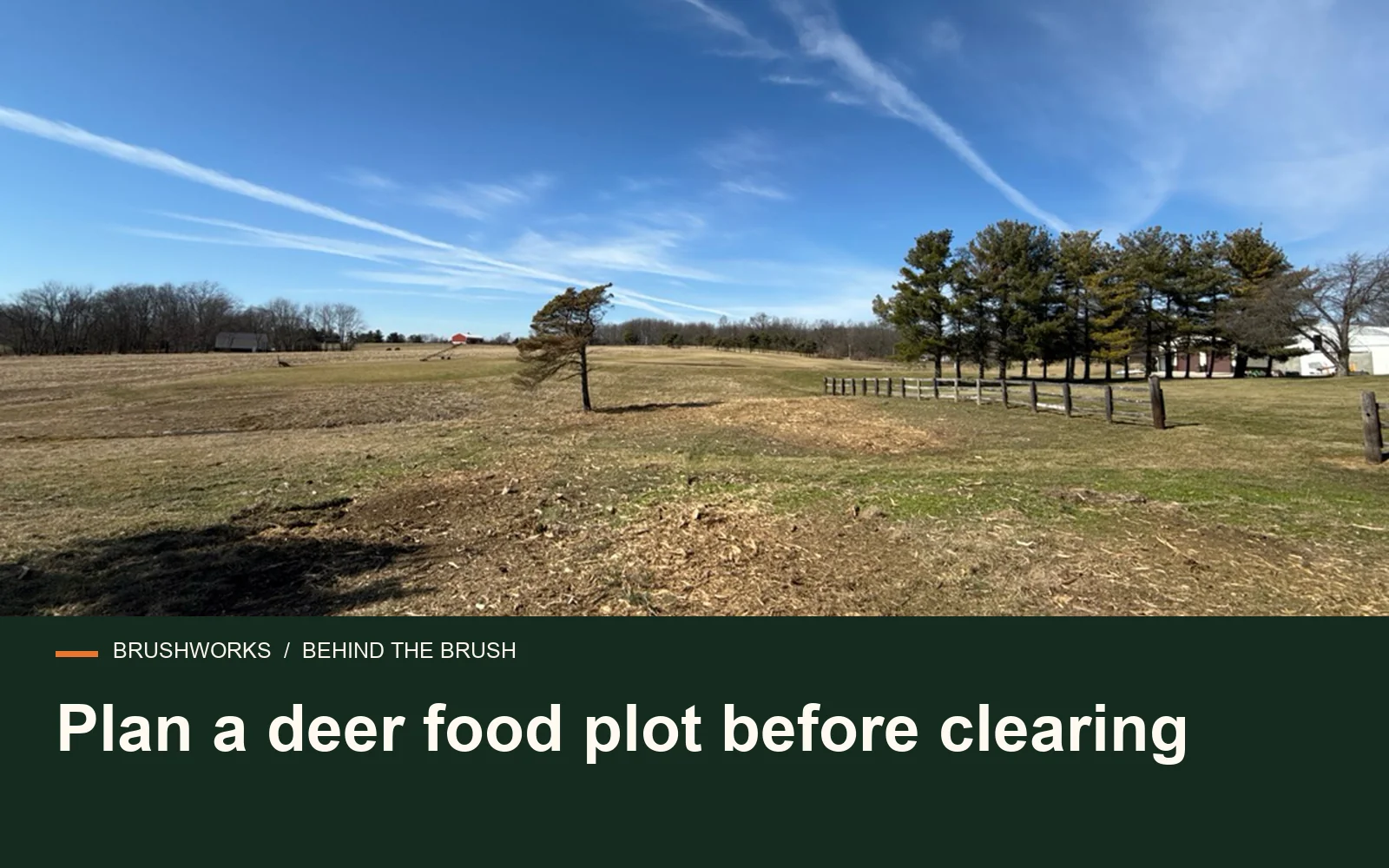
Forestry mulching is usually the cleanest first move when you are opening a plot in Ohio timber or reclaiming overgrown field edges. It is fast, it handles brush and small trees well, and it does not leave giant slash piles where you want to plant.
It opens sunlight without making the place look wrecked. That matters if you want the plot to feel secure. Deer do not love a fresh moonscape.
It helps you stay selective. You can keep the white oak you want for acorns, save screening cover on the downwind edge, and only open what the plot actually needs.
It works well on awkward terrain. A lot of southwest Ohio ground rolls, drops, and pinches in ways that make standard clearing methods clumsy. Mulching is a strong fit for those tucked-away plot sites.
Common food plot mistakes we see on Ohio properties
People get excited, open the canopy too wide, remove all the edge cover, and wonder why mature deer only show up after dark. A plot should feel usable, not exposed.
If you have to cross the opening to hunt it, or if every prevailing wind blows into the bedding area on the way in, the plot is working against you.
Low pockets look like easy clearings, but wet feet kill plot performance. If the area stays soggy after a rain, look elsewhere or change the plan.
A hidden plot still needs service. If a tractor, side-by-side, or seed spreader cannot reasonably reach it, maintenance gets skipped and the plot fades out.
Agree on the handoff
Before work begins, define what the next person needs to find on site. A rough mulched opening may still contain roots, stump remnants, and uneven ground. Grading, structural preparation, planting, surfacing, and specialist tree work are separate unless explicitly included.
Keep the marked work map with the quote. At completion, compare the limits and finish, document any follow-up, and decide who will maintain the area. Photos help record the result, but they do not replace checking the ground and access.
Plan the work for your property
Send the site address, recent photos, a marked clearing area, and the finish you want. We can discuss where clearing fits and what needs a different trade.
Discuss your project → Explore pricing